

Get 25% discount for tour departures between 01/07/2026 and Find out more
Book by 30/06/2026 for tour departures before 30/06/2026 & Find out more
Get 20% discount on these camping safaris departing between Find out more
This affordable Southern Africa Camping Safari explores top wilderness areas, game parks and travel destinations in South Africa, Zimbabwe, Botswana, Zambia and Namibia.
Start with game viewing in South Africa's premier Kruger National Park before exploring the fascinating Matobo National Park of Zimbabwe. Visit Victoria Falls on the Zambian side, then encounter the wildlife of Chobe National Park and Elephant Sands. Experience the wild Okavango Delta by traditional dugout canoe and on foot, camping on a remote delta island.
Travel into the Kalahari Desert and take a guided Bushman Walk, crossing into Namibia to overnight in Windhoek. Drive north to Etosha National Park for unforgettable game viewing and continue to Spitzkoppe and the strange landscapes of Damaraland. On to the coast, we spend time in Swakopmund, followed by an adventure into the world's oldest desert - the Namib, where we walk in the red-orange dunes and marvel at the desert imagery. After peering over the massive Fish River Canyon we cross back into South Africa, stopping at the Gariep River. Lastly we overnight in the Cederberg mountains and journey to our last stop - the beautiful city of Cape Town.
During this trip you are likely to come across activities that encourage tourists to participate in lion, elephant or other wildlife interaction. This includes walking with lions, riding elephants and any other tourist operation putting travellers in close contact with animals that would normally live wild and separate from human contact.
We absolutely do not encourage or endorse this type of wildlife interaction operation. For more information on why this is not good for Africa's wild animals, please see our detailed blog post on the subject.



This Kruger to Cape Town overland camping safari kicks off in Pretoria the administrative capital of South Africa. Situated just a short distance from Johannesburg, Pretoria is often called the "Jacaranda City," named for the stunning purple jacaranda trees that blanket the streets every October. The city offers a wealth of attractions, including the towering 10-meter bronze statue of Nelson Mandela, proudly standing beside the historic Union Buildings. You'll find a variety of cultural landmarks, shopping venues, lively bars, and fantastic restaurants within walking distance of our recommended hotel from where this exciting 25-day safari starts.
Leaving Pretoria, we journey through the scenic Mpumalanga Province, taking in the breathtaking mountain landscapes along the way. Mpumalanga is one of the most beautiful areas in South Africa and boasts the iconic Panorama Route. Driving along the edge of the escarpment, our first stop is the iconic Blyde River Canyon, where you'll marvel at the distinctive Three Rondavels (hut-shaped rock formations), perched gracefully on the canyon’s edge. The air is fresh, and the views are nothing short of stunning. The Blyde River Canyon is unique as it is a "wet" or vegetated canyon, differing from the dry, wind-eroded canyons typically found in desert regions.
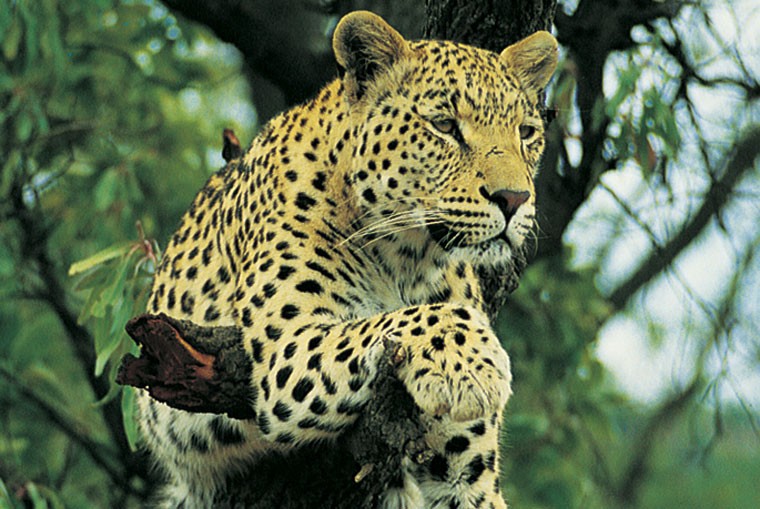
For the first two nights on safari, we camp on the doorstep of Kruger National Park in the Greater Kruger area. The Greater Kruger area was recently formed when fences between Kruger National Park and the private game reserves bordering the park were removed. The establishment of the Greater Kruger enables the diverse wildlife found in these wilderness areas to move freely between Kruger Park and its neighbouring game reserves. Kruger National Park is South Africa’s flagship game park and top travel destination, boasting an unrivalled diversity of plants and animals, ranging from the dwarf mongoose to Africa’s Big Five - elephant, rhino, leopard, lion and buffalo.
Enjoy Shangaan tribal dancing and singing on our first night and get ready for a full-day game drive in the game-viewing vehicle with a resident guide in Kruger National Park proper the next day. Our game drives in Kruger take us in search of the Big Five and a variety of other wildlife, such as giraffe, zebra, cheetah, hyena and various antelope species. With around 507 bird species, 147 mammal species and 114 reptiles game drives in Kruger Park offer excellent photographic opportunities. In addition to its abundance of wildlife, the untamed Kruger Park is also rich in archaeological and historical sites. We take a lunch break during the heat of the day continuing our exploration in the afternoon.
After our fantastic wildlife adventure game viewing in Kruger National Park, we travel north through South Africa’s lush countryside to Tshipise, in the northern Limpopo Province.
We camp at the foot of a rolling koppie, next to the Honnet Nature Reserve. Dense indigenous woodlands grow in the area, which also hosts the third largest Baobab tree in South Africa. We relax at the resort and enjoy a soak in the hot springs.
Day four takes us across the border into Zimbabwe. We take a scenic drive to Bulawayo where we stop for supplies. Bulawayo is a pleasant city known for its cultural richness and historic highlights. It is the second largest city in Zimbabwe, hosting art galleries, museums, parks, and other attractions. From Bulawayo, we head to our campsite in Matobo National Park where we will stay overnight. Tomorrow, we have the opportunity to explore this UNESCO heritage park.
Today we explore Matobo National Park with knowledgeable local guides. This is a wild region of unusual beauty, featuring huge granite boulders and rocky hills.
Matobo is home to significant wildlife and bird populations - including exceptionally high concentrations of black and white rhinos, and black eagles, as well as elusive leopards. If conditions are right the guides lead us into the bush in search of rhinos and other animals. Ancient San (Bushmen) rock paintings are found tucked away in these hills, where sacred sites of the Ndebele are also located. Colonial tycoon Cecil John Rhodes is buried at World's View at his request - a controversial site for the British imperialist's grave given its cultural significance to local tribes.
Today, you have the option of upgrading to a full-day tour which includes a village visit and historical highlights of Matobo Park.
After exploring the beautiful Matobo National Park we travel to our next stop - Victoria Falls. We drive via the town of Victoria Falls in Zimbabwe before crossing into Zambia, where we make our way to Livingstone, on the Zambian side of Vic Falls. For the next two nights, we camp at a pleasant resort on the banks of the Zambezi, near the Victoria Falls waterfall and the safari hub of Livingstone.
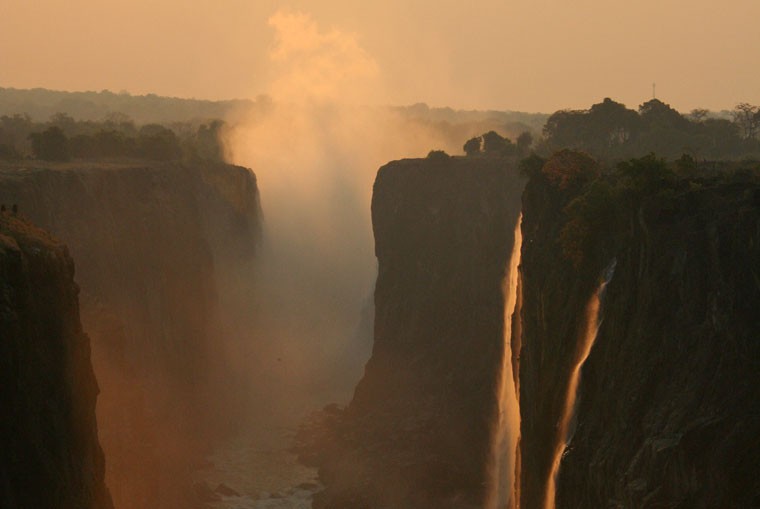
An included visit to the natural wonder of Victoria Falls brings you up close to the largest sheet of falling water in the world, at 1 708 m’s wide and 108 m high. When you witness the impressive spray rising from the Zambezi as it plummets over 100 metres at Victoria Falls, you will understand why it is called the “Smoke that Thunders” or “Mosi oa Tunya”, as Vic Falls is called locally. When the Zambezi is flowing strongly the spray at Vic Falls can be seen from as far as 20 km away.
During our time at Victoria Falls, there are plenty of exciting activities to choose from, including white water rafting, scenic flights, bungee jumping, canoeing, game viewing, Zambezi River cruises and more. You will be briefed on the selection of activities on offer and assisted with bookings for the following day.
Today is free for you to explore Livingstone town, unwind at the resort, or participate in some exciting adventure activities.
Relax beside the river at the resort and cool down in the pool, in between your adventures. End your day with an optional sunset boat cruise on the Zambezi River, keeping an eye out for hippos and crocodiles while enjoying sundowners. You can also take a day trip to Zimbabwe if you feel like exploring further and your tour guide can give you useful advice about visa requirements.
Our overnight camp near Livingstone features a reasonably priced restaurant overlooking the Zambezi River. During our stay in Livingstone breakfast is included in the tour price, allowing for flexibility with your other meals while you are on the move. A budget of between US$15 and $30 per meal is recommended for your other meals.
We depart from Livingstone after breakfast, taking the short drive to Kasane, near Chobe National Park in Botswana.
Botswana’s premier game park, Chobe National Park covers 10566 sq km of unspoiled wilderness in north-eastern Botswana. Chobe Game Park is famous for its large herds of elephants and the Chobe floodplains are the only place in Botswana where the puku antelope is found.
This diverse national park is also home to lion, zebra, buffalo and a variety of antelope species, as well as an abundance of birdlife, including the African fish-eagle. We take a late afternoon boat cruise looking out for hippos, elephants, buffalos, lizards, baboons, antelopes, crocodiles and a variety of birds. This laid-back boat cruise on the Chobe River is an ideal way to spot wildlife and birds up close and take in the stunning bush scenery at sunset.
On day nine, we embark on an open 4x4 game drive in Chobe, ranked one of the top game parks in Africa. Sightings include an array of large mammals, including predators such as lions, leopards and African wild dogs.
Then we leave Kasane and Chobe Park behind, making our way south to Nata. Keep an eye out for elephants and buffalo wandering along the road. Our destination for today is Elephant Sands - set in the bush where wildlife roams freely. Relax at the bar, pool and campsite where animals are often spotted up close.
Today we head west along the outskirts of the massive Kalahari Desert and arid salt pans, driving to Maun - the gateway to the Okavango Delta.
We overnight near the safari hub of Maun, before setting off on our trip into the Okavango Delta. Either this afternoon or when we return to Maun after camping in the Delta, there is usually time to take an optional scenic flight over the Okavango Delta – a breathtaking experience that enables you to view the vastness of this pristine wilderness area.
The jewel in Botswana’s crown, the Okavango Delta is the world's largest inland delta, covering 1.6 million hectares of natural waterways and pristine wilderness. The delta, with its source in Angola, spreads out in an intricate web of channels on the flat plains of Botswana emptying into the desert.
This morning we set off for the fringes of the delta in a 4x4 safari vehicle, meeting up with our local Tswana guides. These knowledgeable and experienced local guides will accompany you in the extensive wetland system “poling” you through the labyrinth of winding channels and lagoons in traditional dugout canoes, called mekoros. You will also have the opportunity to explore the delta on a thrilling bush walk. Exploring the narrow channels of the delta we look out for wildlife including hippos, crocodiles and an array of birds amongst the giant lily pads and tall grasses of the reed-fringed islands.
We spend a night camping in the Okavango Delta, experiencing this unique wilderness area up close. Our overnight tented camp is set on the banks of a tranquil lagoon, in an area of the watery Okavango Delta often visited by elephants. At our basic but comfortable bush camp, we stay in tents with twin camp beds and en-suite bathroom with bucket showers. At night you can hear the sounds of the African bush surrounding you for miles as you sleep under starry skies in this remote wilderness – the wildlife experience of a lifetime!
Wake up in the Okavango Delta, surrounded by the untamed bush. Enjoy the natural setting at camp before we glide out of the delta in the mokoros, watching for animals and birds along the way.
Reaching the collection point beside the waterways we switch to a 4x4 vehicle and return to Maun, arriving at camp in time for lunch. In the afternoon you can cool off in the pool and rest at camp or head off on an optional scenic flight. The flight takes you over the winding waterways and wild plains of the unique delta giving you a different perspective of the area you just visited. Elephants, hippos and other animals are often spotted from above so keep an eye out.
On day 13 we leave Maun and drive southwest along the edge of the Kalahari Desert via Ghanzi to our camp in Grobabis, a city in eastern Namibia, and the regional capital of the Omaheke Region. Our camp is located near the border post, offering a serene and immersive setting.
Here, in the heart of this beautiful landscape, we meet the San/Bushman people and embark on a guided bush walk, gaining a deep cultural insight into their ancient way of life. During this experience, we learn how they harmonize with nature, utilizing the renewable resources around them while maintaining the delicate balance of the ecosystem—a valuable lesson for us all. By supporting this ecotourism venture, you contribute to providing the San/Bushman with a sustainable income and help preserve their unique culture for future generations.
This morning, we leave Grobabis and make our way to the Namibian capital, Windhoek. This small capital city by global standards is situated in a basin between the Khomas Highland, Auas, and Eros Mountains and lies at 1,680m above sea level.
In Windhoek, we get to enjoy some nightlife after our days spent out in the untamed wilderness areas of Southern Africa. Explore Windhoek, located in the centre of Namibia, discovering its colonial German heritage and architecture.
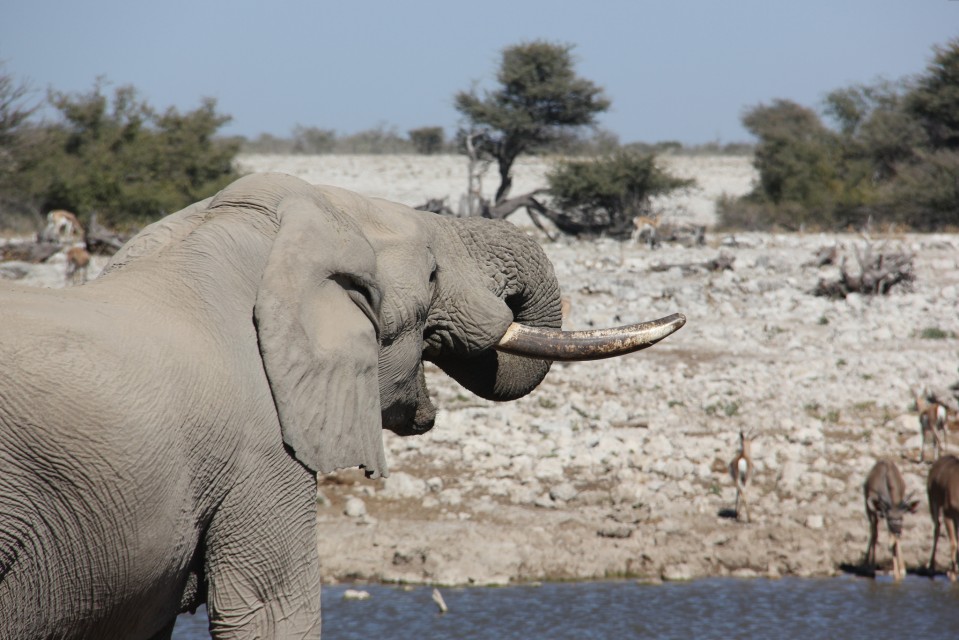
Departing from Windhoek our journey takes us north to Etosha National Park, the "Great White Place" dominated by a vast salt pan. We stay in Etosha Park for the next two nights, camping at rest camps near floodlit watering holes, offering exciting nocturnal game viewing.
The 20,000 sq km Etosha Park is home to thousands of wild animals and is considered one of the most important game reserves in Southern Africa.
This vast game park is inhabited by around 340 bird species and over 100 mammal species, notably the endangered cheetah and black rhino, as well as black-faced impala, tsessebe, roan antelope and gemsbok. In the rainy season, shallow lakes form on the pan, with the watering holes supporting Etosha’s wildlife all year round.
We take a short afternoon game drive upon arrival in Etosha and enjoy a full day of game viewing the following day.
We leave Etosha National Park game viewing en route to look out for animals not seen on the previous days. Next, we make our way back south travelling through the eerie landscapes of Damaraland to Spitzkoppe. The Spitzkoppe area is scattered with exposed granite formations that we explore to see the ancient rock paintings of the San Bushman tribes. The most impressive of these rock paintings is called “Bushman Paradise”.
The peculiar rock formations reach up to 1728m above sea level, offering spectacular views. Explore this dramatic area of Namibia, soaking up its stillness. Witness the ever-changing colours of the rock formations, especially at sunrise and sunset, when they take on intense red-orange hues. Our Spitzkoppe Camp, located at the base of the rocky mountain, is owned and maintained by the local community. All proceeds from our stay contribute to a better future for the local community at Spitzkoppe.
We drive along some of the striking Atlantic coastline, known as the Skeleton Coast en route to Swakopmund, located between the Namib Desert and the Atlantic Ocean.
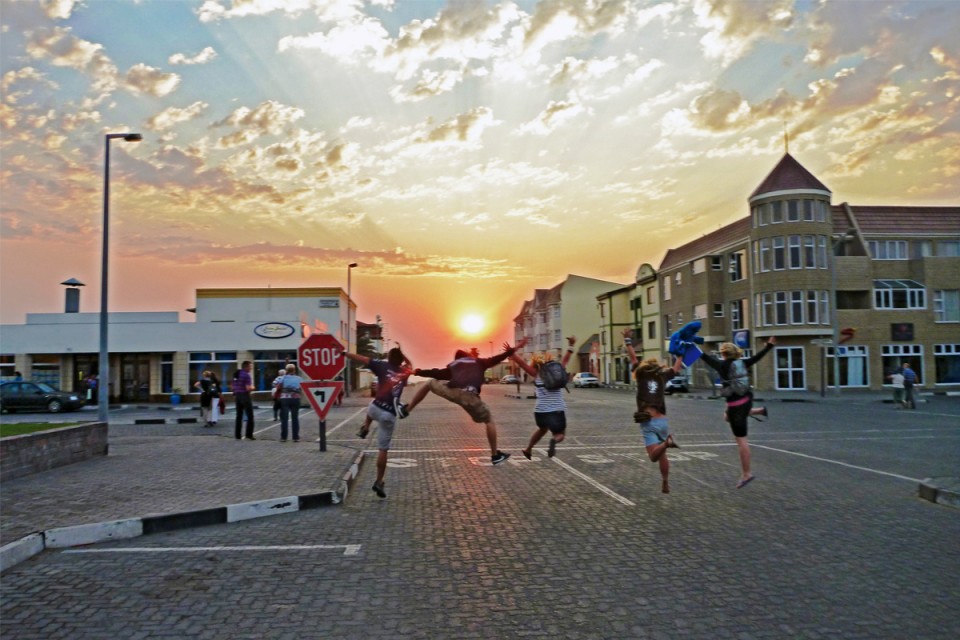
The quaint town of Swakopmund is Namibia’s premier seaside resort, featuring palm-lined avenues and beachside promenades. Take a sightseeing stroll through the German-influenced town and relax at one of the street-side cafes or get your adrenaline pumping on one of the adventure activities. There are plenty of adventure activities to choose from at Swakopmund including kayaking, quad biking, sand boarding and skydiving as well as scenic flights and guided desert walks.
Leaving Swakopmund we drive south, stopping to take snapshots as we cross the Tropic of Capricorn. Our next overnight stop is the smallest town in Namibia - Solitaire. Located in the Khomas Region, time slows down to a crawl in this remote settlement.
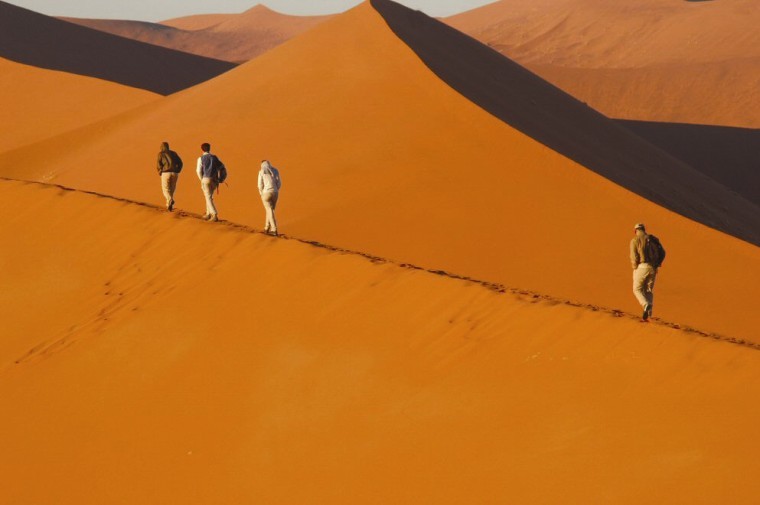
From Solitaire we continue our drive southwards heading into one of the oldest deserts in the world, the Namib Desert. We make our way to the Namib Naukluft Park, where we visit some of the world’s highest sand dunes, reaching up to 300m in the Sossusvlei area.
First stop in the Namib Naukluft Park - the towering Dune 45. Climb to the top of this much-photographed dune to view the immense expanse of dunes fields. This is one of the largest game parks in Africa and Namibia’s largest conservation area, covering 50 000 sq km of dunes, plains, mountains and pans. Following a hearty breakfast we continue our exploration deeper into the park with a nature walk to Dead Vlei. A walk amongst these tall, red-orange dunes provides ideal photo opportunities of Namibia's unspoilt natural beauty.
From the spectacular dunes and flat pans we travel to Sesriem Canyon to walk in the narrow gorge and see layer-upon-layer of sedimentary rocks revealed through erosion over the ages. Tonight we camp near Sesriem, watching for game at the waterhole where gemsbok are often sighted.
We continue south through arid landscapes scattered with quiver trees and rock formations, making our way to the Fish River Canyon.
In the afternoon we visit the Fish River Canyon - arguably the largest canyon in Africa and the second largest in the world. This beautiful natural wonder is around 500m deep and over 160km in length. We explore this scenic area enjoying spectacular views over the sharp “Hell’s Bend” corner of the canyon and more stunning photo opportunities.
Next, we cross into South Africa leaving the unforgettable deserts and vast game parks of Namibia behind. Continuing south we drive to the Gariep River, camping in this dramatic setting overnight. With its source in the Drakensberg Mountains the Gariep, formerly named the Orange River, is South Africa’s longest river, almost traversing the continent.
Relax at our camp along the water’s edge, taking a swim and enjoying nature. Or embark on an optional canoeing trip looking out for the abundance of birdlife in this remote area.
Leaving the Orange River we proceed south into the Namaqualand area of the sparsely-populated Northern Cape region of South Africa. Namaqualand is best known for its prolific display of blooming wildflowers in spring (between August and October).
We overnight at a picturesque campsite near the Olifants River where you can enjoy an optional wine tasting. Walk in the vineyards and enjoy the fresh mountain air or sample some of the good wines of the Western Cape.
We travel south passing the rich fruit-growing area of Citrusdal and admire the spectacular views as we meander down the Piketberg Pass towards Cape Town.
Lastly, we reach the beautiful city of Cape Town, our final stop on this amazing Southern Africa Budget Camping Safari. We recommend that you arrange to spend a few post-tour days exploring the cosmopolitan city of Cape Town. One of the most beautiful cities in the world, Cape Town has something for everyone - from outdoor activities and wineland tours to world-class shopping and lively nightlife.
This tour comes with a highly-recommended Adventure Pass, which is charged in addition to the tour price. We strongly recommend the Adventure Pass, as it includes major tour highlights and activities. The Adventure Pass can be pre-purchased when booking your tour, or at the start of your trip, payable in cash, directly to your tour guide.
Contact African Budget Safaris for a detailed and up-to-date itinerary description, showing exactly what is included in the Adventure Pass. See Full Pricing Info above for the Adventure Pass cost.
Transport on this tour is in a 24-seater, custom-built safari truck. The self-contained truck is fitted with onboard tables, individual lockers (70-litre) (700mm deep x 330mm height x 540mm wide) and a freezer for food, as well as safety features. The safari truck also features plug sockets, a small library and a USB charging station, a drinks cooler box, an external water tank. Other transport includes a mokoro (dugout canoe), a river boat and a purpose-built safari vehicle.
The group prepares meals at camp and help with preparation is invited. Most dietary requirements can be catered for on the road, upon request at the time of booking.
Some of our National Park visits and game viewing drives are conducted using local services, to ensure the best quality game driving and to comply with local authority rulings. Using local African guides and service providers also adds to our safari experience and allows us to contribute to the local communities.
For up-to-date and confirmed pricing info for optional items, please drop us an enquiry.
This tour does take children.
All Pretoria Departures |


Explore Namibia, Botswana, Victoria Falls and Kruger on a 25-day camping overland safari from Cape Town. Desert landscapes and Big 5 wildlife in 4 countries.

Experience diverse outdoor adventures, rich wildlife and cultures, scenic landscapes and habitats, and historical attractions in South Africa, Eswatini & Lesotho.
Our team has the destination knowledge to help you plan an unforgettable African adventure. We're based in Cape Town and ready to help.
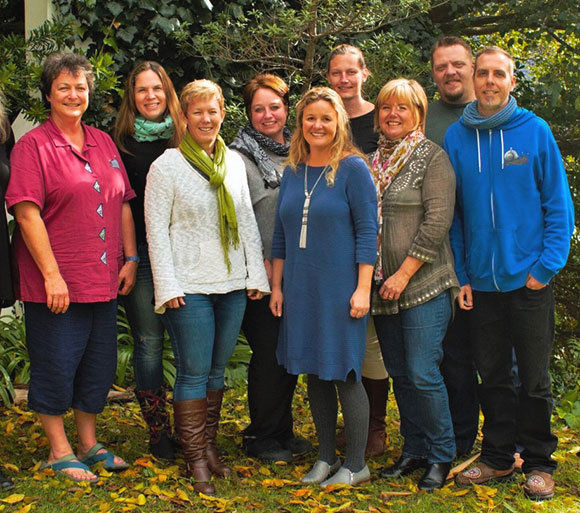
We can also plan you an affordable private group or tailor-made tour. We built our business on turning luxury travel into affordable travel.
