
Highlights of this Overland Africa Tour include the magnificent Okavango Delta, surreal Makgadigadi Pans & Chobe National Park in Botswana. Marvel at mighty Victoria Falls, visit wild South Luangwa National Park in Zambia, serene Lake Malawi and the Great Africa Rift Valley, and then the scenic Tanzania Southern Highlands. Relax on exotic Zanzibar Island, and do the famous Tanzania Northern Safari Circuit – Ngorongoro Crater and Serengeti National Park – and legendary Masai Mara in Kenya. Cross the equator, visit the Chimpanzees of Budongo Forest and go trekking with Mountain Gorillas in Bwindi Impenetrable Forest in Uganda. Finish off with adventure activities in Jinja at the source of the Nile before heading back to Nairobi.
Discover the beauty of Africa's diverse landscapes, cultures, and wildlife on this affordable Africa Overland Camping Safari.
During this trip you are likely to come across activities that encourage tourists to participate in lion, elephant or other wildlife interaction. This includes walking with lions, riding elephants and any other tourist operation putting travelers in close contact with animals that would normally live wild and separate from human contact.
We absolutely do not encourage or endorse this type of wildlife interaction operation. For more information on why this is not good for Africa's wild animals, please see our detailed blog post on the subject.
Our epic Johannesburg to Nairobi & Gorilla Safari begins in the city of gold, Johannesburg. Leaving the economic powerhouse of South Africa behind, we make our way through the North-West Province of South Africa en route to the Botswana border. After completing border formalities, we travel along the Trans-Kalahari highway to our overnight stop, a comfortable hotel in the town of Palapye.
Day 2 sees us continue our drive through Botswana to the vibrant town of Maun, a gateway for visitors to the mighty Okavango Delta. Our journey takes us through the Kalahari Desert, skirting the edges of the great Makgadigadi Pans, a string of salt pans that remain from a vast ancient lake that covered most of Botswana.
We overnight at a riverside campsite in Maun. On arrival in Maun, you have the option to take a scenic flight over the Okavango Delta. Soaring above the delta gives you a perfect perspective of this vast watery wonderland – a mighty river that has no route to the sea and empties into dry desert lands, irrigating some 15,000 square kilometres (6,000 square miles). This water supply provides a lifeblood for an incredible array of wildlife which you can spot from the skies.
Today we are separated from the overland truck for a two-day excursion into the heart of the Okavango Delta. We will be collected in smaller 4x4 safari vehicles, so you need to pack a smaller bag due to space constraints. Early risers have another opportunity to book a scenic flight (time and weather-dependent).
For the next two nights, we will be camping in a tented camp situated on the beautiful Khwai River floodplain that offers panoramic vistas of wildlife drawn to the lush grazing fields, including zebras, lechwe, wildebeest, buffalo, and elephants.
After lunch we journey to a nearby station for a mokoro ride. A mokoro is a traditional dugout canoe which is a common mode of transport used by locals to travel the Delta's intricate waterways. Sit back and relax as your guide expertly navigates the reed-fringed channels and peaceful lagoons adorned with lily pads. Stop at one of the small islands that dot the delta for a leisurely nature walk, led by your knowledgeable guide who will look for tracks and tell you more about life in this fascinating place. As you glide back to base, enjoy the drama as the setting sun casts bright colors against the serene delta scenery.
Today our Africa Overland Tour explores Moremi National Park at the heart of the extraordinary Okavango Delta ecosystem. Moremi is one of first reserves in Africa set up by local inhabitants. The BaTawana tribe established the reserve, named in honour of their Chief Moremi, due to the depletion of wildlife in their ancestral lands due to cattle encroachment and unchecked hunting. Our safari drive goes in search of a multitude of animals, from the iconic Big 5 (lion, leopard, elephant, buffalo, and rhinoceros) to others like giraffe, cheetah, zebra, various antelope species including the marsh-adapted red lechwe, hyenas, jackals, and the rare African Wild Dog. Moremi is also a haven for bird enthusiasts.
Our Africa Overland Camping Tour makes an early start as we pack up camp to make our way through delta backroads back to Maun, keeping a lookout for any last animals. We are reunited with our overland truck. Heading east out of Maun we drive through rural Botswana, back into the Kalahari Desert.
Our next campsite is located near the town of Nata, close to one of the salt pans of the Makgadigadi Pans which was formed over thousands of years from the evaporation vast Lake Makgadigadi, leaving a vast salt pan complex. We stop to take in the surreal views of the barren, moon-like landscapes. Our campsite has a waterhole located alongside which is often visited by free-roaming desert elephants.
Day 6 sees us travel through the Kalahari sands to the bustling town of Kasane, nestled between four countries - Botswana, Namibia, Zambia, and Zimbabwe. We arrive at our riverside campsite, on the banks of the Chobe River, in time for lunch and a siesta to recharge for the afternoon's activities.
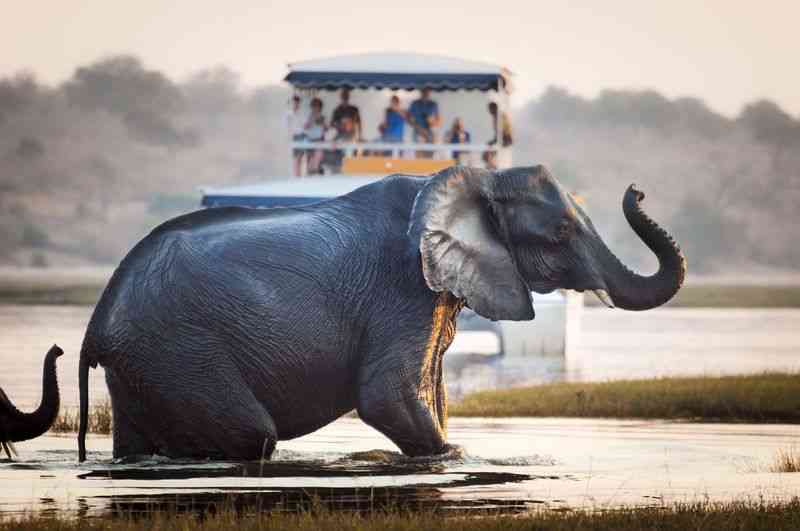
As the heat of the day begins to wane, we embark on a leisurely boat cruise along the Chobe River in Chobe National Park. As we glide silently along the water, keep your cameras at the ready for wildlife on the riverbanks, including the main attraction: the elephants. Chobe hosts one of the highest concentrations of elephants in the world, with estimates exceeding 120,000 individuals. In the afternoons, these gentle giants are often seen gathering on the banks of the Chobe River, where they have access to fresh water even in the dry season.
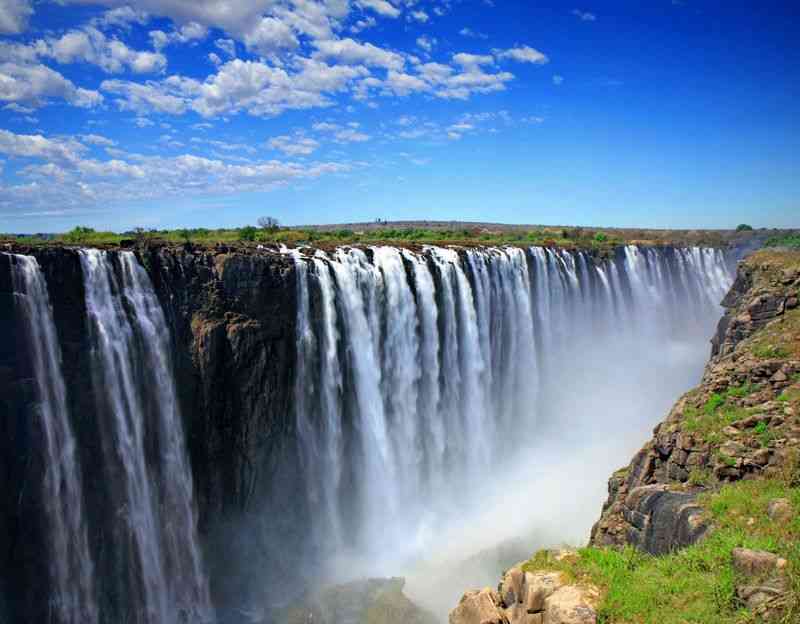
Today, we cross the border into Zimbabwe and travel a short distance to the UNESCO World Heritage Site of Victoria Falls. Known locally as "Mosi-oa Tunya" which translates to "the smoke that thunders", here the mighty Zambezi River cascades with unrestrained power, plunging into the rugged Batoka Gorge below, enveloping the surroundings in a perpetual mist and a deafening roar.
The next two days are unscheduled, allowing you to immerse yourself in the awe-inspiring spectacle of Victoria Falls and all the activities on offer here. For those seeking an adrenaline-fueled adventure, you can choose from an exhilarating menu, including white-water rafting on the raging Zambezi River below the falls, Bungee Jumping, Ziplining, soaring above the Falls on a thrilling helicopter or microlight flight, or experiencing the sheer force of the water up close on a heart-pounding boat trip to Livingstone Island, right on the lip above the Falls.
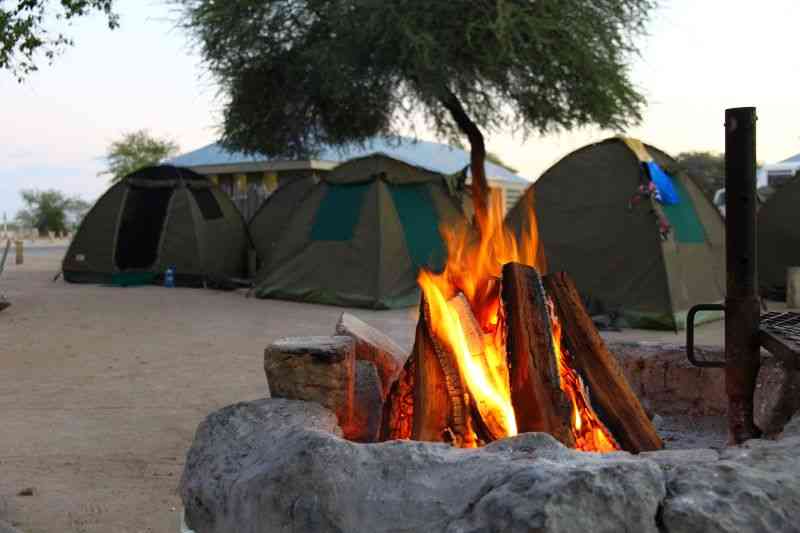
On the other hand, for something more relaxed, stroll through the vibrant craft markets, try the quaint coffee shops dotted throughout the town, or take high tea at the historic Victoria Falls Hotel. Embark on a game-viewing sunset cruise on the Zambezi above the falls, go on a village tour, or book a game drive in one of the nearby wildlife reserves. Tonight, we camp in a pre-erected dome tent with camper beds at a campsite in Victoria Falls village on the Zimbabwe side of Victoria Falls.
Tonight, we stay in a lodge near Livingstone, on the Zambia side of Victoria Falls. The transfer from Victoria Falls to Livingstone is included in your tour price and can be arranged for the morning (08:00am) or afternoon (16:00pm) depending on your activities planned for the day.
On Day 9 of our budget Africa Overland Tour, we bid farewell to Victoria Falls and venture northeast through traditional villages and rural Zambian scenery. For the next two nights, we will camp on the banks of the Kafue River, a significant tributary of the mighty Zambezi River which it joins at the nearby town of Chirundu.
Here you are free to unwind on the deck with beautiful views of the river or book one of the many optional activities. Fishing is popular in the Zambezi River, as it is teeming with over 75 fish species, including the coveted Tiger Fish, African Pike, Barbel, and Upper Zambezi Yellow. Take a full-day safari in the Lower Zambezi National Park, or a river safari offers a unique viewpoint of the region's diverse flora and fauna. Otherwise, hike to a nearby baobab forest and bat cave which provides sweeping views over the verdant valley.
Our journey continues through Zambia, past the bustling capital city, Lusaka, and then heading east towards Petauke, our stopover for the night. We travel the Great East Road, a vital link between Lusaka and its neighbouring country, Malawi. This route winds through the rural landscapes of Zambia, and across the Luangwa River, the lifeblood of the surrounding communities and wildlife of Southern Zambia.
We stop at bustling Luangwa Market, a feast for the senses as vendors sell local food and produce, and a myriad of local crafts, from intricately woven baskets to papyrus carpets created by local artisans.
Our Johannesburg to Nairobi & Gorillas Safari takes us into the unspoiled wilds of South Luangwa today. En route to South Luangwa National Park, we make a detour in the vibrant town of Chipata to visit the artisan workshops of the Mulberry Mongoose. Here, you can witness the craft and creativity of local women who skillfully fashion jewellery and unique creations from indigenous materials, predominantly cotton grown in the region, and wire salvaged from snares set by poachers and recovered by local conservation agencies.
Over the next two nights of our Camping Overland Tour, we camp on the banks of the great Luangwa River, in the heart of South Luangwa National Park. This location is a prime spot for viewing wildlife, with frequent sightings of hippos wallowing in the water and other animals drawn to the riverbanks. As the day draws to a close, enjoy the vibrant orange and pink light display as the sun sets over the river.
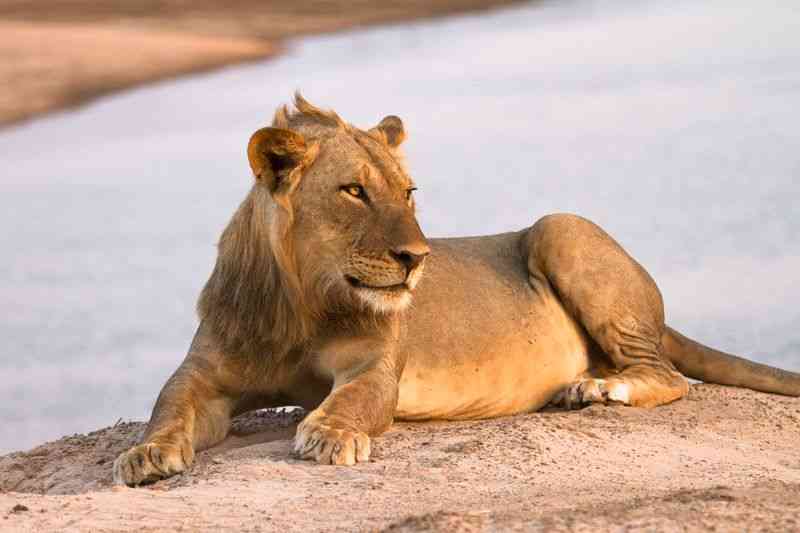
Day 13 is dedicated to exploring the diverse ecosystems of South Luangwa. For early birds, you can join the optional morning game drive, or a Walking Safari to explore on foot (available during the dry season). Relax at camp in the heat of the day before we venture out again for a sunset game drive. The park is a haven for a wide array of wildlife and bird species within its marshes, woods, and grasslands. We're likely to spot buffalos, zebras, leopards, elephants, hippos, giraffes, and crocodiles in their natural habitats. As the sun begins to dip below the horizon, we'll pause to savour a sundowner drink while basking in the beauty of an African sunset. The return drive to the camp as darkness sets in provides an opportunity to spot some of the park's nocturnal inhabitants as they emerge for their nightly activities, particularly the leopards that thrive here.
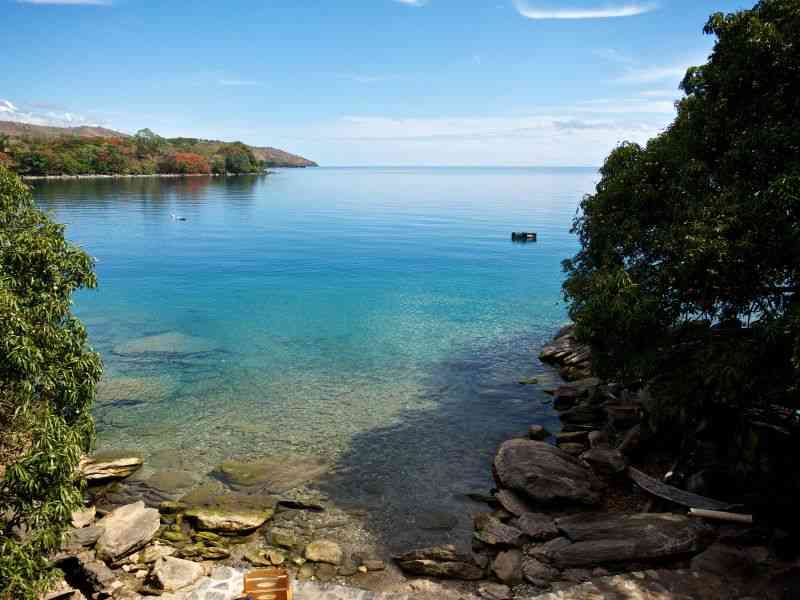
This morning our Africa Overland Tour crosses into our next country, Malawi, the "Warm Heart of Africa." Our destination for the night is the idyllic shores of Lake Malawi, at the southernmost point of the East African Rift system. This lake extends more than 500 kilometres (310 miles) along the western border of Malawi and boasts more species of fish than any other lake on Earth.
We have two nights at a campsite on the shores of serene Lake Malawi and you are free to let the days unfold at your own pace. Soak up the sun on the beach and swim in the balmy clear waters. For the energetic, you can take a guided hike to the nearby Dwanbazi Waterfall or explore the lake on a kayak, snorkelling or on a boat trip.
Day 16 sees us continue our journey along the edges of Lake Malawi, venturing north to our next overnight camping spot in the village of Chitimba. There are many fishing villages along the shores of Lake Malawi, and we stop at one of these. Your guide will lead you on a walking tour to learn more about the local culture and interact with the friendly residents.
By late afternoon we reach our campsite on the shores of the lake. Here, you have the chance to relax in a hammock, cold beverage in hand, watching the sunset paint the sky with shades of orange, pink, and purple. David Livingstone, one of the first Europeans to discover the lake in the mid-19th century, called Lake Malawi the "Lake of Stars" as he was captivated by the flickering of lantern lights from the fishermen's boats on the lake at night.
Our Africa Overland Tour leaves the lake behind and travels to our next country, Tanzania. The road meanders through rolling hills and valleys of the Great Rift Valley and is dotted with small villages. Once border formalities are complete, the terrain becomes increasingly mountainous, and we wind our way through the foothills of the Mbeya Mountain Range. This is a main coffee and tea growing region of Tanzania. Tonight, we stay in a shared bungalow on a coffee plantation outside the town of Mbeya.
Our journey continues, ascending the Great Rift Valley into the Southern Highlands of Tanzania, travelling past terraced farms and over some spectacular mountain passes. We stop at a coffee plantation to tour the lush coffee fields, learn about the coffee production process, and sample some of the delicious brews. Our campsite for the night is on a working farm outside the town of Iringa, known for its pleasant climate and scenic beauty.
This morning, we continue our journey through the highlands. We have a quick stop at Baobab Valley dotted with ancient, towering baobab trees that create a surreal backdrop for a group photo.
Our next campsite is on the outskirts of Mikumi National Park, which forms part of a vast 75,000 square kilometre (29,000 square mile) preserve with historic Selous Wilderness Area. After setting up camp, you have the option to book a game drive in Mikumi National Park. The park is home to Masai giraffes, the largest of the giraffe subspecies, and herds of Cape buffalo are another common sight. Lions can often be spotted resting under acacia trees or embarking on hunting expeditions, and there is a significant population of African elephants along with a host of antelopes, and many other animals and birds.
Our Overland Tour heads out of the highlands towards the East African coastline. We overnight at a centrally located hotel in Dar es Salaam tonight as we have an early start tomorrow to catch our ferry to exotic Zanzibar Island. The rest of the day is yours to get a taste of this vibrant coastal city's culture and charm. Explore the bustling markets to discover a variety of local goods and street food flavours, and sample delicious Tanzanian cuisine at a waterfront restaurant to take in the stunning sunset over the Indian Ocean.
We head out early this morning to catch the local ferry for Zanzibar Island, known as ‘the Spice Island’, where we will be spending three blissful days. On arrival in the historic port of Stone Town, we settle into our overnight accommodation at a comfortable centrally located hotel. The rest of the day is free to explore this historic town, once a major port in the Indian Ocean slave and spice trade, now a favoured destination for travellers.
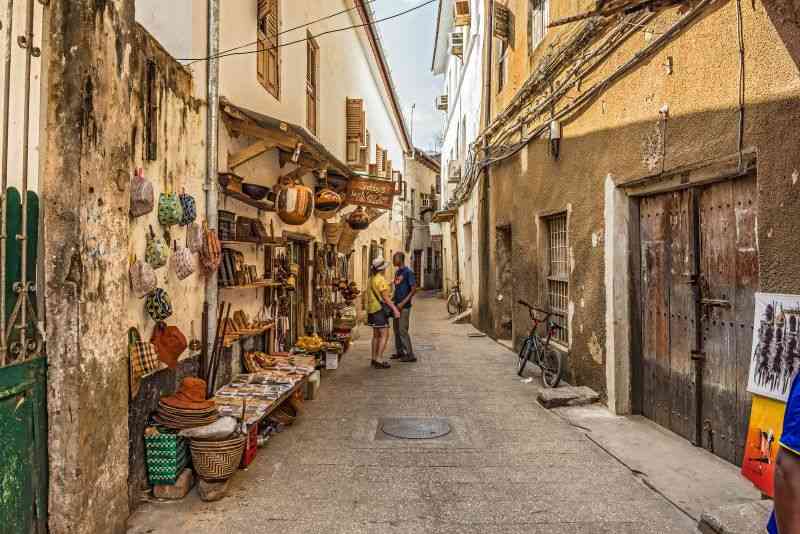
Wandering through the labyrinth of narrow streets and alleys, you'll encounter vibrant markets and stalls selling an array of exotic spices, textiles, and local crafts. Around every corner is a surprise. Sample the delicious fresh seafood and other local dishes flavoured with the spices grown here. Forodhani Garden offers a delightful space to unwind in the evening when it comes alive with fairy lights and local street food offerings.
Our Johannesburg to Nairobi & Gorillas Safari begins with a morning walking tour, where your guide will show you Stone Town’s famous landmarks, including the birthplace of music legend Freddie Mercury. We are then collected in vehicles to take us to the idyllic east coast of the island where we will spend the next two nights.
En route, we'll pause for a Spice Tour, walking through local villages and spice plantations to witness first-hand how small-scale spice farms produce delights like nutmeg, cardamom, cloves, cinnamon & ginger. Watch workers deftly scale trees and identify specific plants. You'll also have the opportunity to buy some spices direct.
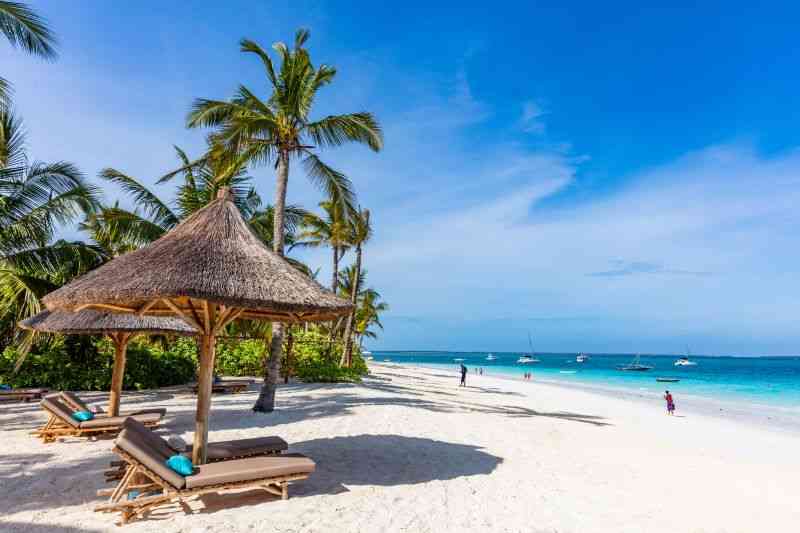
The next two nights will be spent at a beautiful beach resort on the east coast. This is your time to relax and soak up some sun and sea on the unspoiled beaches. Go snorkeling in the marine paradise of these waters, take a sail on a traditional wooden dhow, take a guided tour of the island, or hire a scooter and explore at your own pace.
It is time to say goodbye to our coastal haven as we return to Stone Town and board the ferry back to Dar es Salaam. Here we are reunited with our overland safari truck to continue our journey northwards up the coast. Our next campsite is in the town of Bagamoyo, famous for building wooden dhow sailing boats, keeping alive an ancient practice that has endured through the ages. Established in the late 1700s, Bagamoyo is an intriguing blend of German colonial heritage, Swahili, Arabic, and Christian missionary influences.
Our Overland Camping Safari continues north along the coast this morning, before heading inland across the northern reaches of Tanzania to our destination for the night, the bustling town of Arusha. Nestled in the refreshing foothills of Mount Meru, Africa’s fifth-tallest peak, Arusha is a vibrant town that serves as the launch pad to Tanzania's famous Northern Safari Circuit, the renowned Serengeti National Park and Ngorongoro Crater, as well as for mountaineers hoping to conquer towering Mount Kilimanjaro, not far away. We stay at a lovely campsite in Arusha and need to prepare a smaller travel bag for our three-day excursion into the Northern Safari Circuit starting tomorrow.
We head west on the Tanzania Northern Safari Circuit, through the breathtaking landscapes of the East African Great Rift Valley. Our destination is the town of Karatu, nestled between Lake Manyara and the Ngorongoro Crater. En route, we make a stop in the little village of Mto wa Mbu, known for crops such as rice and distinctive red bananas. It is a melting pot of over 120 ethnic groups making for a rich cultural diversity. We visit the vibrant Mto wa Mbu Market, where you can immerse yourself in local life and sample the area's produce and crafts. Upon arriving in Karatu, we set up camp and your guide will provide information on the upcoming two-day safari adventure in the Ngorongoro Crater and Serengeti.
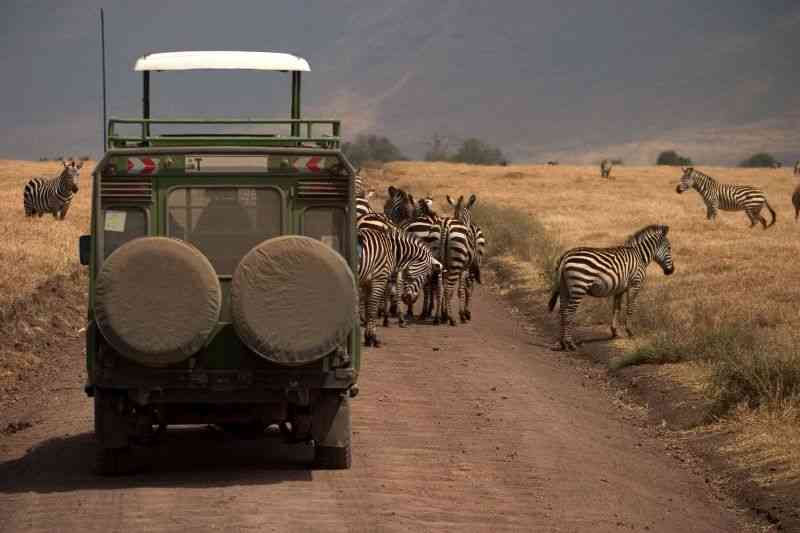
We make an early start this morning for a thrilling day of wildlife in our 4x4 safari vehicles. Regarded by many as the eighth wonder of the world, the Ngorongoro Crater is all that remains of a collapsed ancient volcano. As we descend into the crater through a verdant highland forest, keep an eye out for the many bird species that inhabit the trees. Once we reach the vast crater floor, you'll be amazed by the sight its over 25,000 animals, including buffalo, impala, giraffe, bushbuck, waterbuck, hippos, and elephants that frequent the lake area. With such a high density of wildlife within its walls, the crater offers unparalleled game viewing opportunities.
In the afternoon, we exit the crater and journey on towards the world-famous Serengeti National Park, conveniently located nearby. We enjoy a leisurely game-viewing drive through the park as we make our way to our overnight camp, in the Seronera region at the heart of the park. Expect some unforgettable wildlife encounters along the way.
We will spend the next two nights in luxury tents at a campsite that boasts stunning views of the legendary wildlife-rich Serengeti plains. Relax with a cool drink and watch the sunset paint the sky with hues of orange and red from the comfort of your safari-style Meru tent … an idyllic end to your adventurous day.
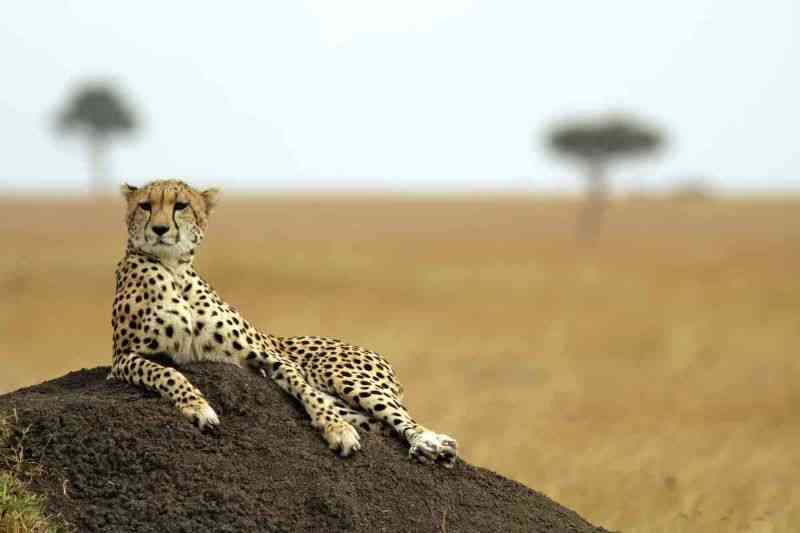
Day 28 of our Camping Safari is dedicated to exploring Serengeti National Park, widely renowned as one of Africa's premier safari destinations. Our journey will lead us from our camp in the central Seronera region celebrated as the 'Big Cat Capital of Africa' for its abundant populations of lions, leopards, and cheetah in their natural habitat. Our safari drive offers opportunities to spot the 'Big 5' - lion, leopard, rhinoceros, elephant and buffalo. Serengeti is home to a diverse array of other species such as giraffe, hippo, hyena, various species of antelope such as impala, topi, and eland, as well as herds of wildebeest and zebra that roam the Serengeti's open plains. Also, keep a lookout for the birdlife like eagles, vultures, storks, secretary birds and many other colorful species.
Serengeti is also the location to take a Hot Air Balloon Safari over the sweeping plains. However note that this is a very popular excursion and advance booking is essential.
We depart the Serengeti National Park with amazing memories and make the return journey through the East Africa Rift Valley, back to our campsite in Arusha where we will spend the night reminiscing about our safari adventure.
We cross the border into Kenya. Keep a lookout for sight of Mount Kilimanjaro which is often visible on a clear day. Our journey continues through rural Kenya as we make our way to Nairobi where we will overnight at a centrally located hotel.
Vibrant capital city Nairobi offers a blend of urban energy and wildlife charm. Explore the bustling markets, sample local cuisine, and stroll through the lively street scenes. Nairobi National Park offers a unique safari adventure within the city limits, with a unique wildlife experience against the backdrop of the iconic city skyline.
Today, our Overland Camping Safari heads off in 4x4 safari vehicles, southwest towards the renowned Masai Mara National Reserve, the quintessential 'Out of Africa' safari destination immortalized in numerous documentaries and films. The drive takes us through rustic Kenyan landscapes peppered with rural hamlets of the semi-nomadic Maasai people, known for their warrior prowess and vibrant traditional attire. We will spend the next two nights in a beautiful tented camp nestled in the heart of Masai Mara.
Covering 1,510 square kilometres (580 square miles) bordering Tanzania, Masai Mara is teeming with wildlife. We'll head out on safari drives, traversing the expansive plains in search of Africa's Big 5 - lion, leopard, rhino, elephant, and buffalo - as well as cheetah, giraffe, zebra, hippo, wildebeest, and smaller creatures like jackals, hyenas, baboons, warthogs, bat-eared foxes, and various antelope species including impalas and topi. The Masai Mara Reserve is perhaps most famous for the annual Great Migration, a spectacular event that sees thousands of wildebeest, zebra, and Thompson’s gazelle traversing between the vast plains of Masai Mara and Tanzania's Serengeti. Note that the migration is a seasonal event, so sightings will vary depending on the time of year.
Today, we leave the Masai Mara and meet up with our overland vehicle heading to Lake Nakuru. This extraordinary soda lake within the Great Rift Valley is renowned for the massive congregations of flamingos that gather here during certain times of the year, attracted by the lake's alkaline waters. We will take a game drive in the surrounding park that covers 180 square kilometres (69 square miles).
Lake Nakuru National Park has one of Kenya's highest populations of black rhinos, with more than 25 individuals, alongside approximately 70 white rhinos. The park is also home to numerous other wildlife species, including impala, warthogs, waterbucks, hippos, and large tree pythons. Predators such as lions, cheetahs, and leopards prowl the park, while buffalo, Rothschild giraffe, and eland are also commonly sighted. Initially established as a bird sanctuary, the park is a sanctuary for over 400 resident bird species and hosts a variety of migratory birds.
After our drive we head to a comfortable hotel located in nearby Nakuru, Kenya's third-largest city.
This morning our Africa Overland Tour crosses into our final country, Uganda, ‘Pearl of Africa’, with its verdant landscapes and collection of stunning Rift Valley Lakes. En-route we cross the Equator and stop to take photos to mark the occasion.
Our destination for the night is a campsite located on the Nile River outside Jinja, Uganda’s second largest city on the north shore of Lake Victoria. This is officially the source of the Nile River where it flows out of Lake Victoria to travel 6,695-kilometers (4,160-miles) through Africa to the Mediterranean Sea. Our camp is nestled on the forested banks of the Victoria Nile close to the beautiful Kalagala Falls. Jinja is considered the adventure capital of Uganda and the river offers many adventure activities. Our stay is brief but we will return at the end of our Uganda adventures.
After a quick stop in the city of Kampala, we travel northwest towards the shores of another of Uganda’s Great Rift Valley Lakes, Lake Albert. For the next two nights we will camp outside the town of Masindi, renowned as a travel hub due to its proximity to Budongo Mahogony Forest and the Murchison Falls National Park which sees the Victoria Nile River flow through, plummeting over a narrow gorge to form the beautiful Murchison Falls waterfall.
After camp is set up, there is an option to visit the Ziwa Rhino Sanctuary that covers 7,000 hectares. The sanctuary plays an important role in addressing the major rhino poaching problem in Uganda, breeding rhinos to reintroduce into the national parks. You can take a bush walk in search of these incredible animals.
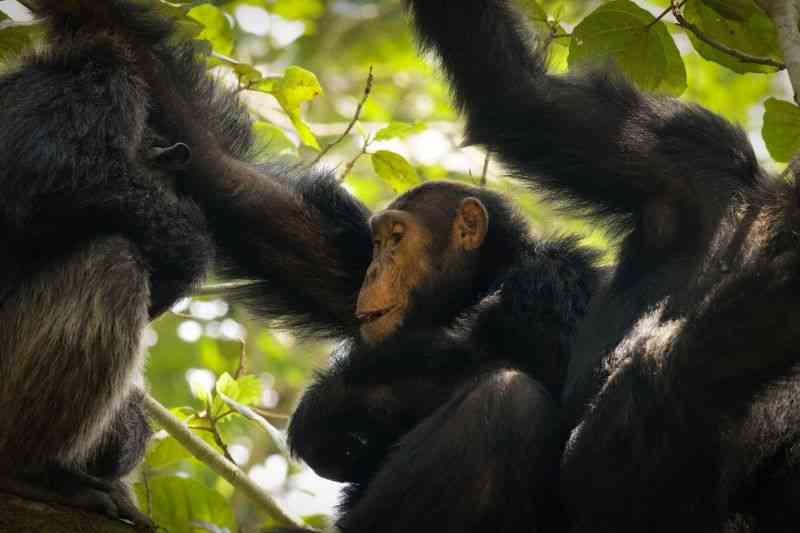
Day 36 sees us head into the Budongo Forest, largest mahogany forest in East Africa. The forest is home to nine primate species, including a huge population of chimpanzees – it is estimated that there are nearly 700 individuals living here. We will meet up with local guides who split us into small groups of 12 people and lead us through this beautiful forest in search of the chimpanzees and other animals. We have the unique opportunity to observe chimp family groups up close and enjoy their quirky antics.
Later in the day we head to Murchison Falls National Park for a game viewing boat cruise on the Victoria Nile River. The reserve hosts 4 of the Big 5 – lion, elephant, buffalo, and leopard (no rhino) – and many other animals and birds drawn to the refreshing waters of the river. Depending on the number of people visiting the chimps, the programme is flexible, and some people may take the river cruise in the morning and the chimp trek in the afternoon.
Day 37 sees our Johannesburg to Nairobi & Gorillas Safari travel further into Uganda, towards the next Rift Valley Lake of our tour, Lake Kikorongo. Our campsite for the night has a beautiful location at the top of a hill overlooking the lake, and on the edge of Queen Elizabeth National Park, known for its unusual, quirky volcanic rock formation landscape.
Our journey takes us over the equator once more as we head southwest to Lake Bunyonyi. At a depth of 800 meters (2,600 feet), Lake Bunyoni is one of Africa's deepest lakes with 29 islands of different shapes and forms. Bunyoni means “small birds” and there are over 200 species of bird spotted on the shores. The lake offers fantastic views over the rolling hills and Virunga volcano mountains in the distance. Our beautiful lakeside campsite will be our base for the next three nights. Your guide will brief you on the Gorilla trekking adventure which begins tomorrow (optional).
Day 39 & 40 are set aside for one of our tour highlights: a Gorilla Safari.
The surrounding area, encompassing Uganda, Rwanda, and Democratic Republic of Congo (DRC), is home to more than half of the world’s extremely endangered mountain gorilla population. The permit fees charged for a gorilla trek goes towards conservation efforts and encouraging local communities to change their attitudes towards wildlife and start to protect rather than poach. The number of gorilla permits are extremely limited to control the numbers of humans coming into contact with these creatures. As a result, our tour schedule needs to be flexible to ensure that everyone has the opportunity to go on a gorilla trek. Whenever possible we choose to trek in a National Park in Uganda, but if permits are limited, we may cross the border to visit the reserves of Rwanda or DRC.
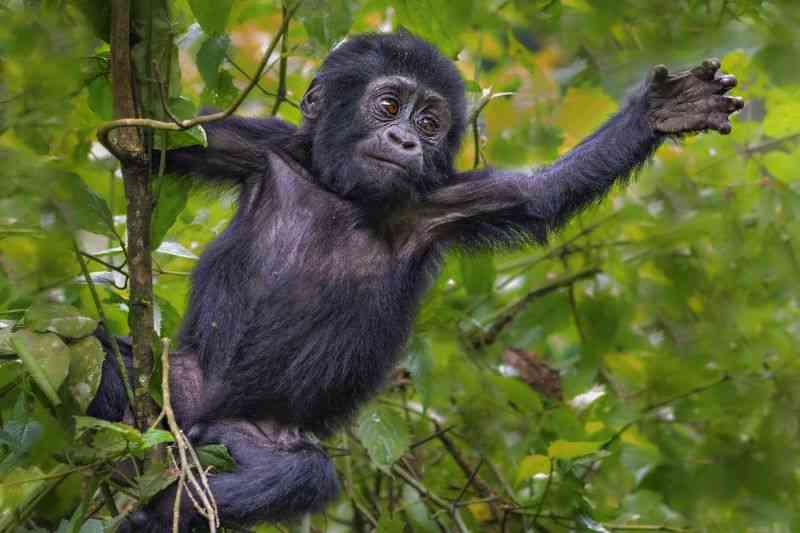
Groups of 6, led by your guides and rangers, head into the Bwindi Forest. This is one of the most biologically diverse areas on Earth and apart from gorillas, it is home to other primates including chimpanzees, blue monkeys, vervet monkeys and black-and-white colobus monkeys. It is a challenging trek through the thick undergrowth, but the effort is richly rewarded when you encounter a family group of gorillas and get to spend an hour in their presence. You sit quietly by and watch them go about their life, from the giant, regal silverback to the youngsters. A truly unforgettable experience.
When you are not trekking, your time is free to relax on the shores of the stunning Lake Bunyoni. Swim in the refreshing waters, go out on a kayak, or explore the surrounds on a mountain bike. You can also take a day trip to neighbouring Rwanda or visit the Batwa Pygmy people, original inhabitants of the Bwindi forests, relocated to some of the islands on the lake in the name of gorilla conservation.
Note: The Gorilla Trekking permit is not included in the overland tour price.
After a memorable few days, our Overland Camping Safari departs beautiful Lake Bunyonyi and heads to another of Uganda’s beautiful water bodies, Lake Mburo in the west. We stay at a scenic campsite on the outskirts of Mburo National Park, which is a paradise for birdwatchers boasting numerous bird species, including the rare and odd-looking shoebill stork. Relax with a refreshing drink as you listen to the melodic symphony of the birds and soak in the panoramic vistas from the camp restaurant.
Today, our journey takes us back to Jinja, second-largest city in Uganda, and back to our stunning campsite on the riverbank, surrounded by lush rainforest with breathtaking views of the Victoria Nile and the stunning Kalagala Falls. We will stay here for two nights to relax and enjoy the many activities on offer in Uganda’s adventure capital.
You may opt to just relax at the resort or choose from a variety of exciting adventure activities. Most popular option is a thrilling half-day white-water rafting expedition through the legendary rapids of the Nile River. Alternatively, you can try river bugging, kayaking, or take a more sedate boat cruise to explore Lake Victoria and uncover the source of the White Nile. Adrenaline seekers may like Bungee Jumping. If you prefer to stay on solid ground, you can go Horse Riding or Quad Biking.
Day 44 of our Johannesburg to Nairobi & Gorillas Safari takes us back into Kenya. Our last night will be spent at a campsite in Eldoret, which is the fifth-largest city in Kenya lying at an elevation of 2,100 meters (6,890 feet) above sea level. This altitude has meant that Eldoret is the hometown of many famous Kenyan athletes, including Olympic champions. As a result, the city has become a hub for high-altitude training camps that attract athletes from around the world.
Day 45 sees us make the final journey southeast, back to Kenya’s capital city, Nairobi. This epic tour ends upon arrival in Nairobi.
The Itinerary is flexible and can be changed without notice to accommodate the best possible viewing of the Mountain Gorillas. The Permit price to visit the Gorillas can also change without notice.
We recommend booking your incoming and onward flights at least one day before and after this Johannesburg to Nairobi & Gorillas Camping Safari is scheduled. It is advisable to arrive the day before departure from Johannesburg and fly out the day after the overland tour ends in Nairobi to allow for delays and changes.
Simply ask your friendly travel advisor to add pre-tour and post-tour accommodation to your safari booking.
This northbound Johannesburg to Nairobi & Gorillas Tour is also available in the opposite direction, starting in Nairobi and ending in Johannesburg.
This Camping Overland Tour is also available as a Lodge Overland Tour which follows the same itinerary and stays at comfortable lodges instead of camping.
For more details contact African Budget Safaris
The Great Wildebeest Migration is one of the most impressive natural events worldwide, involving an annual movement by millions of wildebeest, accompanied by large numbers of zebra, and smaller numbers of Grant's gazelle, Thompson's gazelle, eland, and impala. These move in an irregular pattern from the Serengeti National Park in Tanzania to the Masai Mara National Reserve in Kenya.
This migration is a dynamic process where you'll see not only daily life and death struggles as the herds traverse plains, hills, and rivers, but also the world-class predators that follow them, including lions, hyenas, and crocodiles.
It is important to note that the timing of the Great Migration of Africa varies each year, with the best viewing usually between June and August when the wildebeest cross the Grumeti River in Tanzania and between July to September when they cross the Mara River between Tanzania and Kenya. Given the fluidity of the migration, it's advisable to consult our safari experts to get the most up-to-date information and advice on planning your trip
For a more detailed understanding of the Great Wildebeest Migration, check out the comprehensive guide to The Great Migration in Africa
For up-to-date and confirmed pricing info for optional items, please drop us an enquiry.
This tour does not take children.


Visit top scenic and wildlife highlights through Uganda & Gorillas, Kenya, Tanzania, Zanzibar, Malawi, Zambia, Vic Falls, Botswana, ending in Johannesburg on this epic Africa Overland Camping Tour

Epic Lodge Overland Tour from Johannesburg to Botswana, Victoria Falls, Zambia, Malawi, Tanzania, Kenya, and a Uganda Gorilla Safari, ending in Nairobi, Kenya.

Southern Africa's best Camping Overland Tour, this Eswatini, Lesotho & South Africa Safari, travels from Kruger to Cape Town on an epic Africa Overland Tour

Starting and ending in Johannesburg, visit Botswana’s great Okavango Delta, view wildlife in premier reserves of Botswana, Zimbabwe and South Africa and soak in Southern African scenery and culture.
Budget Overland Africa Tour from South Africa to Tanzania (Johannesburg to Zanzibar) - a camping safari through Botswana, Zimbabwe, Zambia, Malawi & Tanzania
This Botswana Wildlife, Okavango Delta & Victoria Falls Safari takes you to Botswana's Okavango Delta, Khama Rhino Sanctuary, Nata & Chobe Park, then to Victoria Falls on an affordable, overland camping experience.

An affordable Botswana & South Africa Safari, this Camping Overland Tour travels to the Okavango Delta, Chobe, Kalahari Desert, Kruger & Victoria Falls Africa
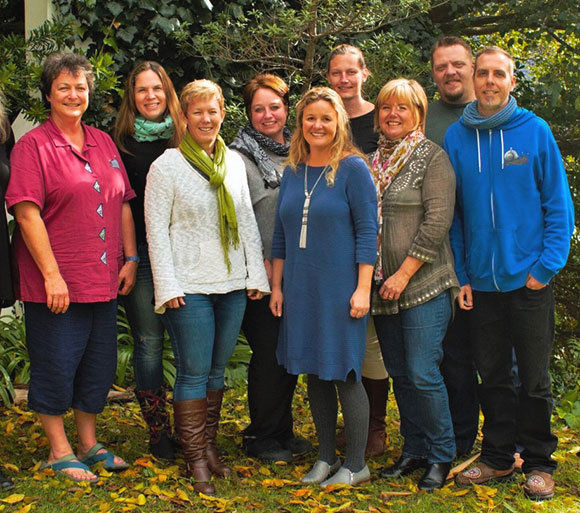
Our team has the destination knowledge to help you plan an unforgettable African adventure. We're based in Cape Town and ready to help.
We can also plan you an affordable private group or tailor-made tour. We built our business on turning luxury travel into affordable travel.