

Book by 30/04/2024 for travel from 01/06/2024 onwards and Find out more
Book by 30/04/2024 for tour departures before 31/05/2024 & Find out more
This budget East African camping safari explores Kenya and Uganda visiting top game parks and travel destinations in these scenic and diverse countries.
Go Gorilla Trekking to encounter the endangered mountain gorillas of Uganda in Bwindi Park's ancient forests - an unforgettable wildlife experience! In Uganda we also go game viewing in Queen Elizabeth National Park and trek for chimpanzees in Kyambura Gorge.
In Kenya the highlight of this affordable camping tour is game viewing in the world-renowned Masai Mara National Reserve, a beautiful game park covering vast grassy plains teeming with wildlife. The Mountain Gorillas & Masai Mara Safari also travels through the Great Rift Valley and stops at Lake Nakuru National Park to see its abundant birdlife and wild animals.
A wildlife, cultural and scenic African Safari Trip of a lifetime!






This Mountain Gorillas & Mara Overland Camping Safari starts in Kenya’s bustling capital city of Nairobi.
Nairobi, known as the "Green City in the Sun", has in recent years undergone rapid growth and is today not only Kenya’s largest city but also the most populated city in East Africa. We recommend that you arrange to arrive a day or more before the safari begins, giving you time to rest and explore the relatively small city centre of Nairobi. Practice your bargaining skills at Nairobi’s fascinating market, browse its bookshops and craft stores, or sit back and relax at one of the numerous cafes and restaurants in the city. Meet the friendly people of Kenya, the most popular travel destination in East Africa, keeping an ear out for the Swahili “Jambo” which means hello. Kenya has long had a well-established tourism industry and you’ll often hear the words ‘Hakuna Matata’, meaning no problem.
Leaving Nairobi early on day one, we travel northwest descending into the vast Great Rift Valley. Stretching around 6000km’s in length from Southwest Asia to central Mozambique, the Great Rift Valley is a massive natural feature offering spectacular scenery. We make our way to the compact Lake Nakuru National Park in the Great Rift Valley, pausing along the escarpment to take in the stunning views.
Nakuru Park is best known for the impressive number of migratory flamingoes that sometimes gather along the shores of the shallow lake. Lake Nakuru National Park hosts over 400 other bird species, including the Great White Pelican, Grey-crested Helmet-shrike, African Spoonbill, Yellow-billed Stork and Long-crested Eagle. The Nakuru National Park is also home to black and white rhino, lion, leopard, buffalo and various antelope species, in addition to python snakes and smaller wild animals such as warthog. We take a game drive in Lake Nakuru National Park with local guides in smaller safari vehicles.
Having experienced the rich birdlife and diverse wildlife of Nakuru, we drive northwest on day two, to our next stop - the rapidly expanding town of Eldoret. Crossing the equator along the way and stopping to take photos, we head to our camp located in the hills near Eldoret, an area once inhabited by the ancient Sirikwa tribe.
Today we travel west into landlocked Uganda, home to the world’s highest concentration of primates, including the endangered mountains gorillas.
Driving through scenic landscapes is easy to see why Winston Churchill called Uganda the ‘Pearl of Africa’ when visiting this beautiful green country in 1907. Uganda boasts diverse terrains, from dense forests and high mountains to lush plantations and fertile terraces. Lake Victoria, recognized as the source of the Nile in 1858 when British explorer John Hanning Speke visited its shores, also lies in Uganda.
We make our way to hilly Kampala, the tourist-friendly capital city of Uganda. Kampala is the largest city in Uganda, bustling with markets, street-side traders, Matatu (mini-bus taxi) stands, ethnic restaurants and more. Meet the friendly people of this confident, safe and lively African city.
From Kampala, we travel west to Queen Elizabeth National Park crossing the Equator again along the way. Our drive takes us through the fertile Ugandan countryside of green terraced hillsides, lush banana plantations, steep mountains and dense forests. Arriving at our camp near Queen Elizabeth National Park on day four you are free to explore the area on foot, visit the local community or simply take it easy.
On the morning of day five, we embark on a game drive in search of the Uganda Kob antelope, as well as elephant, lion, buffalo, hyena and hippo. Enjoy spotting a variety of wildlife and birds in Queen Elizabeth National Park, which overlooks Lake Edward, Lake George and the mountains between Uganda and central Africa to the west.
Then we visit the nearby Kyambura Gorge to track chimpanzees. Unlike the larger gorillas, chimps spend most of their time in the trees, therefore we watch them high up, from a distance. Seeing man’s closest relative in the wilds is, however, a rare and memorable experience. The chimpanzee treks are conducted in groups of eight people, therefore you may go trekking on the afternoon of day four, the morning or afternoon of day five, or the morning of day six (depending on the size of your safari group).
Continuing into the heart of the breathtaking Kigezi Highlands of Uganda we arrive at scenic Lake Bunyonyi, our base for mountain gorilla trekking. The ancient valley of Lake Bunyonyi in the Kigezi Highlands region, known as the “Switzerland of Africa”, is a picturesque birding paradise. In fact, the word Bunyoni means “the place of many little birds”.
This African region is home to half of about 1000 wild mountain gorillas remaining in the world today. We will visit Uganda's Bwindi Impenetrable National Park, where many of these endangered primates are found (occasionally we travel into neighbouring Rwanda to trek for the gorillas).
We spend an unforgettable day trekking these gentle primates – one of Africa’s most unique and intimate wildlife encounters. When not trekking you are free to relax at the camp and enjoy optional activities at Lake Bunyonyi. Dotted with 29 islands, Bunyonyi is one of the deepest lakes in Africa, surrounded by lush hills.
On day nine we make our way back to Kampala, after our once-in-a-lifetime wildlife encounter with the extremely rare gorillas. We drive through green landscapes, crossing the equator and skirting the northern shores of Lake Victoria. Enjoy the city's nightlife, sample some Ugandan cuisine and mingle with the friendly locals.
On the day of our gorilla trek in Uganda, we meet with our local guide and tracker, early in the morning.
We set off in small groups, trekking into the dense Bwindi rainforest on foot. The mountain gorilla trek takes us through the uneven and hilly rainforest, which means that the going can get a little tough at times. A reasonable level of fitness is therefore required for the trekking excursion. The rare privilege of spending time with a family of endangered mountain gorillas in their natural habitat makes the effort of trekking well worthwhile!
The experience of trekking mountain gorillas in the wild is for many travellers the most exciting and memorable African wildlife encounter on safari!
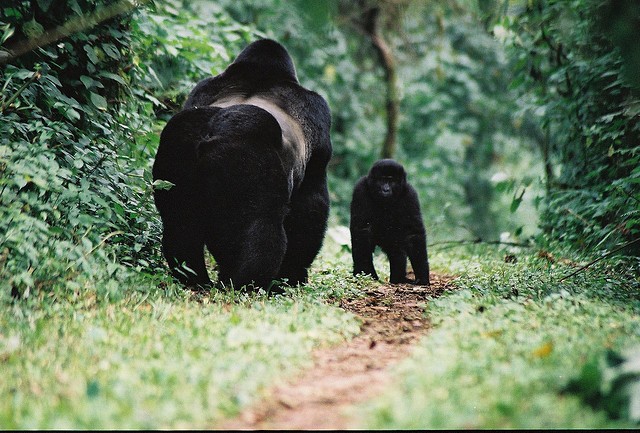
Once we locate a mountain gorilla family or group in the rainforest, we usually crouch down or sit and simply watch these gentle primates for about an hour. The time we are able to spend with the gorillas is regulated by the Uganda Wildlife Authority (the national body that controls and maintains the gorilla population in Uganda). These gorillas are social animals, living in groups of 12 to 20 individuals. The groups are usually led by an ‘alpha male’, known as the ‘silverback’, due to the silver hair growing on the male gorilla's back when he matures.
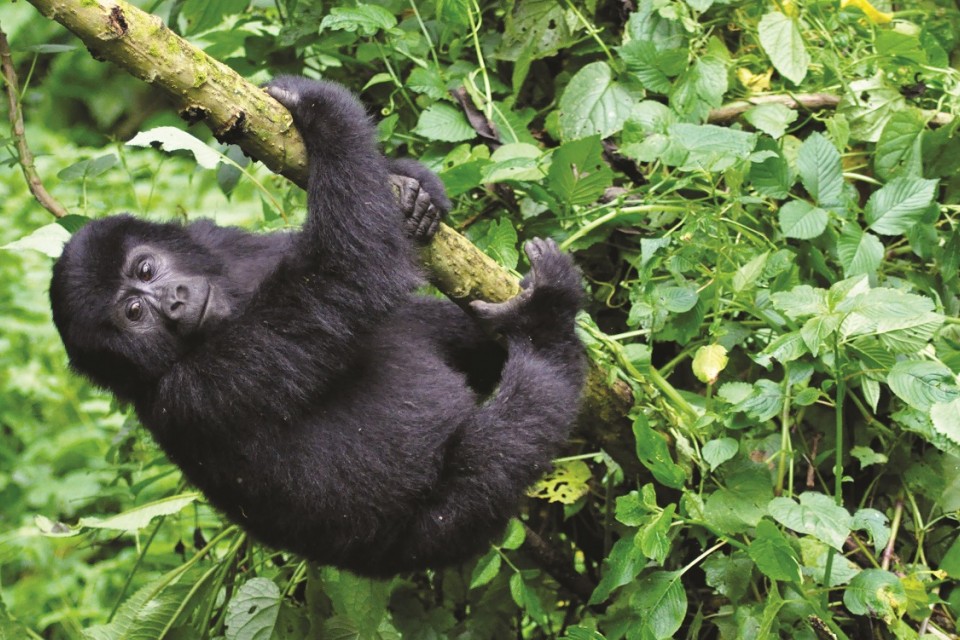
Observing the mountain gorillas from up close, you will see how remarkably human-like they seem. The way that the gorillas interact with each other and the young primates ‘play’ especially resembles human behaviour! You are allowed to take photographs (without a flash) and restricted use of video camera is permitted.
The gorilla trekking permit allows you one trek and gorilla viewing (limited to an hour with the gorillas). Due to strict limits on the daily number of visitors viewing the gorillas, we may spend several days at our Lake Bunyonyi base, allowing time for all our group members to experience gorilla trekking and viewing. The Bwindi Impenetrable Forest, is a UNESCO World Heritage Site, hosting one of the world’s highest diversity of species. Bwindi’s primaeval forest is home to half the world's population of highly endangered Mountain Gorillas.
Travel on to Jinja where we camp on the grassy banks of the Nile River at its source, Lake Victoria. The longest river in Africa, the Nile flows from Lake Victoria over 4132 miles through Uganda, Sudan and Egypt to the Mediterranean Sea.
From camp, you have the option of taking a rafting day trip - a thrilling whitewater rafting experience. You also have the chance to volunteer at a local schools project, making a difference to local children. This Softpower Project is a locally run voluntary program aimed at building and improving schools in the Jinja area of Uganda. Your help painting or plastering for a few hours is always most welcome. Other exciting activities at Jinja include quad biking, mountain biking, village walks and even bungee jumping! Days 11 and 12 are free for you to do optional activities of your choice.
After our thrilling adventures in Jinja, we journey back into Kenya on day 13. Travelling to our camp near Eldoret.
We spend day 14 travelling south to Nairobi and our camp just outside the capital city. Tonight you can sample the lively nightlife of Nairobi and eat out at the famous Carnivore restaurant.
On day 15 there is free time for you to explore Nairobi, sightseeing and stocking up on supplies. Your safari guide can help you make arrangements for activities today. Enjoy some shopping, browse the busy markets, walk around the city centre and visit the National Museum of Kenya. Take a game drive in the compact Nairobi National Park or go to the renowned Daphne Sheldrick Elephant Orphanage to see young rhinos and elephants up close. Other popular activities include visiting the Langata Giraffe Centre and the Karen Blixen Museum nearby. The mega-city is known for its nightlife, so head out for dinner, a drink and some dancing in one of the many clubs.
Tomorrow we transfer to smaller safari vehicles that are more suitable for exploring the Masai Mara National Reserve.
Take a scenic drive through the Great Rift Valley lapping up the beautiful scenery en route to the Masai Mara National Reserve. One of Africa's top safari destinations, Masai Mara is famous for its large populations of big cats, savannah landscapes and the Great Migration.
The next two nights are spent camping on the outskirts of the world-renowned Masai Mara Reserve, home to Africa’s Big Five - elephant, lion, rhino, buffalo and leopard. Our days are filled with game viewing drives in search of the abundant wildlife found in this 1510 km² game park.
The Masai Mara offers the idyllic African scenes shown in movies, consisting of wide-open plains dotted with Acacia trees and thickets of vegetation; as well as fertile riverine woodlands along the meandering Mara and Talek rivers. Anywhere we go in the Mara we will see numerous wild animals including Masai giraffe, wildebeest, baboons, warthogs, bat eared foxes, grey jackals, spotted hyena, topis, impala and hartebeests.
The Masai Mara is known for its’ annual Wildebeest Migration, when thousands of wildebeest, zebra and other herbivores stampede across the plains in search of fresh grazing. They migrate north from Tanzania’s Serengeti in about July and return south crossing the Mara River in about November. This dramatic migration is one of the most impressive wildlife spectacles in the world, especially seeing the grazers plunge into the Mara River inhabited by crocodiles and hippos. An impressive number of predators and scavengers, such as lion cheetah and hyena, follow the herbivore migration adding to this truly spectacular sight.
The Masai Mara Reserve is home to huge numbers of elephants, buffaloes, zebras and hippos, making for superb bird watching and game viewing all year round. Lions are also commonly sighted as they lounge around after a heavy meal, or search the plains for their next prey. Cheetah and leopard are fairly common in Mara, although these more elusive cats are harder to spot.
On the last day of the Mountain Gorillas & Mara Overland Camping Safari, we leave the Masai Mara Game Reserve behind. Making our way back across the Great Rift Valley we travel to our final safari stop - Nairobi.
The day-to-day running order of the itinerary may vary from the above order, depending on the availability of gorilla permits.
Occasionally we may visit a neighbouring country, such as Rwanda, for the gorilla trek and this may involve extra visa fees. We do our best to let you know about any major changes to the tour itinerary before the safari departs.
This tour comes with a Mandatory Adventure Pass, which is charged in addition to the tour price. This Mandatory Adventure Pass, includes major tour highlights and activities. The Adventure Pass can be pre-purchased when booking your tour, or at the start of your trip, payable in cash, directly to your tour guide.
Contact African Budget Safaris for a detailed and up-to-date itinerary description, including everything that is covered by the Mandatory Adventure Pass. See full pricing info above for Mandatory Adventure Pass pricing.
Transport on this tour is in a 24-seater, custom-built safari truck for 13 days. The self-contained truck is fitted with onboard tables, individual lockers (70-litre) and a freezer, as well as safety features. The safari truck also features plug sockets, a library and an i-pod jack. On the last 3 days of the tour transport is in smaller safari min-vans that are more suitable for the game viewing trip to the Masai Mara Nature Reserve.
The group prepares these meals in camp and help with preparation is invited. Most dietary requirements can be catered for on the road, upon request at the time of booking.
Some of our National Park visits and game viewing drives are conducted using local services, to ensure the best quality game driving and to comply with local authority rulings. Especially in the Masai Mara, where smaller, lighter vehicles are used as they are better suited to the narrow tracks and routes within the game park. Using local African guides and service providers also adds to our safari experience and allows us to contribute to the local communities.
Please note that the Wildebeest Great Migration is seasonal. As a natural wildlife phenomenon, it is fluid and unpredictable. For this reason, seeing the Great Migration cannot be guaranteed.
The wildebeest and other wild herbivores migrate between Masai Mara in Kenya and Serengeti in Tanzania. These herds move in a massive circular route covering some 1200 miles (1931km). It is a continuous movement of wildlife that can be seen in different areas at different times of the year. During certain phases of this annual trek the animals disperse or slow down, whilst at other times the migration picks up speed, with the herds becoming larger and denser. Not only does the Wildebeest Great Migration vary from place to place and season to season but the movement of these large wildlife herds varies from year to year.
Please talk to a travel expert from African Budget Safaris about seeing the Wildebeest Great Migration on your safari to find out more. Also, check out our detailed article about the Great Migration in Serengeti and Masai Mara.
For up-to-date and confirmed pricing info for optional items, please drop us an enquiry.
Lake Bunyoni, Uganda
Jinja, Uganda
This tour does not take children.


The best Budget Africa Overland: an epic camping tour of Kenya, Uganda, Tanzania, Zanzibar, Malawi, Zambia, Zimbabwe, Botswana, Namibia & South Africa
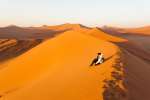
From Nairobi travel through Tanzania, Zanzibar Island, Malawi, Zambia, Victoria Falls, Botswana, Namibia and South Africa for epic scenery and diverse wildlife on this budget Overland Camping Safari.

Starting and ending in Kenya's Nairobi this Kenya & Mountain Gorillas Camping Safari visits Lake Nakuru National Park travelling through the Great Rift Valley. Go Mountain Gorilla Trekking in Uganda, see Lake Bunyoni and explore Kampala.

Visit top scenic and wildlife highlights through Uganda & Gorillas, Kenya, Tanzania, Zanzibar, Malawi, Zambia, Vic Falls, Botswana, ending in Johannesburg on this epic Africa Overland Camping Tour
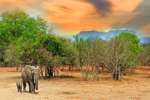
From Nairobi travel through Kenya, Uganda & Gorillas, Tanzania, Zanzibar Island, Malawi & Zambia, ending at majestic Victoria Falls, for epic scenery and wildlife on this budget Overland Camping Safari.
Our team has the destination knowledge to help you plan an unforgettable African adventure. We're based in Cape Town and ready to help.
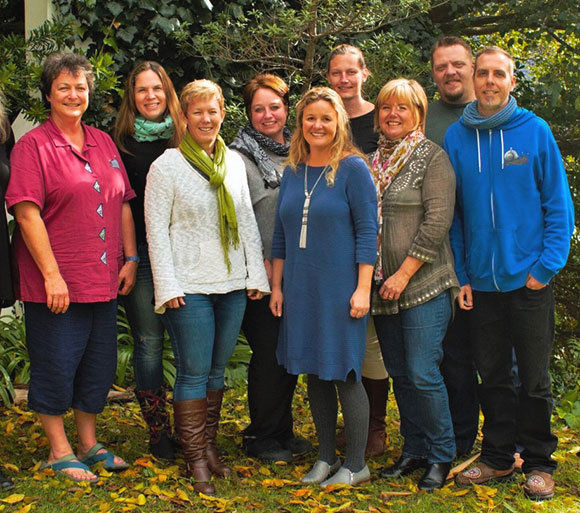
We can also plan you an affordable private group or tailor-made tour. We built our business on turning luxury travel into affordable travel.
