
This Budget Namibia Camping Safari is ideal for nature-loving adventure-seekers and families travelling on a budget.
Namibia Safari Highlights:
Discover the best of Namibia–from spectacular Namib desert landscapes to memorable cultural experiences and exciting wildlife adventures in Etosha!

__large.jpg "Camping in Etosha")

You will be collected from your accommodation in Windhoek city at 7:15 and driven to a backpackers lodge in Windhoek for a short pre-tour meeting. From here we start our 6-day Namibia Camping Safari adventure heading north towards Okonjati Nature Reserve. Along the way, we will stop in the small town of Okahandja to visit the Mbangura Woodcarver’s Craft Market hosting the largest collection of wood carvings in Namibia. Here, craftsmen from across Namibia showcase their beautiful creations, large and small. At the market, you can choose an authentic Namibian souvenir whilst supporting the local artists and communities.
We move on to our overnight camp at Mt. Etjo, located next to the private Okonjati Game Reserve. After setting up our camp and enjoying lunch we’ll drive to the nearby lodge to explore the gardens and have a refreshing swim in the pool. The Mount Etjo Safari Lodge, built in attractive Moroccan style, has beautiful views of the Etjo mountains, a real oasis with palm trees and sprawling green lawns. The main lodge area is set amid small lakes that are home to a small bloat of hippos, a rare sight as hippos are not natural inhabitants of this semi-desert part of Namibia. It provides the fun opportunity to see and photograph this iconic African species without having to travel to the northern reaches of Namibia.
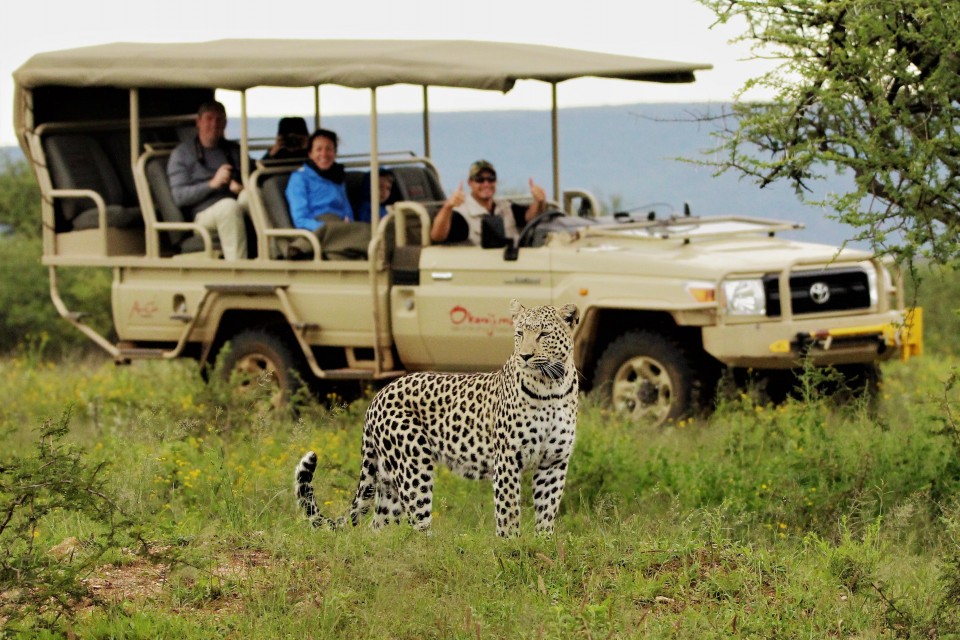
Time for our first afternoon game drive of about three hours to explore the reserve in an open 4x4 safari vehicle – driven by our experienced local guide. The 36,000-hectare reserve is home to about 6,000 animals and offers beautiful scenery. The terrain of the reserve is dotted with massive red and grey termite mounds. The area is rich in indigenous vegetation, primarily Vachellia (formerly Acacia), thorn scrub, and mopane woodlands. Okonjati Nature Reserve is largely free of invasive vegetation, which the resident shrub-browsing species graze on.
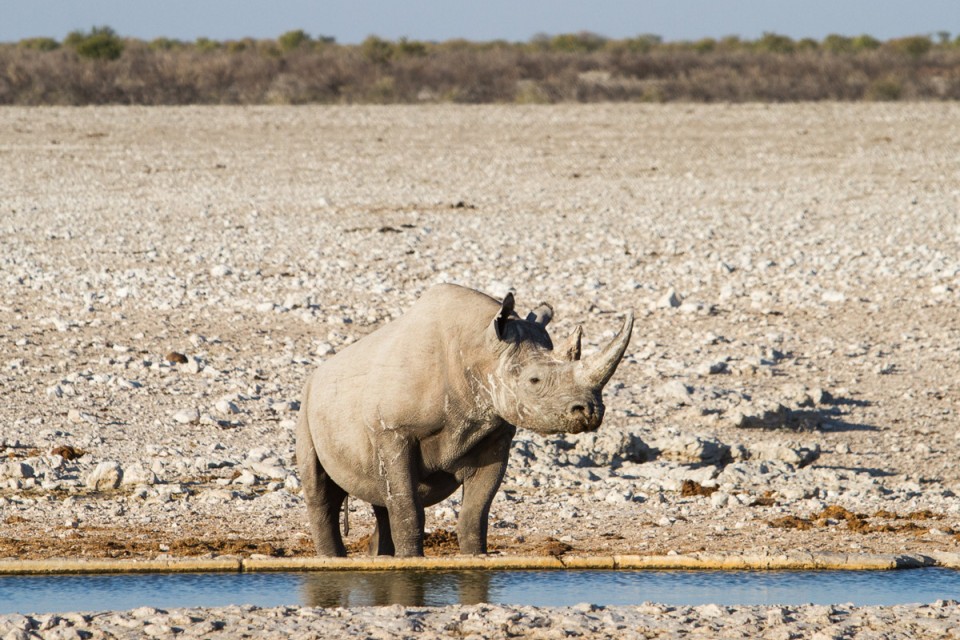
We’ll see typical Namibian wildlife - kudu, gemsbok, springbok, and the stately impala. Rare species like black rhino, sable, roan, lechwe, and nyala can also be seen. Open landscapes with grassland savanna, crisscrossed with many dry streams and riverbeds allow for the perfect game viewing experience and make photographing wildlife a pleasure. We might encounter elephants and rhinos, as well as giraffes, wildebeests, warthogs, steenbok, and the charming damara dik-dik (a tiny antelope). Animals and birds are plentiful and easy to spot in the bush and at the seasonal waterholes.
Pristine bush and wildlife under the iconic African big skies, it doesn’t get much better than this. Late afternoon we’ll stop to enjoy a magical Namibian sunset with drinks and snacks, before returning to our campsite to relax and enjoy a mouthwatering dinner, cooked by our guide over an open fire under the stars.
After dinner, we return to the lodge to see the resident lions up close. These big cats live in a large enclosure where they are able to hunt, and we get to watch them from a secure hide. This close-up view offers a fantastic opportunity to photograph the lions having an extra snack. From here, we drive back to our camp for a well-deserved rest. After an active and satisfying day, we spend our first peaceful night in Namibia sleeping under the stars.
This morning, we depart from camp after breakfast and stop briefly at Otjiwarongo, a small town en route, as we drive north to Etosha. In Otjiwarongo we gather some fresh supplies, before continuing to Etosha National Park, one of Southern Africa’s premier wildlife reserves.
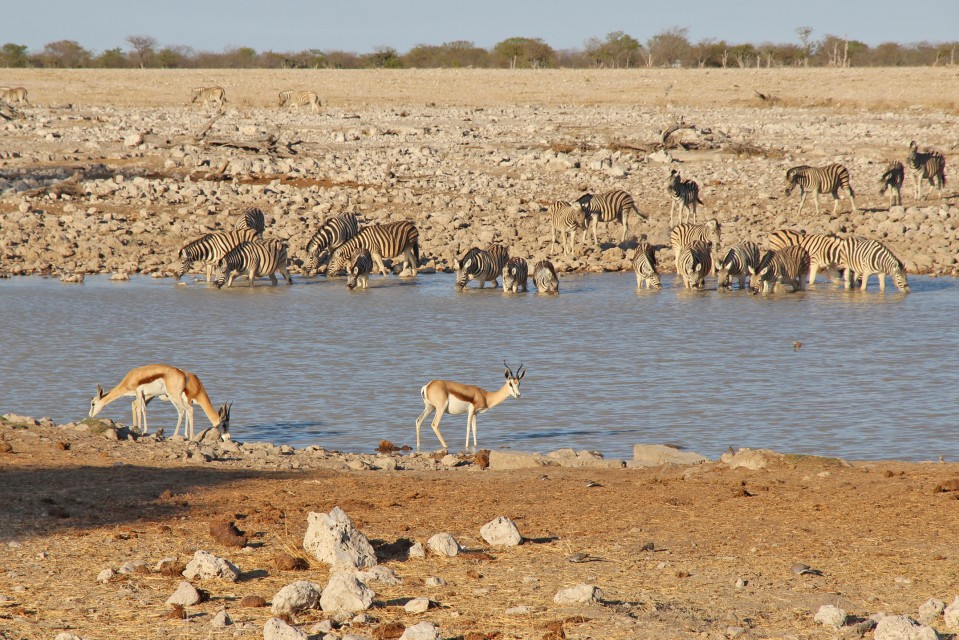
As soon as we enter Etosha the game viewing begins. We start our search for antelope, such as springbok and impala and with any luck, some megaherbivores such as elephant, rhino or giraffe, on our short game drive to Okaukuejo. Arriving at Okaukuejo, we set up camp and enjoy a delicious lunch before heading out on an afternoon game drive. Etosha is unlike any other park, and our game drives take us from waterhole to waterhole in search of predators as well as plains game, birds and if we are lucky, even reptiles.
We return to camp just before sunset, and whilst dinner is cooking, we have the chance to visit the excellent floodlit waterhole where rhino, elephant, giraffe, lion and hyena are frequent visitors. Tonight we tuck into another tasty dinner cooked on the open campfire by our guide.
On day three we get a pre-dawn start. After a quick coffee and rusk, we set off on our full-day game drive in an open game-viewing vehicle at sunrise to catch a glimpse of predators returning after a night of hunting.
We drive through the national park, pausing at waterholes to watch for wildlife and birds. Later, we stop at a picnic site to have breakfast in the bush. Then we continue our game drive east in search of the many wild animals living in Etosha. When we reach Halali Camp you can take a dip in the pool, visit the waterhole and enjoy lunch.
After lunch, we visit the Etosha Pan where the national park gets its name. Here we can get out of the safari vehicle and experience this 4500 sq km ‘saline desert’. The salt pan is so large it can be seen from space. After exploring Etosha Pan on foot we return to Okaukuejo Camp, looking out for big game en-route. Our game viewing adventure comes to an end by sunset then we settle in for our final night of camping in Etosha Park. Tonight you can head to the floodlit waterhole at camp to watch for nocturnal visitors, including rhino, elephant, giraffe and other animals.
Today, we depart Etosha to explore more of Namibia’s highlights. After an early breakfast, we'll enjoy a game drive out of the park and back to the main road.
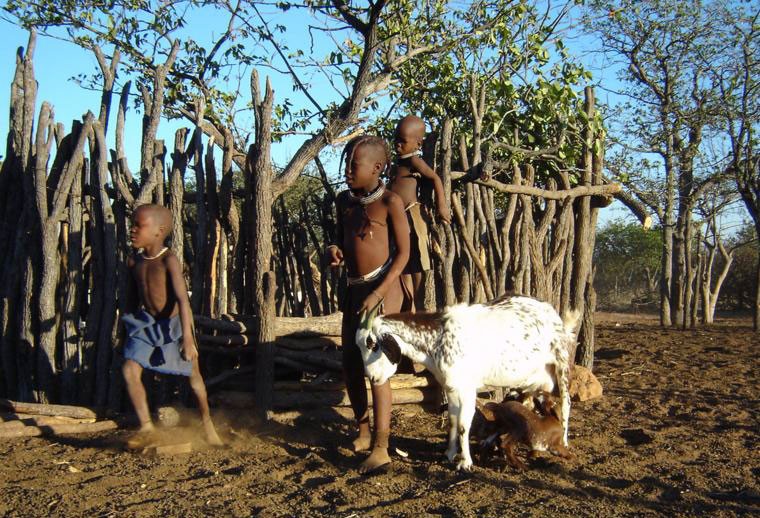
Our first stop is the Otjikandero Himba Village near Kamanjab. The Himba people traditionally inhabit the remote northern regions of Namibia, where modern influences arrived later, allowing them to preserve their ancient customs longer than many other African groups. Although many Himba have migrated south due to tourism and change, the Otjikandero village remains a living example of their traditional lifestyle. The village is not a historical exhibit but a real community, where the people continue to live according to their customs. We'll be welcomed into the village with a guided tour, and visitors are encouraged to ask questions and take photos, ensuring a respectful and authentic experience.
After visiting Otjikandero, we’ll stop briefly in Kamanjab before heading towards the stunning Etendeka Mountains and the Grootberg Pass. "Etendeka," meaning "flat top," refers to the mountain peaks that have distinctive flat tops. The area’s rocky terrain is a remnant of the ancient volcanic activity when the continents of Africa and South America split apart 180 million years ago. As we journey through this dramatic landscape, we’ll enjoy breathtaking views of the rugged terrain and the sweeping vistas of this ancient land.
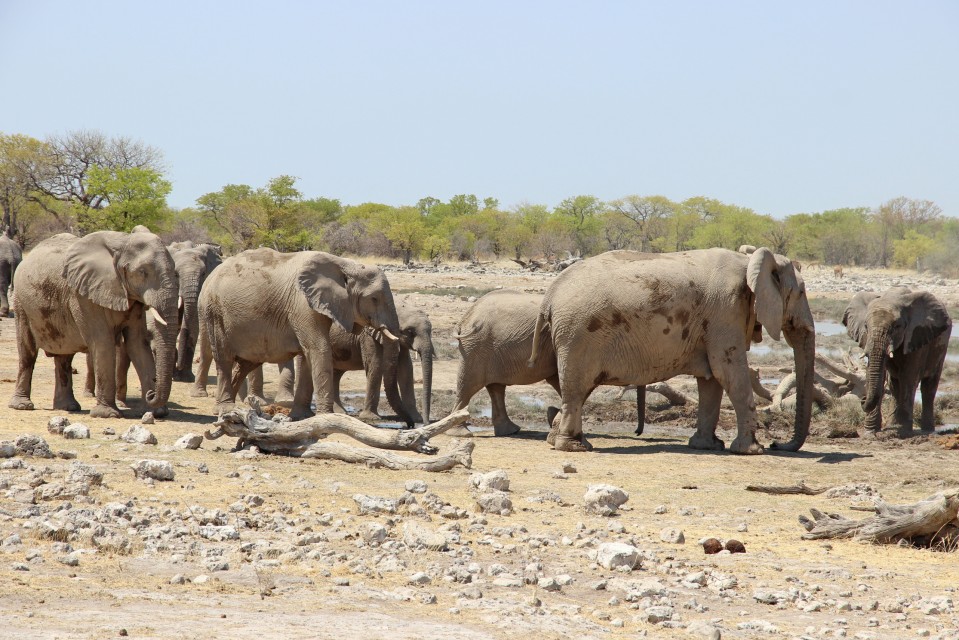
Our next destination is Palmwag Camp located along the Uniab River beneath the iconic makalani palm trees. This area is known for its desert-adapted elephants, who often visit the camp, sometimes coming close or even drinking from the swimming pool. We’ll arrive in the late afternoon, set up camp, and enjoy a sundowner, hopefully catching a glimpse of these majestic elephants.
We begin the final leg of our northern adventure today, heading west to the Atlantic Ocean and south to Cape Cross. Along the way we encounter stunning landscapes, passing through areas rich in unique vegetation. including Namibia's national plant, the ancient and drought-resistant Welwitschia mirabilis, some of which are over 1,500 years old.
Entering Skeleton Coast National Park through Springbokwasser Gate, we soon meet the harsh Atlantic coast. This desolate stretch, known for its shipwrecks, is shaped by powerful winds, waves, and fog, making survival here nearly impossible for shipwrecked sailors in the past.
We also encounter remnants of past ambitions. In the 1960s, entrepreneurs Jack Scott and Ben du Preez spent millions drilling for oil and later attempting to mine diamonds at Cape Cross. Both ventures failed, and we’ll stop to view their abandoned oil rig.
Leaving the park at the Ugab River crossing, known for its iconic gates, we continue south to Cape Cross, home to one of the world’s largest seal colonies where over 100,000 Cape fur seals can often be seen. These seals are found only in Namibia, South Africa, and Angola, and are near-endemic to Namibia. The Skeleton Coast hosts most of the global population. Cape Cross is an incredible, albeit smelly, stop on our journey.
The area is also historically significant, as Portuguese explorer Diogo Cão erected a cross here in 1485, marking it as "Cape Cross." Two replicas of the original cross stand today, with surrounding discs representing the Southern Cross constellation.
Our final stop of the day takes us inland to the breathtaking Spitzkoppe Mountain where will overnight at a camp with twin-share tents and shared ablutions. These striking granite peaks, rising from the surrounding plains, are famous for their stunning sunsets, sunrises, and excellent photography opportunities. After setting up camp, we’ll head into the mountains to capture the sunset before returning to camp for a well-earned dinner.
After breakfast and packing up camp, we head back to the coast and continue south toward Swakopmund, Namibia's adventure capital.
Our first stop along the coast is the wreck of the Zeila, a fishing trawler that was beached in 2008, 15 km south of Henties Bay. The ship had been sold for scrap and was under tow when the cable snapped, leaving it stranded on the beach. The wreck is close to shore, making it an excellent photo opportunity.
Further south, we stop to explore the unique lichen fields along the Skeleton Coast. Namibia boasts a world record for the number of lichen species, and the coast’s macro-lichen fields are some of the largest and most significant in the world. Lichen are a composite organism made up of algae and fungi, which rely on each other to survive in this harsh, arid environment. While the Skeleton Coast is known for its frequent fog, which provides moisture for the lichen, it rarely rains. The lichen are incredibly fragile, growing just 1 millimetre per year and easily damaged by foot traffic or off-road driving. Our guide will point out the areas we can safely explore, and we must take great care not to damage this fragile ecosystem.
After visiting the lichen fields, we continue on to Swakopmund, where we check into our accommodation at Hotel A La Mer, a historic property built in 1892.
Swakopmund is a charming town, nestled between the vast Namib Desert and the Atlantic Ocean. It retains much of its colonial German architecture, and German remains widely spoken. The town is small and easy to explore on foot, but there are many optional activities available. You can take scenic flights over the desert, try skydiving or quad biking in the dunes, or join a "living desert" tour to learn about the unique desert flora and fauna from a specialist guide.
Today we leave Swakopmund at 11h30 so we have the time to enjoy an optional activity. For the adrenaline junkies, this could be flying down a sand dune headfirst at 60km/h on a sandboard, exploring the dune field on a quad biking tour or discover the “old city” of Swakopmund on a fat bike (e-bike option available).
Whatever we choose, we depart Swakopmund no later than 11h30 and drive through the Namib Desert via the Kuiseb Pass, crossing the Tropic of Capricorn, stopping briefly in Solitaire and arriving at our camp late afternoon. We set up our tents, and enjoy the sunset over the Namib Desert while listening to the barking geckos. There is a pool and a bar at camp. Your guide makes you dinner and we get an early night.
We leave camp before dawn on day eight, heading into the desert to catch the sunrise over the orange-red dunes.
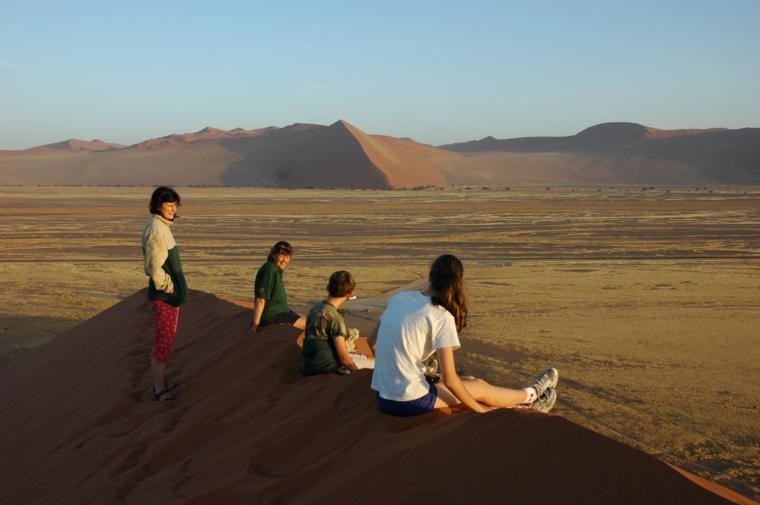
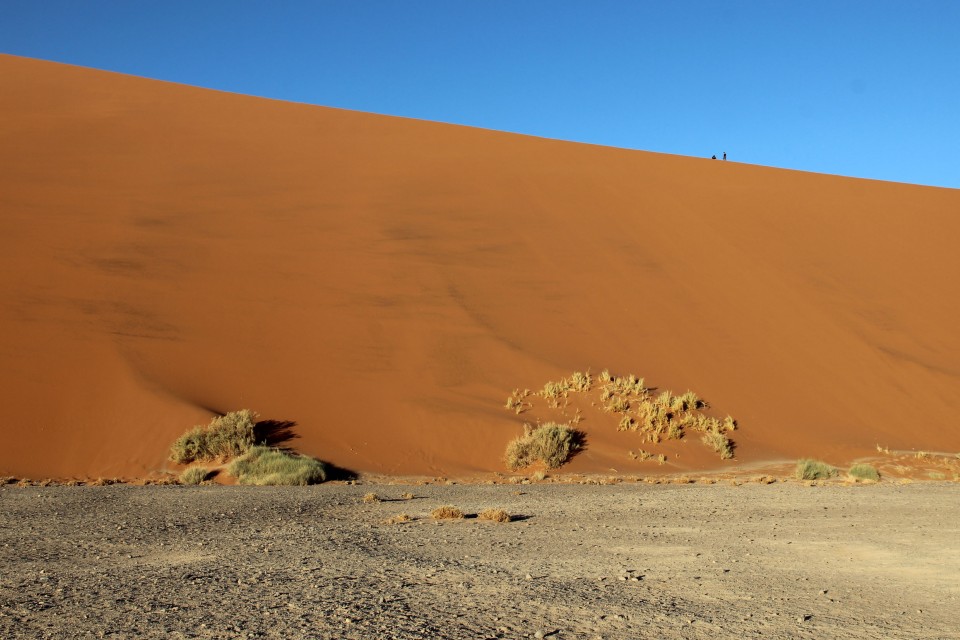
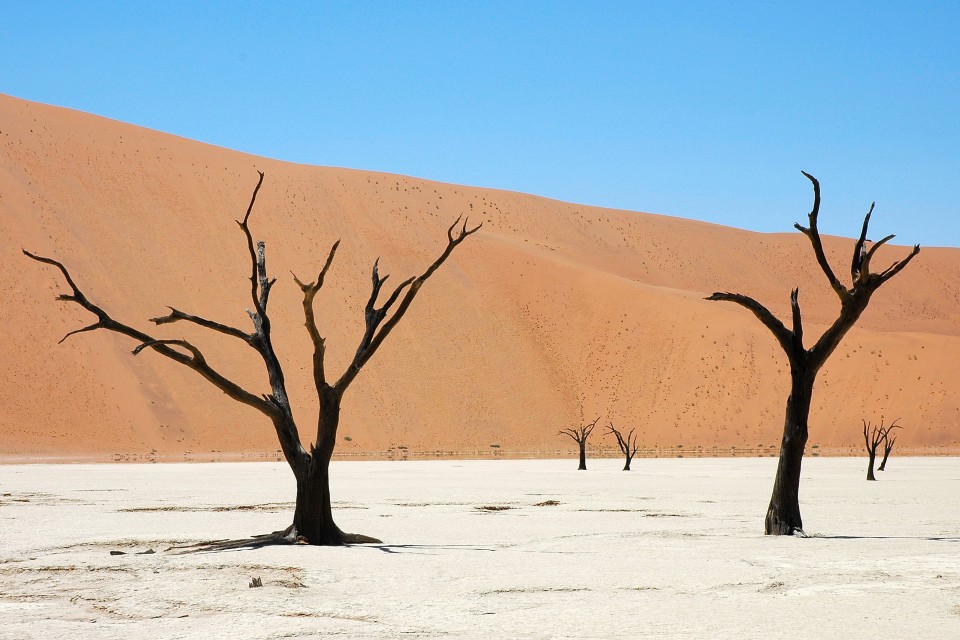
We drive down an ancient river bed, surrounded by towering dunes and our first stop is at the famous Dune 45 where we have the chance to climb to the top to enjoy the sunrise. On the descent, we replenish our energy and enjoy breakfast before continuing to the Sossusvlei area. Next, we explore Sossusvlei and Dead Vlei on foot, taking in the surreal desert landscapes. This is a place of stark contrasts with the dead thorn trees, white ground, tall orange dunes and deep blue skies. Walk across the cracked clay earth, bleached by the sun and try to capture the scene in photos.
We have the opportunity to climb the dune at Sossusvlei before we return to Sesriem for lunch and a swim or siesta during the heat of the day. Mid-afternoon we visit the Sesriem Canyon before your guide drops you at Elim’s Dune for a short and educational sunset walk back to camp through the desert. End the day with a tasty dinner made by your guide.
We pack up camp and enjoy breakfast before heading south through some of the most spectacular desert landscapes in Southern Namibia. Our destination today is the small outpost of Klein Aus, nestled in the Gondwana Sperrgebiet Rand Park. We arrive early afternoon and set up camp. For the active, there is a short optional unguided hiking trail. Permits and a map are available at reception. We enjoy a beautiful sunset and dinner cooked over an open fire.
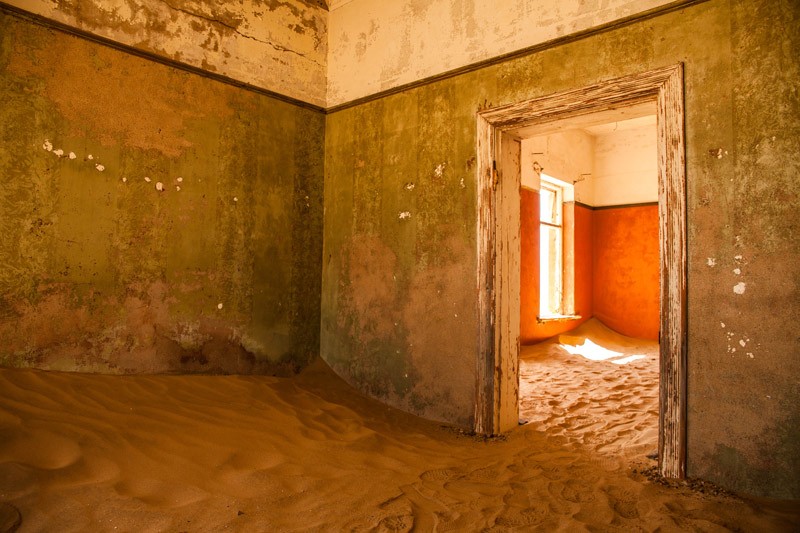
After an early breakfast, we make our way from Klein Aus to the ghost town, of Kolmanskop, situated 15km outside of Luderitz. During a diamond boom in 1910 Kolmanskop quickly became one of the richest towns in Africa boasting the southern hemisphere’s first X-ray machine, a bowling alley and luxury housing. As the diamond boom came to an end and the town’s inhabitants abandoned the area Kolmanskop became a ghost town.
After our tour of Kolmanskop, we continue our adventure to the small town of Luderitz, situated on the rocky shores of the Atlantic Ocean and well known for its unique and colourful colonial-style buildings. We stop at Diaz Point, the famous site of the Original Diaz Cross and enjoy a picnic lunch. On our way back to Aus, we scan the landscape for the famous wild horses of Namibia. It is a mystery how these horses ended up roaming the Namib Desert but miraculously they continue to survive in this inhospitable environment. With a bit of luck, we will get a glimpse of these wild horses which roam freely between Luderitz and Klein Aus. Arriving at camp in the late afternoon, there is time to relax and take in the sunset over the Aus Mountains with a sundowner.
We enjoy another early start this morning as we pack up camp and head east to the Fish River Canyon. Reaching the massive gorge we stop at the Hell`s Bend viewpoint to soak up the geological marvel. The Fish River Canyon is an impressive natural sight, being one of the world's biggest canyons. The Fish River Canyon Canyon is about 161 km in length and some 27 km wide, reaching depths of 550m in places. The canyon started forming along fault lines about 350 million years ago due to tectonic movement followed by water erosion.
After lunch, we continue our adventure heading to our last destination; The Quiver Tree Forest. It is located just north-east of Keetmanshoop and here approximately 250 quiver trees can be found. The forest grew spontaneously and the oldest trees are estimated to be around 200-300 years old. The quiver tree (Kokerboom in Afrikaans) is also Namibia’s national tree, and the forest was declared a national monument in 1995. On the final night of our Namibia Safari, we camp out under the stars near the quiver trees. This is an ideal location for stargazing and photographing the night skies. You can also get a permit to photograph the quiver trees at night (at extra cost).
After a tasty cooked breakfast, we start the day with a chance to really explore the Quiver Tree Forest and Giants Playground, a geological phenomenon of dolerite rocks that appear to have been stacked by giants. From here we begin our journey back to Windhoek passing Brukkaros Mountain, an extinct volcano which is 650m above the surrounding area. We pass through the small towns of Mariental and Rehoboth before arriving at the backpackers in Windhoek late afternoon. There is a shuttle option for those staying elsewhere within the city limits.
Namibia Safari Notes:
This tour does take children.
Child Rates are applicable to children Aged 5 to 11 who shares accommodation with 2 Adults only.
All Windhoek Departures | All Namibia Tours |
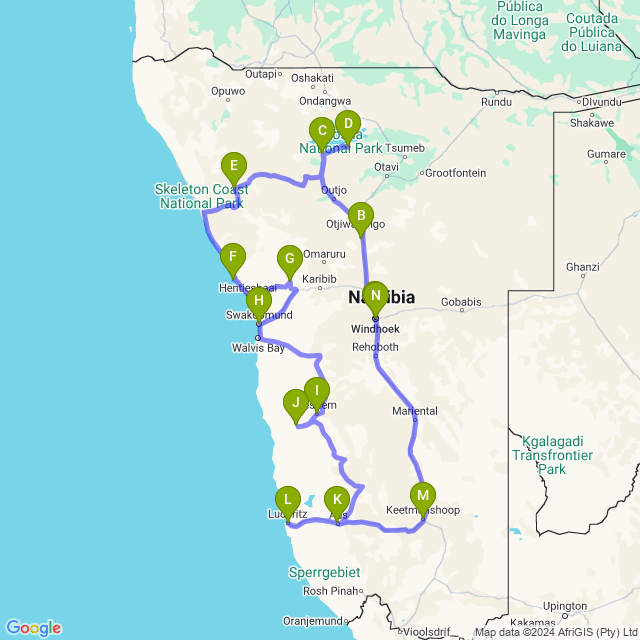

Explore Namibia’s stunning desert landscapes, coastal towns Luderitz & Swakopmund, and premier wildlife viewing at Etosha National Park on this budget Namibia Explorer Camping Safari.

Explore Namibia’s stunning desert landscapes, coastal towns Luderitz & Swakopmund, and premier wildlife viewing at Etosha National Park on this budget Namibia Explorer Safari while staying in excellent lodges.

The Namibia Self Drive Safari saves time and money. Explore Etosha, Namib Desert and more on an independent Namibia tour - accommodation and car hire arranged.
More on this 12 Day Self Drive Tour
An 11-day adventure through Namibia from Windhoek to Cape Town, South Africa with highlights Etosha gameviewing, Swakopmund activities, Namib Desert, Fish River Canyon and Ais Ais hotsprings.

From Windhoek to Etosha Park for game viewing, into rugged Damaraland, via the Skeleton Coast to Swakopmund for adventure activities. Explore the ancient Namib Desert, Fish River Canyon and Orange River, ending in Cape Town.

This Best of Namibia Safari Adventure is an Overland Camping Tour to Etosha Park, the Namib Desert, Swakopmund, Skeleton Coast, Twyfelfontein, Damaraland, Windhoek and more highlights with 2 nights of lodge accommodation.

A budget 9-day Camping & Lodge Safari in Namibia travelling to the best of Namibia's destinations - Etosha Park, Kunene, Skeleton Coast, Swakopmund and the Namib Desert's Sossusvlei and Sesriem.
More on this 9 Day Budget Camping Safari

This Budget Namibia Safari combines camping and lodge accommodation with highlights including a wildlife safari in Etosha Park, the Namib Desert and Fish River Canyon.
More on this 9 Day Budget Camping Safari

A fantastic voyage through the Namib Desert and Southern Namibia exploring Sossusvlei Dunes and arid desert landscapes, coastal Namibia and the Fish River Canyon on an unforgettable camping safari.
More on this 7 Day Budget Camping Safari
Our team has the destination knowledge to help you plan an unforgettable African adventure. We're based in Cape Town and ready to help.
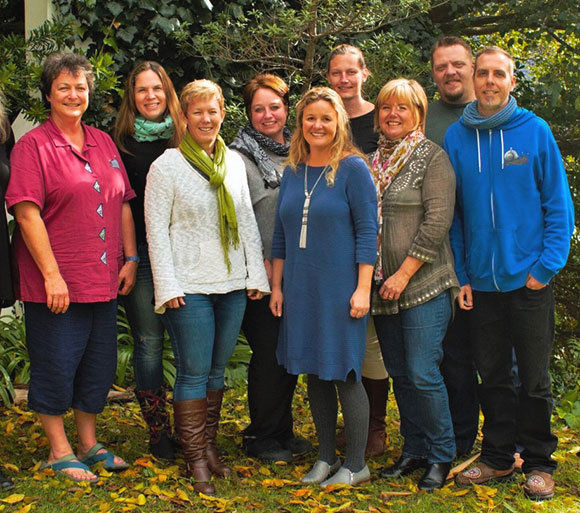
We can also plan you an affordable private group or tailor-made tour. We built our business on turning luxury travel into affordable travel.