Anybody who’s ever travelled anywhere knows how good it is to know a bit about the country you’re visiting, to gain some perspective and context. A visit to Robben Island, for example, will be a much richer experience if you’ve read Nelson Mandela’s Long Walk to Freedom. In the same way, William Kamkwamba and Bryan Mealer’s The Boy who Harnessed the Wind will change the way you experience Malawi (and the rest of Africa).
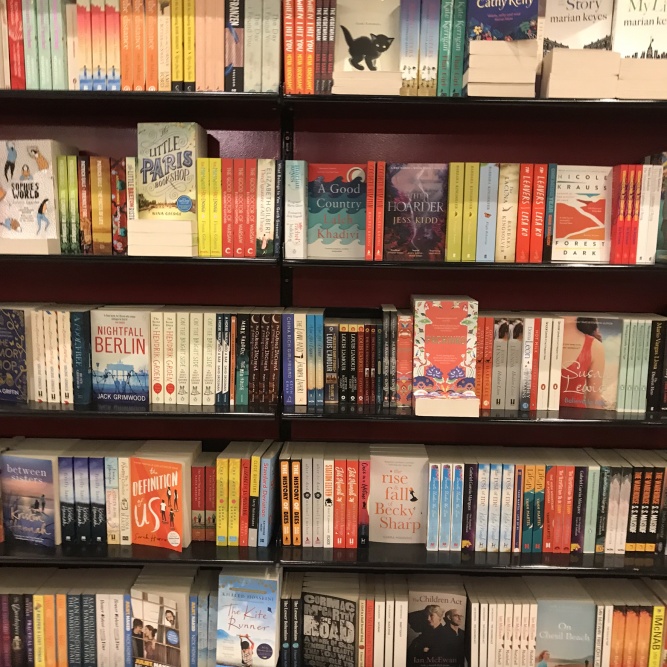
It’s a question our travel consultants often get asked: “What books on Africa do you recommend?” It’s a tricky question, purely because there are hundreds of great books on Africa and a smorgasbord of wonderful African authors and African literature. Be it fiction or non-fiction, historical, magical realism, young adult, murder, mystery or any other genre of literature, there are loads of titles to satisfy the most voracious leader.
We’ve tried, in this blog, to narrow down our list into our favourite 30. We’ve also tried to include a variety of genres set in most of the countries our safaris visit. They're divided into six broad genres:
We get it. The top attraction for going on safari in Africa is to see its incredible wildlife. So which books on African wildlife do we recommend? Again, so hard to narrow it down, but we’ve tried!

Peter Allison was a safari guide in Botswana’s Okavango Delta, so who better to write true tales of the African bush? In this book, made up of a series of essays, his love for Africa and his passion for protecting its animals shines through. It’s a funny, easy read, as he regales stories of some of the visitors he guided – from the fascinating to the outrageous.
Daphne Sheldrick and her husband David spent their lives campaigning against poaching and the conservation of wildlife in Kenya. In this book, Daphne writes about her life, the incredible relationships between the orphaned elephants at the David Sheldrick Wildlife Trust and their staff and the joys and hardships of living in Kenya.

A wonderful book written from the perspective of research (Gus) and what it's like to live in the bush for long stretches of time (Margie). Not only will you learn about hyenas, but also get an insider view of the beautiful and remote Kalahari Desert.
Back to the ellies, Lawrence Anthony was a South African conservation hero. This is the story of how he saved a herd of rogue’ elephants who were destined to be culled. It’s an incredible story of hope. The story is set in the Thula Thula Private Game Reserve in the KwaZulu-Natal Province of South Africa.
The author passed away in 2012 and the elephants – two herds of them – incredibly came to mourn him, walking for 12 hours through the bush to his house and standing vigil there for two days. Its a testament to his incredible relationship with these gentle giants and just how developed their ‘EQ’ is!
Africa has a long and fascinating history and many books have been written. Here we list just a handful of them.

One of Africa’s most well-known sons, the story of Nelson Mandela’s life is a must-read before visiting South Africa. He was incredibly wise and amazingly forgiving and this, the story of his life, written by him, gives one a glimpse into this great man’s mind and an overview of the dark history of Apartheid.
A fascinating book on the history of Africa since its independence from European colonial rule. The book was met with varying reviews when it was published in 2005 and is, perhaps now, a little outdated, but it’s a place to start if you’re interested in the more ‘modern’ history of Africa in relation to colonisation and, more importantly, decolonisation.
In April 1994, the Rwandan government ordered a mass murder of the Tutsi minority by the Hutu majority. 800,000 people were murdered over three months. Young journalist, Philip Gourevitch visited the country, interviewed survivors, those involved in the killings, politicians and the military and wrote this book. It’s harrowing and vicious and extremely sad, but his writing is superb.
An eye-opening book which reveals the African class struggles and how the history of imperialism, neo-colonialism and the bourgeoisie is inextricably linked to it.
Staying with history, initially, but moving on to some less serious and more joyful books: African storybooks for kids! Here, too, there are loads of great African children’s books, wonderful authors who commit them to paper and fantastic artists to illustrate them.

27 April 1994, was an incredible day in South Africa’s history – the first democratic election – and South Africans queued – happily – for hours to vote.
In this sweet story, Thembi goes along with 100-year-old Gogo (granny) and we get to experience it through her eyes. It’s a wonderful story of happiness and community.

Set in rural Kenya, this is the story of a little girl who just wants to help, but she finds that often her helping has disastrous results. A story about community and longing to be a part thereof, with wonderful pictures by Jude Daly.

The true story of William who, at 14 years old, left school to help on the family land, which was being crippled by drought. He carried on educating himself, loaning books from the local library.
After reading a book on energy, he built his own windmill from scrap and brought electricity to his home in rural Malawi. One small boy’s big dreams changing his world, is a great read.

Africa has a rich history of folklore and storytelling. Stories are handed down from generation to generation, shared at family gatherings and regaled around the fire. This collection from across Africa was chosen by Madiba himself, who said: "It is my wish that the voice of the storyteller may never die in Africa, that all the children of the world may experience the wonder of books." Available in paperback, hardcover and audiobook – perfect for the long flight over!

This series of books is a great way of introducing wildlife to kids. The series covers everything: mammals, birds, insects, reptiles and animal tracks. It's easy to read, with colour pictures and a habitat bar with information about the animal. A child will be able to identify whether the reptile is dangerous, its size, when it is active, whether it lays eggs or has babies, what it eats and where it lives.
If you haven’t seen the incredible film adaptation of this book, do. Meryl Streep and Robert Redford bring the story alive in this Oscar-winning movie. The book, written by Karen Blixen, under her pen name Isak Denisen, is a memoir of her years in Kenya from 1914 to 1931. Blixen moved to Kenya with her husband and after they separated, she remained on the farm, managing it herself. It’s an incredible tale of love and hardship.

A memoir of Wainaina, a Kenyan, in which we follow him through his childhood in Nairobi, a failed attempt at studying in South Africa, his travels around Kenya and Uganda and the opening up of his writing career, before returning to Kenya during the post-election violence. An entrancing read.
South Africa during the Apartheid years was a dark and dangerous place. This memoir by Mark Mathabane, who grew up in Alexandra township, Johannesburg, during Apartheid, gives insight on life as a black child during that horrific period in the country’s history.

In 2007, Ewan McGregor and Charlie Boorman set off on motorcycles from John O’Groats at the northern tip of Scotland. They travelled overland, through 18 countries over just under three months to the southernmost tip of Africa, Cape Agulhas.
Needless to say, it’s an exhilarating story of adventure.
In juxtaposition, this is the true story of Bryten Breytenbach - a white Afrikaner - seven years in South African prison for his fight against the Apartheid regime. Two of those years were spent in solitary confinement. It's a harrowing read which brings to light the horror of prison in South Africa.
Ishmael Beah fled from attacking rebels in Sierra Leone, at 12 years old. By 13, the government army had picked him up and turned him into a child soldier. This is his story. It’s honest, it’s heartbreaking, and it allows a glimpse into what is a reality for hundreds of thousands of children in conflict zones around the world.
Aidan Hartley is a frontline reporter. He covered many of the African atrocities that happened in the 1990s. In this book, he unearths his own family's colonial African history. The result is a fantastic, but often harrowing, account of the collision of cultures that occurred.
Here, too, the African tradition of storytelling shines through with a plethora of award-winning African writers. These novels often incorporate the history of their setting, blurring the lines between fiction and non-fiction.

Chimamanda Ngozi Adichie is a Nigerian novelist who has written numerous novels and won a string of awards. In Half of a Yellow Sun, she follows three main characters: a 13-year-old houseboy to a university professor, the professor’s young and beautiful mistress and a shy young Englishman – during the days of Biafra’s struggle to establish an independent republic.
Also set during times of political turmoil, a military coup in Nigeria, Purple Hibiscus follows the life of 15-year-old Kambili under her repressive and fanatically religious Catholic father. Due to the coup, she and her brother are sent to the ‘safety’ of their aunt’s house, a university professor with vastly different views on life and living. It’s a fascinating ‘coming-of-age’ novel.

Barbara Kingsolver is an American author who spent a brief time in central Congo as a child. This fictional book is set in a rural village in Congo. Nathan Pierce, a Baptist minister on an evangelical mission, takes his wife and four daughters, carrying with them all they think they’ll need to survive. It’s an epic story set over three decades.
Set in Zimbabwe’s capital city, the book follows the lives of Vimbai, a hairdresser in Mrs Khumalo’s salon, and charming new hairdresser, Dumisani.
The book expertly details how social concerns shape everyday lives in the rapidly changing setting of Zimbabwe.

Alexander McCall Smith’s unlikely leading character, Precious Ramotswe, sets up her detective agency in Botswana’s capital, Gaborone. It’s a delightful, gentle book – followed by more in the series – that details Mma Ramotswe’s often quirky solving of a series of cases.
This work of fiction, set amongst the turmoil, post-Mau Mau rebellion, in Kenya, consists of fictitious characters and characters that allude to leaders involved in the country at the time. It’s the story of a group of villagers, led by the reticent hero, Mungo, and how their lives were changed during the 1952-1960 emergency.
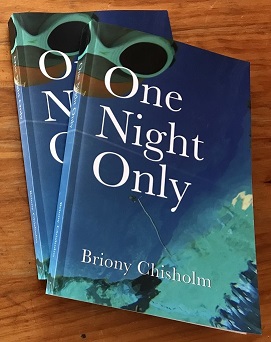
A cheeky ad and some shameless self-promotion (I wrote it).
This is an easy beach read, set in Cape Town’s city bowl.
The book follows the adventures of 33-year-old Sarah Trafford, as she swears off long-term relationships and delves into the world of being a ‘one night only’ woman.
Last, but not least: travel guides. Remembering that Africa covers 30.4 million km2 (to put it into perspective: the USA covers 9.8 million km2, the UK, 242 495 km2 and the whole of Europe, 10.2 million km2), in most cases, you’ll need to get travel guides for each country you visit.
Another important point to remember is that things change quickly in Africa, so do get the most up-to-date version of whichever guide book you choose to get. They are all online, too, so do a bit of internet exploring before you go!
Local tourism websites and their Facebook pages are also great places to get a feel for the places you’ll be visiting and checking out local pages that list what’s happening is how you get to experience places as ’a local’.

Whether you’re into history or love stories, there’s an African book for you. This list just brushes on the huge numbers of books on Africa and African authors so, go on, get reading, and broaden your background before coming on your dream African safari.

Below you'll find further reading and articles related or similar to this post.



Call us toll free from US/Canada on 1-888-414-6513, or from the UK on 0-808-189-1052. All other countries can contact us on +27 21 791 0878.
© 2026 African Budget Safaris | Privacy | Terms | Cookie Policy | Consent Preferences