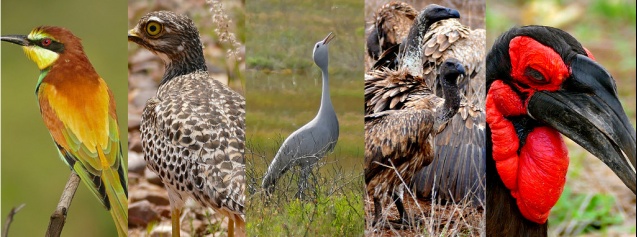
When people think about an African safari, one of the first places they think of is the Kruger National Park in South Africa. This is no wonder, with its varying habitats, the huge number of mammals, reptiles, creepy-crawly and bird species and beautiful bush, beside the ever-sought-after Big 5!
It can get confusing, though, trying to work out the difference between the Greater Kruger National Park (GKNP) and the Kruger National Park (KNP) – they’re joined and unfenced – and then choosing where in this vast, 20,000,000-hectare area you should go.
We’ve gone into the details of the GKNP and the KNP in our blog, Breaking Down the Greater Kruger National Park, and in this blog, we’re going to go into more detail on one of our favourite parts of the GKNP, Sabi Sand Game Reserve.

Situated in the southwest of Kruger, Sabi Sand Reserve covers an area of 65,000 hectares and shares a 50 km, unfenced border with Kruger. On its southern boundary, the Sand River, and through the middle, the Sabie River flows, thus the name: Sabi Sand. Below is a Sabi Sands map that shows its position within the Greater Kruger Park, Sabi Sand within South Africa, and Sabi Sand within Africa.
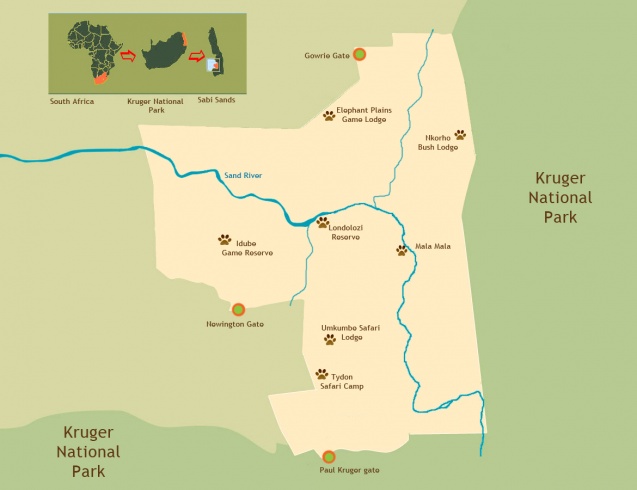
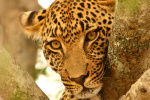
It forms part of the Greater Kruger, which means that the animals roam freely across the whole area. Sabi Sands is known for its incredible game sightings, including the predators and especially the leopards. The Big 5 animals thrive here.

Getting to Sabi Sand Game Reserve is easy. Numerous operators offer a shuttle service from Johannesburg to Sabi Sands, and with most safaris, this transfer is included.
If you’re not keen to spend time on the roads, it’s a hop, skip, and jump by air to one of the three airports - Skukuza Airport, Kruger Mpumalanga International Airport or Eastgate Airport. Depending on where you land, the transfer by road to your camp may be through the park, so it’s a mini, welcoming, game drive. There are also a number of small airstrips within Sabi Sands for those wishing to arrive by charter flight.
From Johannesburg: 450 km, 6 hours
From Cape Town: 1,855 km, 21 hours
From Johannesburg: 50 minutes (two flights daily)
From Cape Town: 2-and-a-half hours (one direct flight daily)
One of the ‘secrets’ of Sabi Sands’ amazing game viewing is the fact that in the ‘olden days’ before it was declared a reserve, the area was populated with cattle farms. The farmers all dug boreholes and made dams to keep their cattle watered, and these remain. There is water all year, which attracts huge numbers of animals into the area, including big herds which, in turn, attract the predators.

Because the area is part of a ‘private’ reserve, with limited camps and therefore fewer people, you get a real bush experience, without the crowds. There are also strict rules that include only two vehicles allowed at a sighting at a time. Basically, the experience is more ‘exclusive’.
Experienced rangers can get off the beaten track and are in constant contact with each other, ensuring that your game sightings are out of this world.
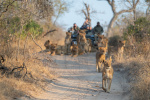
Time and again, people comment on their incredible game experiences within Sabi Sands, mostly commenting about how close they could come to the animals without them being disturbed, due to them being habituated to the game vehicles.

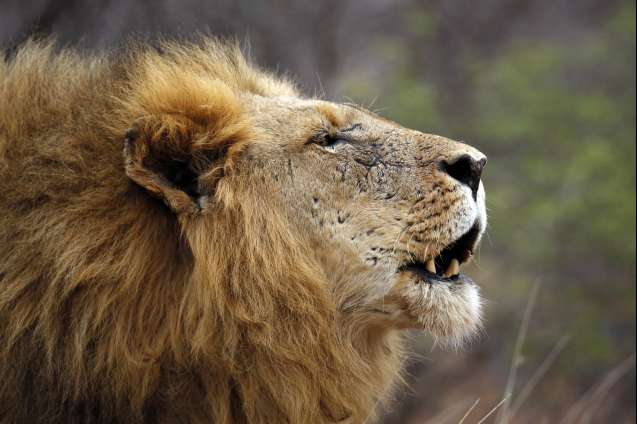
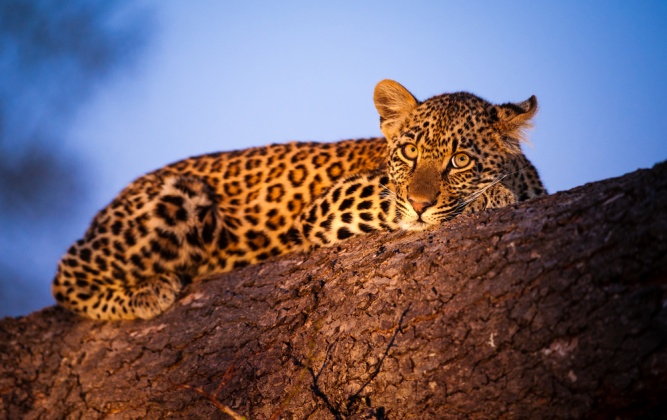
Sabi Sands is known especially for its predator sightings, with regular reports of leopards casually walking alongside safari vehicles. Lions, too, love the Sabi Sands and have even become movie stars! The Mapogo Brothers became known as the most savage lions in the park.
Trigger Warning: There is plenty of ‘lions hunting animals’ footage in this video
As always happens in nature, new gangs have slowly drawn new territorial lines, so the Mapogo gang has been disbanded. Certainly, they and their ancestors still amble through the park, adding to the brilliant game sightings at Sabi Sands.
__medium.jpg)
Often people think that Sabi Sand only offers luxurious, high-end (and very expensive) accommodation. Not true. There are a number of camps and lodges within Sabi Sands that offer accommodation at more affordable prices.

African Budget Safaris offers numerous safaris into Sabi Sands, such as our 3-Day Sabi Sands Lodge Safari and 4-Day Sabi Sands Exclusive Tented Camp Safari - 4 Day.
Think exclusive, but affordable.
Basically, the weather here is always good. Do remember, though, that the rainy season is summer – October to March – which means that the bush is lush and green, making game viewing a little more challenging. The ‘rainy’ season usually consists of beautiful, hot mornings with wild and short thunderstorms in the afternoons, followed by more sunshine.
Average temperatures and rainfall:

If you’re a keen photographer and want to catch the Big Five animals on film, the Sabi Sand Game Reserve is paradise. As mentioned above, the rangers in Sabi Sand know where to go, and sightings are reported via radio.
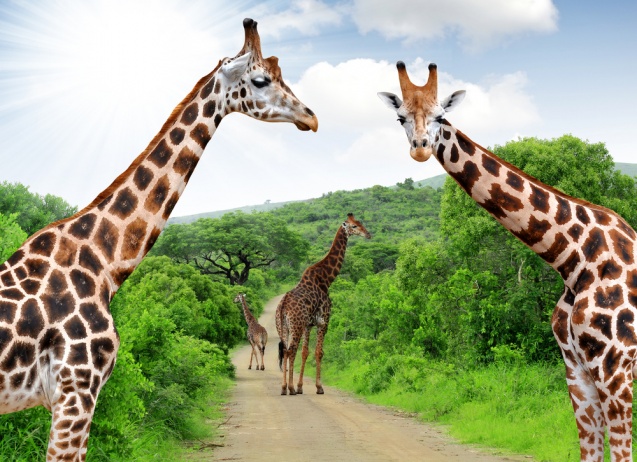
The animals in the area are habituated to safari vehicles, so carry on with their daily carryings-on, meaning you can get that perfect shot of a lion lolling under a tree, his belly full, or a baby elephant skipping along behind its mother. Also, due to the limited number of people in the park, you can get the shot without six other game vehicles in the background!
Many people want to experience both parts of the park. At ABS, we get this, so many of our trips include stays in both the Kruger Park and Sabi Sands. It’s a win-win situation. Here are just three of them:

Now you know why Sabi Sands is special exclusive but still affordable. Contact one of our knowledgeable ABS consultants now to book your dream safari.

Explore these destinations mentioned in this post.
Below you'll find further reading and articles related or similar to this post.




Call us toll free from US/Canada on 1-888-414-6513, or from the UK on 0-808-189-1052. All other countries can contact us on +27 21 791 0878.
© 2026 African Budget Safaris | Privacy | Terms | Cookie Policy | Consent Preferences