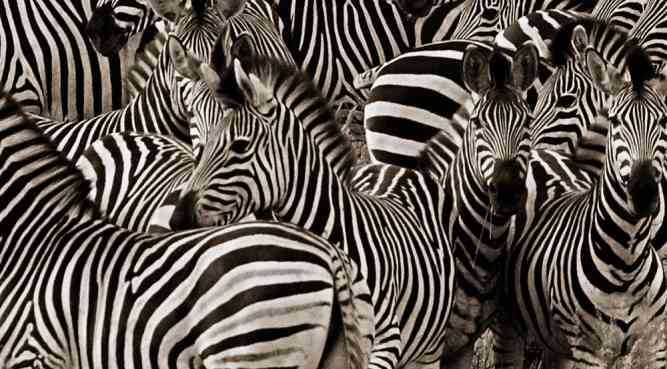
Surprisingly, Africa’s longest land migration isn’t the Serengeti wildebeest but Botswana’s zebra herds. Their round-trip journey spans about 500 km in straight-line distance—making it Africa’s longest land migration measured this way, even though the wildebeest migration involves far more animals and a longer overall circuit.
While the Wildebeest Migration in East Africa is world-famous, the zebra migration was only recently documented. Seeing tens of thousands of striped zebras on the move is a once-in-a-lifetime wildlife experience.
In 2008, herbivore researcher Hattie Bartlam-Brooks discovered from reading GPS collars fitted on zebra mares that they had, incredibly, started reusing old wildlife migration routes from Botswana's Okavango Delta to the Makgadikgadi Salt Pans. This was remarkable because the lifespan of wild zebras is only about 25 years, and the fences that were erected to prevent the spread of foot-and-mouth disease went up in the 1960s. This suggests the zebras were not relying on learned behaviour but on innate navigation abilities, since the route had been blocked for decades.
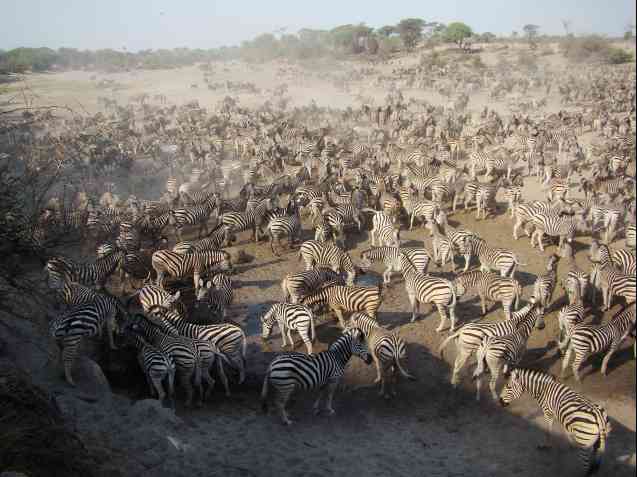
"The migration wasn't thought to still occur until we recorded it in 2008,” Bartlam-Brooks said. "It had been presumed that due to a fence obstructing the route for around 40 years (it was removed in 2004), the zebra no longer migrated, but remained in the Okavango Delta all year round." Up to 20,000–30,000 zebras are on the move, making it the largest mammal migration in southern Africa. By sheer numbers, it’s smaller than the Serengeti wildebeest migration, but still one of the most spectacular wildlife events on the continent.
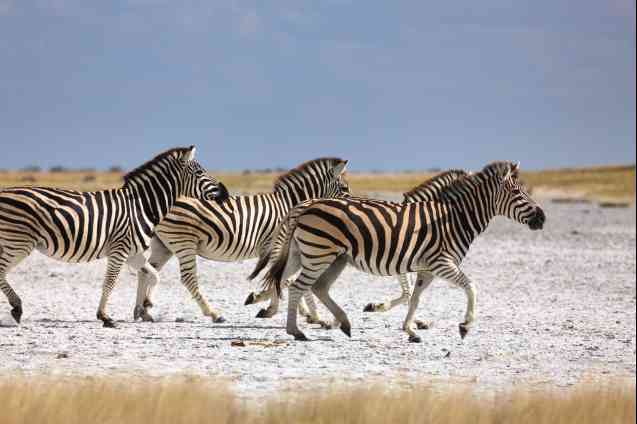
There are two main zebra migration routes. One from the Chobe River floodplains down to the Nxai Pan area (part of the greater Makgadikgadi Pan system) and one from the Okavango Delta down to the Makgadikgadi Pans National Park. The zebras move from north to south in the rainy season, then back from south to north for the dry season, following the seasons and the rainfall.
One of the perks for travellers is that the migration can be seen during the rainy off-season, from November to March. This means safari and lodge prices are lower, and there are fewer vehicles and visitors around.
During the dry months (June–November), the herds remain on the Chobe River floodplains. In early December, around 20,000 zebras begin moving south to Nxai Pan National Park as the rains arrive. Some herds take a direct route, arriving in two to three weeks, while others pause on the Seloko Plain before joining the main group.

Around 15,000 zebras embark on Botswana’s longest wildlife journey—roughly 500 km round-trip. Leaving the Okavango Delta in November and December, they follow the rains south to the Makgadikgadi Pans, where vast grasslands come alive. For three months, the herds disperse across the pans, grazing on nutrient-rich grasses, before turning north again in February as the dry season approaches.

Not all the zebras choose to migrate; nearly half stay in the Moremi-Okavango Delta area. Nobody knows why this happens, but the interior of Botswana is generally arid, while the north has the more fertile deltas of the Okavango and Chobe rivers, where watering holes and rivers have water throughout the dry season. The zebras that migrate are thought to do so because they are in search of more nutritious grazing, which optimises their foals' chances of survival.
Coincidentally, the best time for birding in Botswana is also the rainy season, with migratory birds making their way to water systems, particularly the Okavango Delta. Expect to see bird species like carmine bee-eaters, herons, swallows, marabou and a variety of ducks and geese.
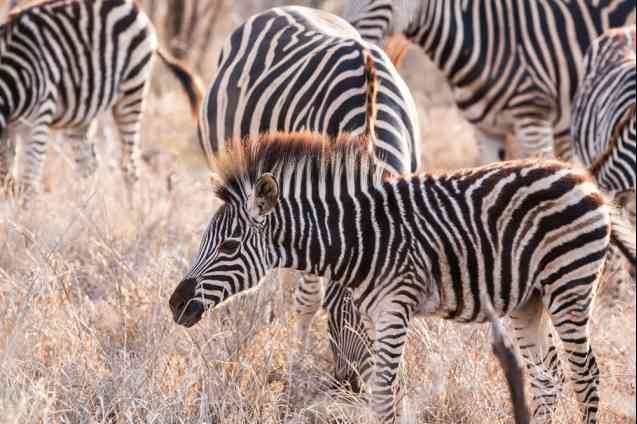
There are incredible game reserves and wildlife safaris up north, like this Budget Botswana Safari, but arguably the best place to see the zebra migration is in the south, at the salt pans.
Since the rainy season (November to March) in Botswana is the best time to see the zebra migration, visitors will see not only zebras and their newborn foals ambling across the Nxai Pan, but also other wildlife, including giraffes, bat-eared foxes, ostriches, and desert elephants. At the Makgadikgadi Salt Pans – in the dry season, devoid of life and water, but now bursting with vegetation – you might be lucky enough to see the zebras being stalked by lions and cheetahs.
The zebra herds congregate along the Boteti River in large, spectacular concentrations, creating a spectacle well worth photographing. When the herds leave Nxai Pan in March, most return directly to the Chobe River floodplains; however, some take a more winding route, stretching their journey over several months. These longer paths can add up to more than 800 km in total travel distance for certain zebras.
The zebra migration can be seen from many different game parks across Botswana at various times of the year, so chat with a safari expert who can help you find the best itinerary for your travel plans and budget. Our in-house travel experts are also pros at designing tailor-made safaris at affordable prices, so you can even have a custom Botswana zebra migration safari created specifically for you.

Things may get muddy and the roads difficult to navigate with the rains, so it's best to travel with a guide or on an organised Botswana safari tour. This is not only for your safety; it’s to have access to the best local knowledge of the area, which increases your chances of seeing more wildlife. Visitors should bring light raincoats and some warm clothing, as downpours can leave you feeling cold when you set off on those early morning safaris. If you decide to drive your own vehicle, ensure that it is a “real” 4x4, with high ground clearance.

The revival of the Botswana zebra migration is sparking hope in conservationists that ancestral wildlife migratory routes can be recovered if given the opportunity, in Botswana and globally. It provides evidence that nature can recover if fences that obstruct animal migration routes come down. But not all fences are “bad” – and in fact, one “responsible” fence installed on the western edge of the Makgadikgadi Pans National Park in 2004 has reduced competition from cattle in the area, which is increasing the zebra population. Biologist James Bradley says, “Shortly after the fence went up, the behaviour of the zebras changed rapidly, and they relaxed more.”
This is a nuanced field that requires more intensive research to balance the needs of nature and those of human populations. But the benefits of the Botswana zebra migration are not only for tourists. The migration also benefits local ecosystems, bringing huge value to the environment, and has already led to an increase in dung beetles, which in turn means more meerkats.
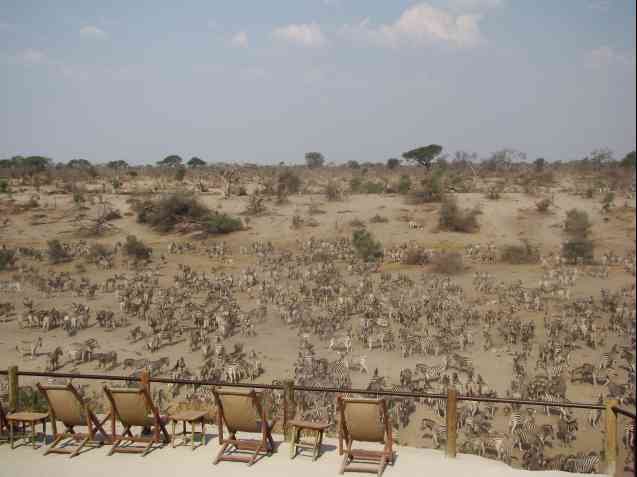
The rainy season in Botswana begins to fade as March approaches, and with it your chances of seeing the zebra migration this year. So the next few months (January, February, and March) offer the last window of opportunity to catch this epic wildlife migration in Africa - along with excellent birding and other game viewing highlights. Don't miss out on the ancient Botswana zebra migration this year. Contact African Budget Safaris, and we'll get you front-row seats to the spectacle!
Find out more about African animal migrations and The Great Migration in Africa with answers to your wildebeest migration FAQs
For our latest safari deals, news, and tips, sign up for our African safari newsletter.

Explore these destinations mentioned in this post.
Below you'll find further reading and articles related or similar to this post.




Call us toll free from US/Canada on 1-888-414-6513, or from the UK on 0-808-189-1052. All other countries can contact us on +27 21 791 0878.
© 2026 African Budget Safaris | Privacy | Terms | Cookie Policy | Consent Preferences

_(1)__thumb.jpg)
tours_through_moremi_game_reserve__thumb.jpg)
__thumb.jpg)
__large__thumb.jpg)


__medium.jpeg)