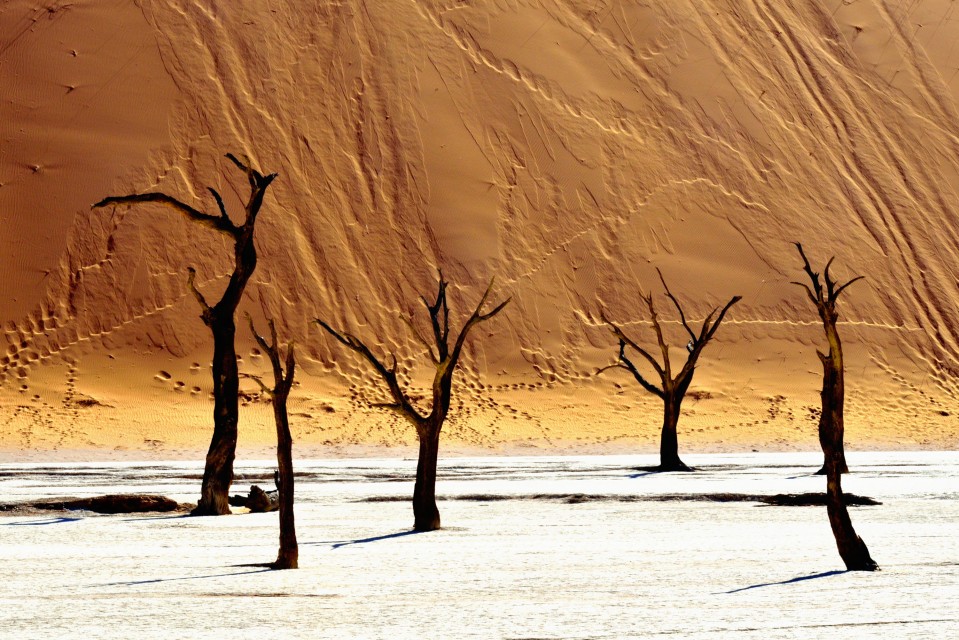

Located in northern Namibia, Etosha is about a 5 hour's drive from Windhoek, the capital of Namibia. This famous game park is dominated by the arid Etosha Pan, yet it is home to nearly 114 mammal species and over 340 bird species.

Wildlife sightings on game drives range from cheetahs and jackals to giraffes and kudu, amongst many more. The striking oryx and unusual black-faced impala also roam Etosha, along with endangered black and white rhinos. The park is also inhabited by plenty of insects, over two dozen species of amphibians and reptiles, and surprisingly even a single species of fish.

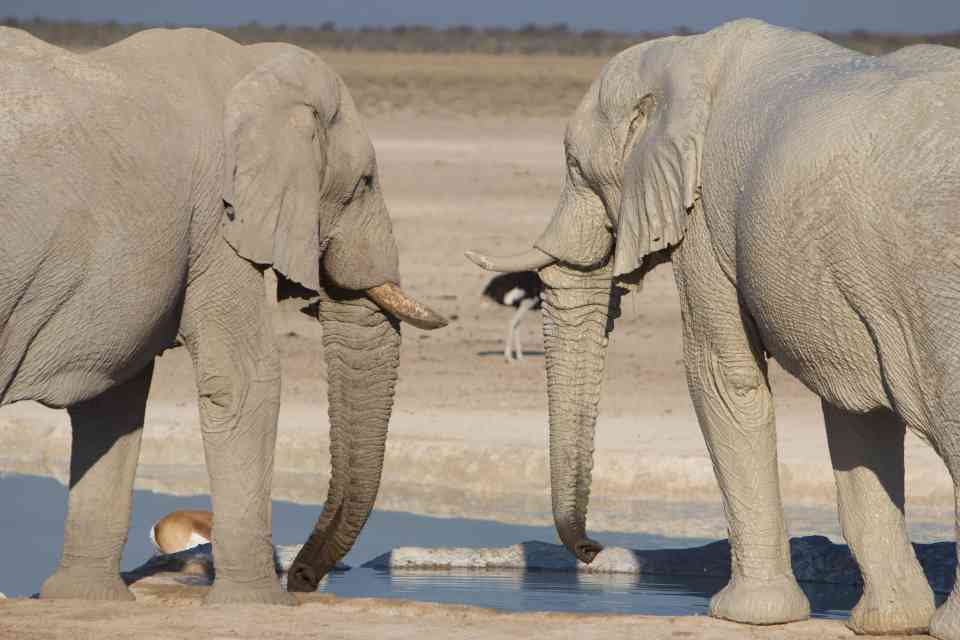
Etosha is said to be home to the tallest elephants in Africa, reaching up to four metres tall at the shoulder. Some 2000 elephants roam the park, having adapted to the desert environment here.

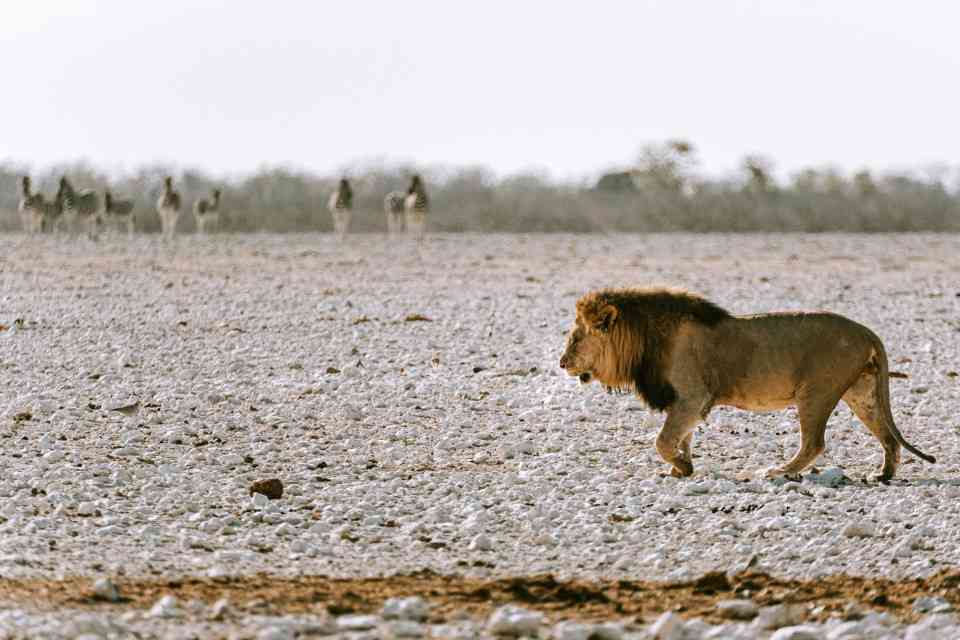
Around 750 lions live in Etosha, which is known for its excellent lion sightings. The lions of western Etosha are regarded as the most ferocious in the game park.

Elusive leopards tend to hide out in the dense bush but can be spotted in Etosha. Certain watering holes, such as Klein Namutoni and Rietfontein, are especially good for leopard sightings. The chances of spotting these nocturnal predators are also higher at night.

Etosha hosts a healthy population of black rhinos - one of Africa's most important black rhino populations inside of reserves. White rhinos have been reintroduced but are rarely seen in the park. Sometimes white rhinos are spotted at the Springbokfontein waterhole, located about halfway between Halali and Namutoni.

Etosha means 'Great White Place' which refers to the salt pan around which the national park is centred. The pan takes up about a quarter of this 20,000 km² park, but there are over 80 watering holes scattered across the reserve.
There are around 40 watering holes and springs dotted along the roads linking the west (Okaukuejo) and the east (Namutoni) of the park alone.

The best game-viewing strategy in Etosha National Park is to locate one of the numerous watering holes and simply wait for the wildlife to come to you. The southern fringes of the pan, near the rest camps, are where the majority of these waterholes lie.
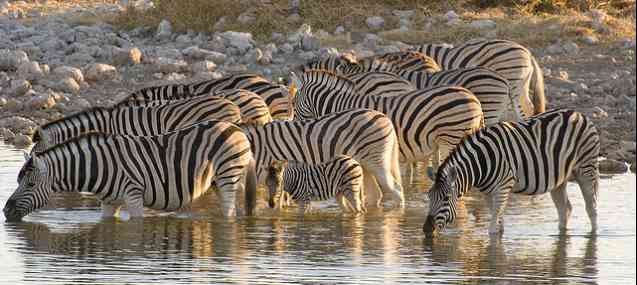
During the rainy season herds of plains game roam the grassy plains to the west of Okaukuejo. These large herds can also be spotted in the Fischer’s Pan area, close to Namutoni, and sometimes to the north of Namutoni on the Andoni Plains.
This Fodor's Travel Guide goes into detail about the best places to spot the various wild animals of Etosha. This page lists the watering holes of Etosha and tells you a bit about each, including the animals that visit.
The Etosha Wikipedia page lists some of the mammals of Etosha, noting how commonly each species is sighted.
The best way to spot wildlife is by 4x4 or overlanding truck, given the elevated vantage these vehicles offer. A 4x4 game viewing vehicle is recommended for exploring off the main tourist routes and during the rainy season when wet conditions can make getting around quite challenging.
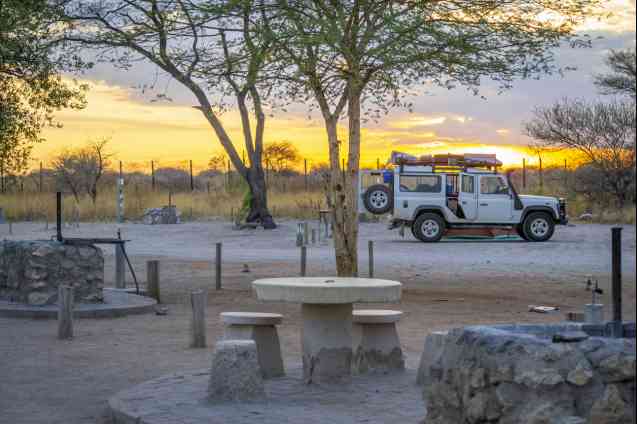
Etosha can usually be explored in a normal (sedan) car because the gravel roads are in good condition. The speed limit is 60 km per hour to protect wildlife and prevent cars from skidding on loose gravel.
Etosha features top-notch rest camps that offer camping facilities and chalet-style accommodations. The private game lodges catering for luxury travellers are concentrated in the western part of Etosha, while the rest camps lie in southern and eastern Etosha.
There are three main rest camps - Okaukuejo, Halali and Namutoni - and two luxury camps - Dolomite and Onkoshi. The main rest camps are all located at active watering holes that are lit up by floodlights to allow for night game viewing.
This camp is located along the western edge of Etosha Pan in the southern part of Etosha National Park. Situated only 17 km from the Anderson Gate, Okaukuejo is the first camp you will reach when travelling on the main north-south road between Windhoek and Etosha.

Okaukuejo offers a range of accommodation options, from various chalets to camping. Facilities include a restaurant, bar, swimming pool, kiosk and shop.
Animals: black rhino, elephant and lion can be spotted here, amongst others.
This camp is located midway between Okaukuejo and Namutoni in the central part of Etosha, south of Etosha Pan.

Choose from camping and various chalets, including bush chalets, family chalets and chalets at the watering hole. Facilities include a restaurant, bar, shop, large swimming pool, kiosk and petrol station.
Animals: leopards, rhinos and elephants can be spotted here, along with other wildlife and birds.
This camp is located in eastern Etosha, on the southern edge of Etosha Pan, and can be accessed via the Von Lindequist Gate (far eastern boundary).
The old German Fort at Namutoni Camp is a great place to relax with sundowners and enjoy views over the watering hole. Facilities include two restaurants, a gift shop, a pool, a small supermarket and a petrol station.
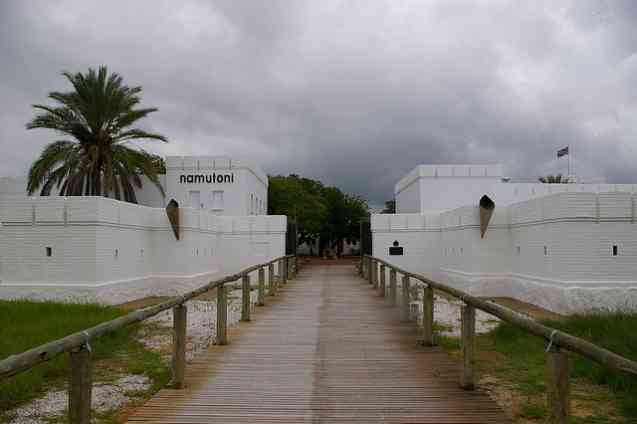
Accommodation options include double rooms, chalets and camping facilities. Other facilities include a restaurant, bar, shop, swimming pool and petrol station.
Animals: leopard and rhino nearby, birdlife at camp and other wildlife.
Winter. From May to September, when the temperatures are cooler the animals congregate at the scarce water sources (watering holes). During winter the sparse vegetation also makes it even easier to spot wildlife and birds, with the dry salt pans stretching out endlessly in a dusty white expanse. Be sure to pack warm clothes for the cold winter nights.
If you are into bird watching then the best time to go to Etosha is during or after the rainy season (November to March) when the pans hold some water which attracts flocks of flamingoes, pelicans, migratory birds and many others.
Etosha National Park is easily accessed from Windhoek via a well-maintained, tarred road. The drive takes between five and six hours.
If you are heading to Namutoni it takes about five hours via the Von Lindequist Gate (500 km) in eastern Etosha. If you are driving to Okaukuejo via the town of Outjo then you will enter the park at the Anderson Gate (400 km) in southern Etosha, which takes less than five hours. Driving from the north of Namibia you can enter Etosha at the King Nehale Gate lying southeast of Ondangwa. The Galton Gate provides access to Dolomite Camp in western Etosha for those staying at the camp.
You can also drive to Etosha from Swakopmund in about seven to eight hours, but an overnight stop is recommended en route. Travellers usually include a stopover at interesting places in Damaraland, near Brandberg Mountain or in Twyfelfontein.
When driving to Etosha you need to arrive before the gates close at sunset or after they open at sunrise (times vary according to the seasons). Visitors are not allowed to drive around in the park at night, but organised night game drives can be joined from the rest camps.
The easiest way to get to Etosha is, needless to say, on one of our affordable Etosha Park Safaris.

See the Google Map of Namibia.


This page offers Photographic Tips for Etosha and the What to See and Do in Etosha section of this guide offers advice for wildlife, landscape, macro and birding photography in Etosha.

Most of our Namibia Tours visit Etosha Park. Many of these are safaris starting in Windhoek.

Explore these destinations mentioned in this post.
Below you'll find further reading and articles related or similar to this post.




Call us toll free from US/Canada on 1-888-414-6513, or from the UK on 0-808-189-1052. All other countries can contact us on +27 21 791 0878.
© 2026 African Budget Safaris | Privacy | Terms | Cookie Policy | Consent Preferences


__thumb.jpg)