
Book your 2027 departure before the end of July 2026 and Find out more
Discover the beauty of Africa's diverse landscapes, cultures, and wildlife on this affordable Africa Overland Camping Tour. From Cape Town, South Africa explore Namibia, Botswana, Victoria Falls in Zimbabwe & Livingstone, Zambia, Malawi, Tanzania & Zanzibar Island, before finishing your journey in Nairobi, Kenya.
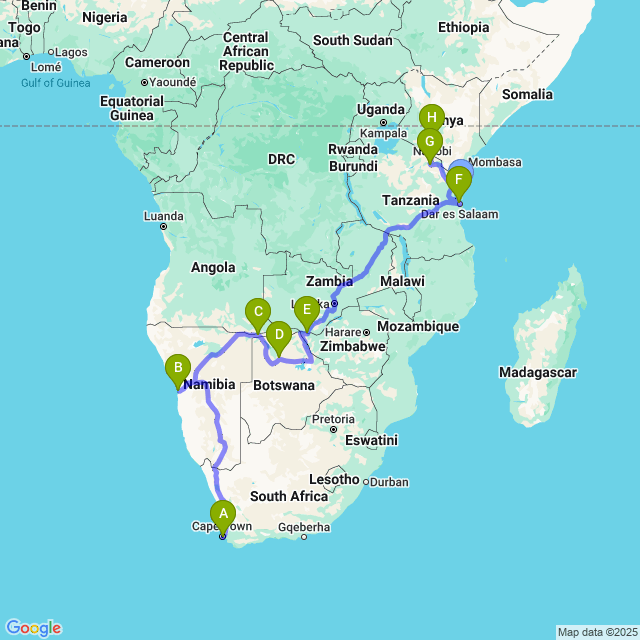
Highlights of this Overland Africa Tour include the impressive Fish River Canyon, ancient Namib Desert & Sossusvlei dune field, seaside adventure town Swakopmund and epic Etosha National Park in Namibia. Mokoro in heart of the magnificent Okavango Delta, surreal Makgadigadi Pans and game viewing river cruise in Chobe National Park in Botswana. Marvel at magnificent Victoria Falls, Zambia’s wild South Luangwa National Park, serene Lake Malawi and stunning Great Africa Rift Valley & Tanzania Southern Highlands scenery. Beach bliss on exotic Zanzibar Island, and an unforgettable safari in the famous Tanzania Northern Safari Circuit – Ngorongoro Crater & legendary Serengeti National Park.
During this trip, you are likely to come across activities that encourage tourists to participate in lion, elephant or other wildlife interaction. This includes walking with lions, riding elephants and any other tourist operation putting travelers in close contact with animals that would normally live wild and separate from human contact.
We absolutely do not encourage or endorse this type of wildlife interaction operation. For more information on why this is not good for Africa's wild animals, please see our detailed blog post on the subject.




This affordable Africa Overland Tour departs from the beautiful city of Cape Town in South Africa. We depart from the DoubleTree by Hilton Cape Town at 08:00 am. Please ensure you arrive at the departure point at least 30 minutes before the scheduled departure time.
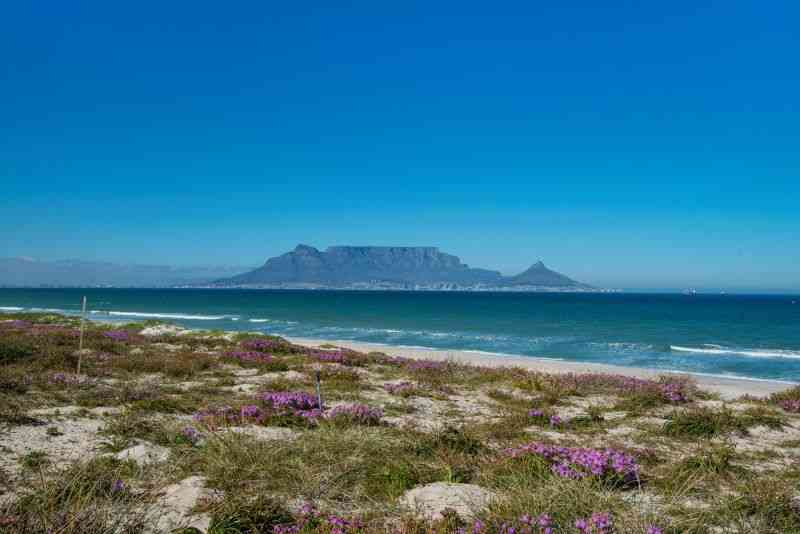
Leaving the Mother City (as Cape Town is fondly called), we pause to take photos and enjoy the iconic panoramic views of the city and Table Mountain from across the bay.
From Cape Town, we drive north to the picturesque Cederberg Mountain of the Western Cape, passing quaint farmstalls en route. The Cederberg Mountains are loved by locals for the hiking trails and the endemic rooibos plants, which grow on the mountain slopes, used to make a hugely popular, healthy tea known as rooibos (red bush) tea
Arriving in the Cederberg, we head to our first overnight campsite in the scenic Olifants River Valley, where we relax and enjoy a traditional dinner and a briefing on the adventure ahead.
On day 2 of our overland adventure, we travel north. Mountains give way to arid flats as we make our way through the Namaqualand region, a semi-desert famous for its colorful carpets of indigenous wildflowers which bloom in springtime (August & September). Driving through this sparsely populated Northern Cape region, we make a stop in the remote town of Springbok in South Africa for last-minute supplies, on our way to the Gariep River, formerly known as the Orange River, which forms the border with Namibia. We cross into Namibia and make our way back to the Namibia riverbank of the Gariep (Orange) River, where we will camp.
The second night of our Africa Overland Tour is spent getting to know one another over a hearty meal. Our campsite features a pool, internet, and a bar.
This morning, you have the option to experience South Africa's longest river by canoe. Canoeing along the Orange (Gariep) River is the ideal way to take in the rugged scenery and spot birds and animals along the river. Alternatively, spend some time relaxing by the riverside at camp.
After lunch, we travel north toward the mighty Fish River Canyon, one of the largest canyons in the world. We'll travel to a lookout point on the rim of the Fish River Canyon and stroll along the edge to stretch our legs and marvel at the view. We then turn west and travel to Keetmanshoop, where we will spend the night.
On Day 4 of our Africa Overland Tour we visit the Quiver Tree Forest and Giants Playground near Keetmanshoop. The quiver tree forest includes specimens over 200 years old making it an important ecological site. The quirky Quiver Trees make a striking silhouette with tall, tapering trunks and canopy of spiky, succulent leaves. Nearby, the Giants playground is a bizarre landscape strewn with unusual stacks of large dolerite boulders about 160 to 180 million years old that look as if they were placed by giants.
Our journey continues through sparsely populated landscapes to the fabled fiery red dunes in the west, transforming landscapes showcasing the diverse faces of this desert nation. Our voyage takes us to the heart of the Namib Desert where our lodge is situated just at the edge of the Namib national park. The lodge also boasts a refreshing swimming pool and a bar, so you can unwind and take a dip to wash off the desert dust.
Today, we visit the Namib-Naukluft National Park, home to Namibia’s most famous desert landscapes. The national park incorporates a large part of the ancient Namib Desert and is home to the rolling expanse of distinctive red-orange sand dunes.
We first visit Dune 45, where you have the chance to climb up the iconic dune for amazing views from the top over the stark desert. Back at the foot of the dune, we enjoy a hearty breakfast before heading on a 4x4 transfer to Sossusvlei and Deadvlei, in the heart of Namib-Naukluft National Park. This area features a crusty pan that offers dramatic scenes of skeletal trees dotted around the pale pan floors, surrounded by orange-hued dunes.
On Day 6 of our overland tour, we are joined by an expert local guide for a nature walk in the unique desert habitat. Exploring on foot, see how plants and animals have adapted to this harsh climate and hear how the San (Bushmen) have long survived in the arid deserts of Southern Africa.
We are then back on the road, headed for the coast and some refreshing sea breezes. On the way, we cross the latitudinal line of the Tropic of Capricorn, pausing to take some photos of the auspicious occasion. Then it’s on to the popular seaside town of Swakopmund, the adventure capital of Namibia.
In the evening, we have an optional dinner at a local restaurant. For the next two nights, we will stay at a comfortable guesthouse in Swakopmund featuring a bar, laundry services, and internet.
Day 7 on this Africa Overland Tour is yours to explore the quaint town of Swakopmund, the town where German colonial influences can still be seen in the architecture, cuisine, and culture. Stroll along the sea, sip coffee at a sidewalk cafe, visit a market and enjoy sightseeing on foot.
You can also try some of the many adventure activities available in this popular coastal town, including quad biking on the dunes, sand-boarding, skydiving, and boat cruises to see dolphins.
After breakfast, we leave Swakopmund and head north along the windswept Atlantic coastline. This is the legendary Skeleton Coast, a stark, moody wilderness marked by shipwrecks and whale bones where the arid desert meets violent Atlantic swells. We stop at the picturesque village of Wlotskabaken, where we take in the sight of cosy holiday cottages tucked between the vast desert and the shimmering sea. From there, we venture to the surreal Lichen Fields, where a local expert will guide us through the fascinating world of lichens—organisms formed from the delicate partnership of fungi and algae. These hardy plants thrive in the harsh desert by capturing moisture from the ocean mist and fog that rolls in from the Atlantic.
We then leave the coast behind and head inland to the Brandberg Mountains, the highest peaks in Namibia. This area is rich in ancient rock art, including the famous White Lady painting. Join your guide for a two-hour hike along the dry Tsisab Riverbed, where you’ll explore both the unique geology of the area and ancient rock art, some of which dates back over 2,000 years. Afterwards, we’ll head to a nearby campsite for a restful evening.
On Day 9, our overland lodge safari heads northeast toward Namibia’s premier wilderness destination—Etosha National Park. Spanning an impressive 22,270 square kilometres (8,600 square miles), it ranks as one of Africa’s largest national parks. The name "Etosha," meaning "Great White Place" in the Ovambo language, refers to the expansive, shallow Etosha Pan located at the heart of the park. This enormous salt pan is so vast that it can be seen from space.
Get ready for thrilling wildlife encounters in one of Africa’s most iconic ecosystems. Tonight, we will stay at a comfortable safari camp near Etosha, anticipating our exciting day in Etosha National Park tomorrow.
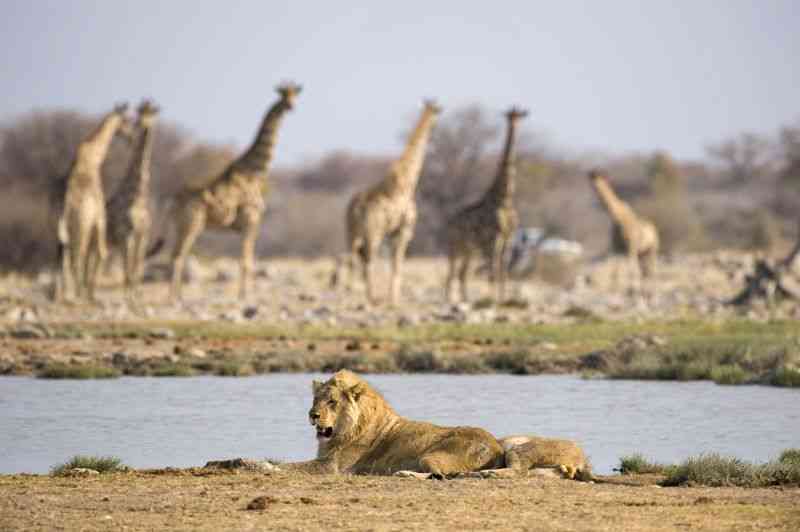
Over the next two days, we explore Etosha National Park on game drives. We cross the open plains, scattered with acacia woodlands, and visit waterholes and the dusty fringes of the Etosha Pan. The salt pan was once a massive inland lake, but today the flat expanse stands almost entirely dry, except for the shallow waters that sometimes collect during rainy seasons. When shallow pools form in the pans, they attract large flocks of birds. Short grasses sprout after the rains, which draw in herds of grazers.
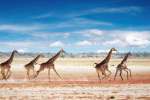
At the watering holes, wildlife watching is often particularly rewarding, given the congregation of herbivores and predators drawn to the precious water sources. Etosha is known for its dramatic wildlife sightings, not only because of the stark landscapes but also due to the intense competition that unfolds in its harsh environment, especially at the waterholes. With some luck, we are likely to encounter lions, rhinos, and leopards. Chances of sighting elephants, zebras, giraffes, gemsbok, springbok, and other antelopes are excellent.
Day 11 starts with a leisurely breakfast and an easy morning unwinding at the safari camp. After lunch, we head to our next overnight safari resort near Etosha, entering the park en route for an afternoon game drive in the overland truck.
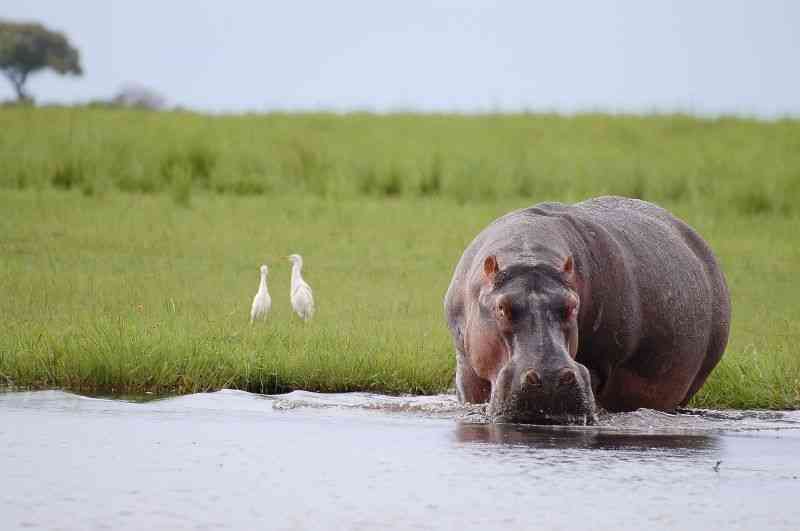
We bid the arid landscapes of Etosha farewell and head northeast to the verdant lands surrounding the Kavango River, where waters from the Angolan highlands flow on their journey through Namibia before emptying into the Okavango Delta in neighbouring Botswana. Our destination in Divundu lies near the Kavango River, a vital life source in this region, attracting a wealth of wildlife to its shores. Its waters teem with crocodiles and hippos. For the next 2 nights, we will stay at a campsite near the Kavango River in Divundu.
We start the day 13 with a relaxing boat cruise along the peaceful Kavango River, soaking in the serene landscapes and watching for birdlife, hippos, and crocodiles along the riverbanks. In the afternoon, there’s an optional game drive in nearby Mahangu National Park—an off-the-beaten-path reserve renowned for its rich variety of wildlife, including elephants, buffalo, antelope, and big cats.
Next, it’s time to journey into the next country on our Africa Overland Tour - Botswana! Our route takes us through the lush Caprivi Strip. It’s rich in wildlife, so keep your eyes peeled for elephants, antelopes, and various bird species. After border formalities are complete, we head towards the town of Maun, the gateway to the Okavango Delta, where we will spend the night at a comfortable safari camp
Day 15 of our overland safari adventure sees us leaving the overland safari truck behind and heading out in the smaller 4x4 safari vehicles with smaller overnight bags, taking only our essentials for our 2-night trip into the Okavango Delta region.
We will spend the next nights in a tented camp in the Khwai Conservation Area of the Delta, located between the renowned Moremi Game Reserve and Chobe National Park. This area is known for its excellent game viewing throughout the year. With luck, we'll see plenty of wildlife as we drive.
Early risers have the chance to take an optional scenic flight over the Okavango Delta (weather and time permitting) before we head to the Delta. The flight offers the chance to get a unique aerial perspective of this great natural wonder – a river delta flowing into a dry, dusty desert and teeming with wildlife.
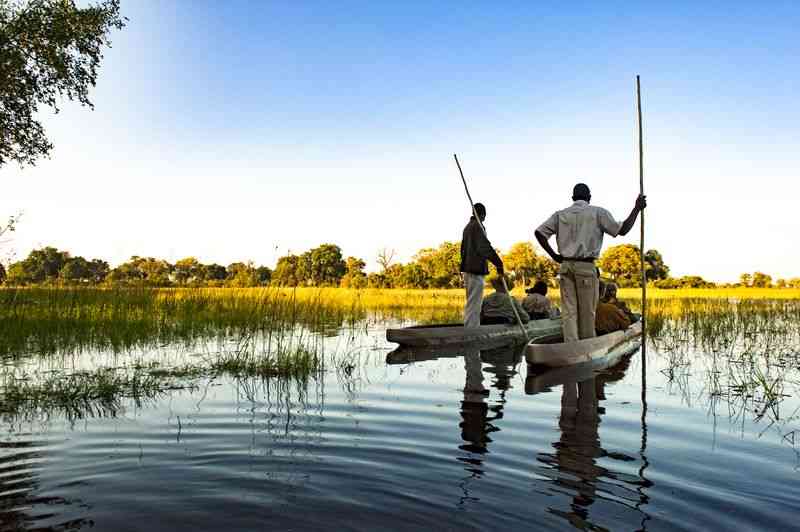
After settling into camp, we head out to a poler's station about an hour from the lodge. Local guides will paddle us out into the Delta waterways in traditional-style mokoros (dug-out canoes). The guides have an intimate knowledge of the reed-lined channels and tranquil lagoons dotted with lily pads and host to a great variety of animals. Get a close-up look at the unique flora and fauna of the Okavango Delta as we move along slowly and quietly. You are able to take a nature walk on one of the islands, a chance to learn about the fascinating plants and smaller creatures encountered.
Please note that the Mokoro excursion may run on an alternative day depending on the season/water levels.
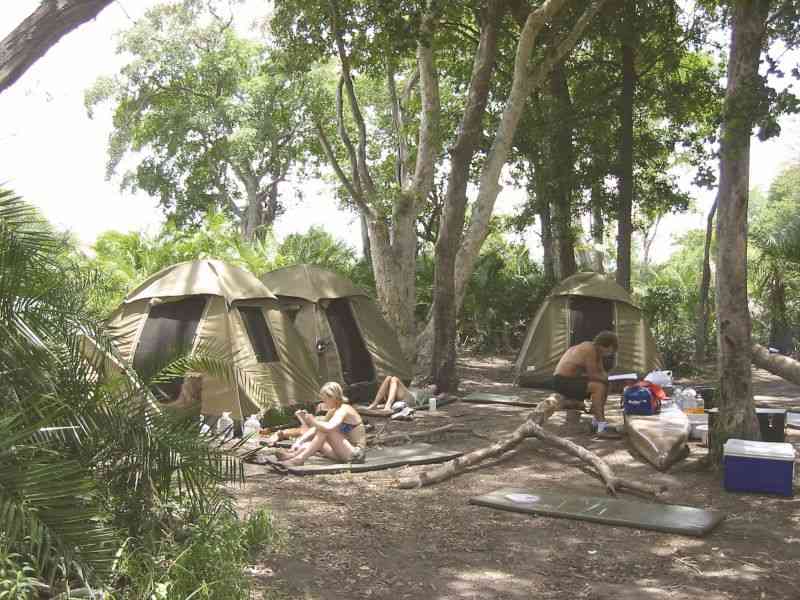
Accommodation in Khwai can best be described as a rustic-style mobile fly camp. Your meru style tent is equipped with 2 single beds and adjoining en-suite amenities consisting of a bucket shower system and chemical toilet.
On day 16 of our epic Africa Overland Tour, we are up early for our full day of exploring Moremi Game Reserve in the heart of the Okavango Delta region. The reserve stretches across several thousand square kilometers, featuring stunning floodplains, lagoons, grasslands, forests of acacia trees, savannahs, and dense mopane woodlands, which host an incredible variety of plants and animals. The reserve is known for its large herbivore populations, which in turn support predators including lion, leopard, and cheetah. This is sure to be an action-packed game viewing adventure.
Our Africa CAmping Overland Tour departs early this morning, back through the Delta landscapes to join our truck in Maun. Then, we’re on the road again, our long journey passing arid plains interrupted only by the occasional acacia tree towards the expansive Makgadikgadi Salt Pans, where the surreal scenery feels as if you've stepped onto another planet. The fascinating Makgadikgadi Pans were formed by the evaporation of an enormous ancient lake, leaving behind one of the world’s largest salt flats. It is an awe-inspiring landscape – a surreal sea of white that magically transforms into a lush, wildlife-rich oasis during the wet season. The salt pans viewpoint/pans experience is dependent on the season. We will overnight at a comfortable safari lodge in Nata.
Day 18 of our Cape Town to Nairobi Camping Safari sees us continue through the Kalahari Desert towards the town of Kasane, situated on the banks of the Chobe River, near the meeting point of four countries: Botswana, Zimbabwe, Zambia, and Namibia. We will arrive in time for lunch and have time to settle into our comfortable safari camp.
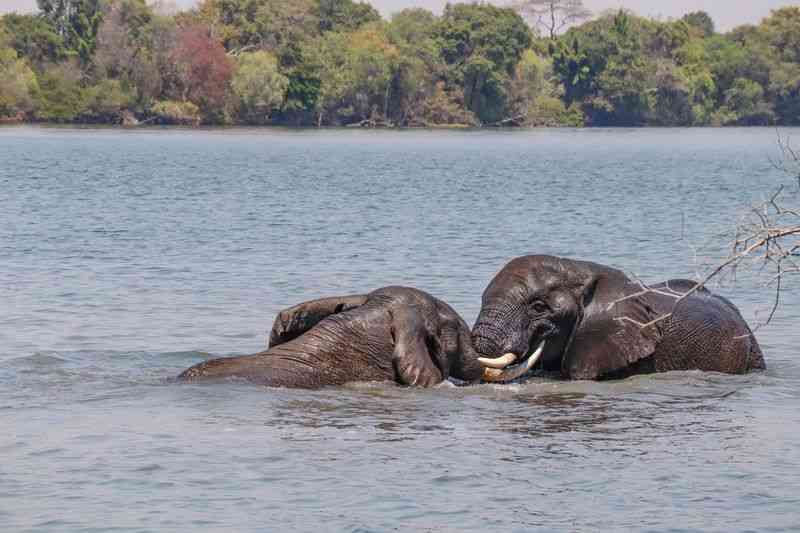
This afternoon we embark on a boat cruise along the Chobe River. From the water, we get up close to plenty of wild animals such as hippos, antelopes, buffalo, crocodiles, and elephants. Our boat-based game viewing provides excellent photographic opportunities for capturing the birds and wildlife attracted to the Chobe River in Chobe National Park. Enjoy a spectacular vista as the sun sets over the Chobe River.
It is time to say goodbye to Botswana as we embark on our next border crossing on our overland tour, into Zimbabwe. Entering Zimbabwe this morning, we drive to Victoria Falls town, home to the largest waterfall in the world.
A UNESCO World Heritage Site, Victoria Falls, is one of the most unforgettable natural spectacles in Africa - an absolute must-see! Today you have free time to visit the Falls and experience the 'Smoke that Thunders' as translated from the local name, Mosi-oa-Tunya – feel the roar of the river and stroll through the rain forest created by the resulting spray. In addition to visiting the spectacular Victoria Falls, you can jump straight into one of the thrilling adventure activities (optional extra) this afternoon or take it easy, exploring the local craft markets and coffee shops.
This evening, you can join the group for an optional dinner at a local restaurant. It’s a relaxed way to enjoy good food, unwind, and swap stories from the day. Your guide will organise the booking if you’d like to join.
Our overnight accommodation is at a comfortable lodge/guesthouse in Victoria Falls. We stay in twin rooms with en-suite bathrooms.
Tonight, we stay at a lodge near Livingstone, on the Zambia side of Victoria Falls. A transfer from Victoria Falls Village to Livingstone is included in your tour price – you can choose a morning transfer (8:00 am) or an afternoon transfer (4:00 pm), depending on your plans for the day. The day is free to relax at the lodge or enjoy more of the activities on offer.
On Day 21 of this epic Cape Town to Nairobi Overland Tour, we say goodbye to the natural wonder of Victoria Falls, making our way into rural Zambia. We pass bustling markets, small villages, and rural landscapes with increasingly sub-tropical vegetation. We overnight just south of Zambia's capital city, Lusaka. Our Safari Camp is a shady oasis surrounded by natural bush where you may encounter animals such as impala, giraffe, zebra and fantastic birdlife!
Today, our Africa Overland Tour continues east along the Great East Road. We travel through Zambia’s capital city, Lusaka and onwards to the town of Petauke, the main hub for safaris to the renowned South Luangwa National Park, where we will overnight at a comfortable campsite.
This long drive takes us east through lush landscapes, crossing the Luangwa River as we head to South Luangwa. We make a stop to visit the lively Luangwa Market, trying some of the unusual fruits grown in the area and browsing the traditional Zambian crafts and curios.
Today, we head to the South Luangwa National Park, Zambia’s premier safari destination, known for its outstanding game viewing. Along the way, we stop at a local textile initiative called the Mulberry Mongoose that produces beautiful clothes and jewellery from local materials – from cotton grown in the area to wire from poacher snares retrieved by local conservationists.
South Luangwa National Park is situated in Zambia's eastern region, in the tail end of Africa's Great Rift Valley, spanning an area of about 9,050 square kilometers of the Luangwa River valley. We spend the next two nights of our Africa Overland Tour camping at a tented camp right on the banks of the Luangwa River. Keep an eye out for hippos and other wild animals, often spotted from the camp bar. We end the day with sundowners and a beautiful sunset over the river.
In the morning, you can take an optional game drive in South Luangwa. Alternatively, you have the option of joining a walking safari in the dry season (April to December). South Luangwa pioneered the African walking safari, for which it is now famous.
Late afternoon, we enjoy a sunset game drive in the untamed South Luangwa National Park. South Luangwa is home to an abundance of wildlife, including buffalo, zebras, leopards, elephants, hippos, giraffes, and crocodiles. We stop for sundowners in the bush, before continuing our game drive into the night, when we hope to spot the elusive nocturnal animals of South Luangwa.
Next, our Africa Overland Tour crosses into Malawi, known as 'the Warm Heart of Africa'. Entering Malawi, we make a detour through Nkhotakota Wildlife Reserve, the oldest wildlife reserve in Malawi. We take a game drive through the dense woodland and hilly terrain, which is home to diverse wildlife, including elephants, buffalo, and various plains game
We then travel on to the central zone of Lake Malawi, the third largest and the second deepest lake in the African Rift Valley. We head for the historical town of Ngala Beach on the shores of the incredibly scenic Lake Malawi.
Our campsite for the next two nights is located right next to Lake Malawi, which enjoys a pleasant climate for swimming year-round. If time allows, you can go snorkeling straight away or take a swim and a stroll on the sandy beach at sunset.
There are no planned activities for Day 26 of your overland tour, leaving you free to relax on the sandy shores of Lake Malawi, explore the area and participate in optional activities.
Popular optional activities include paddle skiing, horse riding and snorkelling. The clear warm waters of this vast African Lake make it an ideal destination for snorkelling to spot the brightly coloured cichlid fish found here. Otherwise, you can embark on an optional motorboat trip, do some bird watching, take a guided village tour or visit the nearby forest reserve. You can also take a walk along the lake, passing fishing villages along the way for some laid-back exploration. Lake Malawi is known for its friendly locals and fresh fish, in addition to the excellent water activities at this scenic lake.
Day 27 of our Africa Overland Tour takes us a little further north along the shores of Lake Malawi to our next campsite. En-route your guide takes you to visit a local village where you can see how rural Malawians live and meet some of these friendly African people. After experiencing a bit of Malawian culture, we proceed north.
By late afternoon, we arrive at the lakeside campsite on the northern banks of Lake Malawi, where you can recline in a hammock and watch the sun go down over the lake with a cold drink in hand.
This morning, we say goodbye to lovely Lake Malawi and travel north into our next African country on this Africa Overland Tour, Tanzania. We cross into Southern Tanzania and into the region of the scenic Mbeya Mountain range. The next overnight stay on our Africa Overland Tour is at a scenic campsite at a coffee plantation set on the mountain slopes.
Kick-start the day with some freshly brewed local coffee. This morning, we will visit a coffee plantation to sample these delicious beans and see how the local coffee is grown and harvested.
Then our Cape Town to Nairobi Camping Safari heads over some spectacular mountain passes, traveling through rolling tea plantations in the Tanzanian Highlands before arriving at our campsite outside the town of Iringa.
From Iringa, our Africa Overland Tour takes us north to the Mikumi National Park. Part of the larger Selous Game Reserve ecosystem, Mikumi Park is home to lion, zebra, wildebeest, impala, buffalo, and elephant, among other animals, and over 400 species of birds. We stay at a comfortable safari camp for two nights. You are free to relax by the pool or book some optional activities like Mikumi Safari game drives or a choice of cultural tours.
Our epic African adventure journeys out of the cool highland region of Tanzania, east towards the balmy Indian Ocean coastline.
We travel to the coastal city of Dar es Salaam, economic hub of Tanzania, where we will overnight at a centrally located hotel. The rest of the day is yours to explore this vibrant city and sample some of its restaurants and attractions.
We make an early start today to catch the ferry to exotic Zanzibar Island.
Our first night in Zanzibar will be spent at a hotel in Stone Town, one of the oldest living Swahili cities in East Africa. From the moment you step onto the island, you're greeted with a blend of cultures, a rich history, and a labyrinth of narrow, winding streets waiting to be explored. Stone Town was designated as a UNESCO World Heritage Site in 2001 for its unique blend of Arab, Persian, Indian, and European architectural styles.
The rest of the day is yours to explore the narrow, winding streets and whirlwind of sights, sounds, and smells. Admire the beautifully carved wooden doors, which are a feature of Zanzibari buildings. Not to be missed is the Forodhani Gardens, which transform into a bustling street food market after dark, with makeshift tables, propane tanks, and grills setting the stage for a feast of local flavors, from fresh seafood to local delicacies such as Zanzibari pizza
Day 34 of our Cape Town to Nairobi Camping Safari begins with a walking tour of Stone Town, where your guide points out significant landmarks, and you even get to see the birthplace of one of Zanzibar’s most famous sons, Freddy Mercury of the band Queen.
We then head out of town, through lush landscapes, headed for the beach resort, which will be our base for the next two nights. We make a stop at a village to do a spice tour, visiting a local plantation to learn more about the spices and their production that this ‘spice island’ has practised for aeons. You will have the opportunity to purchase fresh spices for yourself.
We continue to our destination for the next two days, with shared en-suite bedrooms at a beautiful beachfront resort. This is your time to soak up the sun or try some of the incredible excursions on offer. There are various watersports and ocean activities available, from snorkeling and fishing to scuba diving and sailing on a traditional wooden dhow. Explore the island of Zanzibar on guided trips or rent a scooter and set off on your own.
Zanzibar is renowned as an idyllic tropical beach destination, so unwind in paradise and go swimming in the clear Indian Ocean waters.
This morning, we catch the ferry back to Dar es Salaam, where our overland truck awaits us. Hopping back onto our overland truck, we travel to Bagamoyo for an overnight stay.
Founded in the late 1700s, Bagamoyo is known for its construction of the traditional wooden dhow sailing boats, which are still built today. This vibrant town offers insight into the history of Tanzania, particularly the 19th century, when it was a major trading post. The history of Bagamoyo includes interesting German colonial, Swahili, Arabic, and Christian missionary influences.
The remainder of the afternoon is free for you to swim in the warm waters of the Indian Ocean, walk along the beach, and enjoy the sea views as the sun sets.
Leaving the coastal lowlands of Bagamoyo behind, we journey inland as the landscape transforms into rolling highlands, dotted with lively towns, remote villages, and sweeping savannahs. Along the way, we take in the everyday rhythms of rural Tanzanian life and the unspoiled beauty of the countryside. We arrive at our overnight accommodation in Moshi, and If time allows, this afternoon, consider joining an optional excursion to a local coffee plantation or enjoy a guided cycling tour through the surrounding area.
Leaving Moshi today, we drive through the Great Rift Valley Ngorongoro Highlands area to the town of Karatu. This busy small town lies between Lake Manyara and the famous Ngorongoro Crater, serving as our base for exploring the Northern Safari Circuit of Tanzania.
En-route, we will stop in the village of Mto wa Mbu, known for its rich agricultural produce and a melting pot of diverse cultural groups. We visit the Mto wa Mbu Market for a taste of village life and can sample the distinctive red bananas that grow in these parts.
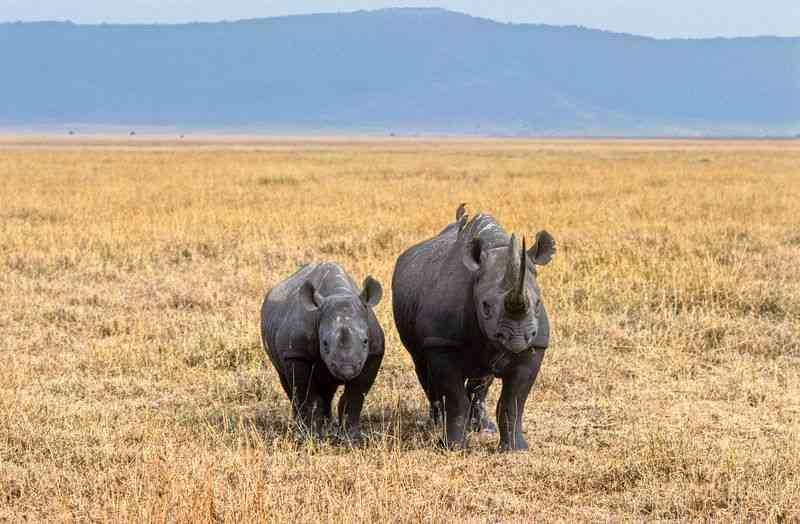
Rise and shine early this morning for an action-packed day in Tanzania’s Northern Safari Circuit. You will be collected in 4x4 safari vehicles and descend into the wildlife-rich Ngorongoro Crater, where most of your day is spent exploring. The Ngorongoro Crater is an ancient volcano caldera which forms a natural amphitheatre that encloses some of the densest animal populations in Africa, promising superb wildlife viewing. Members of most of Africa's large mammal species are found roaming freely in the crater, which is home to all the Big 5 - lion, elephant, buffalo, leopard, and rhino - alongside vast herds of wildebeest, zebra, eland, and other antelopes. You may also see a spotted hyena, or even a cheetah or wild dogs.
After a memorable day of game viewing in the Ngorongoro Crater, we ascend out of the crater and drive on to the Serengeti National Park close by. Entering the legendary Serengeti Park, we make our way to the central region of Serengeti National Park, called Seronera. Seronera is famous for its outstanding predator sightings, earning it the title of the 'Big cat capital of Africa'. Keep your eyes open for wildlife on our game drive en route to Seronera, where we camp the next two nights at a comfortable tented camp.
Day 40 of our Africa Overland Tour is set aside for exploring Serengeti National Park. The Serengeti is a vast, undulating plain, some 30,000 square kilometers. These flat, wide grasslands support huge numbers of grazing herds of wildebeest and other herbivores. It is considered one of Africa’s top safari destinations. Sit back and soak up the iconic African safari landscapes as our game drive criss-crosses the terrain in search of superb wildlife sightings.
We return to our tented camp in the Seronera for a hearty dinner after an exciting day.
On day 41, we return to Arusha, enjoying beautiful panoramic views of the Great Rift Valley en route. This evening we spend the last evening of our overland tour relaxing at the comfortable campsite in Arusha and recount our incredible adventures on this Cape Town to Nairobi Camping Safari.
On the final day of our epic Africa Overland Tour, we travel north into Kenya. Keep an eye out for Mount Kilimanjaro, which is visible in the distance on a clear day. Crossing the border into Kenya, the last country on our journey, we drive to Nairobi.
This comprehensive Cape Town to Nairobi Overland Tour comes to a close in Kenya's capital city today.
Some safari groups choose to eat out at one of Nairobi’s excellent restaurants this evening, after the tour, to celebrate their adventure of a lifetime through Africa together.
We recommend booking your incoming and onward flights at least one day before and after this Cape Town to Nairobi Camping Safari is scheduled. It is advisable to arrive the day before departure from Cape Town and fly out the day after the overland tour ends in Nairobi to allow for delays and changes.
Simply ask your friendly travel advisor to add pre-tour and post-tour accommodation to your safari booking.
This northbound Africa Overland Tour is also available in the opposite direction as the Kenya to Cape Town via Vic Falls Overland Camping Safari, starting in Nairobi and ending in Cape Town.
This Camping Overland Tour is also available as a Lodge Overland Tour - Africa Overland Tour: Cape Town to Nairobi (Lodge Safari), which follows the same itinerary and stays at comfortable lodges instead of camping.
For more details, contact African Budget Safaris
Please note that the Wildebeest Great Migration is seasonal. As a natural wildlife phenomenon, it is fluid and unpredictable. For this reason, seeing the Great Migration cannot be guaranteed.
The wildebeest and other wild herbivores migrate between the Masai Mara in Kenya and the Serengeti in Tanzania. These herds move in a massive circular route covering some 1200 miles (1931km). It is a continuous movement of wildlife that can be seen in different areas at different times of the year. During certain phases of this annual trek the animals disperse or slow down, whilst at other times the migration picks up speed, with the herds becoming larger and denser. Not only does the Wildebeest Great Migration vary from place to place and season to season but the movement of these large wildlife herds varies from year to year.
Please talk to a travel expert from African Budget Safaris about seeing the Wildebeest Great Migration on your safari to find out more. Also, check out our detailed article about the Great Migration in the Serengeti and the Masai Mara.
For up-to-date and confirmed pricing info for optional items, please drop us an enquiry.
Please note this tour or a portion of this tour may coincide with a family departure, in which case, children from 6 years old may be included in the tour. Please contact African Budget Safaris to confirm.
All Cape Town Departures |
1. Unguja, Tanzania
From Nairobi travel through Tanzania, Zanzibar Island, Malawi, Zambia, Victoria Falls, Botswana, Namibia and South Africa for epic scenery and diverse wildlife on this budget Overland Camping Safari.
An epic Africa Overland Tour from Cape Town to Nairobi (South Africa to Kenya) traveling via Namibia, Botswana, Zimbabwe, Zambia, Malawi, Tanzania & Zanzibar.
Camp around South Africa, Namibia, Botswana and Zimbabwe, starting in Cape Town and ending in Johannesburg, on this epic Southern Africa Overland Camping Tour.

Travel from Cape Town to Namibia on an 11-day overland camping safari via Fish River Canyon, the Namib Desert, Swakopmund and Etosha National Park.

Travel from Cape Town to Victoria Falls on a 19-day overland camping safari via the Namib Desert, Etosha National Park, the Okavango Delta and Chobe National Park.

This trip begins in Cape Town, South Africa and travels north through South Africa, Namibia, Botswana, Zimbabwe, Zambia and Malawi before visiting Zanzibar Island and ending in Dar Es Salaam, Tanzania
__small.jpg)
Great 36-day Southern Africa Overland Tour: camping safari to South Africa, Namibia, Botswana, Zimbabwe, Mozambique & eSwatini - from Cape Town to Johannesburg.
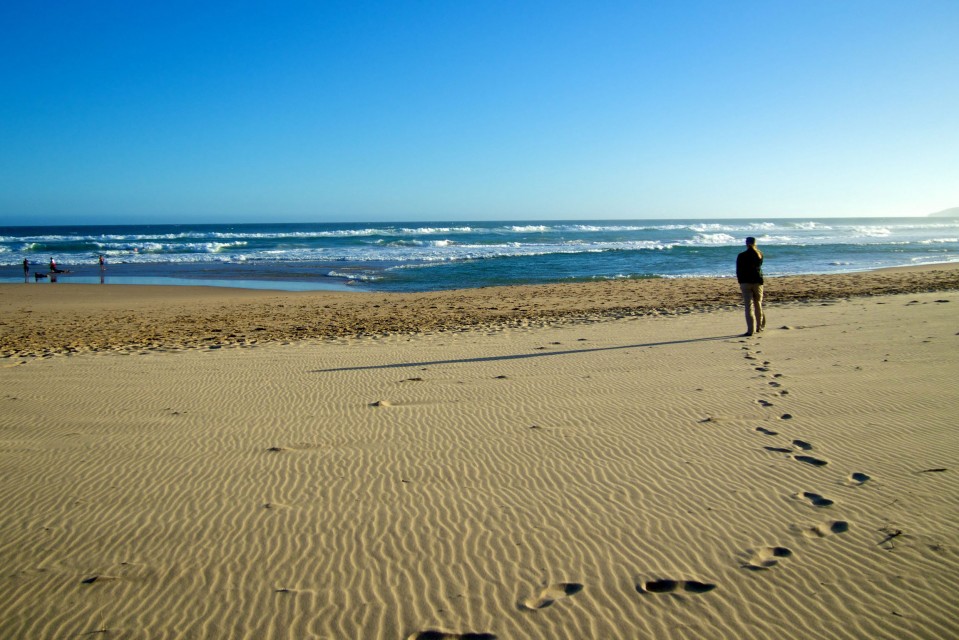 An all inclusive budget Cape Town to Garden Route Tour of South Africa, offering diverse adventure activities. Visit Storms River, Kysna, Hermanus, Big 5 Addo Elephant Park, Tsitsikamma Forest and more.
More on 6-Day Cape Town to Garden Route Tour - South Africa Safari
Our team has the destination knowledge to help you plan an unforgettable African adventure. We're based in Cape Town and ready to help.
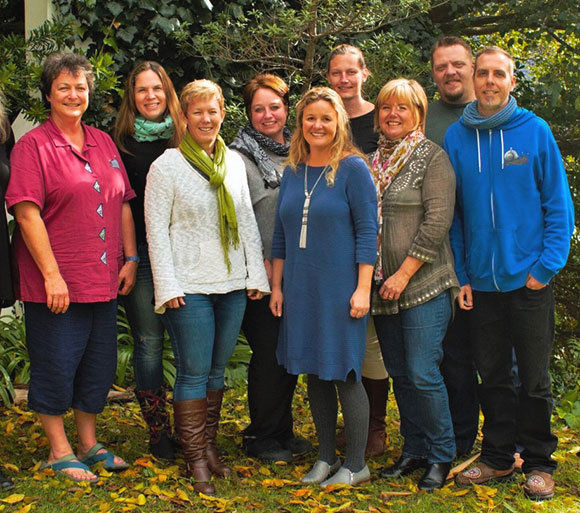
We can also plan you an affordable private group or tailor-made tour. We built our business on turning luxury travel into affordable travel.