
Get 25% discount for tour departures between 01/07/2026 and Find out more
Book by 30/06/2026 for tour departures before 30/06/2026 & Find out more
Get 20% discount on these camping safaris departing between Find out more
An epic African camping adventure meandering down from game-rich Kenya to picturesque Cape Town, via scenic, wildlife and beach highlights galore.
Scenic natural wonders range from the awe-inspiring Victoria Falls and the Great Rift Valley to the Sossusvlei Dunes of the Namib Desert, Fish River Canyon and Orange River. Go game viewing in the legendary Masai Mara Game Reserve, Serengeti Park, Ngorongoro Crater and Etosha Park. Explore Botswana, taking a leisurely river cruise on the Chobe River and camping in the pristine Okavango Delta.
Relax on the idyllic beaches of Zanzibar Island and along the golden-sand shores of Lake Malawi, swimming and enjoying optional activities. Discover the African cities of Nairobi, Dar es Salaam, Lusaka, Windhoek, Swakopmund and other vibrant urban spots. Encounter the colourful cultures of East and Southern Africa, visiting a Maasai Village in Kenya, walking with the Kalahari Bushman of Botswana and seeing San Bushman paintings in Namibia's Spitzkoppe.
During this trip you are likely to come across activities that encourage tourists to participate in lion, elephant or other wildlife interaction. This includes walking with lions, riding elephants and any other tourist operation putting travellers in close contact with animals that would normally live wild and separate from human contact.
We absolutely do not encourage or endorse this type of wildlife interaction operation. For more information on why this is not good for Africa's wild animals, please see our detailed blog post on the subject.



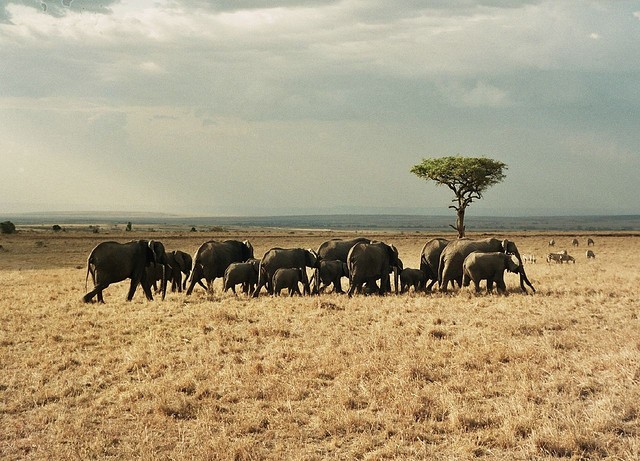
This Kenya to Cape Town Camping Adventure sets off from Kenya's fast-paced capital of Nairobi, in customized safari vehicles.
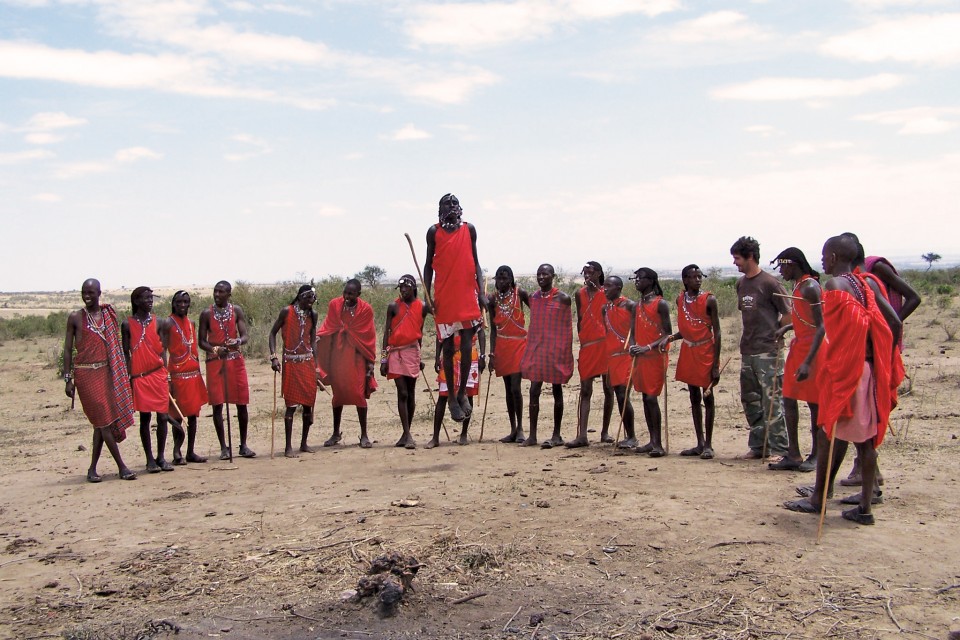
Leaving the city early in the morning, we travel southwest through the dramatic landscapes of the Great Rift Valley, stopping at the Great Rift Valley Viewpoint for a photo opportunity. Our destination is one of the most legendary safari destinations in the world, the Masai Mara Game Reserve. We enjoy expansive views en route, and later in the afternoon, we stop at a nearby Maasai village for an authentic cultural visit.
Our first two days are spent exploring this unforgettable East African wildlife reserve on game viewing drives in the ultimate African savannah setting. Morning and afternoon game drives reveal the magnificent mammals and other creatures that really make this quintessential 'Out of Africa' scene magical. Masai Mara is famous for the annual Great Migration when spectacular herds of hoofed animals cross the open plains and crocodile and hippo infested Mara and Talek rivers in search of fresh grazing. The mass migration of herbivores, including wildebeest, gazelles, zebras, impalas and hartebeest, attracts a host of predators and scavengers that come to feast on this bonanza of prey.
Mara is, however, an awe-inspiring wilderness to visit at any time of the year, hosting abundant wildlife and birds that can be sighted in all seasons.
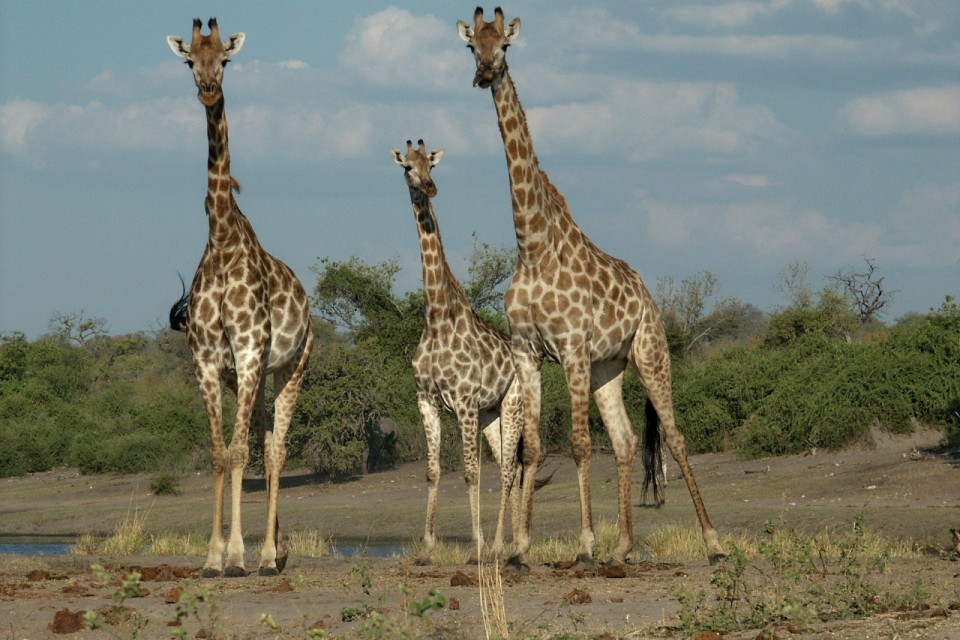
Masai Mara's other claim to fame is the exceptional population of big cats found here. Look forward to spotting cheetah looking out over the grasslands from the tops of termite mounds, leopards resting languidly in treetops and lions lazing in the shade. The full Big Five complement roam the beautiful African bush in Masai Mara, of which buffalo, lion and elephant are most commonly sighted. Game drives across the wide-open grasslands also reward us with sightings of an array of other wildlife, from zebras, jackals, baboons and Masai giraffes to hyenas, bat-eared foxes, warthogs and hippos.
We Camp just outside the vast Masai Mara Reserve in Kenya, getting into the laid-back rhythm of the African bush.
After exploring the beautiful Masai Mara, we leave the rolling plains dotted with thorn trees on day three,and make our way back through the Great Rift Valley to the urban jungle of Nairobi for an overnight stay.
Today we drive south through Kenya, crossing into Tanzania, another of East Africa's top safari destinations. From the Namanga border post, we head to bustling Arusha, arriving in this safari hub late in the afternoon.
Arusha is a pleasant town located at the foot of Mt Meru, Tanzania's second highest peak. The friendly town of Arusha marks the half-way mark between Cape Town and Cairo and serves as the gateway to Tanzania's popular Northern Safari Circuit. Explore this interesting town on foot, visiting the vibrant markets and shops in one of the oldest towns in Tanzania.
We camp on the outskirts of this buzzing town, surrounded by lush plains. In the afternoon, if time allows, you have the opportunity for an optional walk with a resident guide to a nearby Maasai village to meet the locals and glimpse their lifestyle and traditions.
We spend the next three days game-viewing in the famous Serengeti National Park and the game-rich Ngorongoro Crater as part of the Adventure Pass local payment.
On day five we travel across the Great Rift Valley, making our way west via the small and ethnically diverse town of Mto Wa Mbo in a smaller safari vehicle designed for game viewing.
En route to the vast open plains of the legendary Serengeti, we skirt the rim of the impressive Ngorongoro Crater, driving through the Ngorongoro Crater Conservation Area. From Ngorongoro, we drive down to what is probably the most famous game park in the world - Serengeti National Park. This flat wilderness area is even larger than Masai Mara, our first game viewing destination on safari.
Like the Masai Mara, the Serengeti is famous for the massive Wildebeest Migration that takes place between this Tanzanian game park and Mara to the north in Kenya. Covering around 14 763 km² the Serengeti Park is even larger than its Kenyan counterpart, Masai Mara. The vast savannas and grasslands stretch out to the horizon in a seemingly endless sea of open plains. The local Maasai named this expansive place Siringitu, which means 'the place where the land runs on forever'. Looking out over the endless plains teeming with game, predators and birds one is struck by the immensity and beauty of this wild continent.
We drive on to our unfenced camp, looking out for wildlife and birds as we pass through this classical African bush setting. At night we listen for the calls of hyena and the distant lion's roar coming out of the darkness settled over the untamed bush around us.
This morning we take a game drive through the Serengeti, travelling east back towards the Ngorongoro Crater. In the rainy season, the bush is lush and green, while winter sees us driving through golden-brown, more arid landscapes.
Before arriving at the huge unflooded caldera we stop for lunch and then continue up the slopes on the outside of the crater. Our camp for the night is located some 2400 metres above sea level on the rim of Ngorongoro Crater, offering breathtaking views over this natural wonder. Keep an eye out for wild animals in the area around the camp, where we stay warm in the cool night air.
The 326 km² Ngorongoro Crater, formed by volcanic action some 2,5 million years ago, is the largest intact caldera (collapsed volcano) in the world.
Day seven sees us driving down into the famous Ngorongoro Crater to enjoy an action-packed game drive in this World Heritage Site. Ngorongoro Crater is home to the highest concentration of predators in the world, including lions, leopards, jackals and hyenas, as well as a few cheetahs. The natural amphitheatre of the Ngorongoro Crater hosts huge herds of zebra, antelopes (impalas, gazelles and more) and wildebeest, as well as big bull elephants.
The Big Five (lion, leopard, rhino, elephant and buffalo) are all found here, along with all the main kinds of mammals. Birdlife is also prolific here, including endemic species. The crater basin incorporates a variety of habitats, from lush plains and valleys to peaks, craters and forests. We drive up the steep walls some 600m high and back to our campsite on the rim of the crater. Here we soak of the sweeping views over this natural wonder, dismantle the camp and enjoy lunch.
From the must-see Ngorongoro Crater, we return to the safari hub of Arusha, within view of Mount Kilimanjaro. We camp at the Meserani Snake Park tonight, where a great collection of snakes and other reptiles can be viewed up close.
Today we continue our drive south passing through the town of Moshi on the lower slopes of Mount Kilimanjaro, en route to our next camp in Bagamoyo. When skies are clear we get a glimpse of majestic Mt Kilimanjaro, Africa's highest peak and the tallest freestanding mountain in the world, some 5895m high.
Bagamoyo was founded in the late 18th century as an important trading port on the East African coastline. Tonight we camp close to a sandy beach fringed with palm trees, enjoying the warm Indian Ocean.
From the charm of Bagamoyo, we proceed southwards to Dar es Salaam, where we overnight before heading to Zanzibar Islands.
Dar es Salaam is a popular starting and ending point for travel to the nearby Zanzibar Islands, as well as for safaris to Tanzania's top game parks. This unpretentious city is no sleepy hollow, with its vibrant mix of cultures, active business centres and bustling markets. Dar es Salaam, Tanzania's largest city, offers an interesting mix of old and new - bringing together the traditional African, Arabic and Indian influences and modern western ways. The major port of Tanzania, Dar es Salaam has a long and colourful history as a trading hub and is now the commercial centre of this East African nation.
Tonight we camp at a beach resort on the coast near Dar es Salaam, relaxing into easy island-style living beside the Indian Ocean.
On day 10 we leave the mainland of Tanzania, taking a ferry to the exotic Spice Islands - Zanzibar.
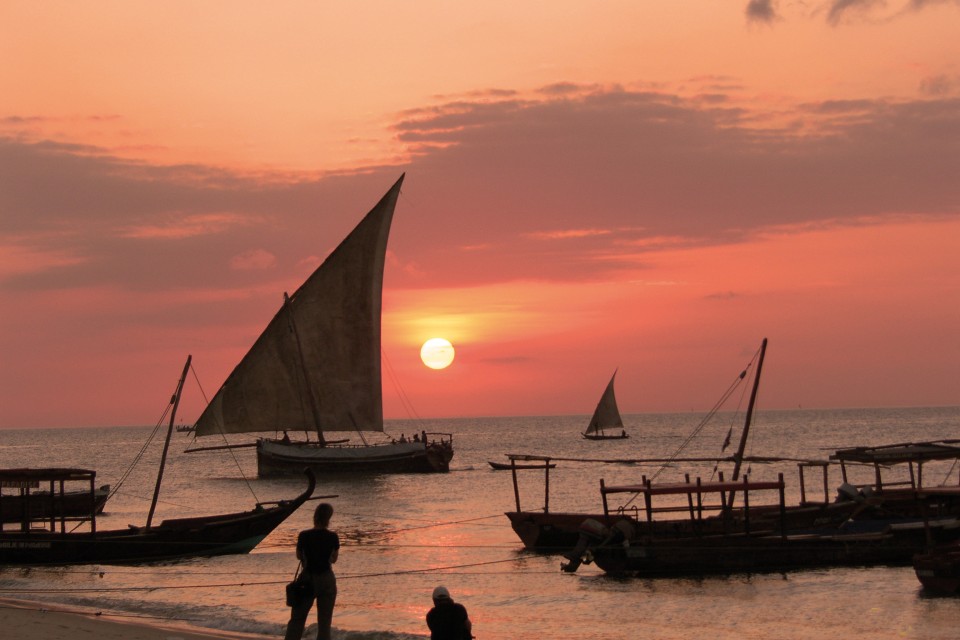
For the next few days, we enjoy a beach getaway on the main idyllic tropical island of Zanzibar, where white-sand beaches are lapped by clear azure waters. You are free to fill your time as you please, selecting from a variety of great activities. Options range from walks in the lush forests and aromatic spice tours in the plantations, to dhow sailing trips to off-lying islets and historic tours of old Stone Town with its narrow cobbled streets.
While on Zanzibar Island your tour guide is available to ensure that your plans run smoothly, but you are free to do whatever you choose.
For pure beach indulgence Zanzibar boasts picturesque tropical beaches where you can spend balmy days lazing around under coconut palm trees and swimming in the turquoise-blue ocean. Head to the stunning beaches of the north to enjoy excellent snorkelling and scuba diving along the coast or at the small islands just off the main Zanzibar Island. This is a beach paradise - ideal for catching some golden rays, sipping on a sunset cocktail and feasting on fresh seafood.
Zanzibar is not your typical African destination, given its long history as an important part of the spice route. Many of the great colonial explorers of the 19th century spent time in Zanzibar, from Richard Burton to David Livingstone. This beautiful island still has a strong Arabic influence, which can be seen in the architecture and culture. Visiting the mosques, churches, palaces and marketplaces on foot is the best way to discover more about Zanzibar Island, past and present.
Please Note: Standard accommodation and breakfasts are included as part of the tour. To give you more freedom with your time and activities, the lunches and dinners are not included in Zanzibar. We usually spend a night in Stone Town and two nights on the northern coast at a beach resort.
On day 13 you have some free time in the morning to explore Stone Town, or shop for curios and trinkets before we take the ferry back to Dar es Salaam. Back on the continent, we make our way out of bustling Dar, as locals call the city, returning to the beach resort.
On day 14 we leave the coast behind heading back into rural Tanzania. We drive through the rolling hills and woodlands of Mikumi National Park, keeping our eyes open for forest elephants, antelopes, zebras and giraffes along the road, as well as a variety of birds.
This evening we have sundowners at a local bar and head to our campsite near Mikumi, where we relax around the campfire under starry skies.
If time allows you can embark on an optional late afternoon game drive in Mikumi National Park.
Next, we head to Iringa, not far from the Malawi border. We spend our last night in Tanzania camping on a productive family-run farm that's been owned by the same family for more than 70 years. The farm lies in the hills at about 1600m above sea level, which gives us a refreshing break from the heat of the tropical coast and African bush. Organic beef, chicken, lamb and vegetables are produced on this farm, located in an incredibly scenic part of Tanzania's Southern Highlands.
We unwind in the highlands enjoying the farmhouse's famous chocolate brownies, hot showers and creamy Amarula liqueur in the cosy bar.
Day 16 sees our safari travelling further south traversing verdant mountain passes and driving through tea and banana tree plantations, as well as fertile fields where livestock graze as we head to the Mbeya Region en route to Malawi.
We stop at the serene Utengule Coffee Lodge, tucked away in the stunning Mbeya Range of Southern Tanzania for our overnight stay. Here, you can take in the awe-inspiring views of the East African Rift Valley, unwind by the pool, or engage in a variety of activities such as squash, tennis, pool, table tennis, or volleyball. For coffee enthusiasts, there’s an optional guided tour of the coffee plantation, complete with a roasting demonstration and a chance to enjoy a cup of freshly grown coffee.
After our final night in Tanzania, we will make our way to the Songwe border post and cross the border into Tanzania's neighbour Malawi. This African country is fondly called the Warm Heart of Africa, because of its reputation for being welcoming and friendly.
We head straight to the scenic Lake Malawi and our next camp, situated at Chitimba Beach on the northern shores of Lake Malawi also called Lake Nyasa in Tanzania and Mozambique. Located along the shores of this vast lake, Lake Malawi is the southernmost of the African Great Lakes dotting the Great Rift Valley in Eastern Africa. This African Great Lake covers nearly one-fifth of Malawi and is the highlight of any trip to Malawi. Lake Malawi is also renowned for having the largest number of endemic freshwater fish species of any lake in the world!
It serves as an important source of food and income with its fishing industry and is a vital source of livelihood for many Malawians. The lake supports a variety of occupations, with fishermen, fish traders, and canoe and net makers all relying on its abundant resources.
The shores of Lake Malawi are lined with pretty golden-sand beaches and lively fishing villages where Malawians fish and trade for a living. Many of the fishing folk head out onto the lake in traditional dugout canoes, called Bwato. The lanterns of fishermen out on the lake twinkle like stars in the night, which is why the great explorer David Livingstone called it 'The Lake of Stars'.
Relax on the scenic golden beach flanked by the green Nyika mountains at Chitimba. The tropical climate is ideal for swimming in the warm, calm waters and relaxing under the banana palms and papaya trees. surrounded by the famous Livingstonia and Nyika mountains. Alternatively, you can explore the village on foot, browse the crafts market, visit the school and meet the locals. You can also hike up onto the Nyika Plateau where the old missionary village of Livingstonia, with its church dating back to 1894, lies high above Lake Malawi.
Please Note: The Malawi stretch of our safari is subject to changes at the discretion of the crew, in order to make the best of our time in Malawi.
Today we leave Chitimba and embark on a scenic drive through lush rubber plantations towards Mzuzu, the capital of Malawi's northern region and the country's third-largest city. We make a brief stop in this pleasant town surrounded by forested mountains and farmlands to stock up on supplies and explore the vibrant local markets before continuing to our beach lodge accommodation nestled along the shores of Northern Lake Malawi in Nkhotakota. Over the next two days, you can unwind and enjoy the warm, inviting waters of Lake Malawi or take part in a variety of optional activities. Whether it’s kayaking, snorkelling, exploring nearby villages, or hiking to a picturesque waterfall, there’s plenty to keep you entertained.
Leaving Lake Malawi we drive through the Nkhotakhota Game Reserve towards the border where we cross into Zambia. Once border checks are completed, we continue our safari to Petauke, a fertile rural region in the Eastern Province of Zambia known for its agricultural production of crops like maize, cotton, sunflower, groundnuts, and soybeans.
Getting an early start this morning we leave Petauke and drive along the Great Eastern Road towards the Zambian capital, Lusaka. The scenic drive takes us through fertile lands of farms and gentle hills, dotted with little Zambian villages and across the Luangwa River.
Arriving in fast-expanding Lusaka on the southern stretch of our East & Southern African Adventure we continue to a farm outside of the bustling city. We camp in a peaceful rural setting, where we can relax after our long day on the road.
The capital of Zambia, Lusaka is the country's most modern and cosmopolitan centre. Set high on a plateau this is the heart of the nation, where the central government is based, major commerce happens and nightlife can be experienced.
Driving further south we make our way to the Zambian border with Zimbabwe, where the Zambezi River forms Victoria Falls. We camp along the mighty river, near Livingstone in Zambia. The camp is a short distance from Vic Falls, serving as our base for the next few adventure-filled days.
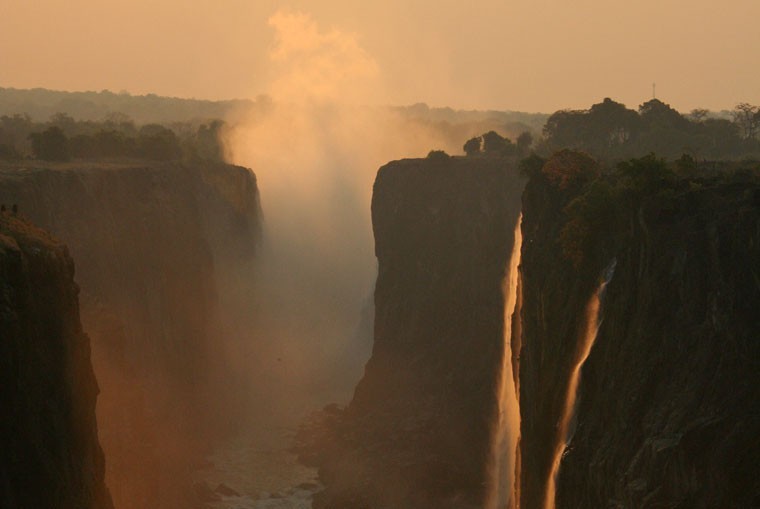
Our first adventure takes us to the natural wonder of Victoria Falls to admire the largest sheet of falling water in the world. An awesome sight at any time of year, we get to see this spectacular waterfall up close, even feeling the spray from its crashing waters. The locals call it ‘Mosi-ao-Tunya’ which means the smoke that thunders, a name Victoria Falls lives up to - roaring as it crashes into the Bakota Gorge and sends up a cloud of mist visible as far as 30 km's away. A visit to the spectacular Victoria Falls is a once-in-a-lifetime experience!
Returning to our lovely camp your guide takes you through the array of adventure activities on offer, helping you to map out your next few days.
Outdoor and adventure activities include horse riding, game walks, canoeing, riverboarding and sunset river cruises. Victoria Falls is renowned for its superb whitewater rafting, considered some of the best in the world. If you have your heights set higher then you can take the adrenalin-inducing leap off the Victoria Falls Bridge, bungee jumping into the deep gorge below or do an exhilarating gorge swing. For those wanting to go higher still, there are thrilling helicopter flips and microlight flights over the mighty Vic Falls.
We spend the next three days on this Overland Camping Adventure in Livingstone, Zambia, camping along the Zambezi. The scenic camp is located inside Mosi-oa-Tunya National Park, incorporating the Victoria Falls and 20kms of Zambezi riverside above the falls. The camp is thus ideally located for embarking on game drives and walks in the wildlife section of Mosi-oa-Tunya Park, home to numerous wild animals and birds. Sightings include giraffe, zebra, buffalo, Zambia’s last white rhinos, warthog and various antelope species, as well as crocodiles and hippos lurking in the river.
The next few days are for having fun at your own pace, doing exactly what you choose to in this fantastic place. You have three days to sample the impressive variety of activities available in Africa's Adventure Capital.
When you've had your fill of outdoor thrills, or if you're looking for something other than adventure activities, then there are cultural and historical highlights to visit. Go to local markets to see African carvings, curios and crafts and buy some gifts and souvenirs. Cross over into Zimbabwe to visit a lively township or visit the Livingstone Museum and walk around the historic town. You could also opt to do voluntary work at a local schools project or other conservation or social upliftment projects.
Spend your time between activities resting at our pretty camp and watching the mighty upper Zambezi River flow by, keeping an eye out for wildlife and birds. The camp overlooks the Zambezi River where elephants can be seen crossing the river, along with sightings of various monkeys, hippos and other animals.
Please Note: As in Zanzibar, during your stay in Vic Falls only breakfasts are included to allow for flexibility with activities (half and full day), with some activities including meals. Try out the local eateries in Livingstone or enjoy a selection of reasonably priced meals (budget US$15 -$30 per meal) at the camp restaurant, whilst looking out over the Zambezi River.
We depart from Livingstone after breakfast, taking the short drive to Kasane, gateway to Chobe National Park in northern Botswana.
Botswana’s premier game park, Chobe National Park covers 10566 km² of unspoiled wilderness in northeastern Botswana. This diverse game park is home to one of Africa's largest elephant populations and exceptionally high concentrations of wildlife. Chobe game park hosts lion, zebra, buffalo, giraffe and a variety of antelope species, as well as an abundance of birdlife.
We take a late afternoon Chobe River cruise looking out for hippo, large elephant herds, cape buffalo, sable and a variety of birds along the river’s edge, listening out for the cry of the African fish eagle. Cruising along the river which forms the northeastern border of Chobe Park, we pass through the fertile floodplains that host the only puku antelopes inhabiting Botswana.
Early on the morning of day 27, we embark on a game drive in Chobe National Park. Exploring the grasslands and bush in an open vehicle we look out for the abundance of birds and wild animals that make this one of Africa's finest safari destinations.
After game viewing in Chobe, we drive south through rural Botswana, possibly spotting roaming elephants and other animals along the way. In the afternoon we arrive at our camp, located in an area where animals roam freely. Elephants and various kinds of buck are often seen up close at the camp which is unfenced.
Today we head west along the outskirts of the arid Kalahari Desert and salt pans en route to Maun, the gateway to the watery Okavango Delta.
We overnight at a camp near the safari hub of Maun, before our trip into the Okavango Delta. Either this afternoon or when we return to Maun after camping in the Delta, there is usually time to take an optional scenic flight over the Okavango Delta – a breathtaking experience that enables you to view the vastness of this pristine wilderness.
The jewel in Botswana’s crown, the Okavango Delta is the world's largest inland delta, covering 1.6 million hectares of natural waterways and pristine wilderness. The delta, with its source in Angola, spreads out in an intricate web of channels on the flat plains of Botswana emptying into the desert.
We spend a night camping in the Okavango Delta, experiencing this unique wilderness area up close.
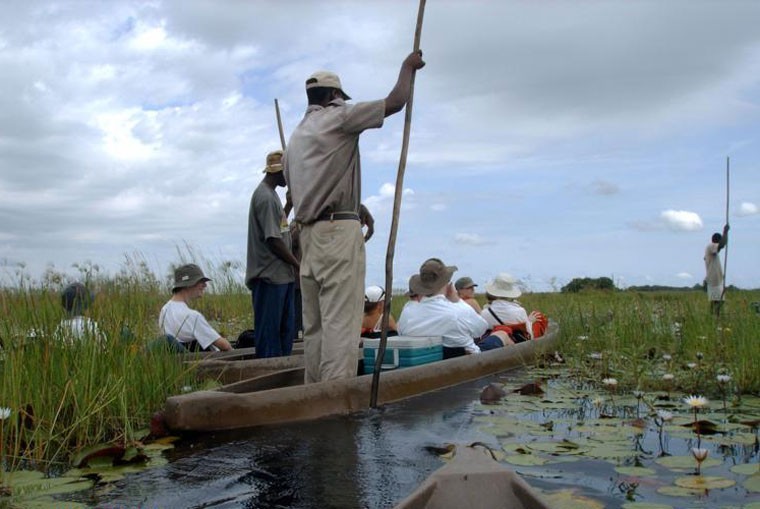
First we drive to a mokoro base in an open 4x4 safari vehicle, where we switch to traditional vessels to navigate by water. Knowledgeable and experienced local guides accompany you in this extensive wetland system “poling” you through the labyrinth of winding channels and lagoons in traditional dugout canoes, called mekoros.
You will also have the opportunity to explore the delta on a thrilling bush walk. Exploring the narrow channels of the delta we look out for wildlife including hippo, crocodile and an array of birds amongst the giant lily pads and tall grasses of the reed-fringed islands.
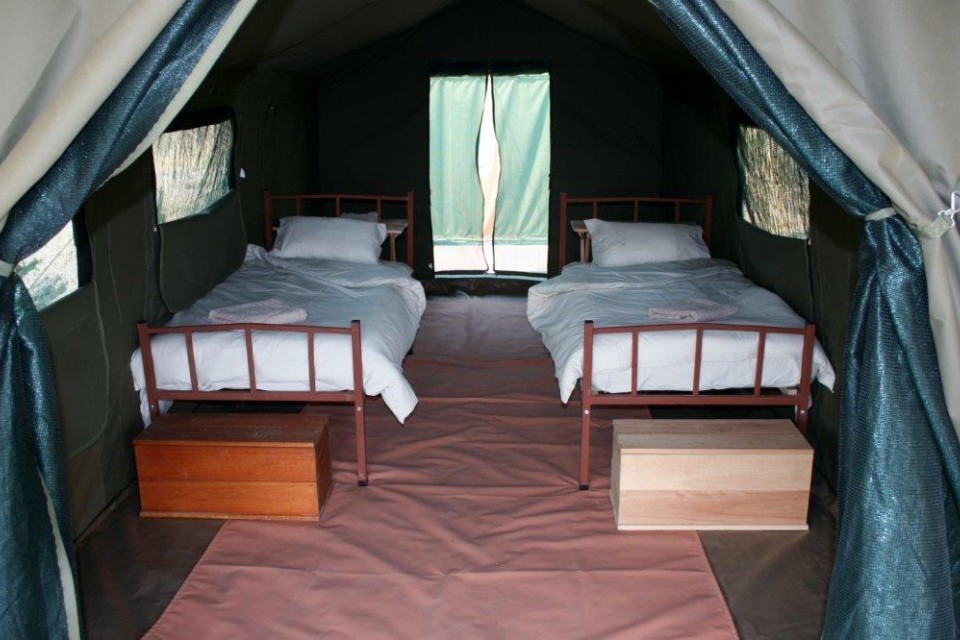
Our overnight tented camp is set on the banks of a tranquil lagoon, in an area of the watery Okavango Delta often visited by elephants. We stay in tents with twin beds and en-suite bathrooms, at our basic but comfortable bush camp. At night you can hear the sounds of the African bush surrounding you for miles as you sleep under starry skies in this remote wilderness – the wildlife experience of a lifetime!
On day 30 we leave the tranquil Okavango Delta, gliding out along the channels in mekoros and then driving back to Maun.
Arriving back at our camp near Maun we have lunch followed by free time to relax or take an optional scenic flight over the delta. The scenic flight gives you a bird's eye view over the delta, allowing you to fully appreciate the vastness of the beautiful wilderness area that we just explored. The views over this pristine wildlife haven will take your breath away! Look out for hippos, elephant and buffalo in the waterways and bush and see the watery channels meandering their way through the Delta in the intricate web of this changing wetland system.
We begin our journey from Maun, traveling through Ghanzi, where the road winds along the edge of the vast Kalahari Desert, heading toward the Namibian border. We cross into Namibia and head to our camp nestled in the peaceful Omaheke region near Gobabis, just a stone's throw from the border. In this tranquil setting, we have the opportunity to meet the San/Bushman people and join them for a guided bush walk, offering a rare glimpse into their ancient way of life. During the walk, we learn how these remarkable people live in close harmony with nature, expertly managing the land’s renewable resources without disrupting the fragile ecosystem around them. It's a powerful lesson in sustainability that we can all take to heart. By supporting this ecotourism initiative, you’re not only helping to sustain the San/Bushman’s income but also playing a role in preserving their rich cultural heritage.
Note: Due to a long travel day and the border crossing into Namibia, the Bushman walk may be moved to the morning of Day 32.
In the morning we continue our safari and make our way to Windhoek.
We stay in Windhoek, Namibia’s capital city, for the night and get to enjoy some nightlife after our days spent out in the untamed wilderness areas of Southern Africa. Explore the laidback city of Windhoek, located in a basin within in the Khomas Highlands of Namibia.
Discover the rich history of this city with its colonial German heritage and architecture. This small capital city is situated in the geographic epicentre of Namibia, nestled between the Auas and Eros Mountains. Eat out at a local restaurant and let your hair down at the well-known 'Joes Beer House'.
Departing from Windhoek our journey takes us north to Etosha National Park, the "Great White Place" dominated by a vast salt pan. We stay in Etosha for the next two nights, camping near one of the park’s watering holes, all of which are floodlit at night offering exciting nocturnal game viewing.
We embark on a short afternoon game drive upon arrival in Etosha and spend the whole of the next day game viewing.
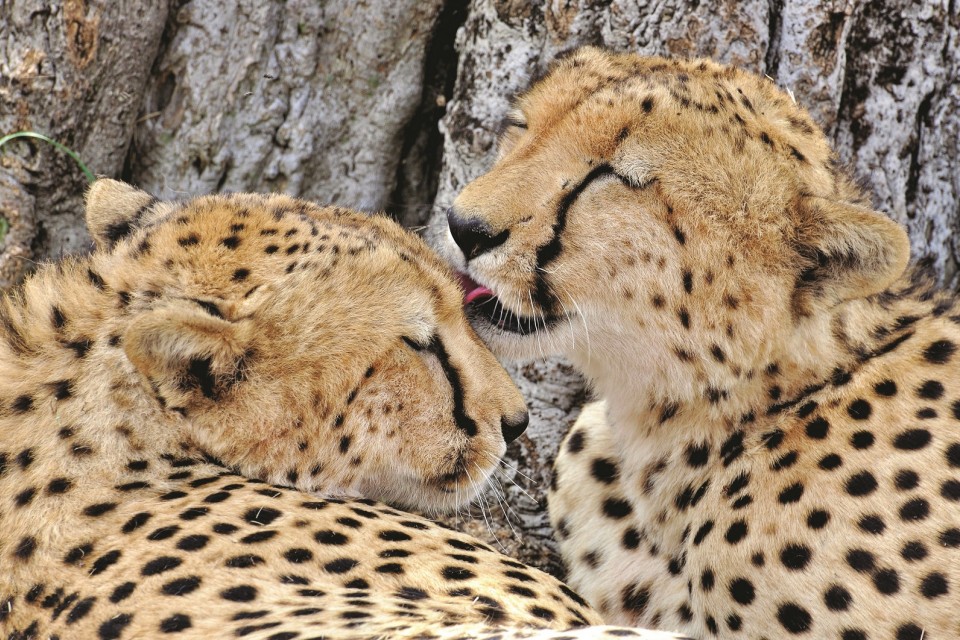
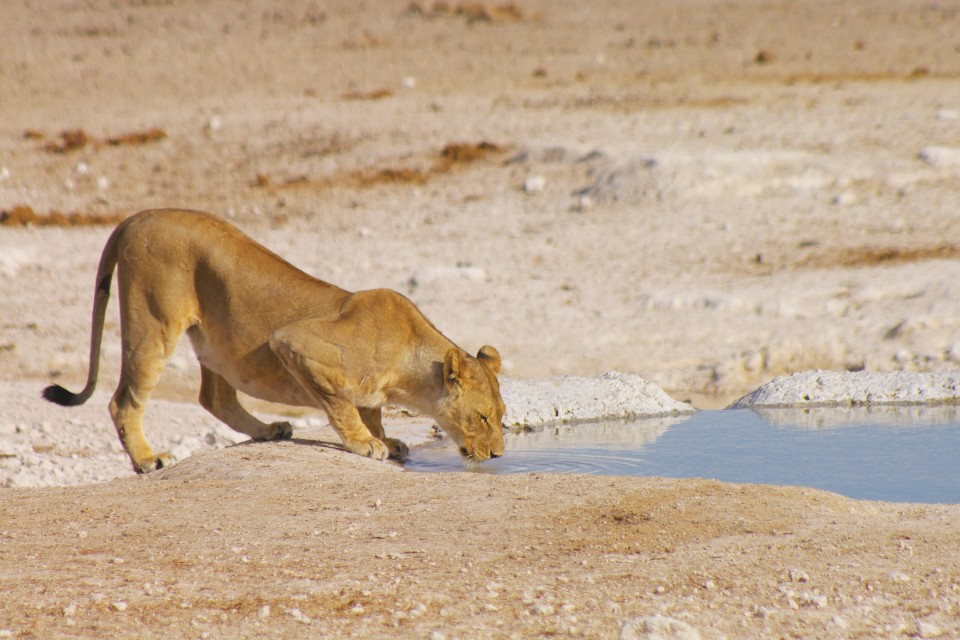
The 20 000 km² Etosha Park is home to thousands of wild animals and is considered one of the most important game reserves in Southern Africa. This vast game park is inhabited by around 340 bird species and over 100 mammal species, notably the endangered black rhino and cheetah, as well as black-faced impala, tsessebe, roan antelope and gemsbok. In the rainy season, shallow lakes form on the pan, with the watering holes supporting Etosha’s wildlife all year-round.
We leave Etosha National Park game viewing en route, to spot some animals not seen on the previous days. Next, we make our way back south traveling through the eerie landscapes of the Spitzkoppe area, near Kunene Region.
The Spitzkoppe area is scattered with exposed granite formations that we explore to see the ancient rock paintings of Bushman tribes. The most impressive of these rock paintings is called “Bushman Paradise”. The peculiar rock formations reach up to 1728m above sea level, offering spectacular views. Explore this dramatic area of Namibia, soaking up its stillness. Witness the ever-changing colors of the rock formations, especially at sunrise and sunset, when they take on intense red shades.
Our Spitzkoppe Camp, located at the base of the rocky mountain, is owned and maintained by the local community. All proceeds from our stay contribute to a better future for the local community at Spitzkoppe.
We drive along some of the striking Atlantic coastline, known as the Skeleton Coast en route to Swakopmund, located between the Namib Desert and the Atlantic Ocean.
The quaint colonial town of Swakopmund is Namibia’s premier seaside resort, featuring palm-lined avenues and beachside promenades. Take a sightseeing stroll through the unique town and relax at one of the street-side cafes or get your adrenaline pumping on one of the adventure activities. There are plenty of adventure activities to choose from at Swakopmund including kayaking, quad biking, sand boarding, and skydiving as well as scenic flights and guided desert walks.
There are no planned activities scheduled in Swakopmund, leaving you free to pick and choose the activities you like best.
Please Note: Only breakfasts are included in Swakopmund to allow for more flexibility with activities, especially half and full-day tours (some of which provide meals). There are lovely cafes and bakeries in Swakopmund offering reasonably priced meals (budget R70-120 per meal).
Today we leave the cool coastline and head inland due south. Along the way we cross the Tropic of Capricorn, pausing to take photos. Our next stop is the tiny hamlet of Solitaire - Namibia’s smallest town.
Leaving Solitaire early in the morning we continue into one of the oldest deserts in the world, the Namib Desert. First stop - the renowned Dune 45 in the Namib-Naukluft National Park. One of the largest game parks in Africa and Namibia’s biggest conservation area, Namib-Naukluft covers 50 000 km² of dunes, plains and mountains. Reaching the iconic Dune 45 we climb to the top for photographs over the glowing desert dunes. In the Sossusvlei area of the Namib Naukluft Park, we see some of the world’s highest sand dunes, reaching up to 300m tall. The towering orange-red dunes of Sossusvlei are ideal for photographic opportunities, especially at sunrise or sunset.
After climbing Dune 45 we have a well-deserved breakfast and continue deeper into the park with a nature walk to Dead Vlei where a dramatic scene awaits. The white pan contrasts sharply with the dead trees and red-orange dunes around it. From the dunes, we head to Sesriem Canyon to see the layers of sedimentary rock exposed through ages of erosion.
Tonight we stay near Sesriem, at a camp with a watering hole where gemsbok are often spotted in the late afternoon.
We continue south through this arid land scattered with strange-looking quiver trees. Our destination for today: the Fish River Canyon. Arguably the largest canyon in Africa and the second largest in the world - this beautiful natural wonder is around 500m deep and over 160km in length. We explore this scenic area enjoying spectacular views over the sharp “Hell’s Bend” corner of the canyon.
Next, we travel down towards South Africa leaving the unforgettable deserts and vast game parks of Namibia behind. Continuing south we drive to the Gariep River, which forms the border between South Africa and Namibia. We spend the night camping on the Namibian banks of the river enjoying the rugged natural setting. With its source in the Drakensberg Mountains the Gariep, formerly named the Orange River, is South Africa’s longest river, almost traversing the continent.
Relax at our camp along the water’s edge, taking a swim and enjoying nature. Or embark on an optional canoeing trip looking out for the abundance of birdlife in this remote area.
Leaving the dramatic Gariep River area we proceed south into the Namaqualand region of South Africa. Namaqualand is best known for its prolific display of blooming wildflowers in spring (best seen between August and October).
We overnight at a picturesque campsite near the Olifants River and have the opportunity to sample some of the fine wines (optional extra) of the Western Cape Province of South Africa.
We travel south passing the rich fruit growing area of Citrusdal and admire the spectacular views as we meander down the Picketberg Pass towards Cape Town.
Lastly, we reach the beautiful city of Cape Town, our final stop on this Kenya to Cape Town Camping Safari.
We recommend that you arrange to spend a few post-tour days in the cosmopolitan city of Cape Town. One of the most beautiful cities in the world, Cape Town has something for everyone, from outdoor activities and wineland tours to world-class shopping and a lively nightlife.
This tour comes with a Mandatory Adventure Pass, which is charged in addition to the tour price. This Mandatory Adventure Pass, includes major tour highlights and activities. The Adventure Pass can be pre-purchased when booking your tour, or at the start of your trip, payable in cash, directly to your tour guide.
Contact African Budget Safaris for a detailed and up-to-date itinerary description, including everything that is covered by the Mandatory Adventure Pass. See full pricing info above for Mandatory Adventure Pass pricing.
Transport on this tour is in a 24-seater, custom-built safari truck. The self-contained truck is fitted with onboard tables, individual lockers (70-litre) and a freezer, as well as safety features. The safari truck also features plug sockets, a library and an i-pod jack. Transport includes mokoro (dugout canoe), riverboat, 4x4 safari vehicle and ferry.
Accommodation is in two-person dome tents fitted with fly sheets, sewn-in ground sheets, insect screens and foam camping mattresses. Campsites used feature standard bathroom and showering facilities, electricity points and sometimes a shop, bar and swimming pool.
On Zanzibar Island accommodation is in basic travel-class hotels and in the Okavango Delta accommodation is in pre-erected twin-share tents with en-suite facilities.
The group prepares the included meals in camp and help with preparation is invited. Most dietary requirements can be catered for on the road, upon request at the time of booking.
Some of our National Park visits and game viewing drives are conducted using local services, to ensure the best quality game driving and to comply with local authority rulings. Using local African guides and service providers also adds to our safari experience and allows us to contribute to the local communities.
Please note that the Wildebeest Great Migration is seasonal. As a natural wildlife phenomenon, it is fluid and unpredictable. For this reason, seeing the Great Migration cannot be guaranteed.
The wildebeest and other wild herbivores migrate between Masai Mara in Kenya and Serengeti in Tanzania. These herds move in a massive circular route covering some 1200 miles (1931km). It is a continuous movement of wildlife that can be seen in different areas at different times of the year. During certain phases of this annual trek the animals disperse or slow down, whilst at other times the migration picks up speed, with the herds becoming larger and denser. Not only does the Wildebeest Great Migration vary from place to place and season to season but the movement of these large wildlife herds varies from year to year.
Please talk to a travel expert from African Budget Safaris about seeing the Wildebeest Great Migration on your safari to find out more. Also, check out our detailed article about the Great Migration in Serengeti and Masai Mara.
For up-to-date and confirmed pricing info for optional items, please drop us an enquiry.
This tour does take children.
All Nairobi Departures |
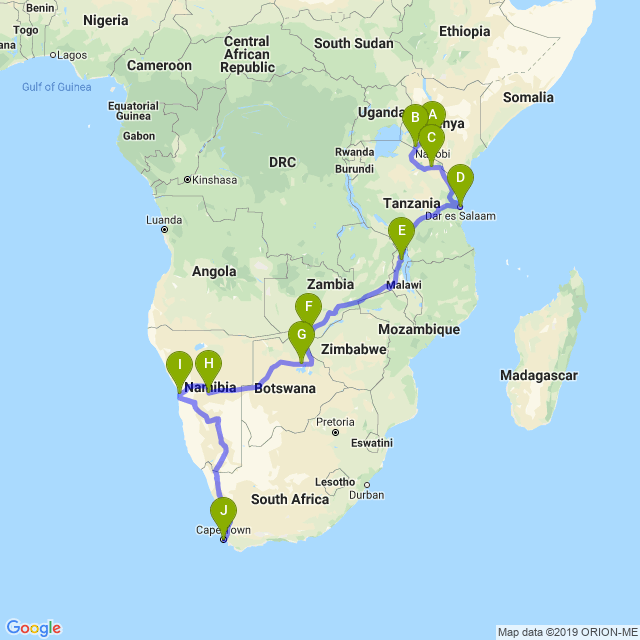
From Nairobi travel through Tanzania, Zanzibar Island, Malawi, Zambia, Victoria Falls, Botswana, Namibia and South Africa for epic scenery and diverse wildlife on this budget Overland Camping Safari.
From Nairobi travel through Tanzania, Zanzibar Island, Malawi, Zambia, Victoria Falls, Botswana, Namibia and South Africa for epic scenery and diverse wildlife on this budget Overland Lodge Safari.

Combine an epic Kenya Masai Mara Safari & Uganda Gorilla Trekking on this budget Camping Overland Tour in Africa.

A wild African safari adventure for young travellers only, from Serengeti & Zanzibar to Victoria Falls. Explore Serengeti, Ngorongoro, Zanzibar beaches, Lake Malawi & Victoria Falls.

Experience gorilla trekking, chimpanzee tracking & Jinja Nile River adventures in Uganda and wildlife safaris in Lake Nakuru on this 14-day Kenya and Uganda overland camping safari.
The best Budget Africa Overland: an epic camping tour of Kenya, Uganda, Tanzania, Zanzibar, Malawi, Zambia, Zimbabwe, Botswana, Namibia & South Africa

Track mountain gorillas in Uganda and explore Kenya's Masai Mara on an 18-day camping safari featuring gorillas, chimpanzees, Big 5 wildlife, Lake Nakuru and Rift Valley.
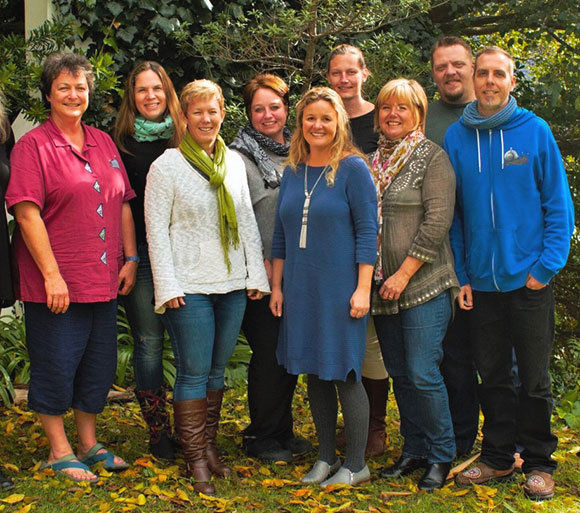
Our team has the destination knowledge to help you plan an unforgettable African adventure. We're based in Cape Town and ready to help.
We can also plan you an affordable private group or tailor-made tour. We built our business on turning luxury travel into affordable travel.