Giraffes are the sky-high celebrities of the safari landscape, and no African safari is complete without seeing the world’s tallest mammal. Giraffes are ubiquitous in most safari destinations, but do you know the best places to see giraffes in Africa?
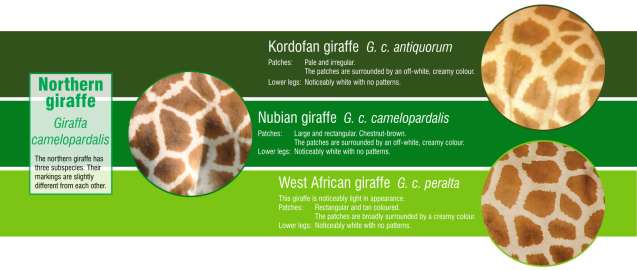
The northern giraffe ranges from West Africa across southern Chad, the Central African Republic, northern Cameroon, the northern Democratic Republic of Congo, and western South Sudan
Once common and widely distributed, giraffes have lost a staggering 90% of their habitat in the last 300 years. Giraffe conservation groups believe that, though common in game reserves across Africa, these gentle giants are facing a silent extinction.
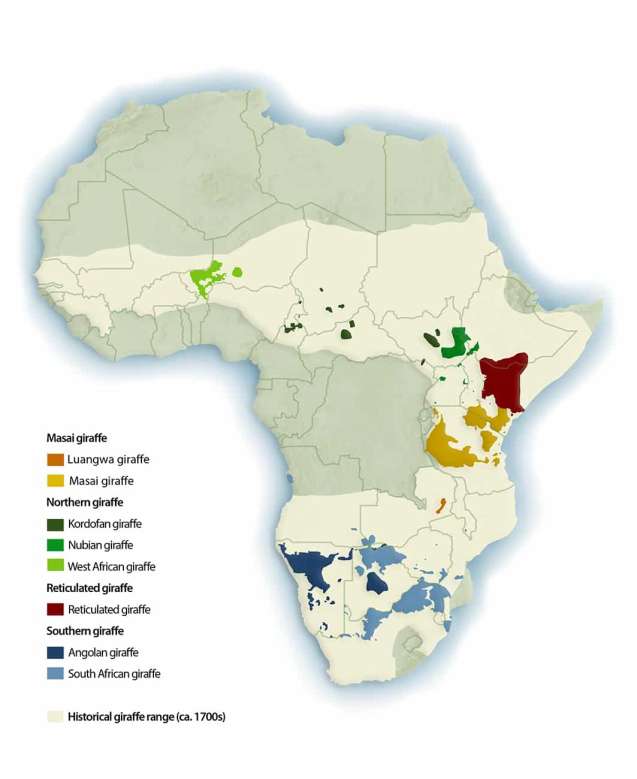
This blog looks at the best places to see giraffes in Africa
If you would like to learn more about giraffes and the work being done to save them, visit the Giraffe Conservation Foundation.
Where are the best places to see giraffes in Africa? These are African Budget Safaris' top giraffe destinations in East and southern Africa.
East Africa is home to the classical African safari. Open savannahs with iconic umbrella trees and vast herds of animals. East Africa is the best region to see giraffes in Africa. The best safari destinations to see giraffes in East Africa include Samburu, the Masai Mara, and Nyerere National Park. These are the best giraffes spotting destinations in East Africa.
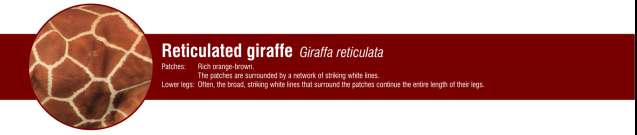
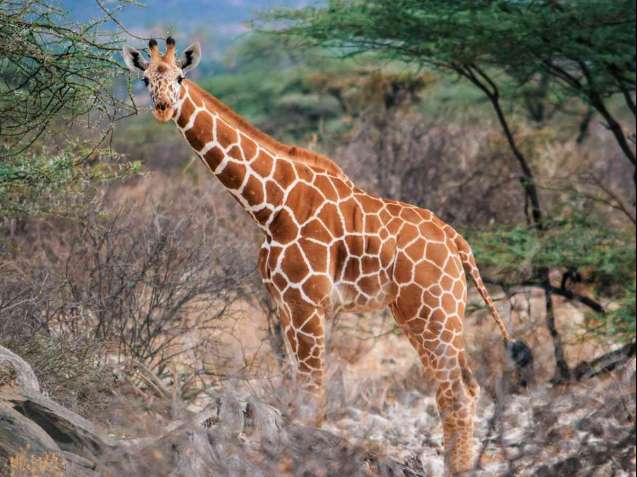
Samburu National Reserve is an outstanding safari destination. In addition to the Samburu Special 5, the Beisa oryx, gerenuk, Grevy’s zebra, the Somali ostrich, AND the reticulated giraffe.
The reticulated giraffe is a striking animal, with rich brown patches surrounded by well-defined white lines. This is your stereotypical giraffe drawn by children all over the world.
Reticulated giraffes are found throughout northern Kenya and southern Ethiopia. The largest of all giraffes, only an estimated 15,950 wild animals remain. As a result, the reticulated giraffe is listed as endangered by the IUCN.
95% of these animals live outside of government-protected areas.
In recent years, with better conservation practices, reticulated giraffe numbers across Kenya have been increasing.
Samburu National Reserve remains a giraffe stronghold and is the best place in Kenya to see this endangered species.
|
Giraffe Fact: Just like a human fingerprint, no two giraffes have the same skin pattern. |
|---|
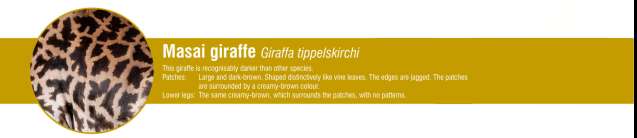
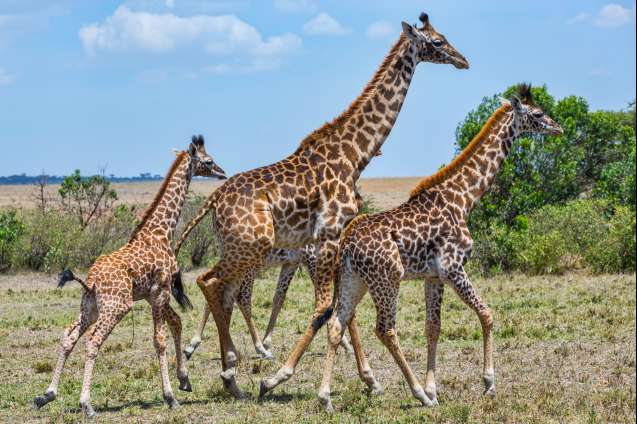
The Masai Mara is home to the Masai giraffe. Masai giraffes are a darker brown, displaying jagged, vine-shaped patches, surrounded by creamy brown. The Masai giraffes are the tallest in Africa.
Masai giraffes range across central and southern Kenya and throughout Tanzania. There are over 45,000 Masai giraffes and they are also known as Kilimanjaro giraffes.
An endangered species, the Masai giraffe population - after declining for decades - has shown a recent increase in numbers.
| Giraffe Fact: Masai giraffes have recently been translocated to Akagera National Park in Rwanda. |
|---|
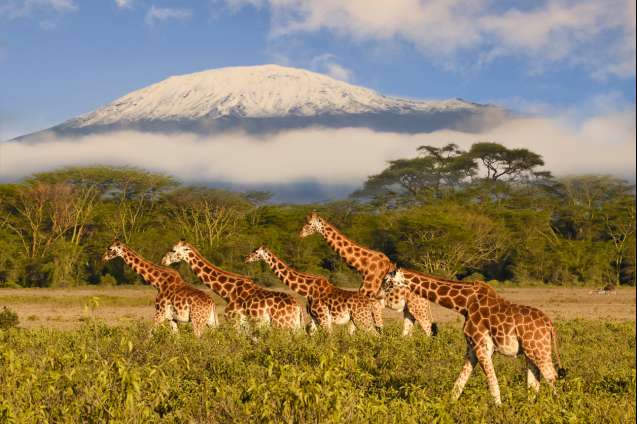
Another great safari destination to see Masai giraffes is Amboseli National Park.
Characterized by its dusty plains and lush marshes, the park’s eastern acacia forests are a magnet for giraffes. These umbrella thorn acacias are the favourite food of the Masai giraffe.
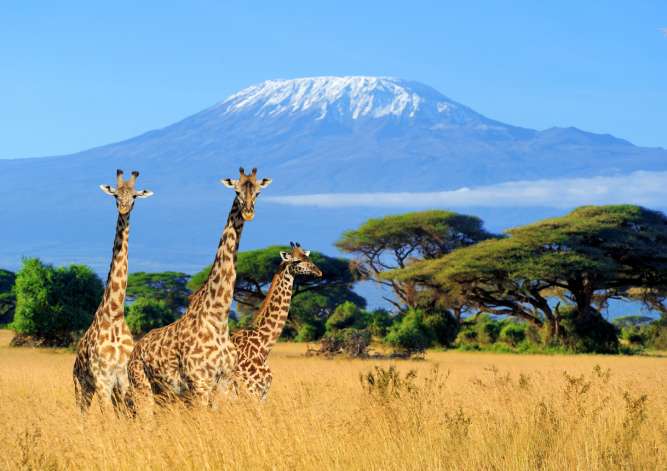
A big highlight of visiting Amboseli is the views of Mount Kilimanjaro which rises across the border in Tanzania. The holy grail of safari photography is to nab a photo of Kilimanjaro with giraffes and acacias foregrounding the lofty peak.
| Giraffe Fact: Giraffes stand between 5 & 6 meters in height. Males weigh around 1,600 kg, while females weigh around 830 kg. |
|---|
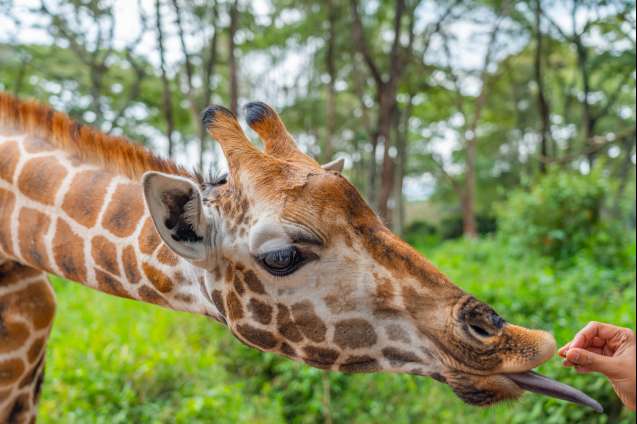
Giraffe Centre is a brilliant place to get up close and personal with giraffes in Africa.
Not to be missed, this small centre is especially geared towards education. Visitors can feed and touch the giraffes at eye level while walking on raised platforms.
The Giraffe Centre is not to be confused with the hugely expensive and over-subscribed Giraffe Manor. The entrance fee to the Giraffe Centre includes entrance to the Nairobi National Park, making it an affordable and worthwhile activity to do while visiting Nairobi.
There are currently 10 resident giraffes, each with its own name. Experience for yourself the delight of a giraffe's lush eyelashes, and the surprisingly soft, up to 50cm long tongue of the tallest animal in the world.
| Giraffe Fact: The Okapi, found in the forests of the neighbouring Congo, is the giraffe's closest relative. |
|---|
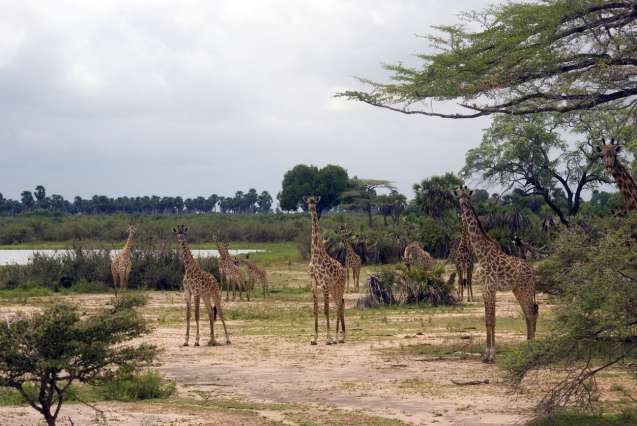
Tanzania’s Nyerere National Park, formerly Selous, has to be one of the best places to see giraffes in Africa.
Masai giraffes are so abundant in the park's northern tourist circuit, that it has been dubbed ‘Giraffic Park’. Interestingly, giraffes are absent from southern Nyerere.
Boat trips on the Rufiji River, which runs through the Nyerere landscape, provide an excellent opportunity to see giraffes drinking water, which has to be seen to be believed.
| Giraffe Fact: Giraffes have horns, known as ossicones, at birth. However, at birth, the ossicones lie flat on the skull to avoid injury. Over time the ossicones fuse to the skull with cartilage that later turns to bone. |
|---|
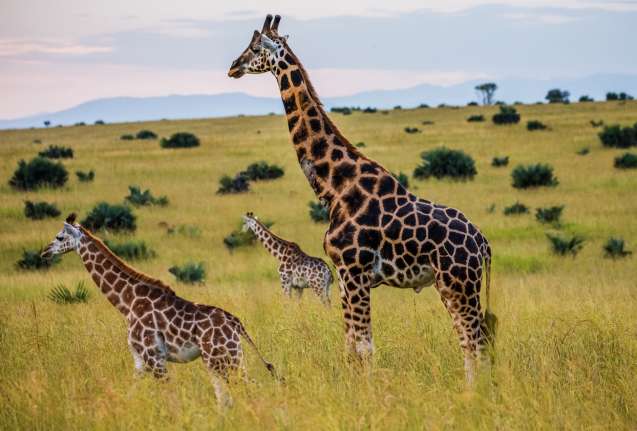
Murchison Falls in Uganda hosts over 1,550 Nubian giraffes. Formerly known as Rothschild’s and Baringo giraffe, the Nubian giraffe is a subspecies of the northern giraffe.
The Nubian giraffes in Murchison Falls National Park make up more than half of the world’s population of this endangered subspecies. The giraffe herds within Murchison Falls National Park are among the largest, often consisting of 30 or more individuals.
Taking a boat trip along the Nile River to see the cascading water of the Murchison Falls, is a great way to see giraffes in Africa.
| Giraffe Fact: The Nubian giraffe has five ossicones, and short, fur-covered horns, instead of two compared to the other species. |
|---|
Southern African safaris span over a large area. From Zambia to Namibia, Botswana, and South Africa, these countries offer some famous safari destinations. Below are the best parks to see giraffes in southern Africa.
,_south_luangwa_national_park__medium.jpg)
Zambia’s Luangwa Valley, famous for walking safaris and exceptional wilderness safari experiences, is home to the Luangwa giraffe, formerly Thornicroft’s giraffe.
The Luangwa giraffe is a subspecies of the Masai giraffe and is found only in this isolated habitat. Despite there only being 650 individuals in the wild, the IUCN lists them only as a vulnerable species.
The Luangwa giraffe is distinguished from other giraffes by the large, dark brown, jagged, vine-shaped patches that extend all the way down its legs.
| Giraffe Fact: Giraffes have the longest tails of any land mammal – about 2.4 meters long. |
|---|
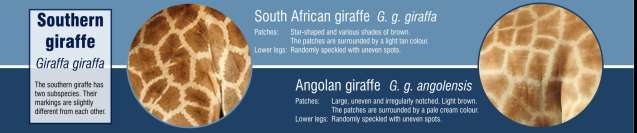
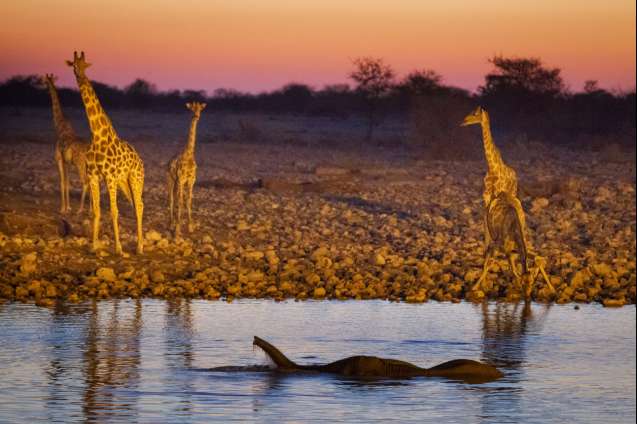
Etosha is an arid landscape famous for some of the best game viewing in Africa. It is also home to the Angolan giraffe, a subspecies of the southern giraffe.
The Angolan giraffe is locally extinct in Angola, but the population in northern Namibia, and Etosha National Park is thriving.
Angolan giraffes are much lighter in colour, and in northwest Namibia, can be almost colourless. They have large irregular and notched brown patches surrounded by a pale cream colour. Their legs are randomly speckled with uneven spots.
| Giraffe Fact: Giraffes are oesteophages. This means that giraffes eat bones. Scientists speculate that this behaviour is to supplement deficiencies in calcium and phosphorous. |
|---|
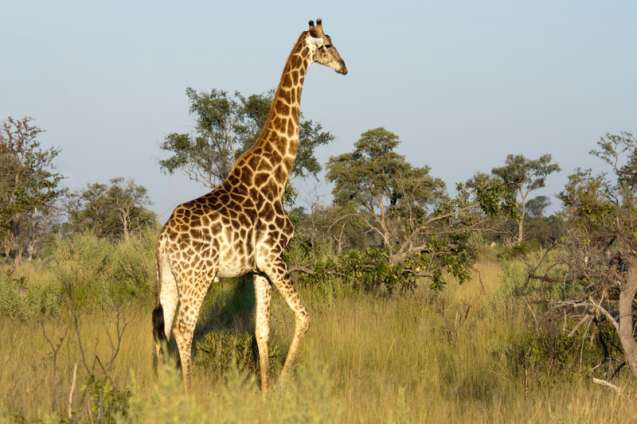
In Botswana, you’ll find both southern giraffe species, the Angolan giraffe and the South African giraffe.
Thanks to Botswana’s excellent wildlife conservation and management practices, the Okavango teems with wild animals. This includes giraffes. It is estimated that Botswana is home to at least 15% of Africa’s giraffes.
Visiting the Delta during the annual flooding between June and August is one of the most phenomenal safari experiences, and one of the best times to see giraffes in Botswana.
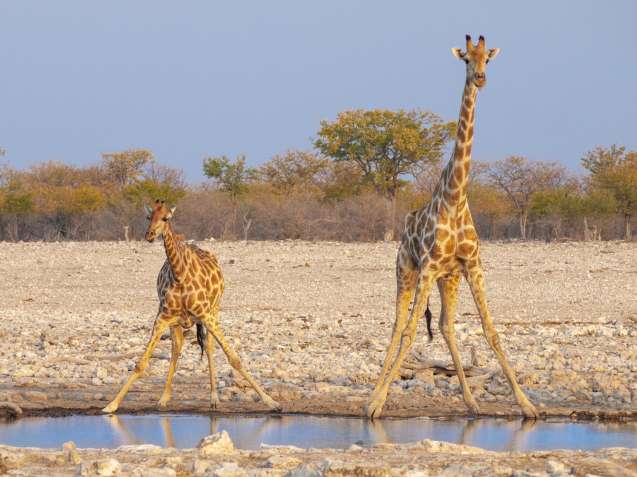
| Giraffe Fact: Giraffe's necks, though exceptionally long, are not long enough to reach the ground. To drink, giraffes must splay their legs to lower their entire body. |
|---|
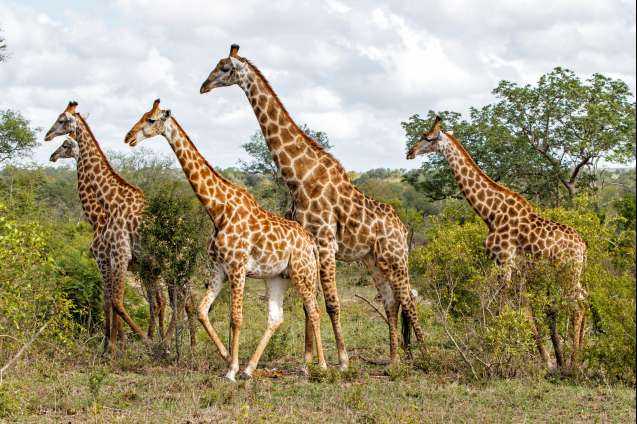
The ultimate self-drive safari destination, Kruger National Park is accessible and affordable. It is also one of the best Big 5 destinations in Africa.
The animals in Kruger are well habituated to the safari enthusiasts who utilise the park, making it an exceptional safari destination. In Kruger, you will find the South African giraffe, a subspecies of southern giraffe closely related to the Angolan giraffe.
The South African giraffe has star-shaped patches that vary in light shades of brown, surrounded by light tan. Their lower legs, like the Angolan giraffe, are lightly speckled with irregular spots.
In the past three and a half decades, the South African giraffe’s population has increased by almost 150% and today, there are around 30,000 South African giraffes spread across southern Africa.
South African giraffes are spread throughout Kruger but Sabi Sands and Satara are well known for excellent giraffe sightings.
| Giraffe Fact: Giraffe feet are about 30cm in diameter, the size of a dinner plate! |
|---|
Giraffes are widespread throughout East and southern Africa. Most Big 5 safaris to hotspots like the Kruger, Okavango, Luangwa, Hwange, Masai Mara, Serengeti, Amboseli, and Etosha will also be perfect opportunities to see giraffes in Africa.
Browse the best safaris to see giraffes in Africa:
Or, talk to an experienced African Budget Safari consultant and start planning your giraffe safari today.

Below you'll find further reading and articles related or similar to this post.




Call us toll free from US/Canada on 1-888-414-6513, or from the UK on 0-808-189-1052. All other countries can contact us on +27 21 791 0878.
© 2026 African Budget Safaris | Privacy | Terms | Cookie Policy | Consent Preferences