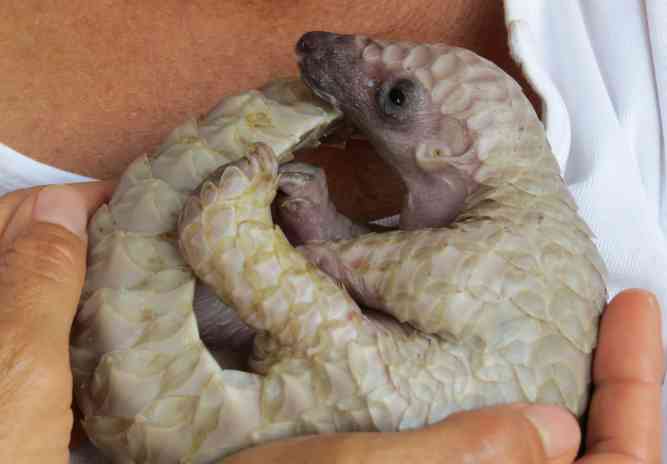
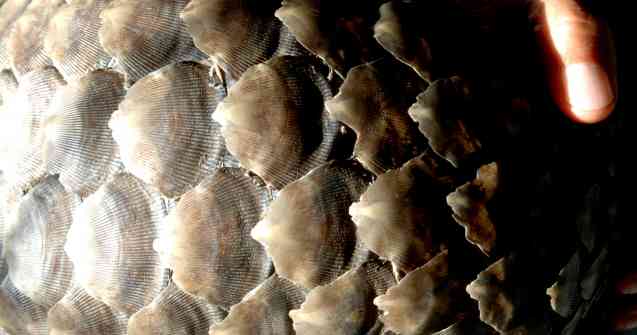
This is a Pangolin. It is the only mammal covered completely with scales instead of fur. Most people will never see a pangolin in the wild. Most people do not realize that the pangolin animal species could be gone before we realize it was even there.
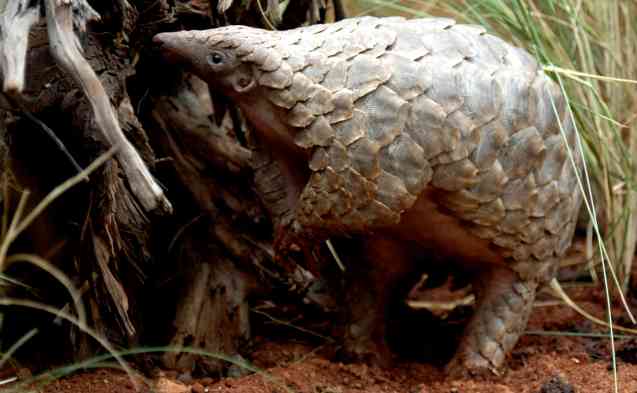
There are only eight species of this scaled and mystical creature. Four of them, The Indian pangolin, Formosan pangolin, Sunda pangolin, and Palawan pangolin, are found in Asia and are different because they have tiny bristles between their scales. In Africa, the four species found south of the Sahara are the Temminck’s ground pangolin, Tree pangolin, Giant pangolin, and Long-tailed pangolin. All eight pangolin species are listed as endangered or vulnerable on the IUCN Red List.
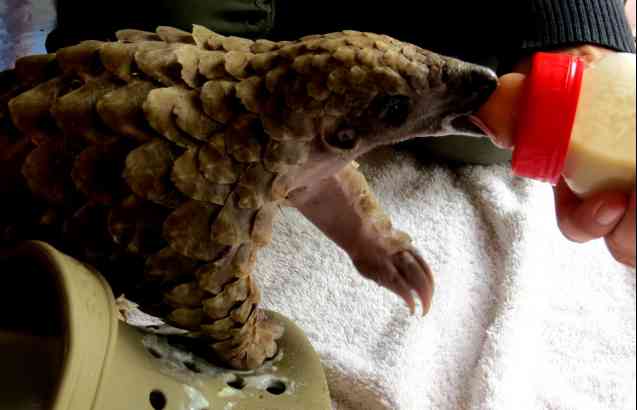
Though widespread and found in National Parks from Virunga in the Congo to Kruger In South Africa, you are more likely to see the Big 5 before you get to see a pangolin. In fact, sightings of the pangolin are so rare that it is traditionally considered a royal animal. It is prized not only for its scarcity but also for its scales and reportedly succulent meat, fit only for kings.
In the Congo, the Lele people consider it part fish (the scales) and part human because it only gives birth to a single offspring. This in-betweenness makes it a spiritually powerful being. This is well documented by anthropologist Mary Douglas in her now-famous book Purity and Danger (1966, Chapter 10 deals with the Pangolin Cult).
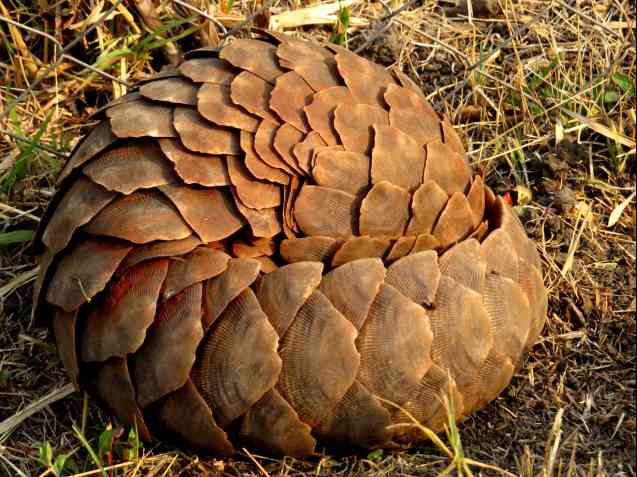
The name pangolin comes from the Malay word “pengguling” which, loosely translated, means something rolled up. Also known as the scaly ant-eater, pangolins roll into a tight ball when threatened. Sadly, this also makes them a soft target for poachers who need only scoop them up and place them into a sack to be further trafficked.
There are some pretty amazing facts about pangolins. For a start, their soft, sticky tongues can be longer than their bodies. They have powerful claws that they use to burrow into anthills to get to their favorite food, ants, and termites. It is thought that a single pangolin can consume up to 70 million insects annually. That is quite a lot of ants!
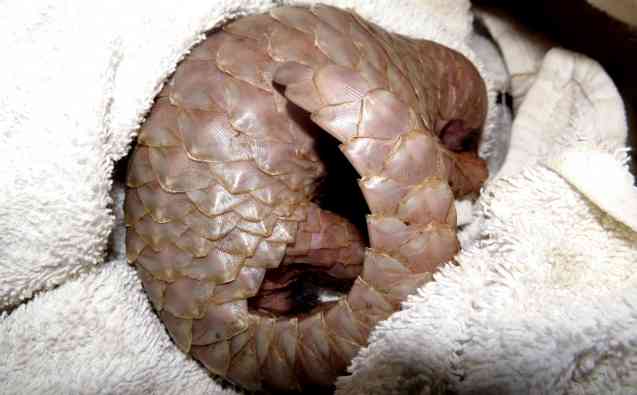
Funnily, pangolins do not have teeth but ‘chew’ instead with stones found in their digestive tracts. In addition to these adaptations, pangolins are able to seal off their ears and nostrils when eating to prevent attack from their angry dinner. Because of their highly specialized diet, pangolins do not do well in captivity and easily become malnourished, dehydrated, and distressed.
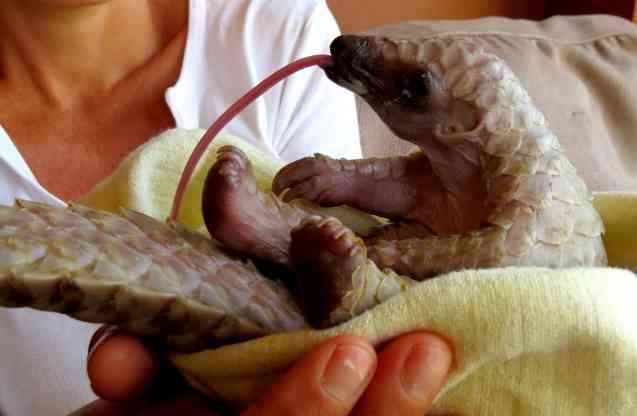
While the hard scales are a perfect defense against most natural predators, they also make them a target for the international trade in animal parts. There is a widespread belief in Asia that the scales can cure a huge gamut of illnesses. In addition to this, both baby pangolin and adult meat are considered a delicacy and are thought to convey excellent health benefits.
Demand for these creatures has burgeoned in Asia. This has resulted in the decimation of the Asian population. Coupled with the growing trade between Asia and Africa, it is feared that the focus has shifted to the African continent. Poachers and syndicates are poaching at an unprecedented rate.

The pangolin is the most trafficked animal in the world. But how is this even possible? Surely, we would have heard of it before. The rhino and elephant, for example, are well documented because they are seen as flagship species. They are iconic and are seen to represent the whole conservation project. Years of research and public awareness campaigns have been conducted on these vulnerable animal species. For this reason, we see them a lot in the media.
By comparison, very little is known about the pangolin animal. There is no in-depth distribution or population map, and no one even knows how long they have lived there. The trade for this reclusive animal has, therefore, been going on in a media blindspot. It was not until 2014, says Lisa Hywood of the Tikki Hywood Trust, that pangolins started to receive the media attention that they so desperately needed.

In October of 2016, at the CITES convention held in Johannesburg, South Africa, all eight pangolin species were upgraded to Appendix 1. This means that international trade in pangolins is strictly prohibited. In addition to this, there are some amazing people working tirelessly to save this exceptional animal species.
-2__medium.jpg)
The Tikki Hywood Trust was founded in 1994 and has been fighting for 22 years for lesser-known and endangered species. They focus on conservation, education, and legislation. Lisa Hywood, who founded the trust in honor of her father, believes that awareness is the key to saving species. By being aware of the animals we are trying to save, the legislation that protects them, and the people or organizations to contact, you can make a real difference to individual animals and to the pangolin species at large.
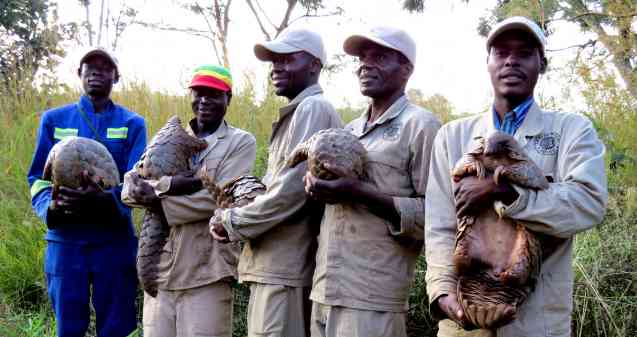
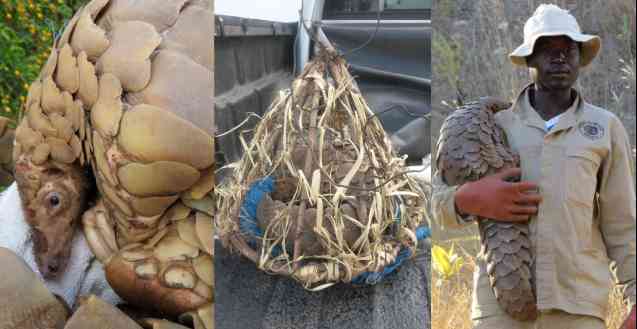
Recently, world-renowned photographer Adrian Steirn shot some incredible images, The Pangolin Men, of pangolins with the people who look after them daily. Because they do so badly in captivity, these men accompany the pangolins to forage for food in the wild. They are their constant companions. To see them is to visualize what it will take for the survival of a species.
How to help pangolins survive
To help these pangolin conservation organizations and people, you can visit the following links:
The Tikki Hywood Trust: All about the trust and a place where you can donate, sponsor, or even partner with this very important player in conservation.
Save Pangolins.org: This site has LOADS of useful information about what to do and who to contact regarding pangolins and pangolin welfare.
Patrick Mavros Animal Jewelry: One of the Tikki Hywood Trusts Partners who have launched an incredible range of pangolin-inspired jewelry.

Below you'll find further reading and articles related or similar to this post.




Call us toll free from US/Canada on 1-888-414-6513, or from the UK on 0-808-189-1052. All other countries can contact us on +27 21 791 0878.
© 2026 African Budget Safaris | Privacy | Terms | Cookie Policy | Consent Preferences