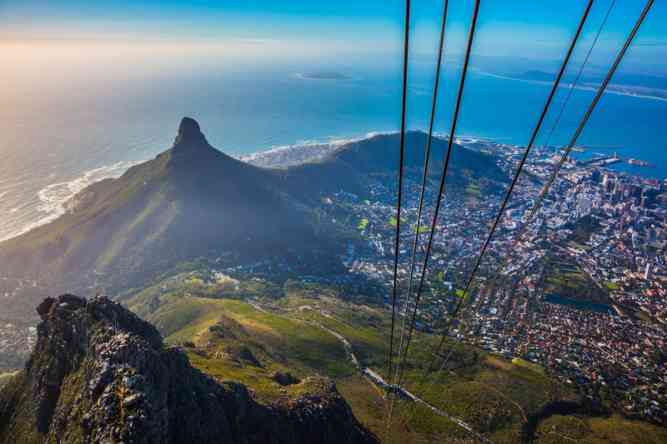
From the rugged desert mountains of the Atlas Mountains in Morocco to the lush forests of Uganda, Africa's diverse landscapes cater to hikers and climbers of all levels of fitness. Choose what kind of animals, vegetation and landscape you wish to see — Africa has a mountain for you. Let’s explore the 10 best mountains in Africa to climb, highlighting the unique features and experiences each has to offer. Between the most popular climbs, there are a few of the least known, where you can sometimes walk without seeing other hikers for days at a time.
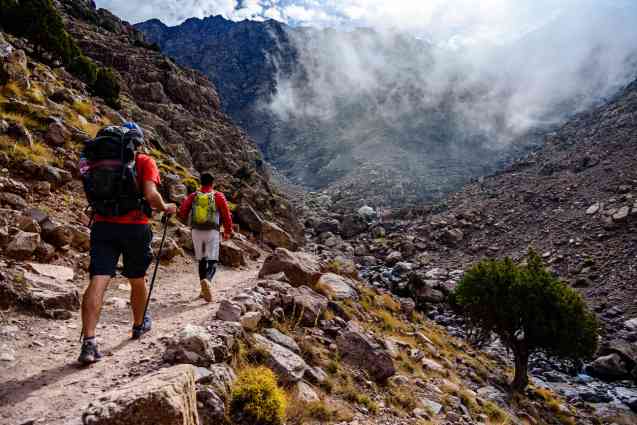
You have to be fairly fit to summit the highest peak in North Africa, Mount Toubkal. The peak can be reached on foot but also features rock climbs if you wish to test your skills.
Below the peak, in the valleys of the Atlas Mountains, you can hike or ski, and stay in the picturesque village of Imlil, also known for good reasons as “Little Chamonix''.
Fly into Marrakech, the beautiful Moroccan city full of gardens and palaces that are well worth exploring, from which Toubkal is only 60km away, via a selection of guided tours.
If you fancy a few summits in the Atlas range, there are other options such as Mgoun, which is close to the stunning Roses Valley and the village of Agouti, and if you prefer a desert vibe, head for the Anti-Atlas range.
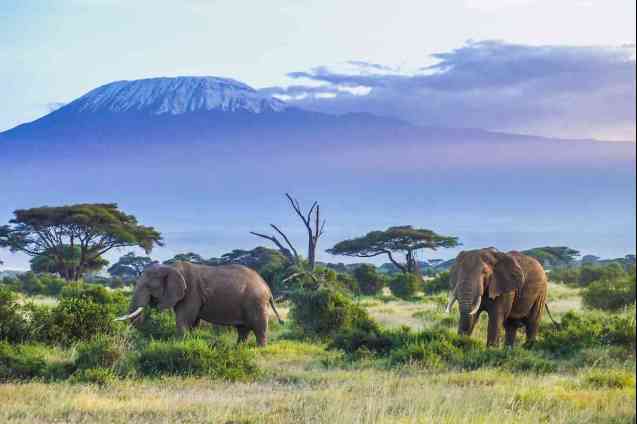
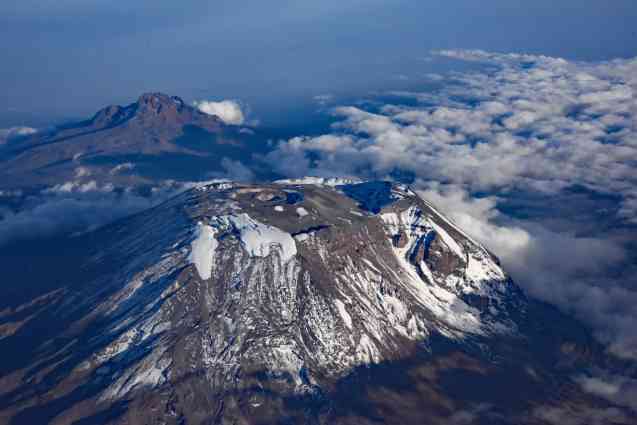
Standing at 5,895 metres, Kilimanjaro is Africa's highest peak and probably the most coveted destination on the continent for hikers and mountaineers. Kili, as it is affectionately known, with up to 50,000 people visiting each year, can be quite busy.
The trek to the summit takes you through five distinct climate zones, offering a dramatic change in scenery from lush rainforests to alpine deserts. The ascent is challenging but oxygen is not actually required, and those who make it to the top are rewarded with breathtaking views from Uhuru Peak, the highest point on the mountain.
The mountain does claim about 10 lives each year, mainly through altitude sickness, so do your research, training and acclimatisation properly, and listen to your guides.
Fly into Kilimanjaro Airport, which is only about 50km from the mountain, with many visitors choosing to stay in the nearby town of Moshi or Arusha en route.

Renowned for its stunning scenery and views, the rugged Simien Mountains offer some of Africa's most exciting trekking opportunities.
Ras Dashen is the highest mountain at 4,500m, and there are several peaks over 4,000m. Hikers will pass dramatic cliffs and deep valleys and with unique species such as the Ethiopian wolf and huge troops of gelada baboons, it’s no wonder that the national park has been declared a UNESCO World Heritage Site.
Expect to encounter the exotic Amharic people, whose villages dot the lofty 60km plateau that makes up the Simien Mountains.
Tourists usually fly into Addis Ababa and from there take a bumpy trip on a coach bus along rough roads to Gonder or Debark, where most of the tour companies are located.
It’s advisable to check the news and go with a group as this is at times near conflict zones, and armed escorts are mandatory.
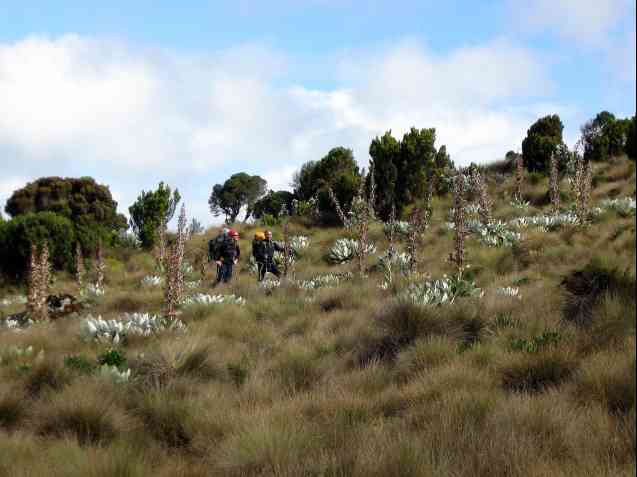
The second-highest peak in Africa at over 5,000m, Mount Kenya offers a range of hiking routes that cater to the novice, but summiting some of its various peaks requires experienced climbers, with routes that are considered harder climbs than Kilimanjaro.
There’s a huge choice of routes such as the trail to Point Lenana, the range's third-highest peak, which takes you through diverse landscapes including bamboo forests, meadows, and past lakes and glacier-carved valleys. Africa’s most technical alpine climbs are on the peaks of Nelion and Batian, and you can even ice climb on the Diamond Couloir and Ice Window routes.
Access to Mount Kenya is fairly easy, as the mountain is just four hours from the capital Nairobi, and the roads are good. Guides are recommended for the hikes, as is a slow acclimatisation to avoid altitude sickness.
The surrounding Mount Kenya National Forest Reserve is well worth visiting, and it’s best to plan a visit that lasts for at least a week.
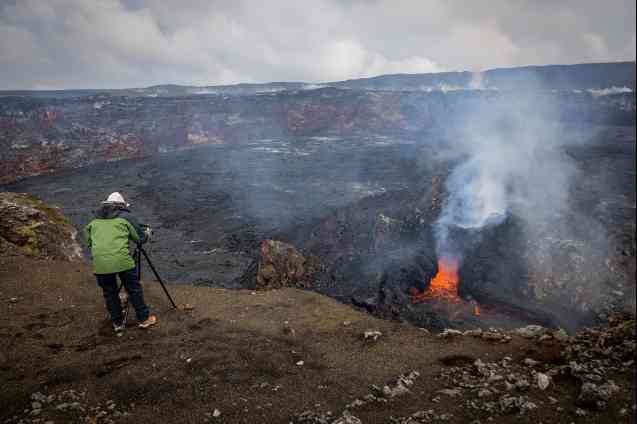
For the adventurous hiker, a trek up Mount Nyiragongo offers the chance to see the world's largest lava lake up close, which when seen at night is even more impressive against the stars.
The hike to the summit takes you through lush rainforests, where plenty of wildlife can be spotted, before ascending to the rim of the crater. It’s a five-hour hike that must be done with Virunga guides, and there is a hut if you wish to sleep at the summit.
Tourists must access the DRC via Rwanda, where you can stay at the lakeside town of Gisenyi before making the trek across the border, or you can get to Nyiragongo from Goma, especially if you want to do the gorilla trek.
Make sure you get all your documents and vaccination certificates in order, and check the volatile political situation of the DRC first; the lava lake also erupts periodically.
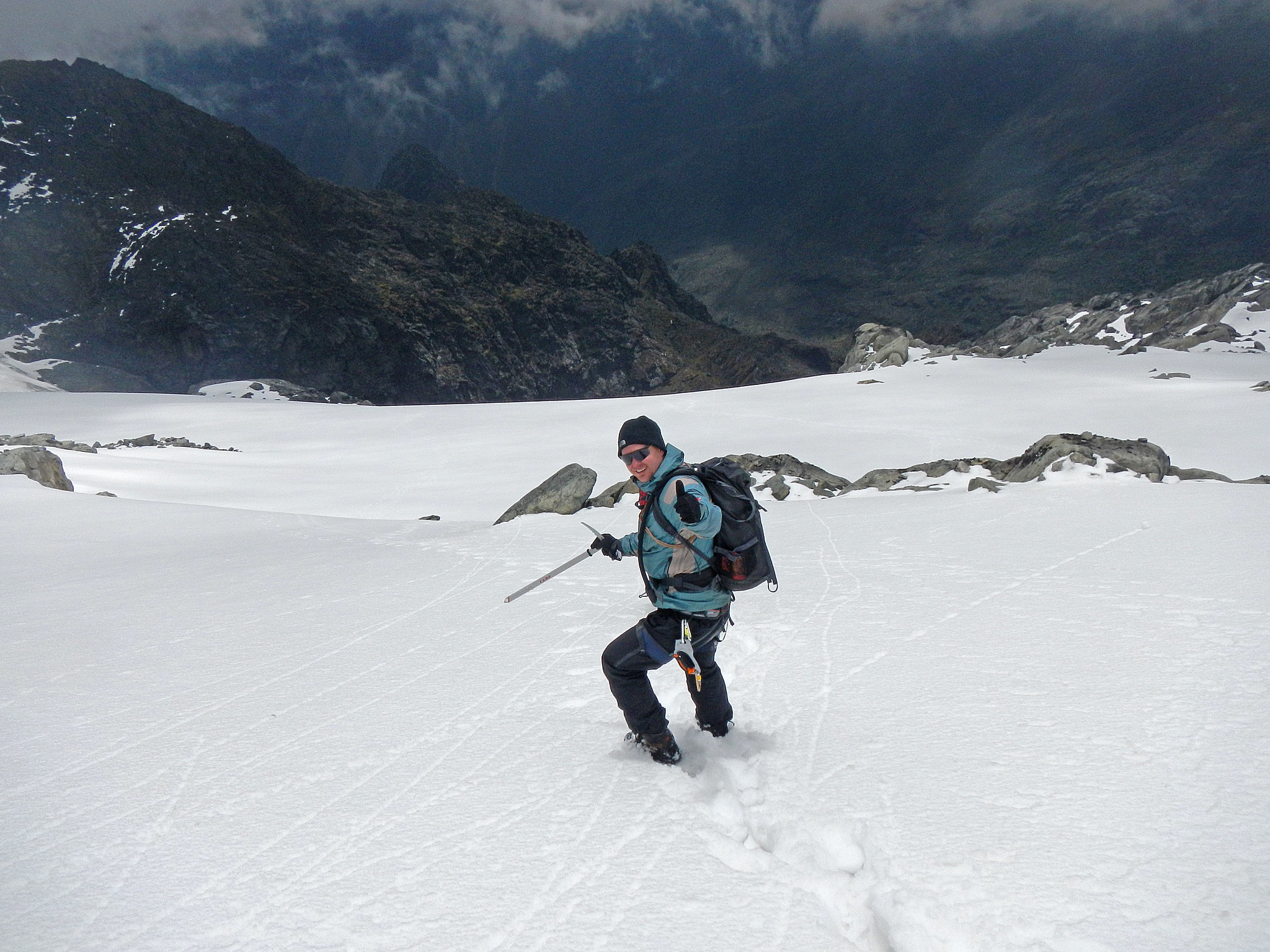
Located on the border of Uganda and the Democratic Republic of the Congo, the Rwenzori Mountains are also known as the "Mountains of the Moon," because legend states that they form one of the sources of the Nile — and they do.
Permanently snow-capped and with several glaciers despite being near the equator, they are a hiker's paradise, with scenic routes leading through dense forests, alpine meadows and snow-capped peaks. The mountains are home to a variety of wildlife, including elephants, chimpanzees, and numerous bird species.
The area only recently became safe, so it’s off the beaten track, and only about 1,000 visitors explore the Rwenzori each year. Margherita Peak on Mount Stanley is over 5,000m high, the third-highest peak in Africa, and to summit it requires crampons and ice picks.
To get there, fly to the capital Kampala and drive for about five hours, or charter a flight from Entebbe to Kasese, just one hour from Rwenzori Mountains National Park.
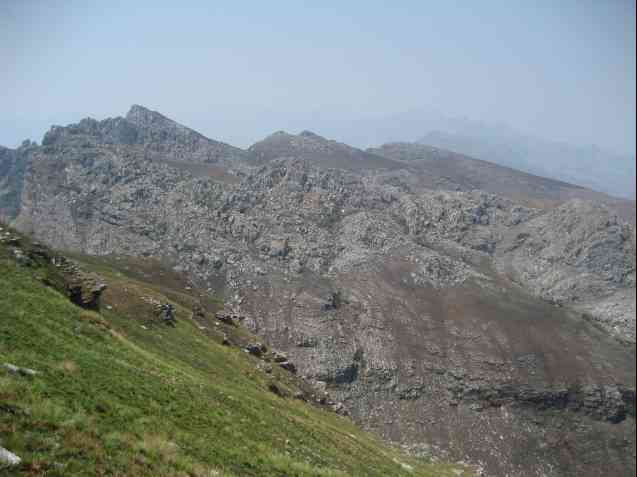
Located in the Eastern or Manica Highlands of Zimbabwe, on the border of Mozambique, the Chimanimani Mountains are a hiking paradise.
With savannah, grasslands, heaths and forests, and hugely diverse fauna such as the eland and samango monkey, it’s no wonder they were recently (in 2022) designated by UNESCO as a Biosphere Reserve. The area runs with streams and has features such as Bridal Veil and Muhohwa Falls, and there are numerous rock pools to take a dip in while you hike.
You may want to begin your hike from Base Camp, near Chimanimani Village, where you can find guides, and spend your first night camping in Terry’s or Peter’s caves.
For easy access, travel via Zimbabwe, and rest assured that you won’t encounter many other hikers: this is one of Africa’s least-known climbs!
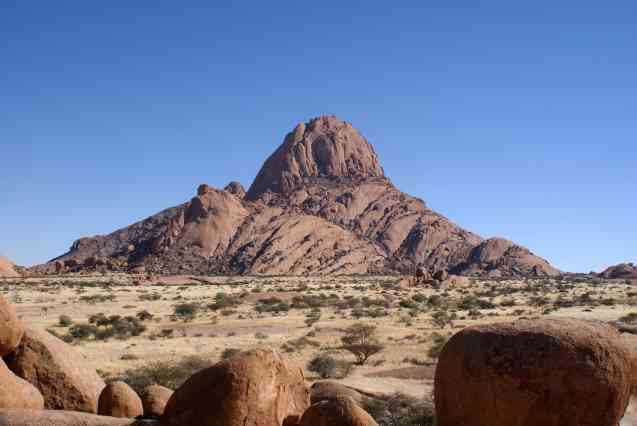
Spitzkop, also known as “Africa’s Matterhorn”, is a huge angular granite peak that rises from the Namib to provide epic views.
It’s the tallest of the Spitzkoppe, and it and the six satellite or “Pontok” peaks feature quality routes for rock climbers, from moderate to extreme, while hikers have plenty of options too.
Desert animals and birds add to the attraction of walking here, and the whole package is easily accessible, as the mountain range is just three hours from Windhoek.

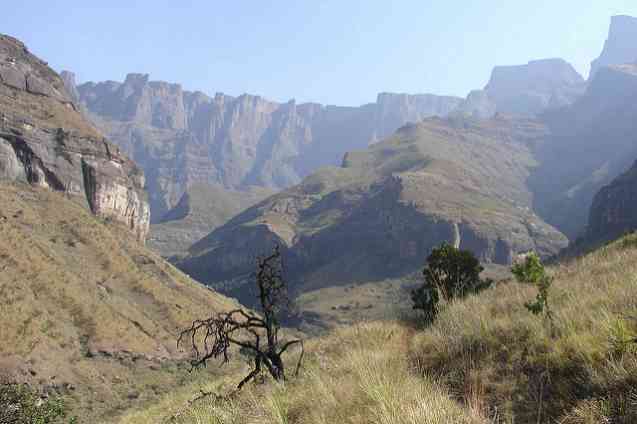
The Drakensberg, meaning "Dragon Mountains" in Dutch, is a UNESCO World Heritage Site with a plethora of hiking trails catering to different fitness levels.
Visitors can explore Three Rondavels, God's Window or the Amphitheatre, one of the most impressive cliff faces in the world, which offers several routes for rock climbers. As the Drakensberg escarpment stretches over 1,000 km, it can be accessed from KwaZulu-Natal, Free State, Eastern Cape and Mpumalanga provinces in South Africa, and from the tiny mountain kingdom of Lesotho.
You can hike on your own or with guides and groups in the foothills, or scale peaks such as Thabana Ntlenyana or Giant’s Castle. Take your pick — the Drakensberg has it all, from gentle one-day strolls to vigorous hikes, and hundreds of lodges and campsites dot the foothills. You can also throw in the Smoking Dragon festival, which has the mountains as its backdrop, over New Year each year.
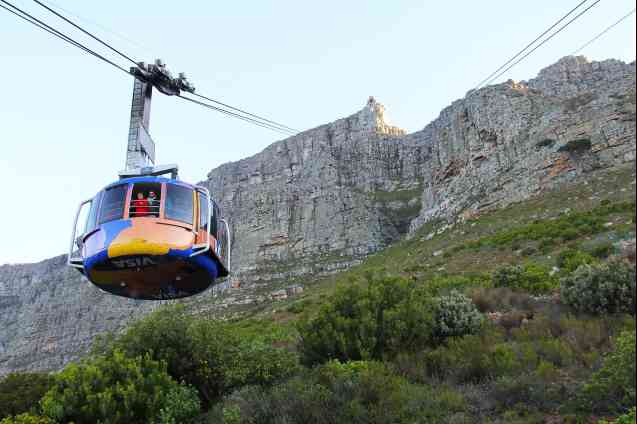
Table Mountain overlooks the beautiful coastal city of Cape Town and offers a range of hiking trails that cater to different fitness levels.
It’s a national park that features the unique Cape fynbos and a surprising range of animals. Hikers can choose from routes that take them through lush forests, rugged cliffs, and stunning rock formations, with panoramic views of the 12 Apostles running down the Cape Peninsula, and both the Atlantic and Indian oceans. Just below the summit, there are literally hundreds of traditional rock climbing routes, with grades ranging from amateur to those suited to seasoned climbers.
If you don’t feel like hiking up to them, there’s always the option of the cable car, and there’s even a restaurant to eat at, high above the city. Ideal for visiting while you’re waiting between flights.
Stay on the paths: this is a deceptively dangerous mountain that looks harmless but claims between 10 and 20 lives each year, often because of the misty “tablecloth” which forms rapidly on the peak. To avoid the crowds, climb or hike early in the morning or late in the afternoon.
When to go: the summer months from October to March are recommended for the best experience.
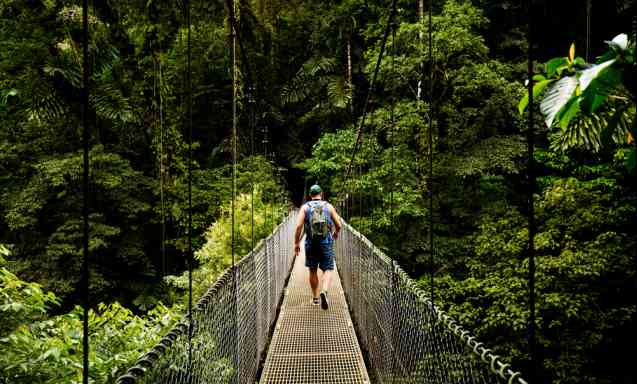
Whether you are seeking the challenge of scaling Africa's highest peaks or prefer a stroll through the scenic foothills, African mountains have something for every hiker. If you want a fairly safe, easily accessible hike, the Drakensberg has several. If you want the adventure of a lifetime, with a hint of danger the Simien Mountains or Nyiragongo might be for you. Rock climbers can do a simple day trip up Table Mountain, or take a few weeks to explore Mount Kenya’s challenging routes. Lace up your boots, pack your backpacks, and embark on an unforgettable mountain trek in Africa.
Talk to one of African Budget Safaris' expert travel consultants and start planning your trip today.
Explore these destinations mentioned in this post.
Below you'll find further reading and articles related or similar to this post.




Call us toll free from US/Canada on 1-888-414-6513, or from the UK on 0-808-189-1052. All other countries can contact us on +27 21 791 0878.
© 2026 African Budget Safaris | Privacy | Terms | Cookie Policy | Consent Preferences