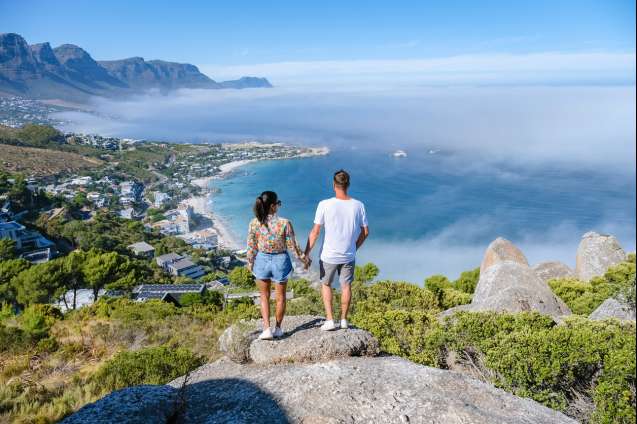
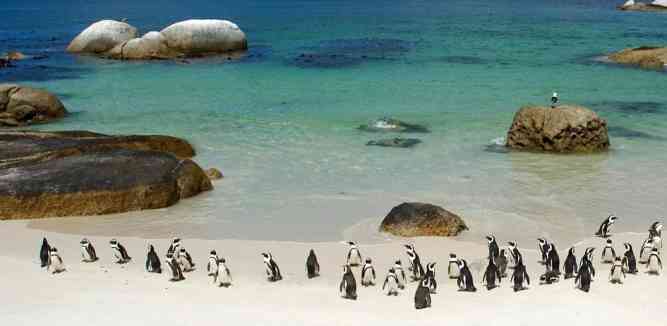
The Cape Peninsula is home to Africa’s only nesting penguin species - the African Penguin. And, the best place to see penguins in Cape Town is Boulders Beach on the southern Cape Peninsula.
Boulders Beach is nestled in a sheltered cove between Cape Point and Simon’s Town and though amid a residential area is one of the best places in the world to get up close and personal with these endangered birds.


Just around the corner from the viewing platforms of Foxy Beach is Boulders Beach, which offers the unforgettable experience of frolicking in the water with Penguins. Remembering that these are wild birds, equipped with razor-sharp beaks that can give a nasty bite, swimming in the crystal clear water, on a white sand beach, bathed in glorious sunshine, WITH PENGUINS and not an iceberg in sight, is unforgettable! These are not aggressive birds and getting nipped is highly unlikely if you follow a few simple rules. No touching, feeding or chasing penguins and if they’re sitting on a nest, give them a wide birth as they are particularly protective about their eggs.
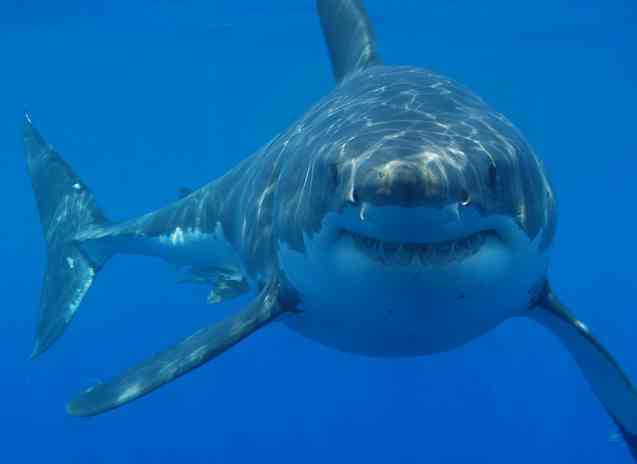
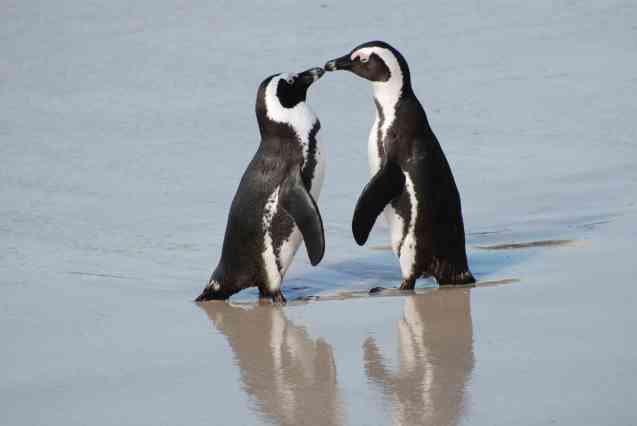
The African Penguin is found from central Namibia to Port Elizabeth and, in the wild, favours nesting on small off-shore islands where the flightless bird is less susceptible to its predators. It might not seem like it, but the African Penguin is cleverly camouflaged to avoid marine predators like the great white shark, with a black back, to avoid detection from above when diving and a white belly, to avoid detection from bellow when swimming at the surface of the water.
This little penguin can move at up to 20km per hour when hunting and feeding on small marine animals like pilchards, mackerel and squid. This charismatic little bird was pushed to the brink of extinction but has, in recent years, found worldwide fame through a nesting colony in Simon’s Town on the Cape Peninsula of South Africa.

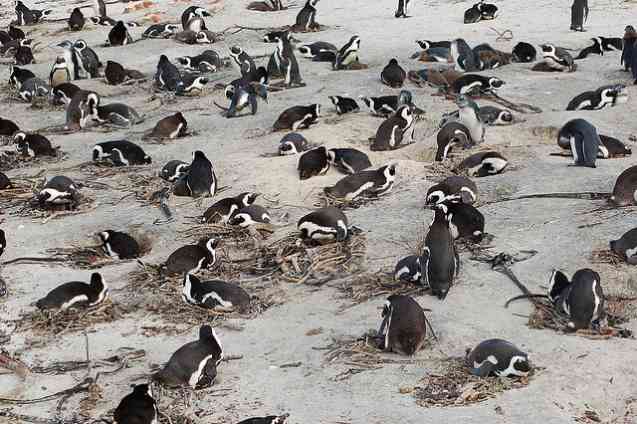
Sadly, it is estimated that the population of African Penguins today is a mere 10% of the numbers at the turn of the century. The radical decline in penguin numbers is due to overhunting of penguin eggs (considered a delicacy), and habitat destruction, specifically guano depletion. African Penguins originally used to lay their eggs in small depressions dug into guano crusts that covered off-shore islands. When people began to remove the guano, prized by farmers for its high nitrogen, phosphate and potassium content, they effectively removed the nesting sites of these unassuming birds. By midway through the 20th century, not only had their habitat been removed but increased fishing meant a decline in fish stocks, as well as pollution through oil spills. Coupled with natural predation by sharks and seals, for these dapper little marine birds, also called black-footed penguins, it all spelt trouble.

Ahem - what's guano? It's the dung of bats or birds, especially sea birds.
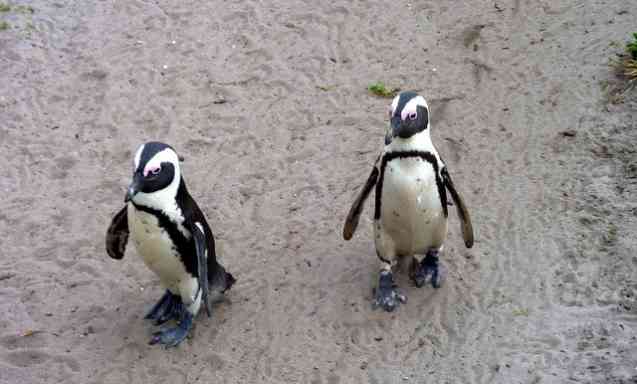
Today, though the African Penguin is listed on the IUCN red list as endangered, things have started to look up. In 1983 a pair of African Penguins was spotted on Foxy Beach at Boulders, signalling the start of this land-based colony, and by 1985 they had begun to nest and lay eggs. These two penguins were clearly the forerunners for a much larger colony and by 1997 there were over 2300 adult birds! This rapid growth was due not only to breeding but also to the migration of penguins from other colonies, like Dyer Island (near Gansbaai), as a direct result of increased fish stocks attributed to the ban on purse seine fishing in False Bay. African Penguin numbers are growing throughout the region with the largest colony of about 50 000 birds on St. Croix Island near Port Elizabeth. The most famous of these islands that host African Penguins is Robben Island, where Nelson Mandela was imprisoned, but it is the colony in Simon's Town at Boulders in the Table Mountain National Park that is the most remarkable.


Did you know? African Penguins do the opposite to penguins in Antarctica - they protect their eggs from the sun and keep them cool, instead of having to keep them warm.
The following budget tours visit Cape Peninsula and Boulders Beach, the best place to see penguins in Cape Town, South Africa:
Chat to a professional travel consultant for help planning your Cape Town trip on a budget.
Below you'll find further reading and articles related or similar to this post.




Call us toll free from US/Canada on 1-888-414-6513, or from the UK on 0-808-189-1052. All other countries can contact us on +27 21 791 0878.
© 2026 African Budget Safaris | Privacy | Terms | Cookie Policy | Consent Preferences