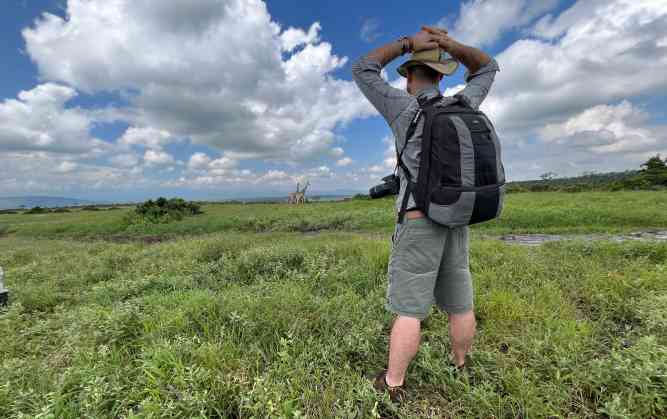
Explore the Kenyan Highlands in Part II of our interview - On Safari in Kenya with African travel expert, Daniel De Lapelin Dumont. In this post, Daniel tells us about his recent visit to Lake Naivasha, Lake Nakuru, and the Masai Mara. He also talks about his accommodation and what a Kenya safari in the shoulder season is like.
Dan has traveled Africa extensively over the past decade and a half, visiting Botswana, Lesotho, Madagascar, Morocco, Mozambique, Namibia, Tanzania, South Africa, Zimbabwe, Zanzibar, and now Kenya. He joined African Budget Safaris in 2012, making him one of our most experienced travel consultants.
| Catch up on Part I of our On Safari in Kenya interview with Dan, covering Nairobi, the Giraffe Center, Sheldrick Wildlife Trust, and Samburu National Park. Or get Dan's Kenya safari packing tips and insight into his 10-day Kenya safari in Dan’s Adventures on Safari in Kenya. |
The Solio Ranch is quite close to the Aberdare National Park, whereas Ol Pejeta is slightly further south.
On my safari in Kenya, we stayed at the Rhino Watch Lodge close to Solio, and the altitude there is really high, close to 3,000 meters. It felt like you could have been in the English countryside in that it’s very green, with lots of rolling hills and water around, so yes, the landscape was different from Ol Pejeta Conservancy and Samburu National Park.
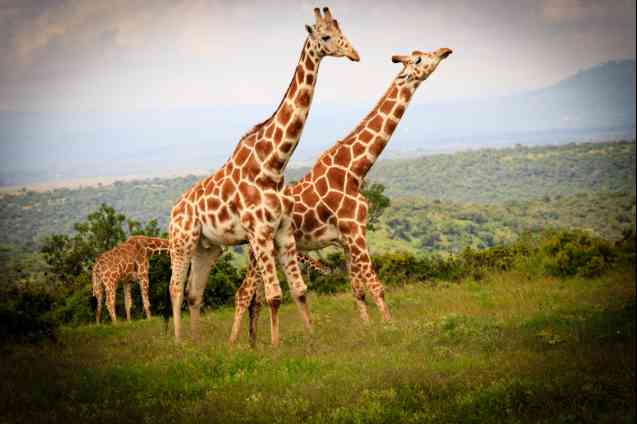
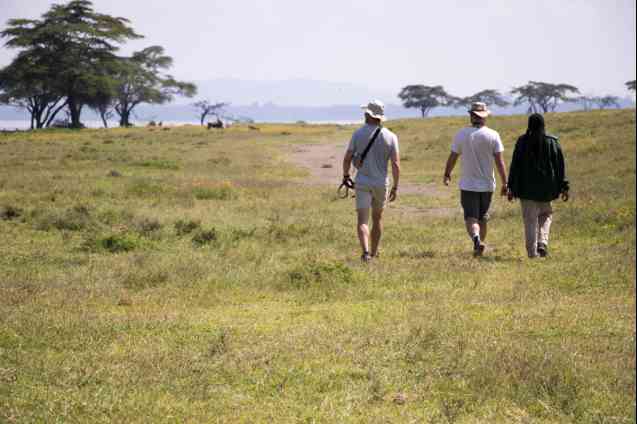
We did a safari walk from the Aberdare Country Club, an old colonial-style building which has a golf course with wildlife roaming around the grounds. You can go out on foot to walk with giraffes and zebras.
I think if you're interested in lots of walking or overnight hiking and climbing, the Aberdares would be the area to go. It's the gateway to quite a few hikes like Elephant Hill and Mount Kinangop.
It was nice to see the different sorts of landscapes in Kenya and was definitely worth it.
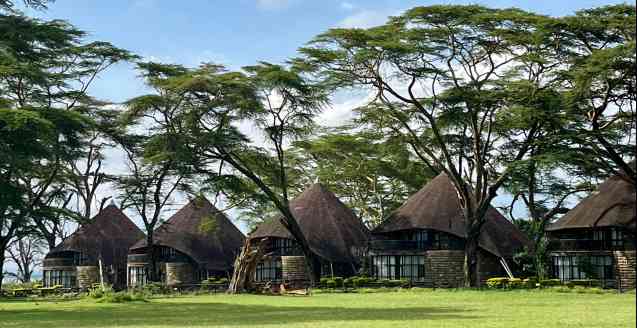
I was quite surprised by Lake Nakuru and how built up the town of Nakuru was. As you're driving in, you come over some hills and look down onto Lake Nakuru, you can see that it’s quite developed around the edges of the lake.
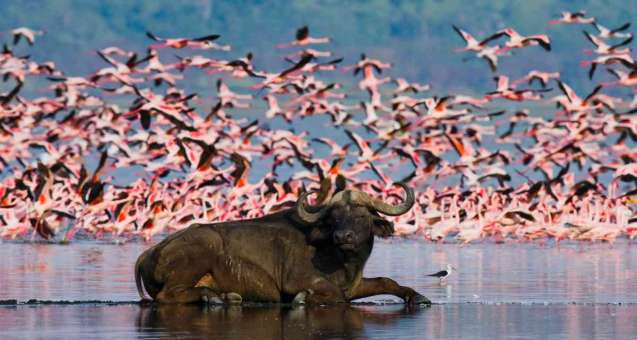
Often people associate Nakuru with flamingos but an interesting fact is that Lake Nakuru has an underground source that fills it, and the water levels keep rising and they're not going down. Flamingos apparently don't like to get their knees wet, so their numbers have dropped dramatically. I didn't see any flamingos.
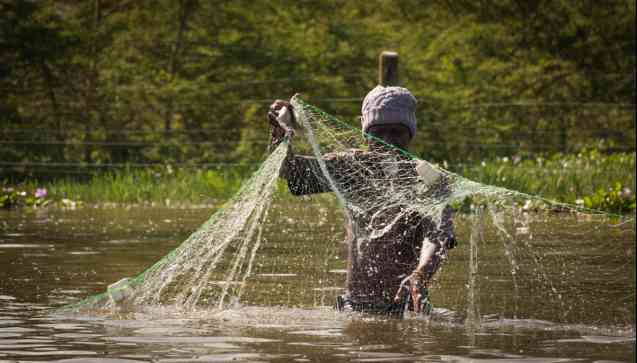
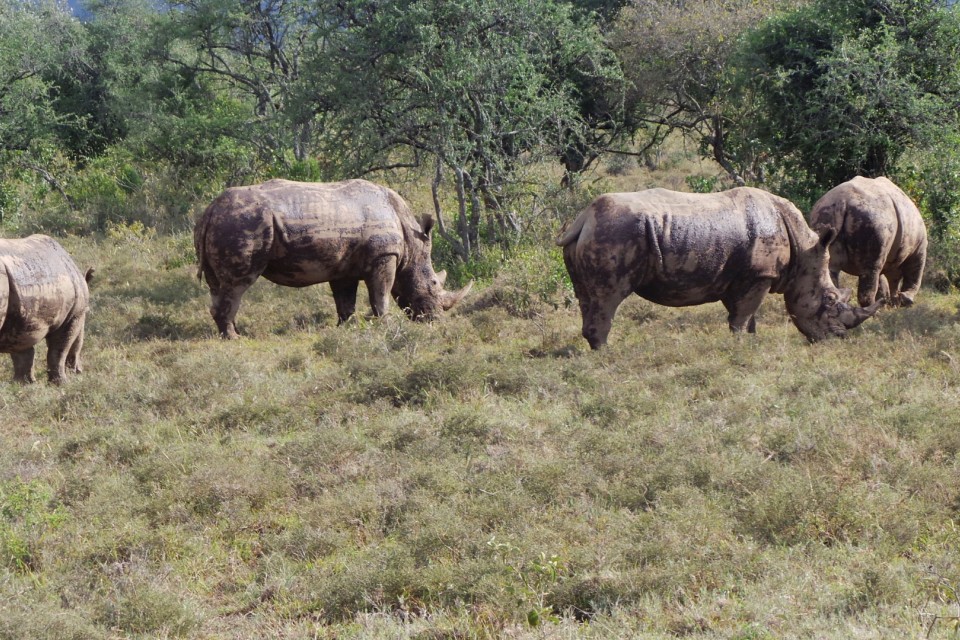
We saw lots of pelicans, lots of fish eagles, a rhino, and some other wildlife on our game drive in Lake Nakuru National Park. There is another lake nearby called Lake Elementaita, and apparently, that's where some flamingos are flocking to now, I would like to go there next time I'm on safari in Kenya.
If I had to choose between Lake Naivasha and Lake Nakuru? Lake Naivasha was actually more impressive and fun to visit.
Naivasha is quite a big flower farming area, which they export to Europe and has more of a holiday feel. The Sopa Lodge where we stayed at Lake Naivasha had zebra running around the hotel grounds, and at night the hippos came onto the grass banks to feed right there.
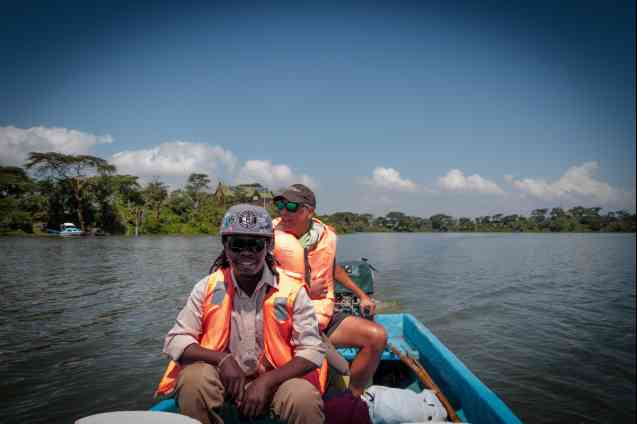
We didn’t do a game drive in Lake Naivasha National Park but the boat trip to Crescent Island was great. I've never seen so many fish eagles in my life and you constantly hear that distinctive fish eagle call. The guide on the boat trip had this trick where he called the fish eagles with fish, I really enjoyed that.
The feeling I had is that it was more fun to stay in Naivasha, that there were more things to see and do and these activities made it more enjoyable.
Some Kenya safari tours spend a couple of nights in Naivasha and visit Lake Nakuru as a day trip which you could combine with Lake Elementaita.
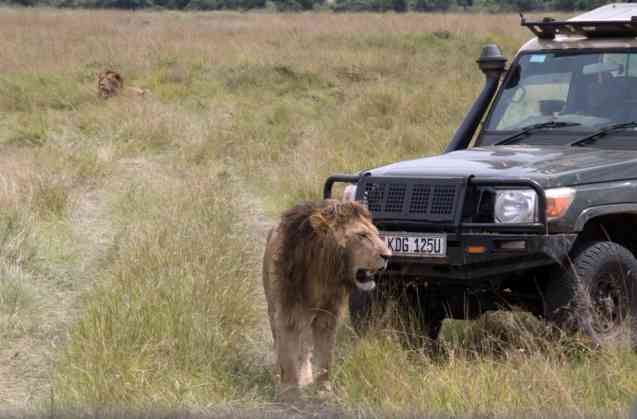
Thompson Falls. Yes, it’s worth a visit. It's a nice short stop and they're quite impressive and I’d recommend it.
Absolutely not.
We spent two nights at two different lodges (in two different zones) at the famous Masai Mara. So effectively, we only had one full day in the reserve on our safari in Kenya.
I’d recommend a minimum of 2 or 3 nights at Masai Mara, more if you can afford it, especially during the wildebeest migration.
When our safari guide described the high season in the Masai Mara and the sheer volume of wildlife, I think you’d want to set aside more time.
An interesting thing about the Masai Mara vs Serengeti, the Masai Mara is a lot smaller. If you look at the map, Serengeti is a lot more spread out and the areas that I went to in central Serengeti, were quite flat, there weren’t any major viewpoints or elevated areas.
In Masai Mara, you have these hills that you can drive up and look down onto the Mara River.
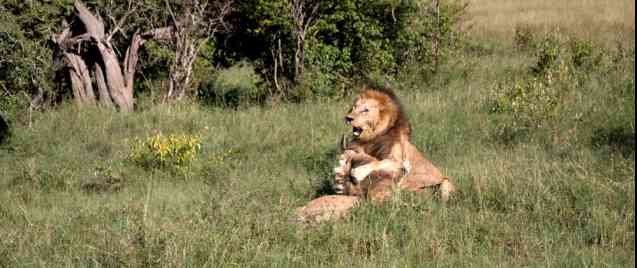
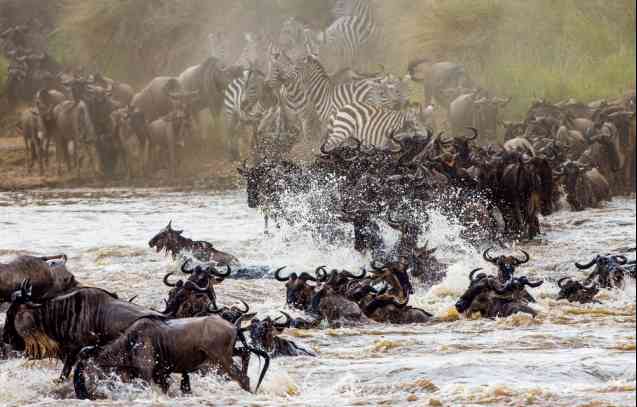
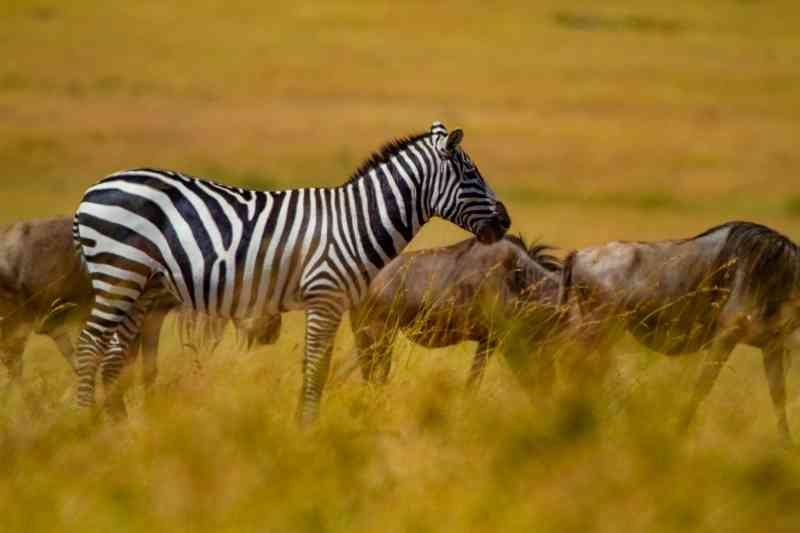
You can actually watch the river and see all the wildebeests and zebras queueing up just on the other side of the river, grazing, waiting. Our Kenya safari guide said they will only cross when it’s very hot and very sunny. So if it's a cloudy day or it's not warm enough or windy, they're not going to cross.
If you think about 800, 000 wildebeest, 100 to 200,000 zebra plus all the other antelope, all rammed into this small space. It's got to be quite something to witness.
So yes, weighing up the 50 to 100 vehicles queueing to see the wildlife and the sheer spectacle of it all... it would definitely be worth it.
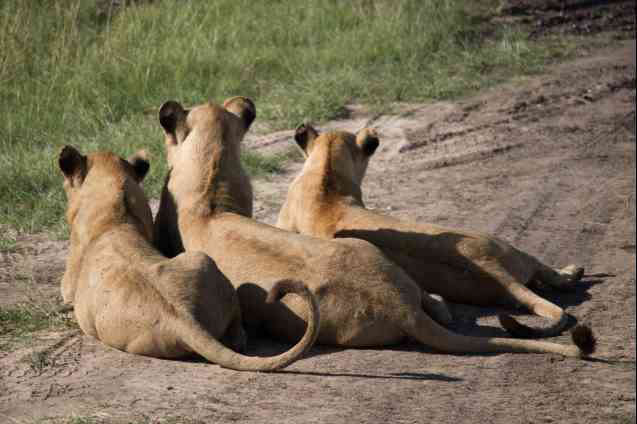
At the end of the rainy season, when I was on safari in Kenya, the grass was tall and we did see many animals in Masai Mara, but we couldn't see them as clearly. I was always just thinking in my head, “Oh, what would this look like with so many more animals here during the dry season?”.
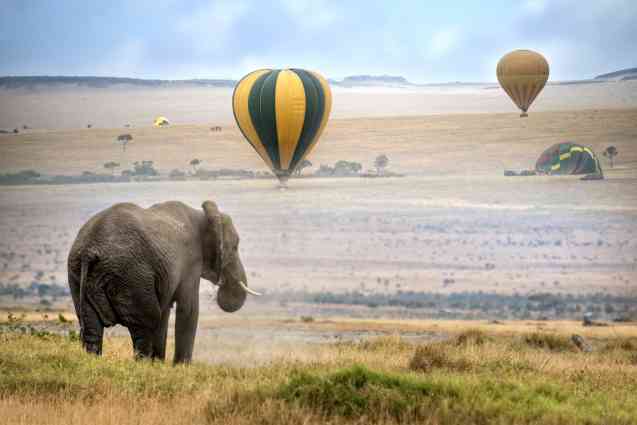
To come back in the dry season, at the height of the Great Migration, I think it's worth the crowds and the cost. Also, if you do the hot air balloon trip, in August and September, with all that wildlife... that's got to be quite something.
Absolutely.
I was comparing my trip to one of the 10-day Kenya safaris that we have on the African Budget Safaris website, and they visit almost all the same locations, but they spend longer at each place. So, 2 nights at Naivasha, 2 nights at Ol Pejeta, and 3 nights at Masai Mara, for example.
Most of the Kenya Safaris we feature don’t go as far north as Samburu but if they did it would be closer to 15 days instead of 10.
The hardest part of the trip was all the food! Big hotel breakfasts, lunches, and dinners, every single day. It’s cool at the beginning when you are trying all the new food, but after a while, you are so full, normal people don't eat like this!
On these African safaris, make sure you don't eat for a week before you travel because you're not going to go hungry.
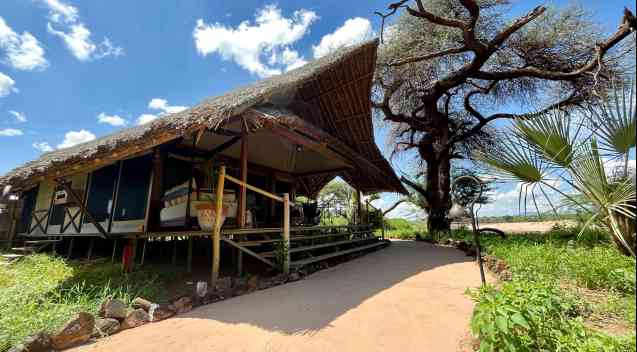
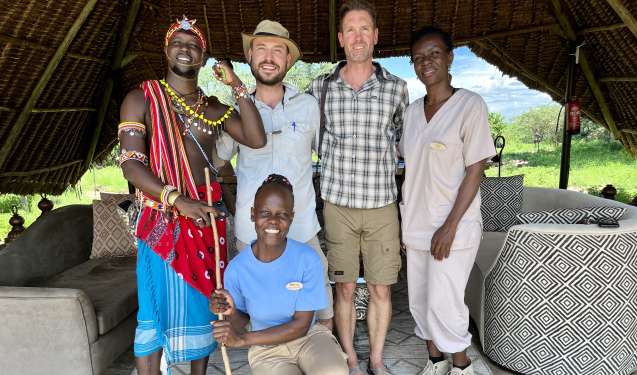
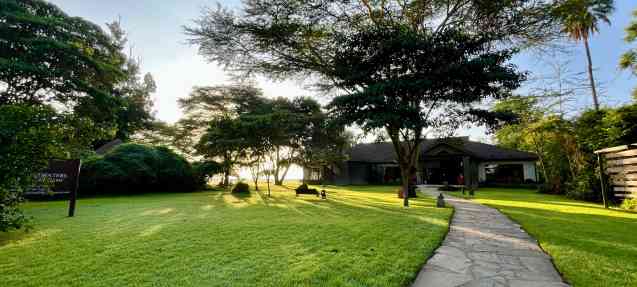
The accommodation we stayed at was great. Everyone was super friendly. This trip really just gave me a taste of what a great country Kenya is to visit.
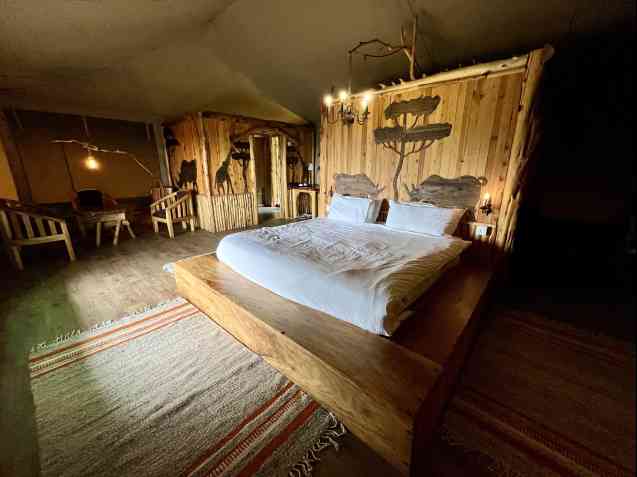
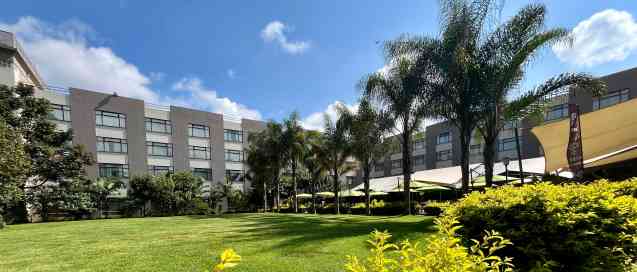
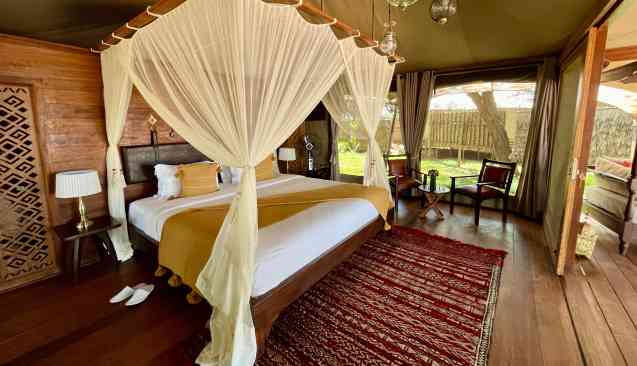
In Nairobi, we stayed in a 3 or 4-story hotel-type accommodation, just like a regular hotel in the city. But on our safari, we stayed in more traditional canvas tents. Some of these ‘tents’ were almost the size of my house; they were just huge.
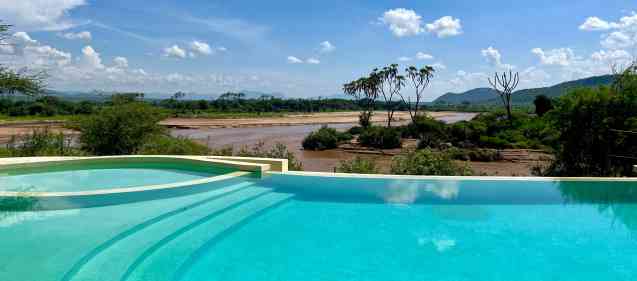
The accommodations all had running water, flushing toilets, Wi-Fi access, and everything you could think of. They were all great. What impressed me the most was the beautiful setting. Overlooking a river, or a hillside with beautiful views. There was a level of thought that's gone into the locations that really made it a pleasant experience for guests.
I was surprised at one point because we had this running joke about how cold it is in Kenya at the end of the rainy season and up in the highlands...
but everywhere we stayed when you got into bed there was a hot water bottle in your bed. Every night. You didn’t really need it but there is such great attention to detail, you feel well looked after on safari in Kenya.
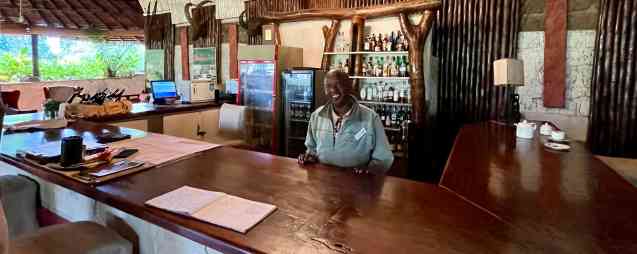
The bars at all the lodges were well stocked with spirits for cocktails and wines from all over the world, we really didn’t want for anything.
It would be nice to have actually seen a bit more of what Nairobi has to offer in terms of restaurants and nightlife.
I was impressed with the little I saw and when I do go to Kenya again, I'll set aside a bit more time to go and explore Nairobi.
It's actually difficult, I'm torn between staying in Samburu or Naivasha for a longer time. The thing I liked about Naivasha is that it’s got a bit of a scene there. People go there for a weekend to go and have fun, or it's a place for people to go for wedding parties. It has a bit more of the western side of things... but actually, if I had to choose I'd say Samburu National Park.
But I would preferably visit in the dry season. I’d love to go on a safari in Kenya at the end of August, or the beginning of September, to see the Great Migration in Masai Mara, and also the change in the landscape in Samburu. Just to see the difference in the landscape. What we saw, with everything so lush and green, isn't what you hear about or what you see in photographs of Kenya safaris. Those beautiful mountains in the distance would really pop out if it wasn't so green on the plains.
I would stay in Samburu for more nights if I went on safari in Kenya again.
That’s a tricky one. Every place I've been in Africa has something unique or special about it. I think accessibility, in terms of infrastructure, is a good point of comparison.
Kruger is attractive because it is very easy to fly in and fly out again. Johannesburg is such a big transport hub, and in a way, Kenya is similar. Nairobi Airport is a big transport hub in East Africa. From Nairobi, it’s easy to move around.
In terms of the African safari experience, you could compare Kenya and South Africa to Tanzania. The difference between the two is the variety that Kenya has to offer.
People often say that South Africa is a world in one country because it has so much on offer. There’s Cape Town, the two oceans, the Garden Route, Karoo, all these different landscapes, and all these different tribes, too. In terms of parks, Kruger National Park is South Africa's main safari park. There are other good ones but they are off the main tourist routes.
In Botswana, you've got the Kalahari Desert and the Okavango Delta as the main attractions.
Tanzania, for me, felt a bit rougher around the edges. It felt more rustic in terms of the African safari experience. While on my Kenya safari... the infrastructure was really good, it was easy to get around, everything worked, it was just a really pleasant experience. It just made you relax more and enjoy the whole safari experience.
3 Kenya safari highlights?
Samburu, definitely, Nairobi, and Lake Naivasha.
I was blown away by Samburu and I’d love to go back. The Giraffe Center was pretty amazing and Nairobi felt like a really interesting place, and lastly just the vibe at Lake Naivasha.
If I could change 3 things about my safari in Kenya...
I’d travel at some point between Mid-July and September to see the Great Migration and the dry season landscapes.
I’d spend more time at Lake Naivasha and maybe try to see the flamingos at Lake Elementaita or Lake Bogoria, and then explore Nairobi. I was really impressed with how modern the city was and I’d love to explore the food and art scene, maybe go to some festivals.
If you are thinking of going on a safari in Kenya, check out our affordable variety of Kenya safari packages. We feature all kinds of Kenya safaris, including family safaris, overland tours, safaris for seniors, 4x4 adventures and more.
These 3 Kenya safaris cover similar ground to Daniel's safari in Kenya:
Watch Kenya Safari for Beginners (2025): Expert Planning Tips on YouTube for more about traveling to Kenya.
To start planning, talk to an experienced African travel expert. Contact African Budget Safaris for up-to-date travel advice and information from consultants who know Africa. Our travel consultants will match you with the best Kenya safari, or tailor-make a private safari that is just right for you and your budget.
Explore these destinations mentioned in this post.
Below you'll find further reading and articles related or similar to this post.




Call us toll free from US/Canada on 1-888-414-6513, or from the UK on 0-808-189-1052. All other countries can contact us on +27 21 791 0878.
© 2026 African Budget Safaris | Privacy | Terms | Cookie Policy | Consent Preferences