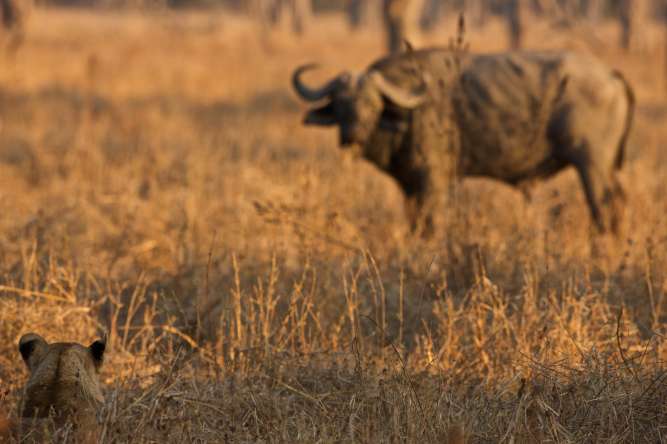
The Cape buffalo is one of the easiest Big Five animals to see on safari, yet it is still oddly overlooked. Elephants are the majestic giants, lions bring power and drama, leopards provide mystique, while rhinos take the conservation spotlight, but buffalo may be the most underestimated heavyweight in the African bush. The Cape Buffalo, notorious for their bad temper, provide reliable sightings, are thrilling to watch, and deserve far more respect than they usually get.
For safari travelers, visibility matters. Buffalo are often easier and cheaper to see than leopard or rhino, especially in classic safari areas like Kruger National Park, Chobe National Park, and South Luangwa National Park. If you are planning a first safari, or hoping to tick off the Big Five without blowing the budget, buffalo are one of your best-value wildlife sightings.
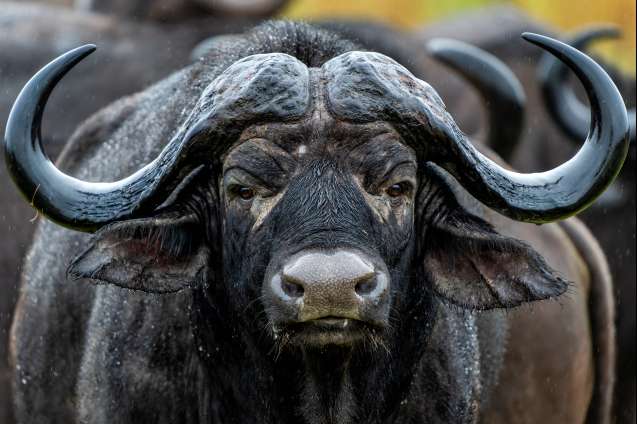
Yes, mostly. The African buffalo is the species Syncerus caffer, and the Cape buffalo is its largest and most famous Big Five subspecies. Found across much of East and Southern Africa, when safari travelers talk about seeing “buffalo” in places like Kruger, Chobe, the Okavango Delta, or South Luangwa, they are usually talking about Cape buffalo.
This is why both names appear so often online. “African buffalo” is the broader species name, while “Cape buffalo” is the name most commonly used for the big, dark, heavy-built buffalo associated with the Big Five. In practical safari terms, the two phrases often refer to the same animal, but “Cape buffalo” is usually the more precise label for the classic Big Five buffalo most people picture.
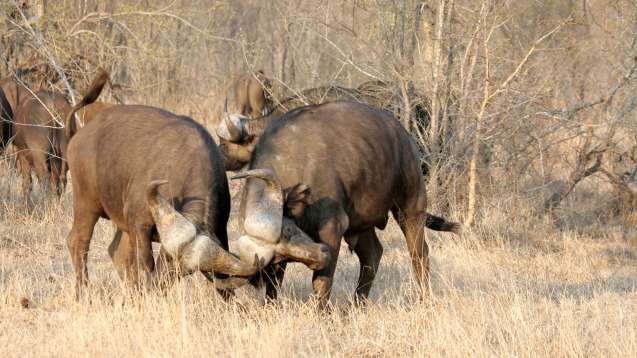
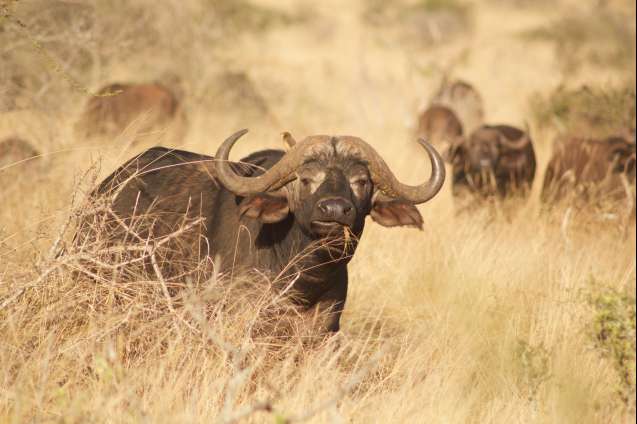
Cape buffalo look solid and slow, but do not be deceived. Adult bulls are powerfully built, can weigh between 425 and 870 kg, with some exceptionally large animals pushing close to a ton, and can run at speeds of around 56 km/h. Their fused horn bases form a heavy shield called a boss, one of their most distinctive and intimidating features.
Much of the Cape buffalo’s fearsome reputation was cemented during the colonial big-game hunting era, but the danger is rooted in strength, unpredictability, and aggression. A wounded buffalo is widely regarded as one of the most dangerous animals in Africa, and old bulls, especially those living apart from the breeding herd, are particularly notorious. These older males, often called dagga boys, are usually found alone or in small bachelor groups and are known for their heavy build, bad temper, and fondness for mud wallows. Buffalo can also be difficult to read, which makes a charge feel sudden and alarmingly direct.
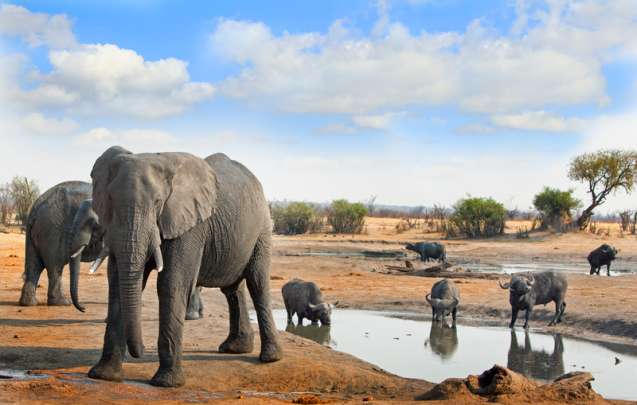
Buffaloes are also intensely social. They live in large herds, defend calves, and often stand their ground in situations where many other herbivores would run. This collective confidence is part of what makes them so formidable. A breeding herd may number in the hundreds, and in some areas, much larger aggregations can form, especially where grazing and water are good.
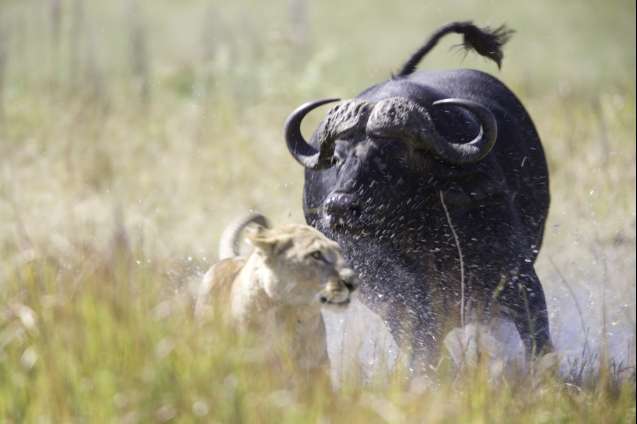
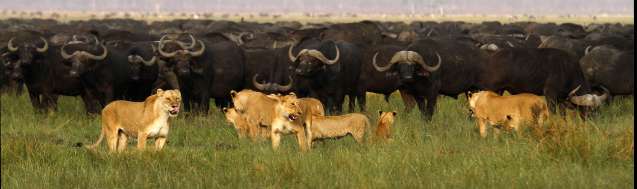
Lions do hunt buffalo, especially calves, weakened animals, or isolated adults, but they do not approach healthy buffalo casually. A full-grown Cape buffalo is a dangerous opponent, and buffalo herds are famous for mobbing predators, circling calves, and pushing back hard when lions get too close.
This is one of the reasons buffalo sightings are so exciting on safari. You are not just looking at another placid grazer. You are looking at an animal powerful enough to make Africa’s apex predators think twice. In places with strong lion populations, like South Luangwa and the Savuti Marsh in Botswana, buffalo-lion dynamics can be one of the most dramatic things to witness in the bush.
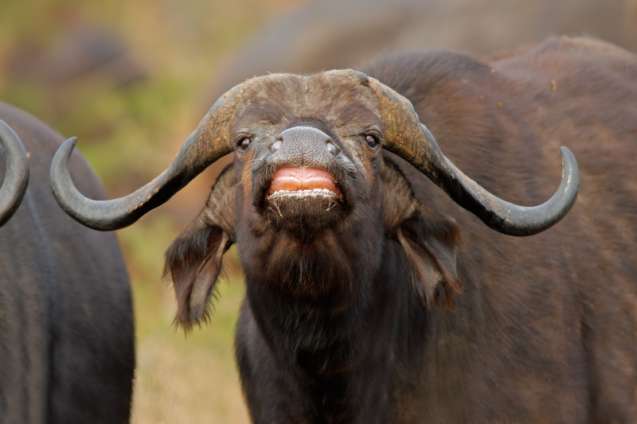
Cape buffalo are widespread across many of Africa’s best safari destinations, but some parks are far better than others if you want reliable sightings, large herds, and good overall value.
Kruger is one of the best-value places in Africa to see Cape buffalo. It is a classic Big Five destination; it has excellent safari infrastructure, and buffalo are among the most reliably spotted large mammals here. Kruger’s safari appeal is partly about consistency, and buffalo are a big part of that.
For first-time safari travelers, Kruger works especially well because it combines strong wildlife density with a wide range of trip styles, from budget camping and overland safaris to lodge-based packages. If your goal is to see buffalo without spending private-reserve money, Kruger is one of the smartest places to start.
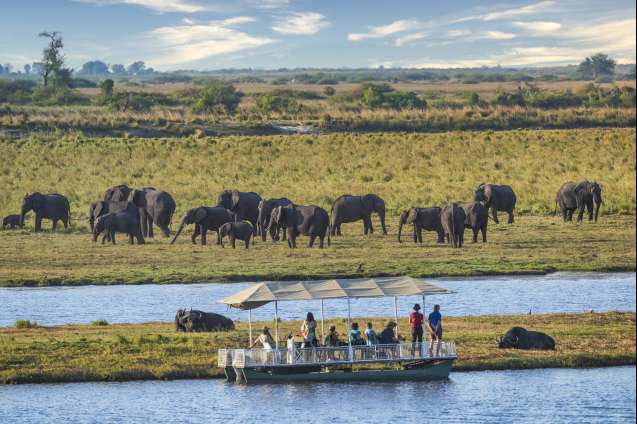
Chobe is another top-value buffalo destination, particularly if you want to see big herds in scenic riverfront settings. The park is famous for large concentrations of wildlife, including substantial elephant and buffalo herds, especially in areas linked to the Chobe River system.
Chobe also has a practical pricing advantage. It is often easier to include on a more affordable Southern Africa itinerary than many travelers expect, especially when combined with Kasane, Victoria Falls, or overland routes through Botswana and Namibia. If you want huge, photogenic herds and strong general game viewing, Chobe is hard to beat.
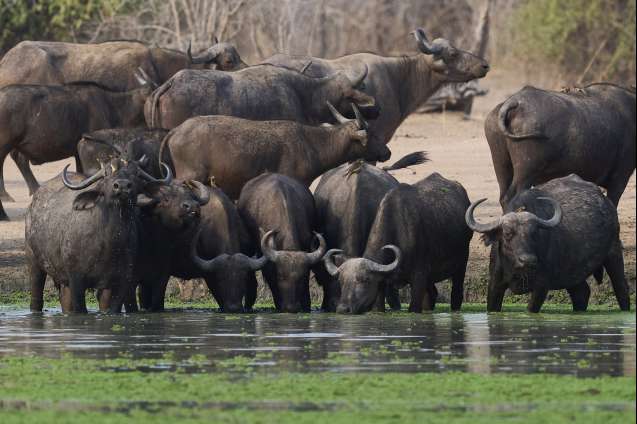
South Luangwa is one of the best places for travelers who want buffalo as part of a more dramatic predator-prey safari experience. The park is widely regarded as one of Zambia’s premier wildlife destinations, with large populations of lions, leopards, elephants, and buffalo.
It is also an excellent option for travelers looking for something a little less mainstream than Kruger or Chobe. In the dry season, wildlife gathers more tightly around the Luangwa River and its lagoons, which can create superb game viewing and powerful encounters between buffalo and predators.
If you are choosing a safari partly around Cape buffalo sightings, these destinations offer slightly different strengths. Some are better for value and easy sightings, while others suit travelers looking for exclusivity, dramatic predator encounters, or a more premium safari style
| Destination | Value for Money | Buffalo Herd Size | Safari Style | Best For |
|---|---|---|---|---|
| Kruger National Park | Excellent | Large herds, reliable sightings | Classic, accessible, budget to mid-range | First-time safari travelers, self-drivers, and budget-conscious Big Five seekers |
| Chobe National Park | Excellent | Very large herds in some areas | Scenic, river-based, easy to combine with other highlights | Travelers wanting huge herds, strong all-round game viewing, and good Southern Africa value |
| South Luangwa National Park | Very good | Good numbers, often seen in predator-rich areas | Wilder, less mainstream, immersive | Travelers wanting buffalo as part of a dramatic predator-prey safari experience |
| Okavango Delta | Moderate to low | Good sightings in beautiful wetland settings | Premium, fly-in, more exclusive | Travelers prioritising scenery, comfort, and a higher-end Botswana safari |
| Greater Kruger private reserves | Moderate to low | Strong sightings within a high-quality Big Five experience | Exclusive, guided, more intimate | Travelers wanting fewer vehicles, expert guiding, and a more exclusive safari atmosphere |
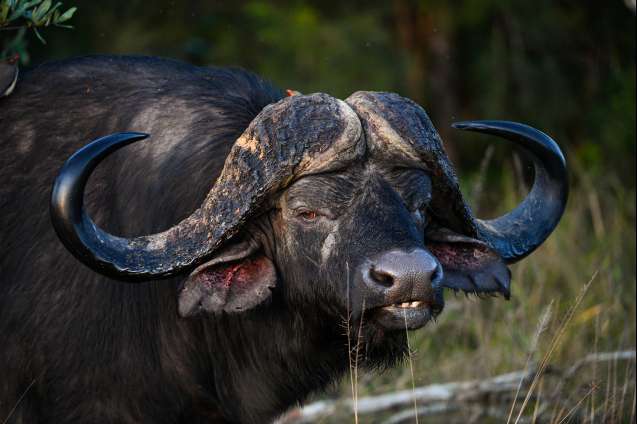
The Okavango Delta offers excellent buffalo sightings, often in beautiful wetland and floodplain settings, but it is usually more expensive than Chobe. This is a stronger fit for travelers prioritizing a higher-end or fly-in safari, rather than those focused purely on value.
Private reserves in the Greater Kruger ecosystem also offer strong Cape buffalo sightings, often with a more exclusive safari experience, fewer vehicles, and expert guiding. The trade-off is price. These are generally better for travelers seeking comfort, photographic opportunities, or a more intimate Big Five experience than for those chasing the cheapest buffalo sightings.
__medium.jpg)
Buffalo are also common in several East African safari areas, where they form part of broader Big Five or classic savanna wildlife experiences. These safaris can be excellent, but if your main aim is simply to see Cape buffalo in good numbers at a sensible price, Southern Africa often offers better value.
From Kruger and Chobe to South Luangwa and the Okavango Delta, we can help you choose the right safari destination based on your budget, travel style, and wishlist. Talk to an African safari expert.
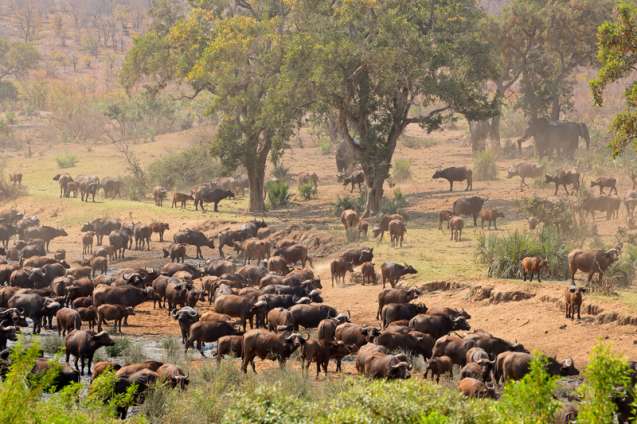
Buffalo are one of the most reliable Big Five sightings on a budget safari because they are widespread, often found in large groups, and common in some of Africa’s best-value parks. This is where buffalo become genuinely useful for safari planning, as they are not just impressive, but practical.
Compare that with leopard, which can be elusive even in very good parks, or rhino, which are often more localized and linked to higher-cost reserves or specific conservation areas. Buffalo, by contrast, are frequently seen on game drives in Kruger and Chobe, and they are a regular part of strong all-round wildlife viewing in South Luangwa.
That makes them one of the unsung heroes of a first safari. They help travelers build a realistic Big Five checklist without relying on luck alone, and they deliver the kind of close, high-impact wildlife encounters that make African safaris unforgettable.
__medium.jpg)
| Fact | Cape Buffalo |
|---|---|
| Scientific name | Syncerus caffer caffer |
| Other names | African buffalo, in broader species terms |
| Weight | Between 425 and 870 kg (936 and 1920 lbs) for Cape buffalo adults, with bulls heavier than cows |
| Herd size | Often dozens to hundreds, with some very large aggregations possible |
| Top speed | Around 56 km/h (35 mph) |
| Key feature | Heavy horn boss in mature bulls |
| Where found | East and Southern Africa, as the southern savanna or Cape buffalo subspecies |
| Safari reputation | One of the most dangerous and unpredictable Big Five animals |
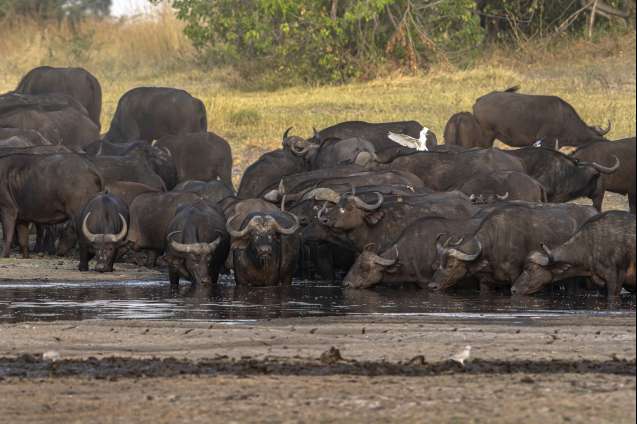
Cape buffalo may not get the glamour of lions or the scarcity value of rhinos, but that is exactly why they are underrated. They are powerful, social, widely distributed, exciting to watch, and far more dangerous than many first-time safari travelers realize.
They are also one of the best-value Big Five animals to build a safari around. If you want a strong chance of seeing buffalo, often in impressive numbers, without immediately jumping to luxury safari prices, Kruger, Chobe, and South Luangwa are three of the smartest places to start.
For anyone planning a first safari, the lesson is simple: do not treat buffalo as the Big Five animal you tick off in passing. Treat them as one of the reasons to go.
Not exactly, but close enough for most safari conversations. The African buffalo is the species, while the Cape buffalo is the largest and best-known savanna subspecies, the one most travelers see on safari in East and Southern Africa.
Cape buffalo are large, powerful, fast, and notoriously unpredictable when threatened. Old bulls and wounded animals are especially feared, and buffalo herds are known to defend themselves aggressively against predators.
They can be. Lions are apex predators, but buffalo are among the most dangerous animals in Africa because they can charge, fight back hard, and injure or kill predators and humans when cornered or threatened.
For value and reliability, Kruger National Park and Chobe National Park are two of the strongest choices. South Luangwa is also an excellent option, especially for travelers who want to see buffalo as part of a more predator-rich safari experience.
Yes, often more so than some other Big Five animals. In well-known safari parks like Kruger and Chobe, buffalo are among the more dependable large mammal sightings, especially compared with elusive predators like leopard.
That depends on the destination, but buffalo are often among the easiest Big Five animals to see because they live in herds, are widespread, and occur in many of Africa’s most accessible safari parks.
Our team can help you find the right African safari, whether you want classic Big Five sightings, better-value game viewing, or a first safari that fits your budget. Talk to a safari expert and start planning your safari.
Explore these destinations mentioned in this post.
Below you'll find further reading and articles related or similar to this post.




Call us toll free from US/Canada on 1-888-414-6513, or from the UK on 0-808-189-1052. All other countries can contact us on +27 21 791 0878.
© 2026 African Budget Safaris | Privacy | Terms | Cookie Policy | Consent Preferences

__large__thumb.jpg)