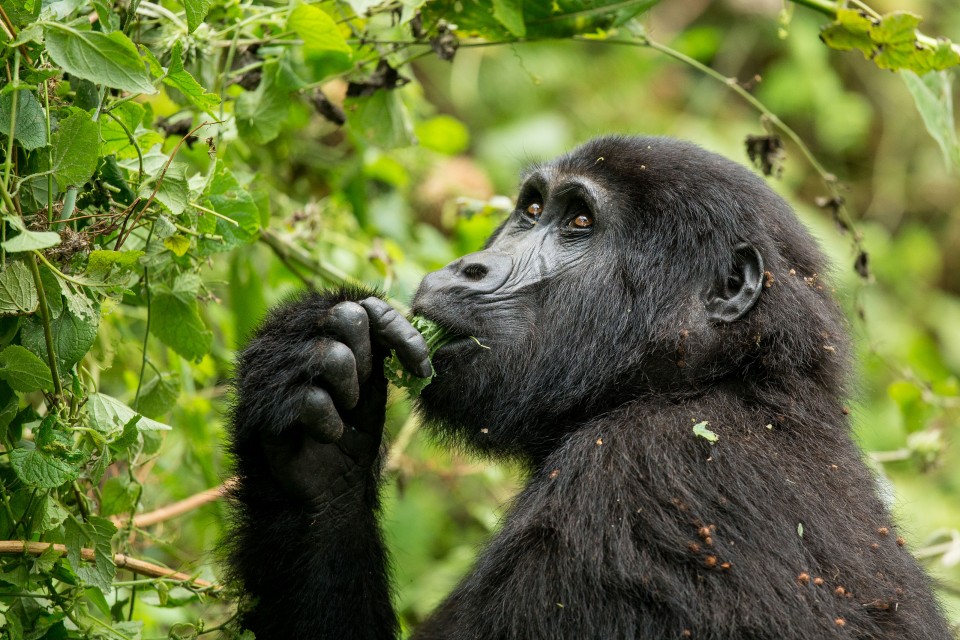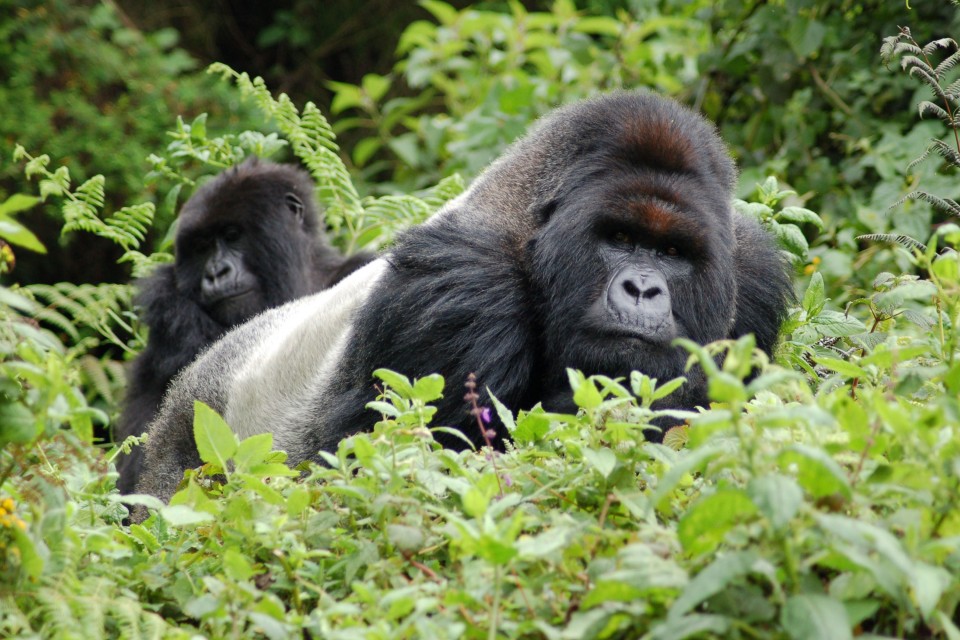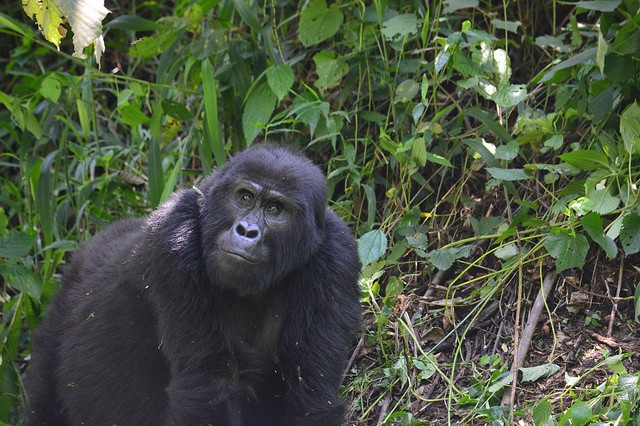

Gorilla trekking in Africa presents an extraordinary, once-in-a-lifetime experience. This quick guide answers the most common gorilla safari FAQs, such as where can you go gorilla trekking? Is gorilla trekking safe? And how fit do you need to be to trek with gorillas? If you like the idea of mountain gorilla trekking but want some of these questions answered, then this is the no-fuss guide to gorilla trekking for you!
| Africa Gorilla Trekking FAQs: Quick Links |
|---|

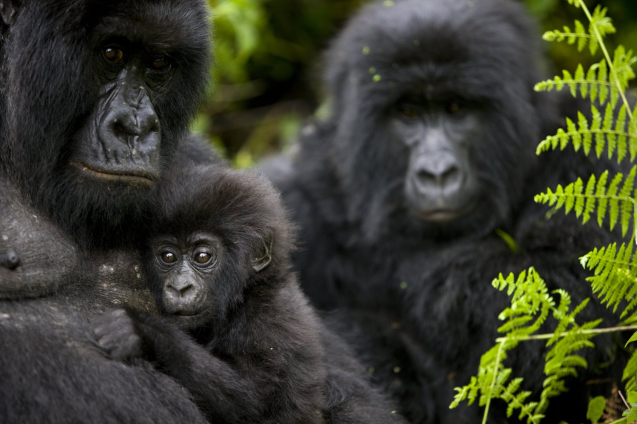
There are 3 East African gorilla trekking destinations; Rwanda, Uganda, and the Democratic Republic of the Congo (DRC). Mountain gorillas live in the forested areas of the Virunga Mountains that straddle the border between the DRC, Uganda, and Rwanda.
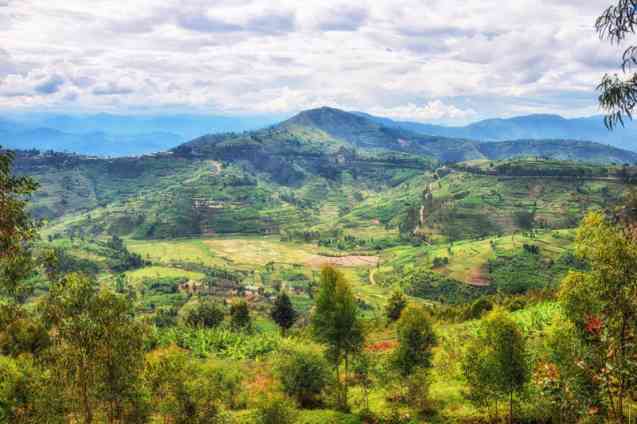
Rwanda is widely considered to be the best gorilla trekking destination in Africa. This is because Volcanoes National Park is just over 100 km / 62 miles from the capital city, Kigali, and is therefore easily accessible. Volcanoes National Park has 13 gorilla families that are well-habituated to humans and relatively sedentary making them easier to track and find.
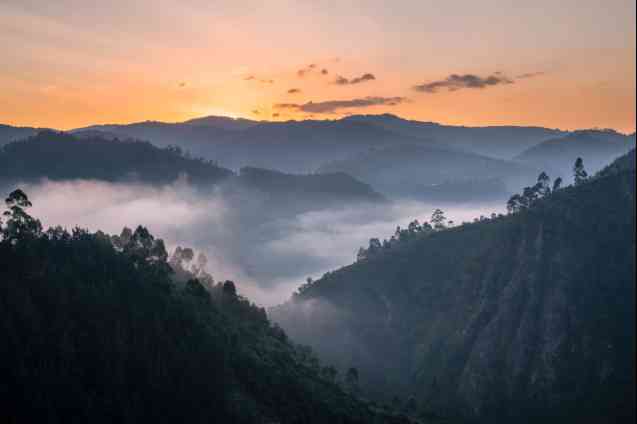
Yes. Booking your gorilla trekking permits in advance is essential. Gorilla trekking is extremely popular and is tightly controlled with limited permits available. It is recommended that you book at least 6 months in advance, particularly if you are travelling during the high gorilla safari season from July to September.
The bulk of gorilla trekking permits are sold in bulk to tour operators. It is therefore advisable to book a tour to avoid disappointment.
When visiting Rwanda or Uganda, we recommend a minimum of 3 days to allow for stress-free travel. A minimum of three days for Rwanda gorilla trekking or four days for Uganda gorilla trekking is recommended. This includes travel time and the trekking day. For logistics in the DRC, a slightly longer trip is advised.
__medium.png)
The most popular gorilla trekking months in Africa are during the dry season from June to September. The short dry season between December and February is also good. That said, because of the equatorial climate, gorilla trekking is considered an all-year-round activity.
No. Only people over the age of 15 are allowed to obtain gorilla trekking permits.

Gorilla trekking groups are limited to 8 tourists per group, plus guides, trackers, and porters.
The best advice is to know your own fitness level. Considering that gorillas live in mountainous terrain above 2,000 m, it is safe to say you need to be relatively fit. However, even if you are not the fittest person, you should not let this stop you. Trekkers are often grouped according to fitness levels, with harder-to-reach families assigned to the fittest adventure seekers. In addition to this, you can hire a porter to carry your backpack or you. Hiring a porter is an excellent way to support local communities.
Hiking in tropical rainforests can be tough. Worn-in hiking boots, a hat, long-sleeved shirts, good hiking trousers, gaiters to protect your legs, gloves to protect your hands and a good rain jacket are essential. Optional extras are walking sticks and a dry change of clothes. Don’t forget waterproof bags for your belongings, as well as a backpack, water, and insect repellent.

Gorilla trekking duration varies according to your destination and fitness level. The gorilla trek will take 1 to 2.5 hours in each direction. Once the gorillas have been located, visitors will spend about an hour with the gorilla families before heading down.
Mountain gorilla trekking can be tough. Hiking uphill on dirt tracks in high humidity, and sometimes rain, fending off stinging nettles, thorns, insects, and rampant vegetation. Expect hot, sweaty, muddy, and breathless. Many people choose to hire a porter to help with trickier terrain and to carry backpacks. Once your gorilla family has been located, you will have 45 minutes to an hour to sit with them and observe. Being close to these gentle apes is an exceptional experience that many people struggle to put into words.
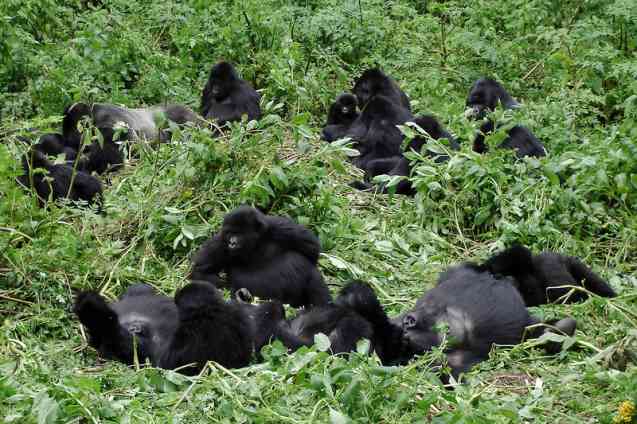
The gorilla families in Rwanda, Uganda, and DRC are all carefully monitored for both their protection and for science. For this reason, it is extremely rare for trekking groups not to encounter gorillas. In addition to regular monitoring, trackers are employed by the parks to locate the family groups, thus adding to the probability of a successful mountain gorilla encounter.

Gorillas share around 98% of our DNA, and as such are extremely susceptible to human viruses. For this reason, gorilla trekking guides are trained to keep a respectful 7m. However, gorillas are not aware of safe distances and wild animals being unpredictable, a close encounter is not impossible.
Yes! Photography is encouraged but flashes are strictly prohibited.

Generally speaking, gorilla trekking is safe. Gorillas are generally sedate and peaceful creatures. The family groups that are visited are habituated and accustomed to humans. While gorillas are wild animals living in a wild environment, instances of inter-species aggression are rare.
Humans are another topic. Both Rwanda and Uganda are politically stable and safe countries, which contributes to their popularity for the gorilla trekking experience. Virunga National Park, along the eastern border of the DRC, has been plagued by unrest caused by Mai Mai militia groups. This situation is carefully monitored and the park is closed if deemed unsafe. If your desire is to visit Virunga National Park and the DRC, keep careful tabs on the Virunga website which has up-to-date information.
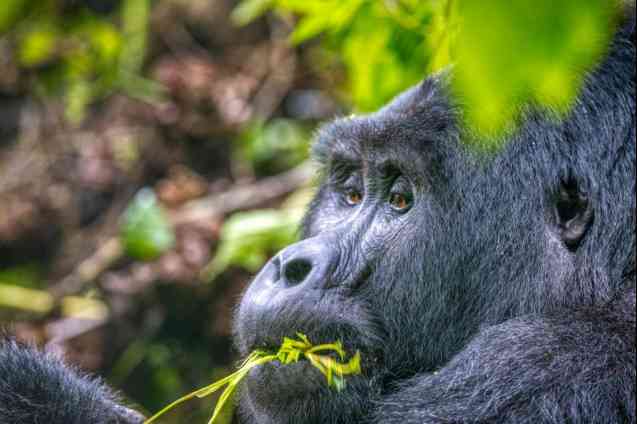
Due to its popularity, gorilla trekking permits in Rwanda are the most expensive, followed by Uganda, and then the DRC. Aside from the permit costs, good gorilla safari deals can be found in both Uganda and Rwanda.
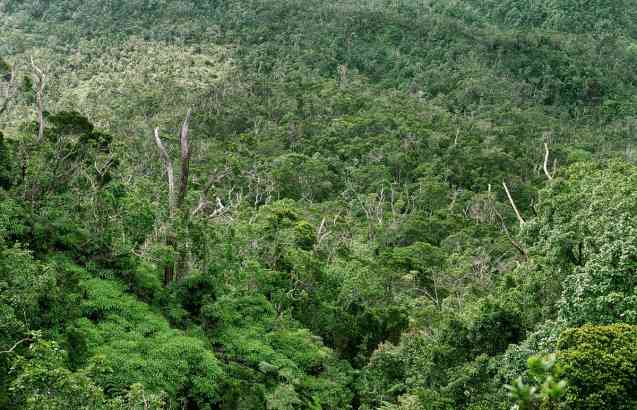
The popularity of gorilla trekking has a direct impact on the communities that surround the national parks. The gorilla trekking permit fees are funnelled toward conservation efforts that are geared toward keeping gorillas safe. Guides, porters, and hotel staff are all direct beneficiaries, and community-based tourism initiatives further aid local communities. As a result, communities take pride in their national treasure, and poaching is frowned upon. The mountain gorillas are monitored more closely providing an additional layer of protection, and gorilla numbers have steadily increased to over 1,000 individuals. For more about the impacts of gorilla trekking see: Is gorilla trekking good for conservation?
Yes. Getting close to these magnificent primates is an amazing experience. Gorilla trekking, alongside Big 5 safaris, are the two most sought-after African safari experiences.
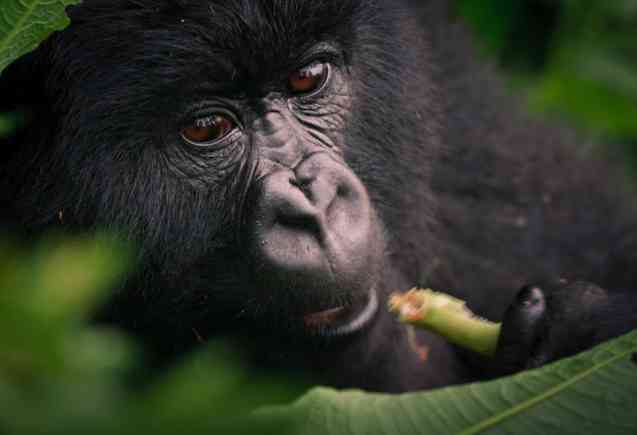
If you would like to learn more about gorilla trekking in East Africa, check out our comprehensive gorilla trekking guide here, and browse African Budget Safaris gorilla trekking tours to Uganda and Rwanda here.
Compare our Rwanda gorilla trekking tours and Uganda gorilla trekking tours.
Our experienced travel consultants will be happy to answer any of your gorilla trekking questions and help you take the next step towards your gorilla trekking experience of a lifetime.

Explore these destinations mentioned in this post.
Below you'll find further reading and articles related or similar to this post.




Call us toll free from US/Canada on 1-888-414-6513, or from the UK on 0-808-189-1052. All other countries can contact us on +27 21 791 0878.
© 2026 African Budget Safaris | Privacy | Terms | Cookie Policy | Consent Preferences


__thumb.png)