Planning an African safari is exciting — but once you start comparing destinations, seasons, travel styles, and costs, it can quickly become overwhelming.
This guide is not a quick list of safari budget tips. It is a practical, step-by-step framework for planning an affordable African safari in 2026.
Instead of focusing only on how to spend less, this guide shows you how to spend smarter. You’ll learn which decisions have the biggest impact on your budget, where it is worth paying more, where you can save confidently, and how to avoid the hidden safari costs that catch many travellers by surprise.
From choosing the right destination and travel season to comparing overland tours, lodges, flights, activities, and daily costs, this guide walks you through every major financial decision involved in planning a safari — from your first ideas to the day you leave.
Many travellers begin by exploring example itineraries to understand what is possible at different price points. You can browse our curated collection of budget safaris in Africa to see real-world routes, travel styles, and pricing.
Wondering how much an African safari really costs? This video explains typical safari price ranges, what affects the cost, and practical ways to save money without missing out on the best wildlife experiences.
Need help making your safari budget go further? In this video, Lauren Melnick and Stephanie Parker share practical strategies for finding affordable accommodation, choosing the best-value safari destinations, travelling in shoulder season, and knowing when it is worth spending more.
You can read this guide from start to finish, or jump directly to the sections most relevant to your planning stage:
This guide is ideal for:
By the end of this guide, you’ll understand:
For quick answers to specific price questions, see our reference guide: African safari cost guide.
Quick Links
Effective safari budget planning is not about chasing the lowest price — it’s about making smart decisions early, allocating your budget where it delivers the most value, and avoiding the hidden costs that catch many travellers off guard. This section provides practical safari planning advice you can apply immediately when planning your African safari budget in 2026.
Strategic Safari Budget Planning Quick Links
A structured timeline is one of the most effective safari planning strategies for keeping costs under control.
12–18 Months Before Travel: Dream, Research & Budget
At this stage, focus on defining your priorities.
Expert tip: Travellers who engage a safari consultant early typically access better-value itineraries because budget-friendly options sell out first, not last.
9–12 Months Before Travel: Lock in Major Costs
Booking early protects you from price increases and gives you access to mid-range accommodation before it sells out.
6–9 Months Before Travel: Health & Route Logistics
4–6 Months Before Travel: Insurance & Extras
2–3 Months Before Travel: Spending Preparation
2–4 Weeks Before Travel: Final Cost Checks
Understanding where safari money goes is essential when learning how to plan a budget safari effectively.
Accommodation usually accounts for the largest portion of your safari budget.
Cost tiers
Accommodation Money-saving Strategy
Expert Money-saving Tip: Mixing accommodation levels often saves more money than downgrading the entire itinerary.
Transport decisions can dramatically affect costs:
Expert Money-saving Tips:
Many travellers over-budget by assuming all activities cost extra. Many safari activities are included in the itineraries. Only choose optional safari add-ons when you have a significant bucket-list priority.
Activities often included in safari packages:
Premium add-ons
Decision tool
Ask: Does this activity add a new experience — or just a new price tag?
Hidden costs are the most common cause of safari budget overruns.
Must-budget items:
Expert rule: Add a 10–20% contingency buffer to your safari budget.
Quick reference: How Much Does an African Safari Cost?
Your total safari budget = [cost per-person per-day] x [number of people] x [number of days]
These [variables] will determine the total cost of your safari. Before you book, consider the following factors that will affect your safari budget:
Longer trips cost more — but inefficient travel routing could be even more costly.
Expert Tips:
Budget Alternative:
Expert Tip: Private safaris can be surprisingly affordable if you bring a larger group and split the costs
Travel seasons determine your basic per-person, per-day safari cost.
Real-world example: This 4-day Masai Mara safari costs:
Same safari. Same wildlife region. Vastly different price.
The most successful safari budget planners:
Strong safari planning strategies turn budget limitations into smarter, more rewarding safari experiences.
Your daily safari budget directly affects your level of comfort, group size, and travel style. Here’s what different budget levels typically include:
| Budget (per person per day) | Typical Safari Experience |
|---|---|
| $150–$250 | Camping or basic lodges, shared vehicles, excellent wildlife viewing, best overall value |
| $250–$400 | Comfortable lodges or tented camps, smaller groups, very good comfort-to-cost balance |
| $400–$700 | Premium lodges, fewer travellers, upgraded comfort and guiding |
| $700+ | Luxury lodges, fly-in safaris, exclusive wildlife areas, maximum comfort |
Choosing the right destination is one of the most powerful safari budget planning decisions you’ll make. Safari costs vary dramatically between countries, regions, parks, and even neighbouring reserves. Strategic destination planning allows you to experience iconic wildlife while keeping daily costs, park fees, and transport expenses under control.
This section helps you compare destinations objectively — not by hype, but by value delivered per dollar spent.
Destination Strategy Quick links:
| Category | Best Option | Why It Offers Value |
| Cheapest safari country | South Africa | Excellent infrastructure, self-drive options, affordable parks |
| Best overall budget value | Namibia | Low crowd density, affordable lodges, good road network |
| Cheapest Big Five safari | Zimbabwe | High-quality guiding, lower park fees |
| Cheapest gorilla trekking | Uganda | Permit costs less than half of Rwanda |
| Most expensive safari countries | Botswana Kenya Tanzania |
Iconic destinations, exclusive concessions, high park fees |
| Best value Great Migration safari | Kenya & Tanzania (shoulder season) | Iconic wildlife at reduced seasonal rates |
| Cheapest flight hubs | Johannesburg Nairobi Addis Ababa |
High competition keeps fares lower |
Expert insight: The “best” safari destination is rarely the cheapest country — it’s the one that delivers the experiences you want with the fewest add-on costs.
Cost advantages
Typical daily safari costs
Cost challenges
Typical daily safari costs
Strategic takeaway: East Africa offers world-famous wildlife experiences — but requires careful seasonal and route planning to stay within budget.
Some parks are famous — and priced accordingly. Others offer similar wildlife at a lower cost.
These parks deliver incredible experiences — but park fees alone can exceed US$200 per person per day in peak season.
| Iconic Park | Lower-Cost Alternative | Benefit |
| Masai Mara | Mara conservancies (shoulder season) | Fewer vehicles, lower rates |
| Serengeti Ngorongoro Crater |
Northern Tanzania circuit | Reduced crowd pressure |
| Okavango Delta | Chobe / Khwai | Similar wildlife at lower daily rates |
Expert Tip: Spending fewer days in premium parks and more time in value reserves often delivers better overall wildlife viewing for the same budget.
Poor routing is one of the biggest hidden safari costs. The cheapest international flights are usually to Africa’s major air travel hubs: Nairobi, Johannesburg, and Addis Ababa. It makes sense to plan your safari accordingly.
Smart Route Planning Principles
Cost-Saving Start & End Points
Safari itineraries that start and end at travel hubs reduce:
Multi-country trips can offer value — but only when planned efficiently.
Best-value combinations
When to avoid
Decision tool:
If adding a second country increases logistics more than wildlife variety — don’t add it.
Seasonality has a greater impact on safari cost than destination choice alone.
Seasonal Price Comparison
| Season | Price Level | Crowd Level | Wildlife Viewing |
| Peak (dry) | Highest | High | Excellent |
| Shoulder | Medium | Medium | Very good |
| Green / Low | Lowest | Low | Good–Very good |
Real-World Example: Botswana Emerald Season (Dec–Mar)
Expert Money-saving Tip: The green season is the most underused safari money-saving strategy.
Before choosing where to go, ask:
Use this framework to match experience goals to budget reality.
The smartest safari budgets are built on destination strategy, not just discounts.
Travellers who:
Consistently experience better safaris at a lower cost.
Once your destination and budget framework are in place, the biggest savings come from how you implement your safari plan. This section focuses on practical safari money-saving tips that directly affect what you pay — including timing of booking, tour style, accommodation choices, and transport tactics.
These money saving strategies are used daily by experienced safari planners to help travellers get better safaris for less money.
Money-saving Quick Links:
Timing is one of the most powerful — and most underestimated — safari planning strategies.
Book Early for High-Demand Travel
If you’re travelling:
You should book 9–12 months in advance, and 12–18 months ahead for peak periods.
Why does this save money?
Expert Safari Money-saving Tip: Early booking also spreads payments over time, making safari budget cash flow planning easier and more predictable.
If your dates are flexible, travelling outside peak season delivers immediate savings.
Typical savings
In many regions, wildlife viewing remains excellent — especially for predators — while prices drop significantly. It often coincides with birthing seasons, so you get to see lots of babies!
Safari operators discount unsold departures closer to travel dates.
Best for
Keep an eye on our Safari Discounts & Specials page, which is regularly updated.

4. Group vs Private Safaris: Cost Comparison
Your choice of tour style has a major impact on your budget.
Group Safaris: Best Value Option
Group safaris consistently offer the lowest per-person cost.
Why they’re cheaper
Best for
Private Safaris: Flexibility at a Premium
Private safaris offer:
But costs rise sharply for:
Cost-saving hybrid strategy: Join a group safari for the core itinerary, then add a short private extension.
Travelling as:
Often qualifies you for:
Accommodation choices can make — or break — your safari budget.
Camping vs Lodges: The Reality
Camping safaris are consistently the most affordable option.
Camping advantages
Mid-range tented camps offer a middle ground — more comfort than basic camping, often less than lodges
Mix-and-Match Accommodation Strategy
One of the most effective budget safari strategies is combining accommodation types.
How to do it:
This approach preserves comfort and budget.
Stay Longer in Fewer Places
Each lodge change adds:
Decision Tool:
If the wildlife quality is similar, stay longer rather than moving.
Transport is the second-biggest safari expense after accommodation.
Getting to Africa: Start Smart
International Flights are cheapest to:
Safaris starting and ending in these major hubs reduce:
Getting Around: Drive Over Fly
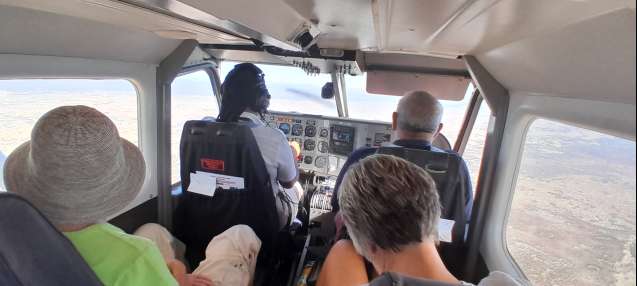
Internal flights are convenient — but expensive.
Cost comparison
Overland Safaris use purpose-built vehicles that balance comfort with affordability.
Group Transport = Big Savings
Shared vehicles reduce:
This is one of the main reasons group safaris cost less without reducing wildlife quality.
Real-World Cost Comparison Example - 7-Day Botswana Safari
| Style | Approx Cost (pp) |
| Private fly-in safari | US$5,275+ |
| Private road safari | US$4,008+ |
| Group lodge safari | US$3,109+ |
| Group camping safari | US$2,680+ |
Same country. Same wildlife.
The difference is implementation, not experience.
Some upgrades deliver value; others don’t.
Worth considering
Often not worth it
Decision Tool:
Ask: Will this upgrade improve wildlife viewing or just comfort?
Before booking, confirm:
✔ What is included vs excluded
✔ Vehicle type and group size
✔ Accommodation location (inside vs outside parks)
✔ Transport method between destinations
✔ Seasonal pricing applied correctly
The most effective safari money-saving strategies focus on:
Smart implementation doesn’t reduce your safari — it refines it.

Successful safari budget planning doesn’t end when you book your trip. Using these practical planning tools before departure — and applying them consistently while on safari — you are far more likely to stay within budget while still enjoying a smooth, stress-free safari.
This section provides real-world tools you can use to track spending, avoid hidden costs, prepare for emergencies, and manage payments and documentation efficiently while travelling in Africa.
Practical Planning Quick Links:
One of the most common mistakes in how to plan a budget safari is failing to separate what’s included in a safari package from what you spend daily.
Divide your safari budget into three clear categories:
Fixed & Upfront costs
Semi-Fixed costs
Variable daily costs
Your safari package already includes meals, transport, and park fees. Track these separately to prevent double-budgeting. Determine what is not covered and include in your variable daily cost budget.
Assign a daily spending limit for:
Implementation tip: Allocate only your daily allowance in cash each day to avoid overspending early in the trip.
Negotiate Value, Not Price.
Safari prices are largely fixed. Instead of asking for discounts, request:
This approach aligns with how safari operators structure margins.
Use Group Size as Leverage
Group travel is one of the strongest cost-reduction tools.
Who benefits most
Even joining a scheduled group departure can significantly reduce costs.
Be Flexible With Comfort Levels
Travellers willing to:
Have far more options when matching itineraries to budget.
Hidden costs don’t feel expensive individually — but add up quickly.
Commonly Missed Expenses
Expert Tip: Confirm everything in writing — inclusions, exclusions, and upgrade costs — before paying a deposit.
One of the most overlooked safari planning strategies is emergency preparation.
Emergency Cash Reserve
Set aside funds separately for:
This money should not be used for souvenirs or upgrades.
Travel Insurance Is a Cost-Protection Tool
Comprehensive travel insurance protects travellers financially and medically, which is why it is mandatory when you book through African Budget Safaris.
This is important for:
From a budget perspective, insurance prevents catastrophic costs — it’s not optional.
Time Buffers Save Money
Rushed itineraries often create extra costs. Be realistic when scheduling your time.
Implementation rule: Add buffer days before and after your safari to avoid:
Africa is not a single payment environment — planning ahead prevents financial stress.
Card vs Cash Reality
Best practice - Carry a mix of:
Pro Tips:
Avoid Excessive ATM Fees
Multiple small withdrawals lead to repeated fees. Withdraw larger amounts less frequently and track spending daily.
Currency Awareness
Research which currencies are accepted in each destination to avoid poor exchange rates and forced airport exchanges.
Documentation errors can derail a safari — and inflate costs instantly.
Passport Requirements
Most African countries require:
Failing to meet these requirements can lead to denied boarding or emergency replacements.
Visa Planning
Visa rules vary by nationality and country.
Implementation checklist
Safari Money Saving Tip: Multi-country visas (where available) can reduce costs.
Printed + Digital Backups
Carry both printed and digital copies of:
This avoids delays, misunderstandings, and replacement costs.
✔ Budget categories clearly defined
✔ Daily allowance set
✔ Emergency fund secured
✔ Insurance purchased
✔ Payment mix prepared
✔ Documentation verified
✔ Inclusions confirmed in writing
The most successful budget safari travellers are not those who spend the least, but those who plan the best. Using clear budget tracking, smart negotiation, hidden-cost protection, emergency preparation, payment awareness, and documentation control ensures your safari budget works with you, not against you.
For 2026, these practical safari planning tools are no longer optional — they are essential.
Yes. A knowledgeable African safari specialist can often save travellers money by navigating complex pricing, avoiding hidden costs, and matching travellers with the best-value safari options for their budget and priorities.
At African Budget Safaris, consultants use first-hand, on-the-ground experience to design cost-effective, personalised itineraries. This real-world expertise ensures you get maximum value without sacrificing quality.
Most budget African safaris typically range from around US$150 to US$400 per person per day, depending on the destination, travel style, accommodation level, group size, and travel season. Lower-cost options such as basic camping, shared vehicles, or overland tours tend to be at the lower end of this range, while simple lodge experiences are often toward the higher end. For a more detailed breakdown of costs by country and style of safari, see our African safari cost guide.
Planning a budget-friendly African safari is about smart strategy, timing, and informed decision-making — not cutting corners. By planning early and staying flexible, you can enjoy exceptional wildlife experiences while keeping costs under control.
A Proven Budget Safari Planning Framework
With the right approach, a 2026 safari can deliver iconic landscapes, extraordinary wildlife encounters, and lifelong memories — without overspending.
Planning a Budget Safari: Next Step?
For more information, contact African Budget Safaris.
Below you'll find further reading and articles related or similar to this post.




Call us toll free from US/Canada on 1-888-414-6513, or from the UK on 0-808-189-1052. All other countries can contact us on +27 21 791 0878.
© 2026 African Budget Safaris | Privacy | Terms | Cookie Policy | Consent Preferences


__medium.jpg)




__large.jpg)