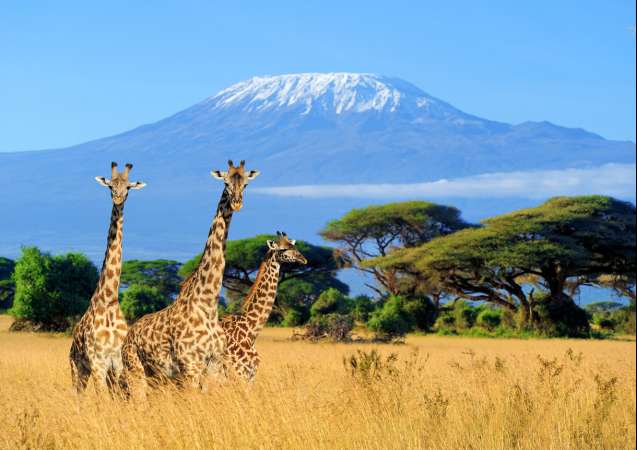

The giraffe, the tallest land animal in the world, is under threat. The IUCN has recently upgraded this majestic giant from ‘least concern’ to ‘vulnerable’. While the giraffe is common within park borders, and you are likely to see giraffes on most safaris, populations have been in steady decline. In the past 30 years, giraffe numbers have dropped by nearly 40%. Giraffes have been a part of our history and culture for centuries and below you will find a compendium of interesting and little-known giraffe facts, aka giraffenalia.
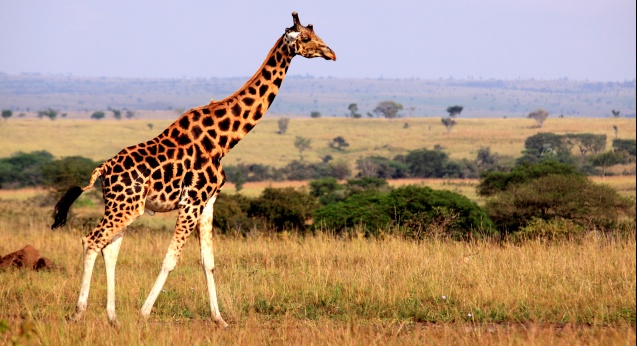
The giraffe is the world’s tallest animal. It exploits the very exclusive ecological niche of tall trees on the open planes of the savannah. To this effect, it has prehensile lips and a very long and tough tongue (over 50cm!) both adaptations for stripping tiny leaves from their unpleasant and thorny branches. Giraffes need over 35kgs of food a day. Because they only eat tiny leaves, this means that they spend most of their time eating. It therefore follows that they only need between 6 and 30 minutes of sleep per day!
Because of their unusual shape, giraffes have a highly specialised cardiovascular system. It starts with an enormous heart that weighs up to 11 kilograms and reaches over 60cm long. Additionally, the jugular veins contain a series of one-way valves that prevent excess blood flow to the brain when the giraffe lowers its head to drink. Because of this, scientists have examined giraffes and applied what they have learnt to zero gravity environments and the design of spacesuits.
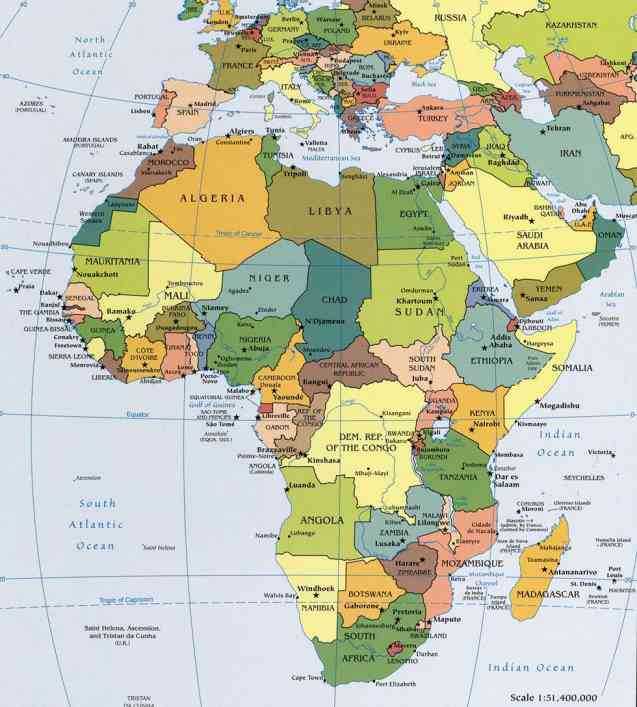
You can see giraffes on safari throughout East and Southern Africa. From Kenya to South Africa, and most countries in between, giraffes are ubiquitous members of the African safari landscape.
For a detailed breakdown of what kinds of giraffes to see where, check out The Best Places to See Giraffes in Africa
The first known giraffe came to Europe via Alexandria in 46 BC. It is believed to have been a gift from Cleopatra to Julius Caesar. Caesar, on his triumphant return to Rome after years of civil war, exhibited the animal to the public. Interestingly enough, the scientific name of the giraffe, Camelopardalis, comes from the Greeks and Romans who believed the animal to be an unnatural hybrid of a camel and a leopard.
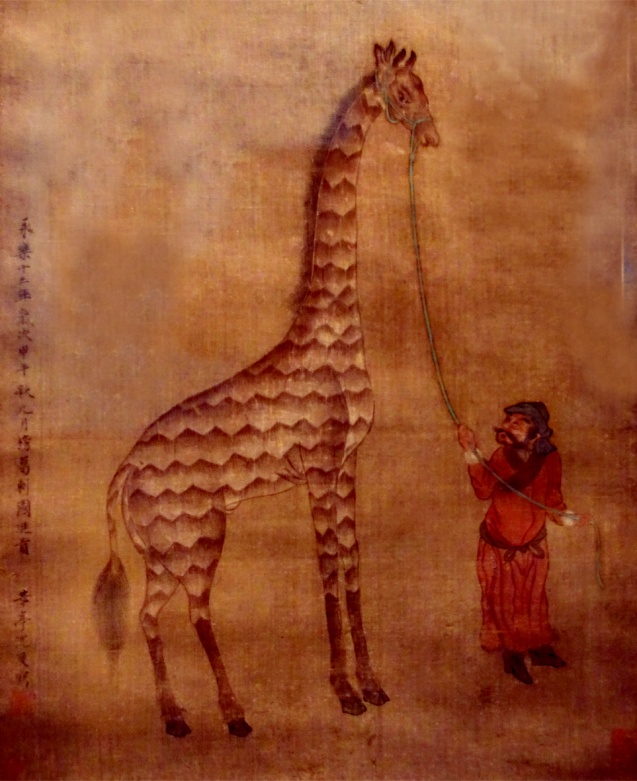
Between 1405 and 1433 when the Chinese were first sailing the seven seas, a giraffe made the journey from Africa to China as a tribute for the then emperor Yongle. The curiosity was well received. The Chinese believed the giraffe to be the flesh incarnation of the mythical qilin, or Chinese unicorn - half dragon half horse. Records indicate that this was not an isolated event and that numerous animals made this journey during the Ming period.
There is a group of stars called ‘Camelopardalis’ or in laymen’s speak, the giraffe constellation. It is a large and faint group of stars that appears in the northern sky and was introduced in 1612 by Petrus Plancius a Flemish astronomer of the time.

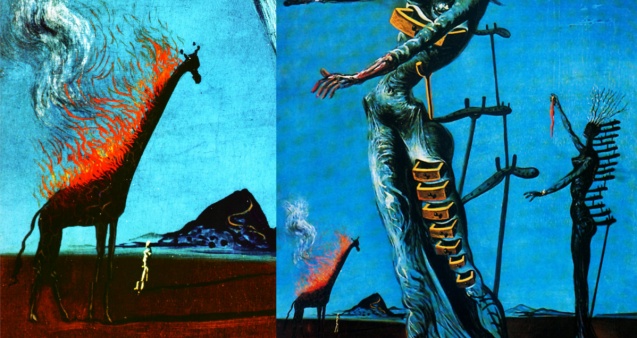
The great surrealist Salvidor Dali took the giraffe as a symbol of masculinity. In his famous painting “The Burning Giraffe” 1937, the giraffe is meant to be a “masculine cosmic apocalyptic monster”. I will just leave that there.
British comedian Eddie Izzard seems to be particularly taken with giraffes. In his 1997 video release, Glorious, he dramatizes what “evil giraffes” may be like. The YouTube video has over 1.5 million views.
This is not his only giraffe skit, however. He returned again to giraffes in 2008 as part of his stand-up comedy tour, Stripped. Here he elaborates on the fact that giraffes are silent beings that do not have a distinctive call.
In fact, it is not that giraffes do not make a noise but rather that no one has ever heard a giraffe. This is due to their noises falling outside of the human range of hearing.
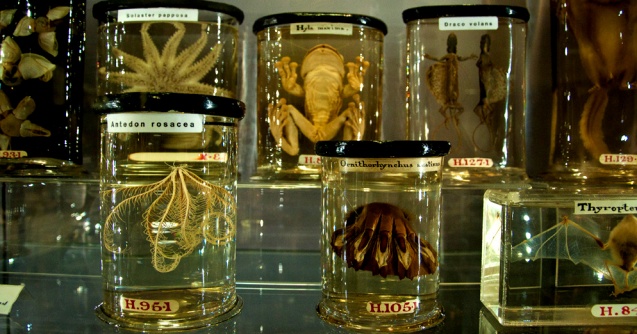
In London, the Huntarian Museum can be found on the grounds of the Royal College of Surgeons. The museum holds a bizarre collection of bits of animals and humans alike. It is macabre but also fascinating. My favourite item in the whole museum, carefully preserved in formaldehyde, is a giraffe’s eyelid.
Item RCSHM/E 34.3 is headed: “Eyelid, Mounted wet tissue” and is followed by the description “Skin from around the eye of a giraffe”. This is exactly, in scientific terms, what is in the jar. What it does not describe, even in preserved form, is the length of the eyelashes and the incongruity of this sample even existing in damp and rainy London.
Being the tallest animal in the world has to come with a little bit of just plain weird. To start with, Giraffes take part in a behaviour called osteophagia. This is literally “feeding on bone”. The reason is not however as nefarious as I had hoped. It’s nature's version of a calcium supplement and such a humdrum affair that giraffes have been known to fall asleep mid-chew!
Lastly, the mating ritual of giraffes involves the practice of necking where male giraffes bash one another to determine who has the mating rights. Impressive though this may be, what is more astonishing is what happens after this show of bravado. The male giraffe will test the female's fertility by tasting her urine.

Giraffes are awesome. So awesome that they get their very own day on the 21st of June every year. To find out more you can visit the Giraffe Conservation Foundation which works to preserve these amazing (and eccentric) giants.
Below you'll find further reading and articles related or similar to this post.




Call us toll free from US/Canada on 1-888-414-6513, or from the UK on 0-808-189-1052. All other countries can contact us on +27 21 791 0878.
© 2026 African Budget Safaris | Privacy | Terms | Cookie Policy | Consent Preferences