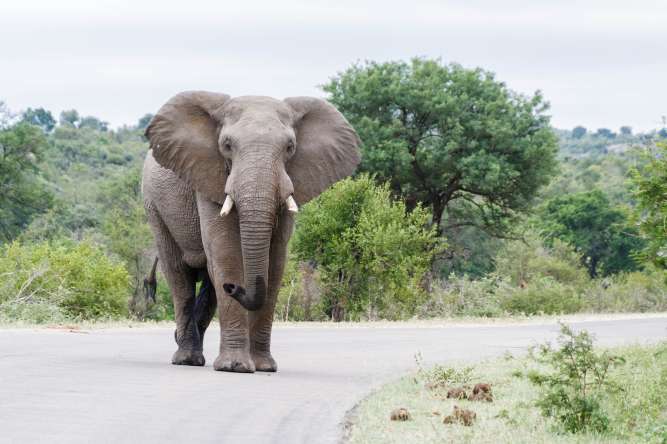
There is more than one way to experience a Kruger safari. You can drive yourself through Kruger National Park, join a guided small-group tour, stay in a private Greater Kruger reserve, camp under the stars, fly into a safari lodge, or combine several of these experiences in one trip.
The best Kruger safari depends on your budget, how much time you have, your comfort level, and whether you prefer independence or having someone else handle the logistics.
For most first-time visitors, the biggest decision is not whether to visit Kruger, but what type of Kruger safari to book. This guide compares the main options so you can work out which safari style suits you best.
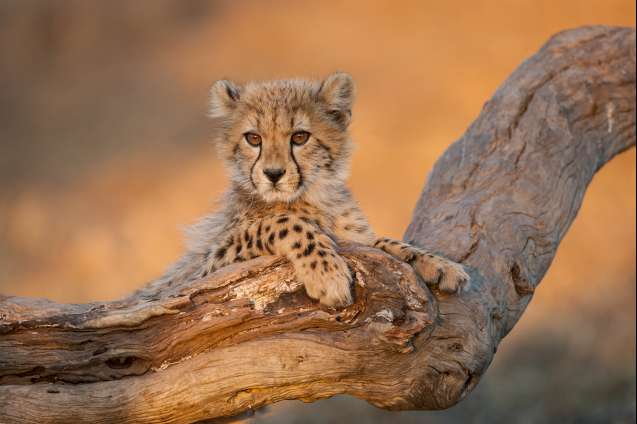
The main types of Kruger safaris include guided safaris, self-drive safaris, small-group and private tours, lodge and camping safaris, Greater Kruger private reserve safaris, fly-in packages, family safaris, and walking or wilderness experiences.
| Kruger safari type | Best for | Budget level | Main advantage | Main trade-off |
|---|---|---|---|---|
| Guided Kruger safari | First-time safari travellers | Budget to luxury | Guide, transport and logistics included | Less independence than self-drive |
| Self-drive Kruger safari | Independent travellers | Budget to mid-range | Freedom and excellent value | You do the driving and wildlife spotting |
| Small-group safari | Value-conscious travellers and solo travellers | Budget to mid-range | Share costs without sacrificing expert guiding | Less flexibility than a private safari |
| Private Kruger safari | Families, couples, photographers and friends | Mid-range to luxury | Flexible itinerary and private vehicle | Higher cost per person |
| Greater Kruger lodge safari | Wildlife enthusiasts and travellers wanting exclusivity | Mid-range to luxury | Smaller reserves, fewer vehicles and flexible game drives | Usually costs more than staying inside public Kruger camps |
| Camping safari | Budget and adventure travellers | Budget | Immersive and affordable | Less comfort and privacy |
| Lodge safari | Travellers who want comfort without organising everything | Mid-range to luxury | Comfortable accommodation and packaged safari activities | Higher cost than camping or basic self-drive |
| Fly-in Kruger safari | Travellers short on time | Mid-range to luxury | Cuts down long road transfers | Flights increase the cost |
| Walking safari | Active and adventurous travellers | Varies | Experience the bush on foot | Age and fitness restrictions may apply |
Want a closer look at the differences? Watch our video comparing self-drive and guided Kruger safaris.
Not sure which option fits your budget? Browse our Kruger safari tours, or ask one of our safari experts to help you compare the best options for your dates, budget and travel style.
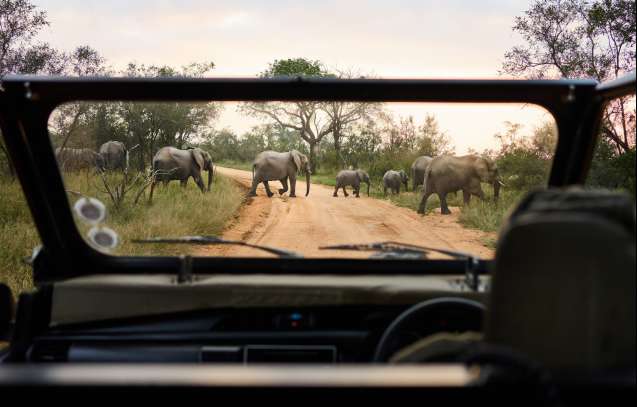
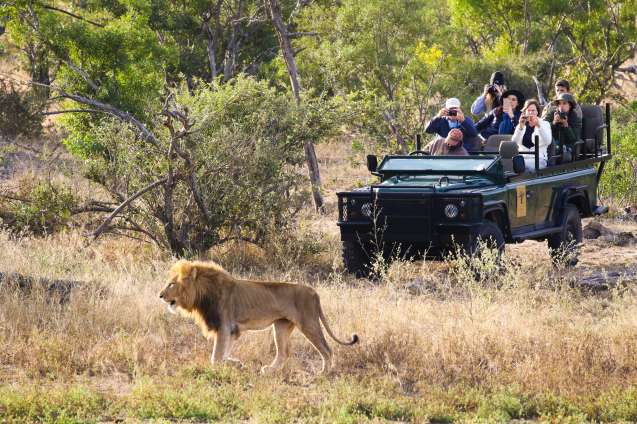
A guided Kruger safari is the simplest way to experience the park if you don't want to organise accommodation, transfers, routes, and game drives yourself.
Guided Kruger safari tours range from short three- or four-day trips to longer safaris combining Kruger National Park, Greater Kruger private reserves, the Panorama Route and other parts of Southern Africa.
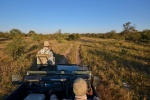
Your safari guide handles the driving and navigation while helping you find and interpret wildlife. That matters more than many first-time visitors realise. A good guide reads tracks, alarm calls, animal behaviour and changing conditions while you get to concentrate on watching the bush instead of watching the road.
Guided safaris can include:
Kruger National Park itself offers guided morning, sunset and night drives, so you do not need to stay in a private reserve to experience Kruger after dark.
Best for: First-time visitors, travellers without a rental car, solo travellers and anyone who wants the planning taken care of.
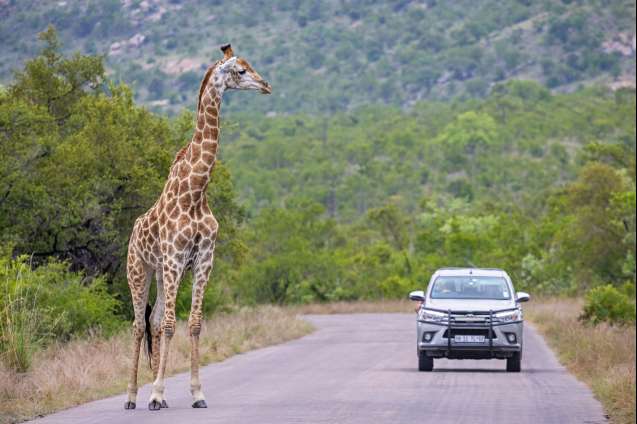
A self-drive Kruger safari puts you behind the wheel. You decide when to leave camp, which roads to explore, how long to sit at a waterhole and whether that distant shape under a tree deserves another ten minutes of investigation.
Kruger is unusually well suited to self-drive safaris. Visitors can explore a huge network of tar and gravel roads in an ordinary rental car, and the larger rest camps provide accommodation, fuel, shops and restaurants.
Self-drive is often one of the most affordable ways to go on safari in Kruger, particularly for couples, families or friends who can split the cost of a vehicle and accommodation.
The trade-off is that you are responsible for the route planning, driving and spotting. You must also obey park speed limits, gate opening and closing times and road restrictions. Ordinary visitors are not allowed to drive off-road.
No, but good planning makes a huge difference. Kruger is enormous, and trying to cover too much ground is one of the easiest ways to turn a safari into a long day staring through a windscreen.
Rather than racing between camps, choose a manageable section of the park and allow time to stop, watch and wait. Wildlife does not work to an itinerary.
You can also combine self-driving with SANParks guided activities such as morning drives, sunset drives, night drives and guided walks.
Best for: Independent travellers, repeat visitors, road-trippers and anyone looking for a flexible, budget-friendly Kruger safari.
If you are planning a longer driving itinerary, it is worth treating your Kruger safari route as a separate planning decision rather than simply trying to cover as much of the park as possible.
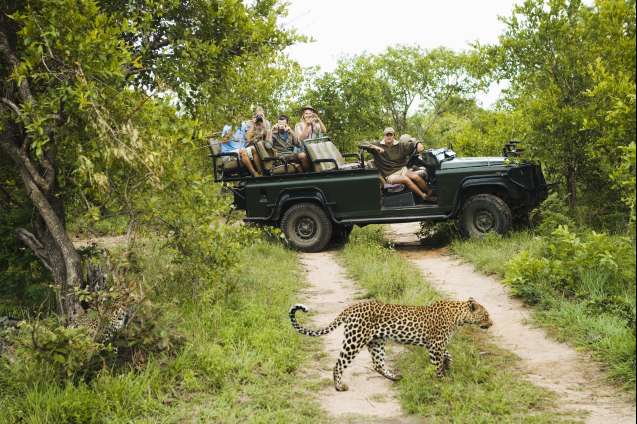
This is one of the most important choices when planning a Kruger safari.
Kruger National Park is the vast public national park managed by SANParks. Visitors can self-drive, stay in public rest camps, and book guided park activities.
Greater Kruger refers to the broader conservation landscape adjoining Kruger National Park, including private reserves such as Sabi Sand, Timbavati, Klaserie and Balule. Many of the best-known reserves form part of a wider open ecosystem where wildlife can move across unfenced boundaries.
| Kruger National Park | Greater Kruger private reserves |
|---|---|
| Public national park | Privately managed reserves |
| Excellent for self-drive | Game drives are normally guided |
| Large road network | Smaller, more tightly controlled safari areas |
| Usually more affordable | Generally more expensive |
| Vehicles remain on designated roads | Guides may be able to go off-road for selected sightings, depending on reserve rules |
| Accommodation from campsites and bungalows to private concessions | Mostly safari lodges and tented camps |
| Greater independence | More personalised guiding |
Neither is automatically better. They offer different versions of the Kruger experience.
For many travellers, the ideal solution is to combine Kruger National Park and Greater Kruger. You get the scale and variety of the national park together with the more intimate feel of a private reserve.
For a detailed comparison, read our guide to Kruger National Park vs Greater Kruger.
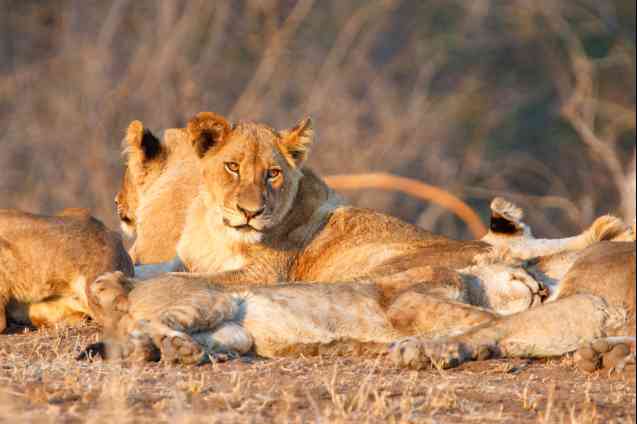
A small-group Kruger safari sits neatly between self-drive and a fully private safari.
You share the vehicle, guide, and transfer costs with other travellers, which makes professionally guided safaris much more affordable. Group sizes vary by tour, but smaller groups generally provide a more relaxed experience than travelling in a large vehicle.
Small-group safaris are particularly useful for solo travellers because a private guide and vehicle can be expensive for one person.
They are also a strong choice if you want to meet other travellers without joining a long overland tour.
Best for: Solo travellers, couples and budget-conscious visitors who still want professional guiding.
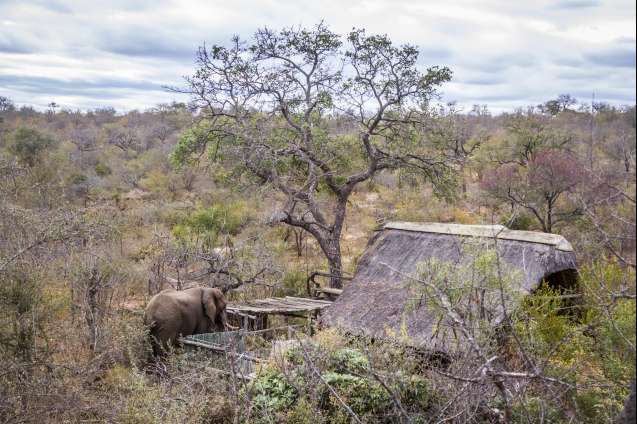
On a private safari, the vehicle and guide are booked for your party rather than shared with other guests.
That flexibility can make a significant difference if you have specific priorities.
A private Kruger safari works particularly well for:
Private safaris cost more than shared departures, especially for one or two people, but the price per person becomes more competitive as the group grows.
The biggest advantage is not luxury. It is control over your time.
Best for: Families, photographers, special-interest travellers and groups who value flexibility.
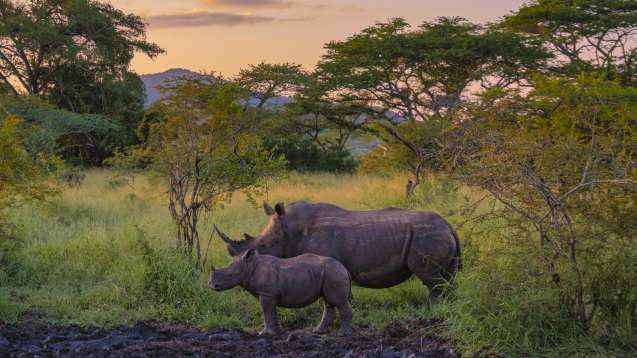
You do not need a luxury lodge to have a brilliant Kruger safari.
Camping keeps accommodation costs down and puts you close to the sounds and rhythms of the bush. Depending on the tour, camping safaris may use campsites inside or near wildlife areas and can range from simple dome-tent adventures to more comfortable permanent tented camps.
Camping also works particularly well as part of a longer Southern African overland safari where Kruger is combined with destinations such as Botswana, Victoria Falls, Eswatini, Lesotho or Cape Town.
Just remember that camping safari can mean very different things. Check whether you will be pitching your own tent, using permanent tents or staying in a tented camp with beds and en-suite bathrooms.
Best for: Adventure travellers, younger travellers, overlanders and anyone trying to stretch their safari budget further.
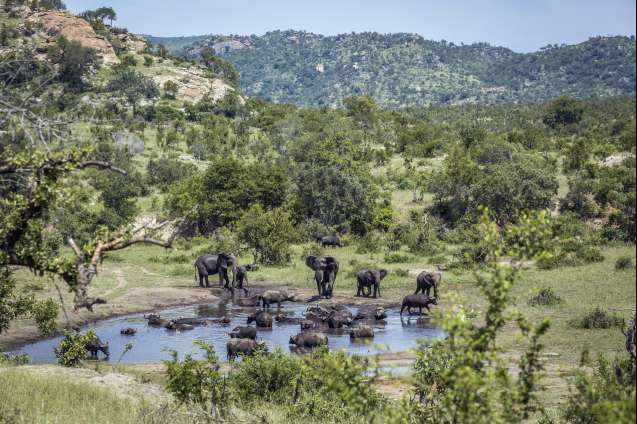
Lodge safaris are one of the most popular Kruger safari options because there is enormous variety.
A lodge safari does not automatically mean five-star luxury. Accommodation ranges from straightforward budget lodges and permanent tented camps to boutique safari properties and high-end private lodges.
A typical lodge safari may include:
This makes lodge packages particularly useful for travellers who want safari days to be adventurous but their nights to involve a proper bed, private bathroom and hot shower.
Best for: Couples, families, first-time safari travellers and anyone wanting a comfortable mid-range safari.
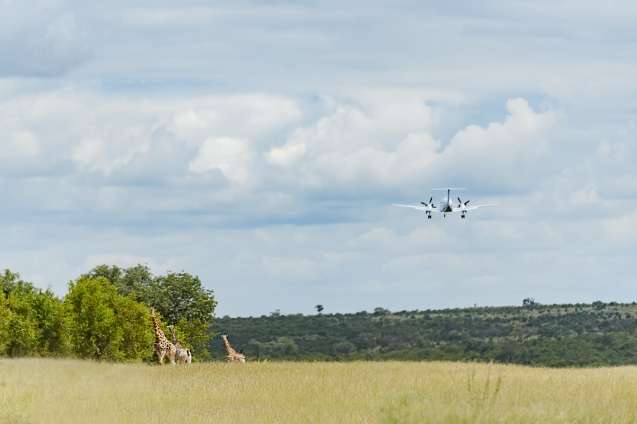
Kruger is within road-trip distance of Johannesburg, but the drive takes up a substantial part of the day.
If you have limited time, flying can get you into safari country much faster. Airports serving different parts of the Kruger region include Skukuza, Hoedspruit and Kruger Mpumalanga International Airport.
A fly-in safari makes particular sense if:
The obvious downside is cost. Flights and transfers can make a fly-in package considerably more expensive than travelling by road.
Best for: Honeymooners, short-stay visitors and travellers prioritising safari time over transport costs.

Walking changes the scale of a safari.
Once you are on foot, the experience is no longer only about finding big animals. Tracks, insects, plants, birds, dung, sounds and signs that disappear from a moving vehicle suddenly become important.
Kruger National Park offers different kinds of walking experiences, so it is important not to confuse them.
Many Kruger camps offer guided morning and afternoon walks lasting a few hours. Groups are small and are accompanied by experienced armed field guides.
SANParks does not permit children under 12 on these guided walks.
Kruger's wilderness trails are a much more immersive experience. They combine rustic wilderness accommodation with extended time exploring remote parts of the park on foot.
These experiences require a reasonable level of fitness and have additional participation requirements.
Greater Kruger lodges and private reserves also offer bush walks, with conditions and age restrictions varying between properties.
Best for: Active travellers, repeat safari visitors and anyone interested in the smaller details of the bush as much as the Big Five.
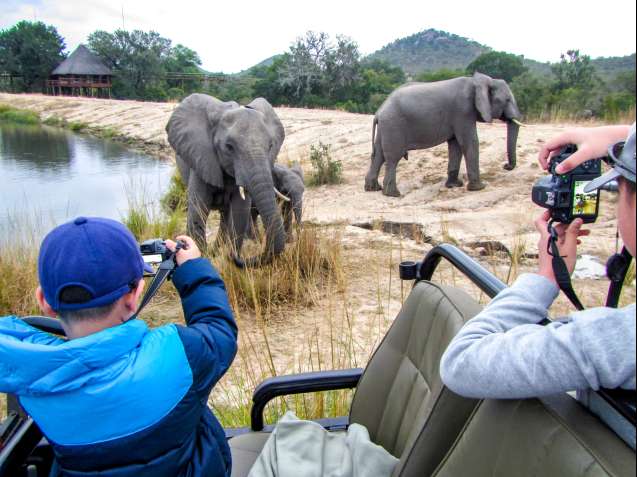
Kruger can be an excellent family safari destination, but choosing the right safari matters more when children are involved.
A self-drive trip gives families the freedom to stop when they need to, while family-friendly lodges can take care of meals, accommodation and activities.
For younger children, the southern parts of Kruger can be convenient because there are several camps, picnic areas and places to stop within relatively manageable driving distances.
Age restrictions need to be checked carefully. SANParks does not permit children under six on its guided game drives and children under 12 on guided walks. Private lodges and reserves set their own rules, and some accept children of all ages while others restrict young children from shared game drives.
Kruger National Park is in a malaria-risk area. The risk varies seasonally, but travellers should get current medical advice before visiting, particularly when travelling with children or during pregnancy.
Do not rely on accommodation or safari marketing to make the decision for you. Speak to your doctor or a specialist travel clinic about the appropriate precautions for your family.
For more planning advice, see our guide to African safaris with kids.
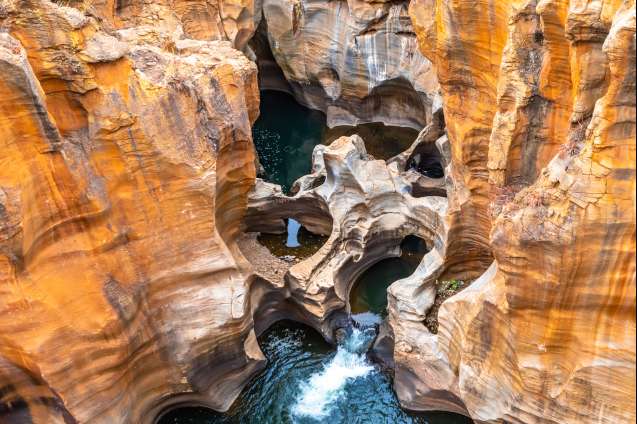
If this is your first visit to Mpumalanga, it is worth considering a safari that combines Kruger with the Panorama Route.
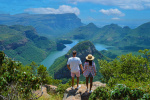
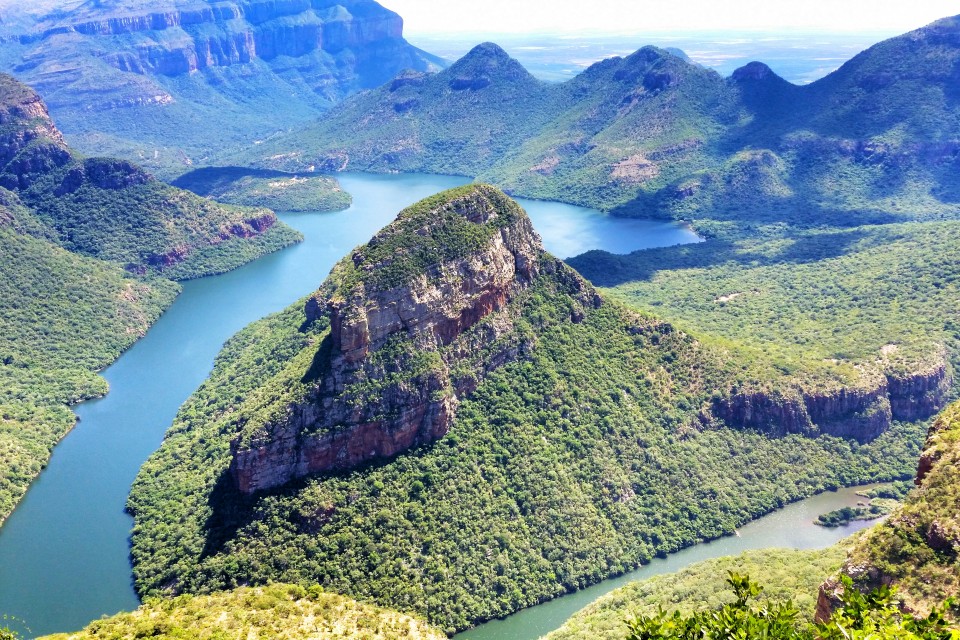
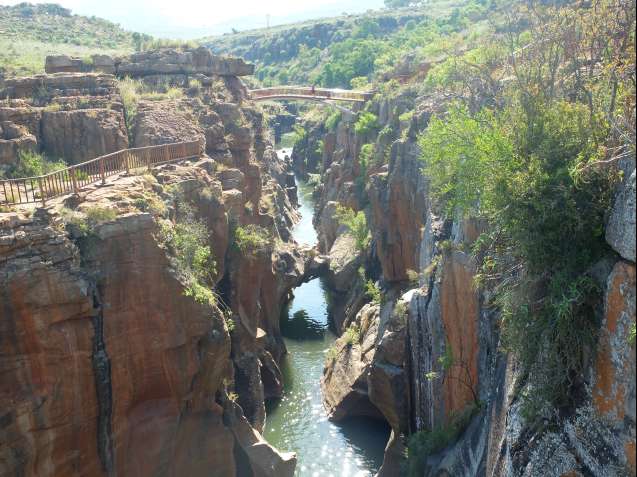
The Panorama Route passes through one of South Africa's most dramatic landscapes, with mountains, forest, waterfalls and viewpoints overlooking the Blyde River Canyon region.
The combination works particularly well because the Panorama Route can be visited before or after Kruger without turning the holiday into a complicated multi-country itinerary.
You get two very different experiences:
Our 6-Day Kruger Safari & Panorama Route Tour, for example, combines guided Kruger game drives, Greater Kruger experiences and a full-day Panorama Route tour.
Best for: First-time visitors to South Africa and travellers who want more variety than game drives alone.
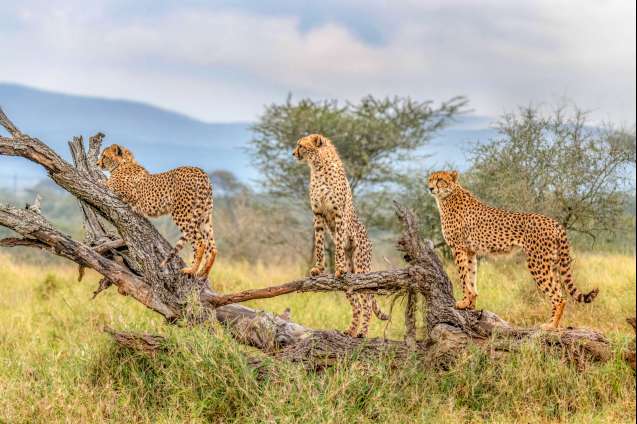
Kruger does not have to be the whole holiday.
It is also a common start, finish or highlight on longer Southern African overland safaris. These trips can combine Kruger with destinations such as:
Overland tours are particularly useful if you want to see several countries or ecosystems without arranging every transfer separately.
Camping overland tours usually offer the lowest prices, while accommodated overland tours use lodges, hotels, guesthouses or permanent camps.
Best for: Longer trips, solo travellers, social travellers and anyone wanting Kruger as part of a bigger African adventure.
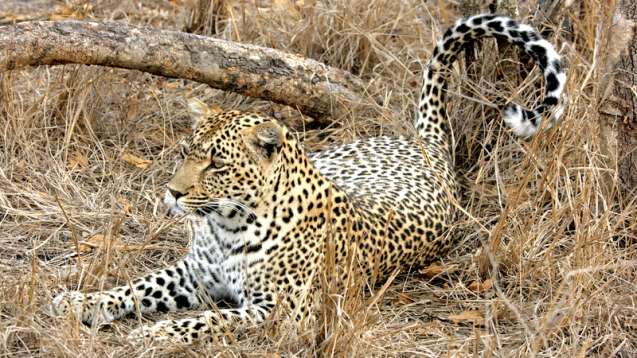
Game drives and walking safaris are the main attractions, but Kruger also offers some less obvious activities.
Contrary to what you may expect, there is a controlled mountain biking experience inside Kruger National Park.
SANParks currently operates guided mountain bike trails from Olifants Rest Camp. The rides are led by armed field guides, participant numbers are restricted and riders must be at least 16 years old.
You cannot simply bring a bicycle and cycle around Kruger's public roads. Cycling outside organised activities is prohibited.
Kruger also offers guided 4x4 wilderness experiences on designated routes. These are very different from ordinary self-driving and are subject to specific vehicle, booking and seasonal requirements.
For experienced road-trippers, a 4x4 trail can add a genuine expedition element to a Kruger visit.
Yes, you can even play golf in Kruger.
The unfenced Skukuza Golf Club is a 9-hole, 18-tee course situated close to Skukuza Rest Camp inside Kruger National Park. Wildlife can wander through the course, which makes losing a ball in the rough rather more interesting than usual.
Horse riding and hot-air ballooning are available in parts of the broader Lowveld and Greater Kruger region, but these are not standard activities inside Kruger National Park itself.
If one of these activities is important to you, check exactly where it takes place before booking a package advertised as a "Kruger" experience.
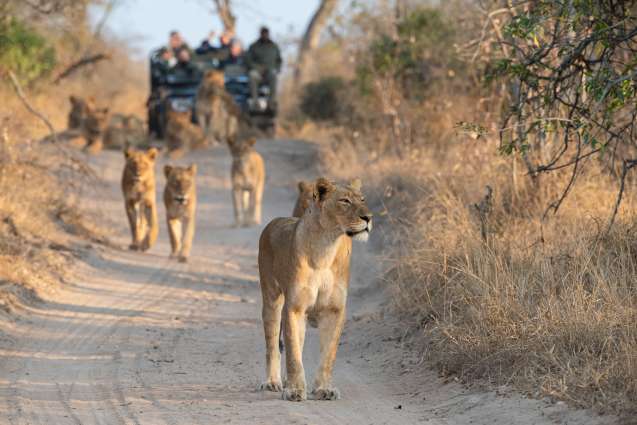
A lot.
Your safari style is one of the biggest influences on the total cost of a Kruger trip.
| If your priority is... | Start with... |
|---|---|
| Lowest possible cost | Self-drive or camping safari |
| Best guided value | Small-group lodge safari |
| Privacy and flexibility | Private guided safari |
| Exclusive wildlife experience | Greater Kruger private reserve |
| Maximum comfort | Private lodge or fly-in safari |
| More destinations for your money | Overland safari |
Prices are also affected by season, accommodation level, group size, transport, park fees, the number of included game drives and whether you travel by road or air.
For a more detailed breakdown, see how much a Kruger safari costs.
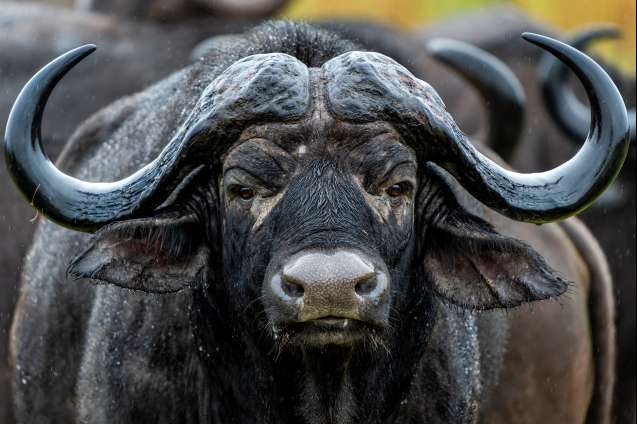
There is no single "best Kruger safari". There is a best option for the way you want to travel.
| Traveller | Best place to start |
|---|---|
| First safari | Guided small-group lodge safari |
| Budget traveller | Self-drive, camping or small-group safari |
| Solo traveller | Small-group or overland safari |
| Couple | Small-group lodge or private reserve safari |
| Family | Private safari or carefully selected family-friendly lodge |
| Photographer | Private vehicle or Greater Kruger safari |
| Experienced safari traveller | Walking safari, remote Kruger itinerary or private reserve |
| Short on time | Fly-in lodge safari |
| Long Africa trip | Southern Africa overland safari including Kruger |
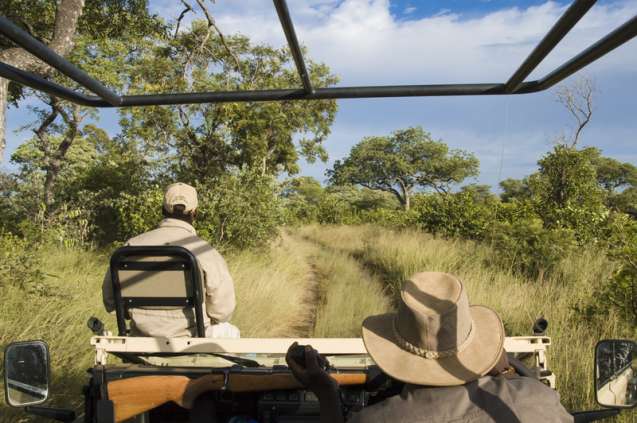
Three to five days is enough for a rewarding first Kruger safari, but staying longer gives you more time to explore different habitats and allows wildlife sightings to unfold without feeling rushed.
A short safari of three or four days works particularly well if Kruger is part of a wider South Africa itinerary.
Five to seven days gives you more flexibility and makes it easier to combine Kruger National Park with a Greater Kruger private reserve or the Panorama Route.
Longer trips suit repeat visitors, photographers and travellers who want to explore different parts of this enormous wilderness area rather than staying only in the wildlife-rich south.
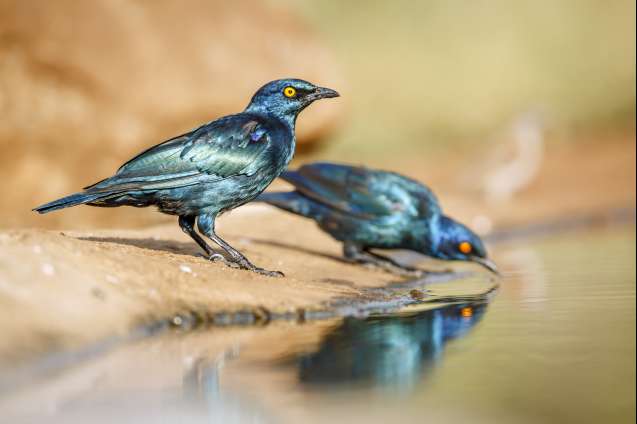
Kruger is a year-round safari destination, but the experience changes significantly with the seasons.
The dry winter months generally bring thinner vegetation, cooler temperatures, and wildlife gathering more predictably around water. This makes the dry season particularly popular for game viewing.
The wetter summer months transform Kruger into a green landscape filled with migrant birds, newborn animals and dramatic skies. Wildlife can be harder to spot in thicker vegetation, but the bush is wonderfully alive.
There is no universally perfect month. Your best time depends on whether you prioritise wildlife visibility, birding, scenery, temperature, crowds or price.
See our full guide to the best time to visit Kruger National Park before choosing your dates.
No. Kruger National Park and the surrounding Lowveld fall within a malaria-risk area.
Risk is seasonal and is generally higher during the warmer, wetter months, but it is not accurate to describe any Kruger safari as completely malaria-free.
Visitors should take sensible mosquito precautions and speak to a doctor or travel-health professional about malaria prevention before travelling.
If avoiding malaria areas is a priority, South Africa has excellent alternatives elsewhere in the country. See our guide to malaria-free safaris in South Africa.
If you are still unsure where to start, these three safari styles cover very different kinds of Kruger trips.
The 4-Day Kruger Safari in South Africa is a small-group lodge safari combining a full-day guided Kruger National Park safari with private reserve and conservancy game drives and a bush walk.
Good for: First-time visitors wanting a short, guided and good-value safari.
The 6-Day Kruger Safari & Panorama Route Tour combines two full days of guided game viewing in Kruger with Greater Kruger activities and the spectacular Panorama Route.
Good for: First-time South Africa visitors wanting wildlife and scenery in one trip.
For a more intimate Greater Kruger experience, the Sabi Sands Exclusive Tented Safari combines tented lodge accommodation with guided game drives inside one of Greater Kruger's best-known private reserves.
Good for: Travellers prioritising wildlife, guiding and a more exclusive safari environment.
Choosing between Kruger safari tours can look complicated because there are so many ways to do it. Start with four questions:
Once you know those answers, the shortlist becomes much easier.
Browse our full range of Kruger National Park safari tours, from affordable small-group lodge safaris and camping adventures to private reserve and fly-in options.
Or tell our safari experts what you want from your trip. Give us your travel dates, budget, number of travellers, and the kind of safari you have in mind, and we can help you find the Kruger safari that fits.
Explore these destinations mentioned in this post.
Below you'll find further reading and articles related or similar to this post.



Call us toll free from US/Canada on 1-888-414-6513, or from the UK on 0-808-189-1052. All other countries can contact us on +27 21 791 0878.
© 2026 African Budget Safaris | Privacy | Terms | Cookie Policy | Consent Preferences