This year is the perfect time for exceptional safaris in Namibia, with ancient African deserts springing to life after the heavy rains!
One of the driest countries on earth, Namibia is experiencing an extraordinary transformation, which makes 2025 ideal for Namibia safaris to the Namib Desert and beyond!
Nambia's 2023/24 season was particularly challenging for the country. It was marked by below-average rainfall and extended dry spells that necessitated widespread drought relief efforts.
2025 has brought some respite. Thanks to heavy rainfall this year, vast stretches of this arid country are now bursting into life. From the ancient Namib Desert to game-rich Etosha National Park (places that usually see little to no precipitation) are now drenched, and the landscapes are changing in ways few have ever witnessed.
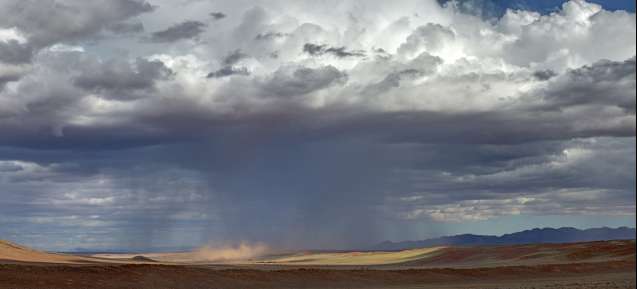
In 2025, bouts of heavy rainfall were seen across Namibia. Even the coastal towns of Swakopmund, Walvis Bay, and Lüderitz —where rainfall is typically a rarity—saw prolonged downpours, causing streets to flood due to inadequate drainage in these arid destinations.
More impressively...
Rivers that have been dry for years, sometimes decades, are now in full flood. Social media has been abuzz with footage of the Swakop River surging towards the Atlantic Ocean, a rare sight in this usually dry riverbed.
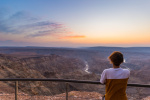
Similarly, the Fish River - famous for carving out the Fish River Canyon over aeons - received significant inflows above and below the Hardap Dam, a nearly empty reservoir just a few months ago.
For those planning safaris in Namibia, this unusual rainfall presents a once-in-a-lifetime opportunity to witness African deserts in bloom.
The country’s normally dry riverbeds are teeming with life, and the rains are reshaping iconic Namibia destinations.
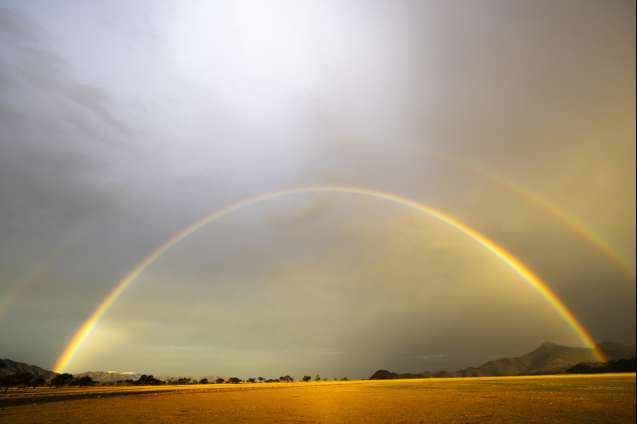
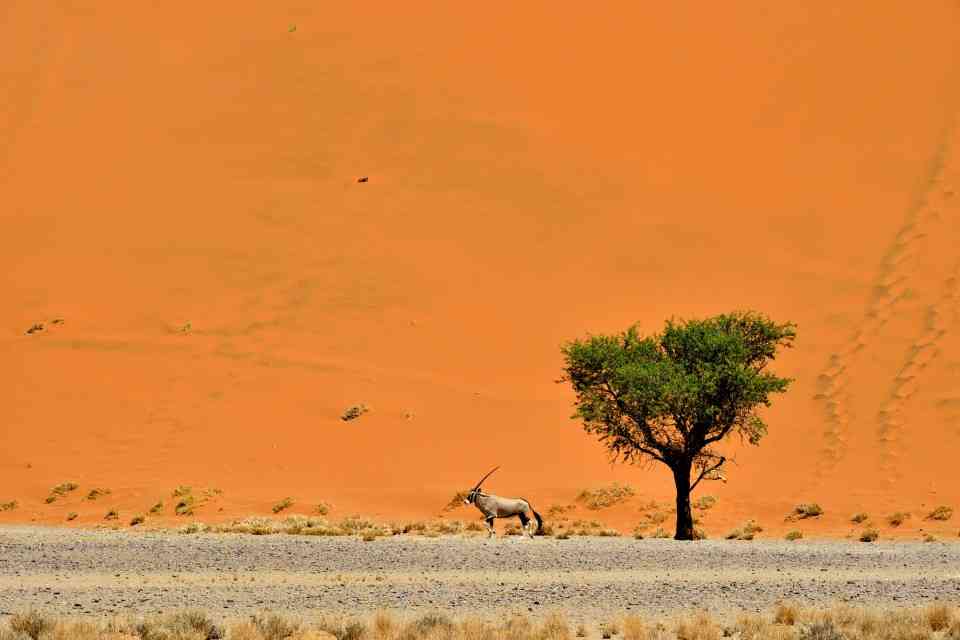
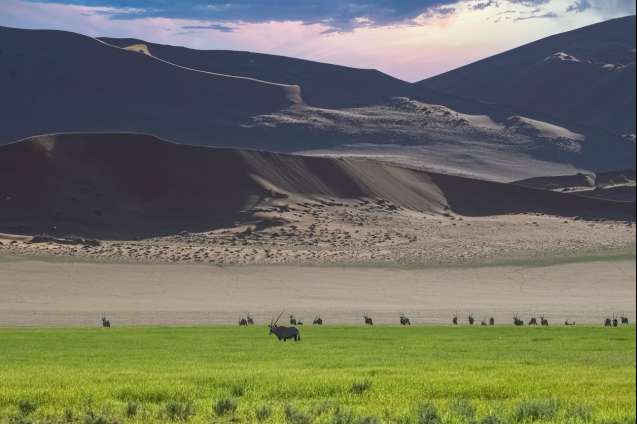
Sossusvlei is located in the heart of the ancient Namib Desert, with its towering red sand dunes, the highest in the world. But only once every few years does the area truly live up to its name: when Sossusvlei, meaning “dead-end marsh,” transforms into a lake after the rains.
The usually nonexistent Tsauchab River flows, and the waters reach this iconic salt and clay pan, filling it with cool, reflective water that attracts a variety of wildlife. An ideal time to see oryx and springbok on your Namibia safari.
Visitors lucky enough to witness this transformation will see a landscape that usually consists of cracked, sunbaked clay turn into a shimmering oasis. The reflections of the giant dunes in the water create a breathtaking and surreal view, making this the perfect time for safaris in Namibia. Photographers and nature enthusiasts will be mesmerised.
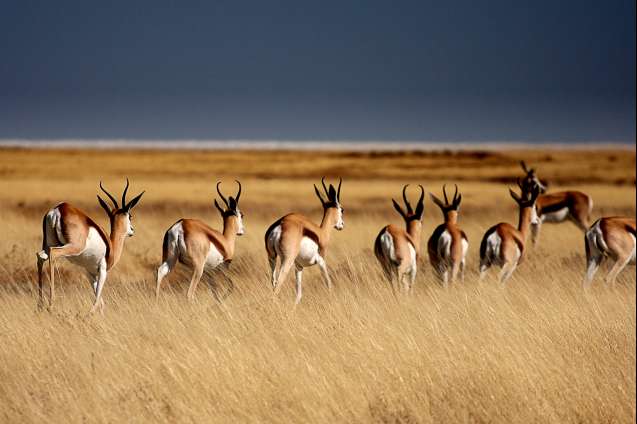
The Etosha Pan is normally a dry, salt-encrusted expanse so vast it is visible from space.
This year, the pan has also received substantial rainfall.
The influx of water turns the vast Etosha Pan into a temporary lake, attracting thousands of flamingos and other waterbirds in a spectacular natural event. Both greater and lesser flamingos migrate to the pan to feed and breed, drawn by the explosion of blue-green algae and small aquatic invertebrates in the newly formed waters.
The scene of flamingos wading through the reflective, pink-tinged shallows against the stark white pan is one of Etosha’s most breathtaking wildlife spectacles.
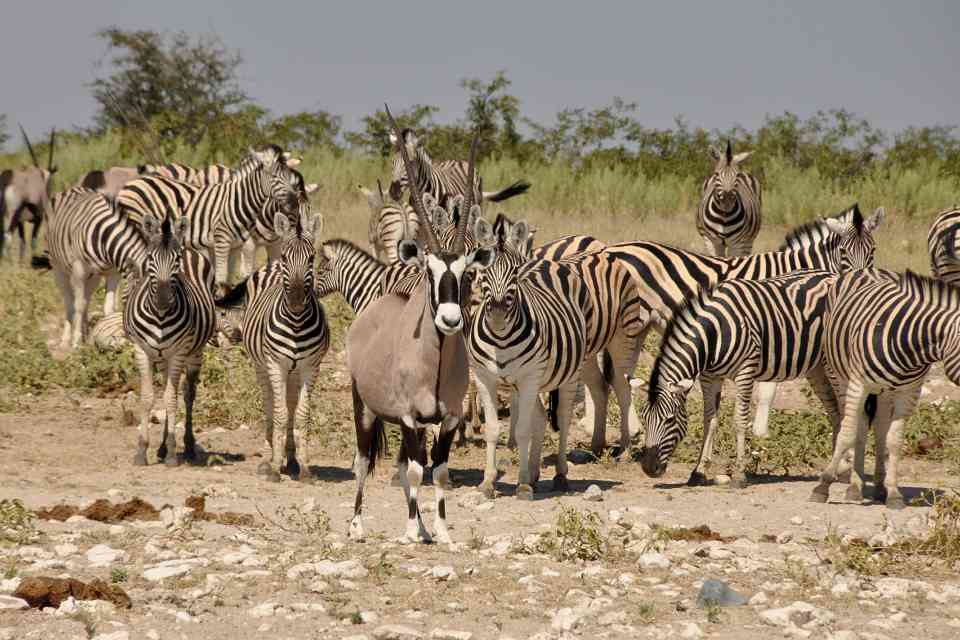
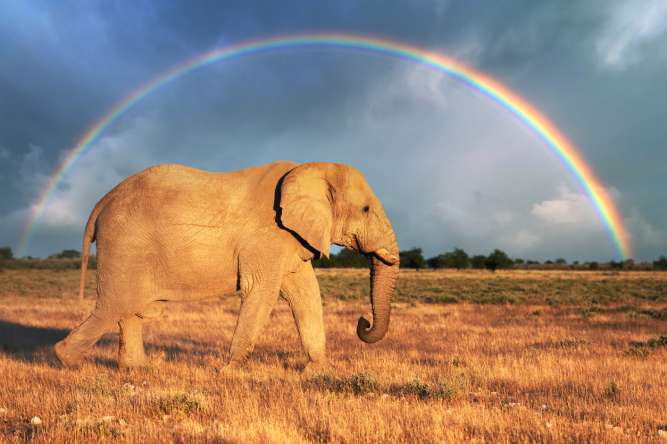
The surrounding savanna, typically parched, becomes lush and green. This provides ample grazing for herbivores like elephants, giraffes, zebras, and various antelopes.
In their wake, predators like lions and cheetahs lurk, hoping to take advantage of the increase in prey. This makes for remarkable predator sightings on safaris in Etosha National Park.
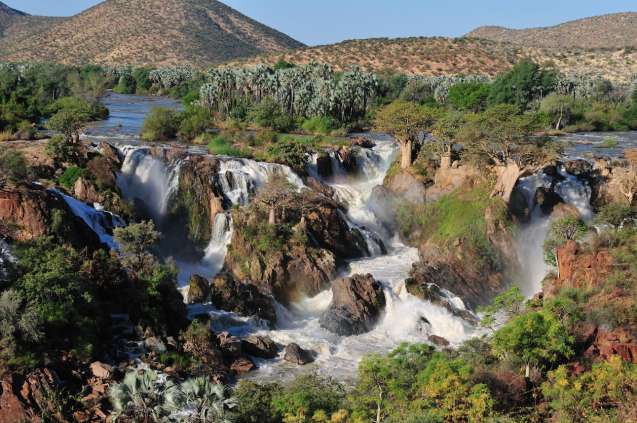
In the far north of Namibia, the Kunene River forms much of the border between Angola and Namibia. From here, it flows towards the Atlantic Ocean near the remote Skeleton Coast.
The rains have significantly swollen the river, making Epupa Falls an even more dramatic sight than usual. The normally tranquil waterfalls are now powerful torrents, plunging over rugged cliffs with incredible force. The surrounding vegetation has responded to the rain with bursts of green, creating a jungle-like atmosphere in a normally semi-arid region.
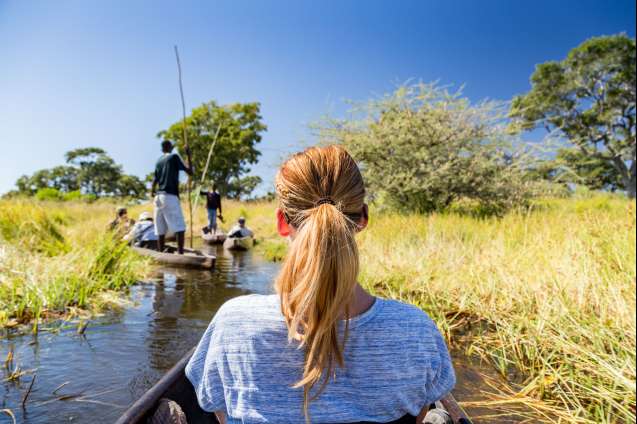
Whether gazing at waterfalls, paddling through its waters, or engaging with the Himba people, this region offers unforgettable safaris in Namibia. And this is a fantastic year to visit!

The Namib lily (Ammocharis deserticola) is a drought-adapted plant that remains dormant underground most of the time, only blooming after rare rains.
When conditions are right, the lilies bloom, producing carpets of fragrant pink or red flowers that stand in stunning contrast to their barren surroundings. The blooms briefly transform the harsh desert into a delicate floral spectacle before retreating underground once the waters dry up.
The spectacle is most commonly sighted in southern and central Namibia, including parts of the Sperrgebiet, Naukluft Mountains, and Kuiseb River region.
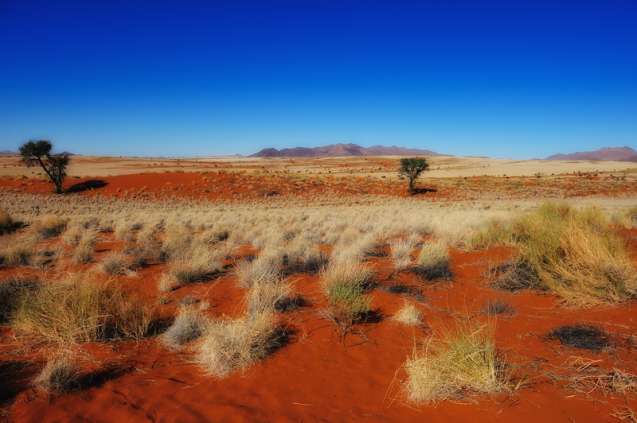
For those seeking a unique travel experience, Namibia safaris in 2025 will be a rare and memorable adventure.
The combination of good rainfall, transformed landscapes, and thriving wildlife makes for unbeatable safaris in Namibia this year. It is the ideal time for adventure seekers, photographers, and nature lovers to visit Namibia's deserts.
2025 Namibian safari highlights include:
For more information about this fascinating African country, see our Namibia Safari Guide.
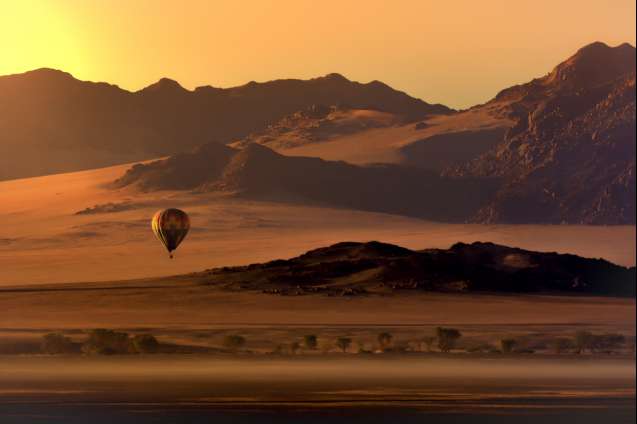
Namibia safaris showcase a rare and spectacular version of the country this year. So, if you’ve ever dreamed of visiting this incredible African country, 2025 is the year to do it!
The transformation won’t last forever—as the dry season approaches and the heat continues to bake down, the water will evaporate, leaving behind mineral-rich salt pans and the usual arid landscapes.
To experience this desert destination when water is abundant is something rare and exceptional.
Better yet, our team can help you enjoy a Namibian safari on a budget. Speak to our friendly travel experts at African Budget Safaris for help tailoring an African safari to see this once-in-a-decade transformation before it disappears.
Explore these destinations mentioned in this post.
Below you'll find further reading and articles related or similar to this post.




Call us toll free from US/Canada on 1-888-414-6513, or from the UK on 0-808-189-1052. All other countries can contact us on +27 21 791 0878.
© 2026 African Budget Safaris | Privacy | Terms | Cookie Policy | Consent Preferences


tours_through_windhoek__thumb.jpg)