__banner.jpg)
Deciding between Kruger and Etosha? Don’t rely on a casual coin toss.
When it comes to Kruger vs Etosha, each destination delivers entirely different African safari experiences. If you’re not clear on what you want, you might end up paying for an expensive disappointment.
Kruger brims with life: rivers snake through the bush, herds gather at the water’s edge, and the Big Five often appear within a single drive. Etosha feels like another world. The vast white pan shimmers in the heat, “ghost” elephants coat themselves in pale dust, and rhinos slip silently to floodlit waterholes under a canopy of stars.
Both wildlife parks deliver magic… but in very different ways.
If you’re weighing up where to spend your safari budget, you’re in the right place. Below, you’ll find a blow-by-blow comparison between Kruger and Etosha with all the important information you need to know before locking in your flights and itinerary.
__medium.jpg)
The two biggest differences between Kruger National Park and Etosha National Park are the landscape and what you can expect to see on safari.
In Etosha, Namibia, you’ll find a vast landscape stretching across the arid white salt pan. It’s famous for its “ghost elephants,” which cover themselves in the white sand to protect their skin from the harsh sun. It’s a sight you’ll never see in Kruger, South Africa, despite the game park’s incredible diversity.
Instead, you’ll find a landscape crisscrossed with several permanent rivers like Sabie, Olifants, Crocodile, and Letaba. These rivers run throughout the year, creating natural watering points for fantastic wildlife viewing. Read more about Africa's stunning Kruger biome.
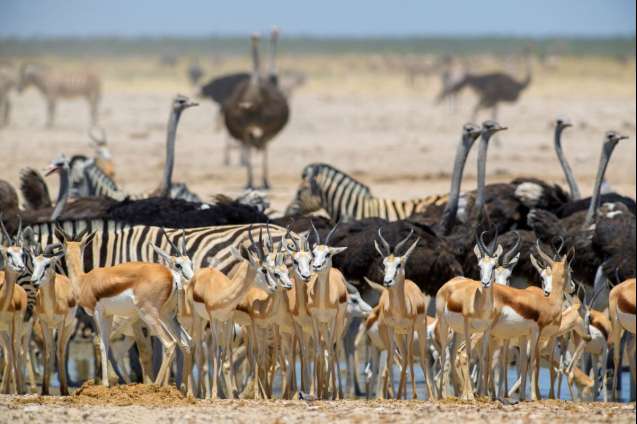
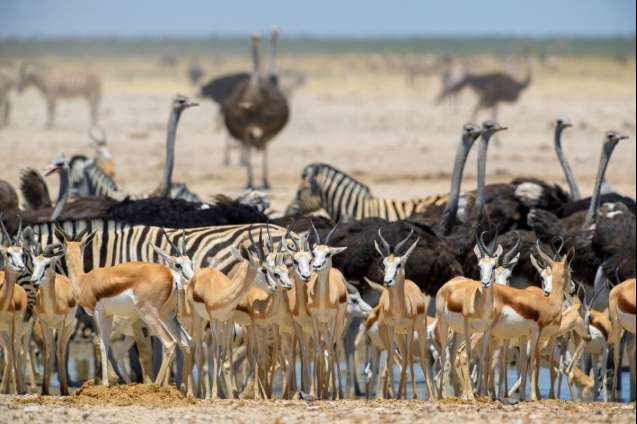
Etosha's unique biome offers a surreal African safari experience. Etosha Park doesn’t have permanent rivers flowing through it. The entire ecosystem centres around the Etosha Pan, which only fills with water in the rainy season. To survive, the wildlife relies on a network of natural springs and artificial waterholes.
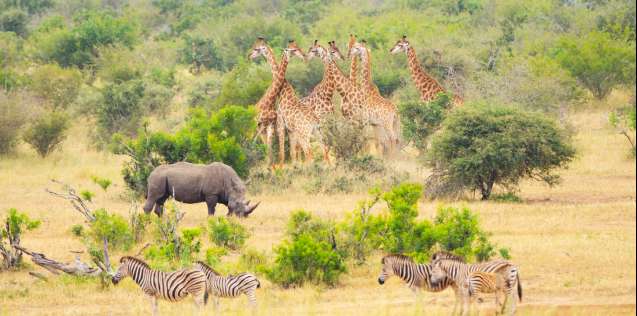
Etosha National Park is more of a “soft safari” destination. Unlike Kruger Park, which is world-renowned for its Big Five sightings, you’ll only find the Big Four in Etosha (no buffalo).
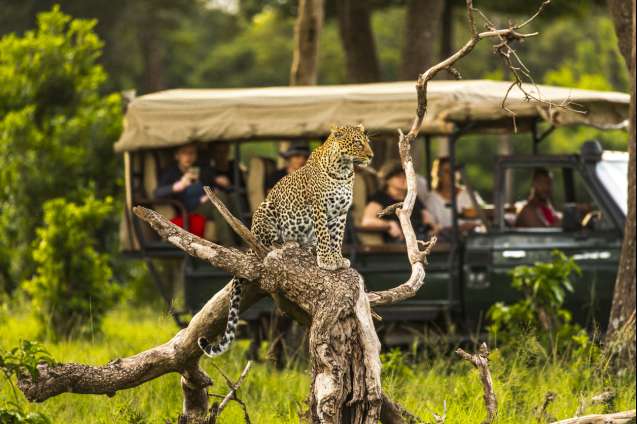
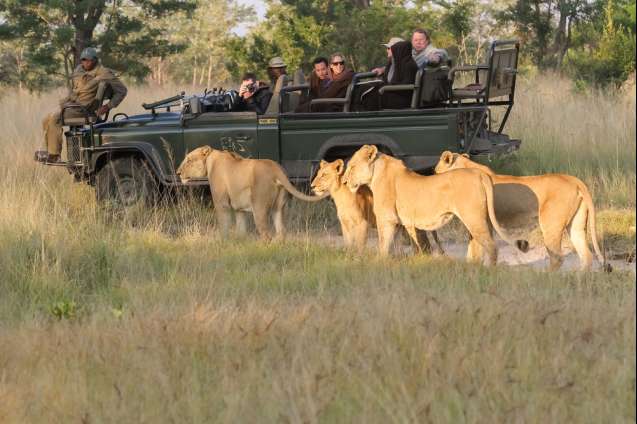
Kruger has a much higher density of game than Etosha, and is one of the best Big 5 safari destinations in Africa. While lions are usually easy to come across in Etosha, you’ll have a much harder time spotting the park’s small number of cats. To put it in perspective, estimates suggest that there are approximately 1,000 leopards in Kruger, whereas Etosha Park has fewer than 50.
With no rivers in Etosha, you’ll miss out on seeing wildlife like crocodiles and hippos, which are a dime a dozen in Kruger National Park. But don’t let that sell Etosha short. The night-lit water holes are incredible! Grab a blanket, a flask of hot chocolate, and you’re all set for some of the best black rhino sightings in southern Africa right under the Milky Way.
If you’re after the classic Big Five safari experience with high game density and want almost guaranteed big cat sightings, go to Kruger National Park in South Africa.
Etosha is not as renowned for its wildlife sightings, and you shouldn’t visit here if your sole purpose is seeing big game. However, if you’re already planning to visit Namibia for other reasons, it’s well worth going to Etosha.
Read more about Etosha's wildlife and how to get the most out of your visit.
__medium.jpg)
Logistics. The bane of any traveller’s itinerary. It can make or break your trip, and deciding to book a safari in Etosha or Kruger is no different.
Both Etosha and Kruger parks offer some of the best overland routes in Africa.
With multiple daily flights from Johannesburg and Cape Town, you can easily reach Kruger’s regional airports, Skukuza, Hoedspruit, and Nelspruit/MQP.
It’s music to your ears if you’d prefer a fly-in safari without the hassle of self-driving. If you choose to stay within the park, your lodge may include complimentary round-trip airport transfers. That said, flight prices are not cheap and might eat up some of your precious safari budget.
If you’d rather have the freedom to drive yourself, car rentals are plentiful and affordable. You can also choose to drive down from Johannesburg and forgo the domestic flight if you don’t mind the longer drive.
_(1)__medium.jpg)
Now, Etosha Park is accessible, but not as accessible as Kruger.
To get here, you’ll need to hire a car and drive from Windhoek to the park gates. Depending on the entrance you choose, the drive can take four to six hours without any stops.
There are domestic flights to the smaller airstrips, but these flights are less frequent and expensive.
If you choose Etosha and it’s the first stop on your Namibia itinerary, make sure your flight lands early in the morning or spend one night in Windhoek before you hit the open roads.
Short on time? Kruger Park is the clear winner. It’s much easier and faster to get to the game park, giving you more time in the bush than on the road.
If you’re planning a Namibia road trip, the drive time to Etosha doesn’t matter as it’s part of the journey. Just make sure you leave early. Namibia has a reputation for hazardous night driving due to poor lighting, long open roads, and hazards such as wildlife, stray livestock, and pedestrians walking along the roads.
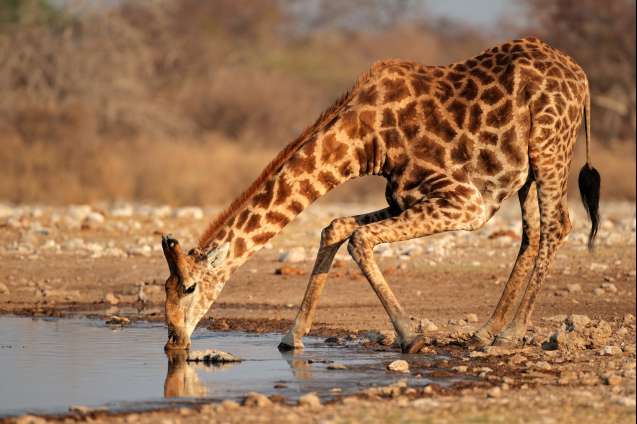
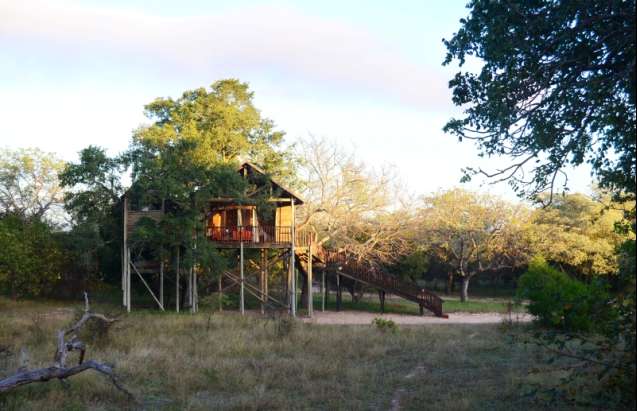
Kruger and Etosha share many accommodation similarities. Both have rest camps with campsites, lodging options inside and outside the national parks at various price points, and private concessions featuring luxury lodges for those looking to splurge.
But there are some differences you’ll want to take into consideration when planning your safari.
Kruger is brimming with options. You’ll find dozens of rest camps with campsites, communal kitchens, laundries, and shops - everything you need for a budget safari in the national park. The only snag? Spots fill up fast. Book as early as possible if you’re travelling in peak season (June to August).
Etosha is smaller than Kruger and has fewer camps overall, but that doesn’t mean the facilities are lacking. You’ll have everything you need at the campsites, but the shops do carry a much smaller selection of items. Plus, you’ll have access to the park’s famous floodlit waterholes at Okaukuejo and Halali.
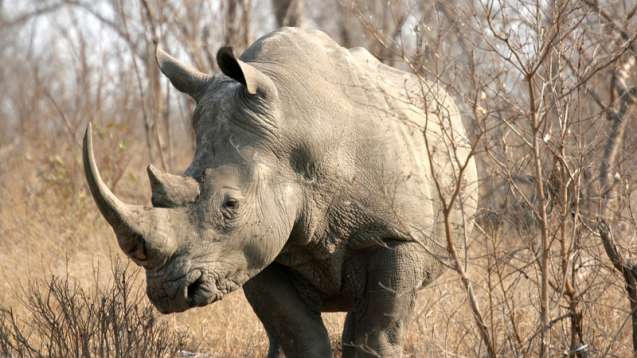
Cost Comparison Between Kruger and Etosha*
| Camp Site Location | Rest Camp | Approx Cost |
|---|---|---|
|
|
|
|
|
|
*Approximate at the time of publishing
Kruger is the quintessential South African safari experience. Your bungalows, cottages, and guesthouses feature braai (BBQ) areas, as well as basic communal or private kitchens and bathrooms. It’s perfect for families, groups of friends, and long stays in the wildlife park. That said, it’s government-owned, and the conditions are not always excellent.
Etosha: While lodging inside the safari park has improved over the years, NPW quality control is not the greatest, and you should manage your expectations. Expect simple chalets with on-site restaurants serving a limited menu. If you are a vegetarian or vegan, you will struggle to find food you can eat.
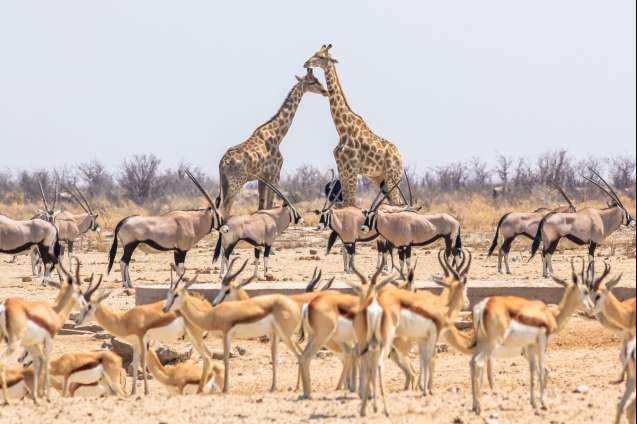
Cost Comparison*
| Chalet Location | Camp | Approx Cost |
|---|---|---|
|
|
|
|
|
|
*Approximate at the time of publishing
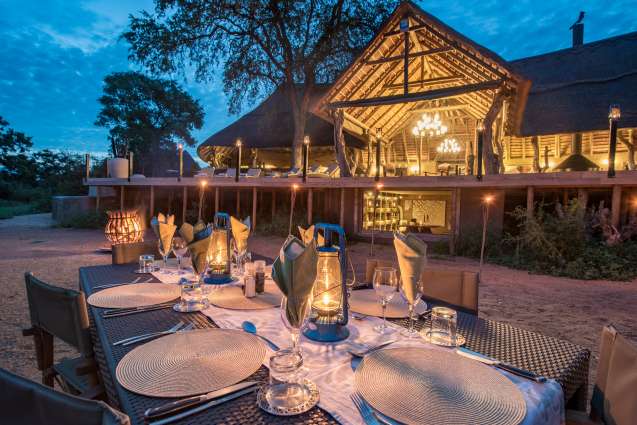
Got a bit more wiggle room in your budget? Look at staying in a private lodge.
Kruger: Expect a huuuuge spectrum of options. You’ll find lodges inside and outside the national park, from tented camps to bucket-list luxury stays. There are also private game reserves within the Greater Kruger Park, such as Sabi Sands and Timbavati, which offer a more exclusive safari experience away from the general day visitor crowds at a higher price point. My top tip? If you’re South African, always ask for SADC rates (these are not advertised online).
Etosha: There are many midrange to luxury safari lodges outside of Etosha’s gates, as well as super luxurious stays. While it’s definitely not cheap, Safarihoek, which is on a private concession in Etosha, is an option if you want night drives and fewer vehicles per sighting.
Cost Comparison*
| Lodge Location | Level | Approx Cost |
|---|---|---|
|
Kruger
|
|
|
|
Etosha
|
|
|
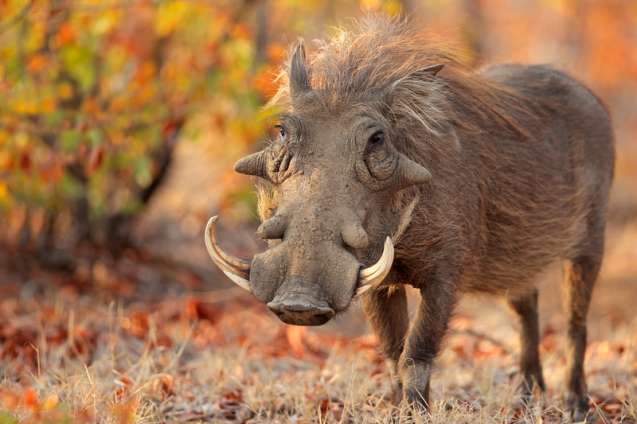
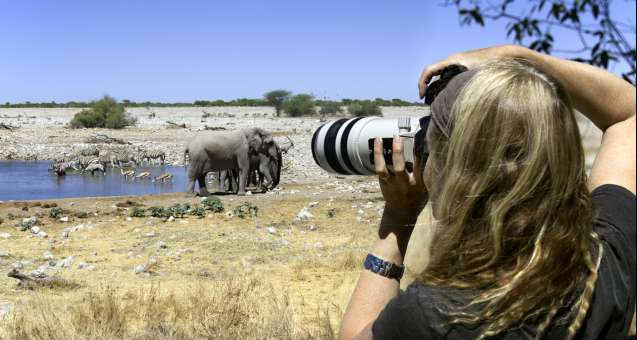
Yes, you can go on game drives at either safari park, but each one offers its own unique experiences that the other cannot.
A Kruger safari wins for diversity. You can book walking safaris, night drives, overnight trails, and sleep-outs without needing a private lodge.
An Etosha safari wins for waterhole culture. The floodlit camp waterholes are an unrivalled way to see wildlife behaviour at night, and you don’t even have to leave your camp.
__medium.jpg)
Kruger Park is the better choice for Big Five sightings, high wildlife density, and a diverse range of activities. Etosha is unique for its stark landscapes, floodlit waterholes, and ghost elephants. If you want variety and big game, choose Kruger. For atmosphere and Namibia road trips, Etosha wins.
Etosha is generally more affordable for camping and self-drive safaris, but Kruger offers a wider range of budget to luxury options. Lodges in both wildlife parks can be pricey, but Kruger has more mid-range and SADC-discounted stays.
Yes, if you’re already in Namibia or seeking a different safari feel. Etosha offers incredible rhino sightings and stargazing at waterholes, but if this is your only African safari, Kruger delivers a more classic Big Five wildlife experience.
Both safari parks allow self-driving, but Kruger’s roads are more developed, with better signage and facilities. Etosha requires longer drives between sightings but rewards patience with dramatic scenes at waterholes.
It all comes down to what kind of African safari you want.
Kruger gives you variety, density, epic Big Five sightings, and easy logistics. You’ll have plenty of activities beyond game drives to fill your days (and nights), and there are accommodation options for every budget. As a bonus, Kruger also combines brilliantly with Cape Town.
Etosha is a “soft safari”. I’d recommend it if you’re adding it onto a larger Namibia itinerary and you’re not expecting a traditional Big Five safari. Come here for the atmosphere of watching rhinos under the stars, elephants dusting themselves in white dust, and the raw stillness of the Etosha Pan. Read our guide to top tips for an Etosha safari.
Both national parks deliver magic, just in different ways. If you have the time and budget, consider doing both.
But if you don’t, hopefully this guide has made your safari conundrum a whole lot easier.
Ready to plan your unforgettable and affordable Kruger or Etosha safari?
Contact our expert team at African Budget Safaris for personalised assistance in crafting your perfect African adventure.
Explore these destinations mentioned in this post.
Below you'll find further reading and articles related or similar to this post.




Call us toll free from US/Canada on 1-888-414-6513, or from the UK on 0-808-189-1052. All other countries can contact us on +27 21 791 0878.
© 2026 African Budget Safaris | Privacy | Terms | Cookie Policy | Consent Preferences


__thumb.jpg)