Knowing the best time to visit Tanzania for a wildlife safari really comes down to what you want to get from your East African adventure. With diverse wildlife, tropical beaches, rich culture, and iconic landscapes, this beautiful country has much to offer.
But certain times of year are better for enjoying Tanzania’s main attractions, so it pays to research.
Read on to learn more about Tanzania’s climate, seasons, and the best time to visit.
Tanzania has a tropical climate that varies by region and altitude. Temperatures in Tanzania are generally consistent year-round, but the country has distinct dry and rainy seasons that are important to monitor.
These are considered the best months to see the famous Great Migration in the Serengeti, trek Mount Kilimanjaro, and enjoy the tropical beaches of Zanzibar Island.

However, these months are also Tanzania’s peak travel season, which means everywhere will be busier; you’ll be sharing your holiday with more tourists, and you’ll be paying higher rates.
If you’d prefer a quieter, more peaceful experience, our team of African travel experts recommends visiting this country during the short rainy season (end of October to December) or the short dry season (January to February).
We also recommend avoiding the long wet season from March to May, as the rains can be sudden and heavy, disrupting travel plans and activities.
However, it is more nuanced than this, and when to go to Tanzania depends on what you want to do during your trip.
Most people come to this fantastic country to take a wildlife safari through the beautiful Serengeti National Park, see the world-famous wildebeest migration, hike Mount Kilimanjaro, or explore the beach paradise of Zanzibar.
To help you plan your perfect trip, we’ll explain when it's best to visit Tanzania for each of these brilliant options.
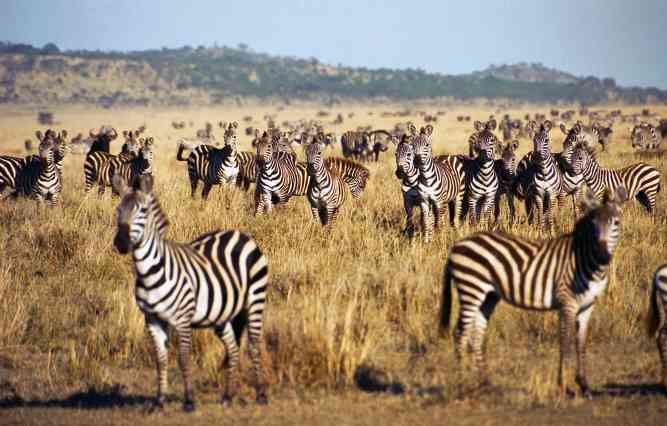
Tanzania’s headline attraction is the Great Migration, which takes place across Serengeti National Park.
Every year, almost 2 million animals - mostly wildebeest, zebra, gazelles, and antelopes - cross the open plains of this vast national park in search of water holes and food. Their crossing of the Mara River is the climax of this journey and is dramatic, as the animals try to escape the jaws of waiting crocodiles and other predators.

Cited by some as the most remarkable wildlife phenomenon on earth, this spectacle is not to be missed if you’re considering when to go to Tanzania.
While the Great Migration occurs for much of the year, late June to August mark its peak, making these the best months to see this natural phenomenon. However, this is also peak migration season, and it goes without saying that this bucket-list activity is popular! As such, it can get very crowded in Serengeti National Park and the surrounding safari lodges at this time.
Safari and flight prices also go up during these months, and camps can be fully booked up to a year in advance. This means you’ll need to plan ahead and get a booking early if you want to travel to Tanzania in June, July, or August.
The Serengeti National Park is a year-round safari destination. If you aren’t fixated on seeing the great migration at its peak, there are other times to visit the reserve that may suit you better.
In short, the best time for a Tanzania safari in the Serengeti really depends on what wildlife you’d like to spot.
January to March is calving season - a great safari opportunity to see young wildebeest, zebras, and antelopes, as well as lion cubs and even elephant calves. It’s even common to see calves being born! However, this is not the best way to see the migration in action, so don’t expect stampeding herds or dramatic river crossings.
Tanzania’s ‘green season’, between November and March, is a fantastic time for birdwatching, as migratory species arrive in their thousands. There will be fewer visitors during this period than at the peak of the great migration, along with lower prices, though there may be some rainfall.
The ‘long rain’ season (March to May) is the least popular time to take a Tanzania safari, as heavy rains can disrupt wildlife viewing. However, if you’re looking for the best safari deals, this is the time of year to pick them up!
If you’re heading to the idyllic island of Zanzibar, you’ll almost certainly want to relax on some of its picture-perfect white sand beaches, so you won’t want rain to dampen your parade!
This means the best time to visit the island is either during the archipelago’s long dry season, from July to September, or during its short dry season in January and February.
Tanzania's 'short dry season' can also make a great time to visit the Spice Island, which lies off the coast of Stone Town, before the rains return in March.
During the short rains in November and December, downpours across Zanzibar are usually followed by blue skies, and you’ll be rewarded for sitting out a few showers with fewer people around and good deals on prices.
It’s only during the long rains in April and May, when the island can receive heavy rainfall, that we recommend you reconsider your plans.
If you’re thinking about climbing ‘Kili’, as this mountain is affectionately known, then when to attempt this mammoth hike is a crucial decision to make.
Bad weather on Mount Kilimanjaro will make for a miserable trek, spoil the views, and, most importantly, make this high-altitude ascent twice as hard!
Given this, we recommend avoiding the rainy months, when there’s a greater chance of you slogging through mud and trekking through fog and drizzle as you get higher in altitude. There are often freezing conditions and snow on the summit at this time as well.

For these reasons, our African travel experts generally advise that the best time to climb Kilimanjaro is from December to mid-March and mid-June to the end of October, when conditions are warmest and driest.
The clear skies, great views, and sunshine you can expect at these times create more comfortable hiking conditions and excellent photo opportunities! Not to mention, you are a lot more likely to reach the summit if the weather up on the mountain is good! However, please note that these are also the busiest months, so please book ahead.

Check out our excellent-value Tanzania Safari Tours.
Or, to get more advice on planning your trip to Tanzania and find some of the best safari deals, talk to one of our African safari specialists.
Our team has the expertise to help you plan your trip of a lifetime and can advise you on the best time to visit Tanzania based on your plans and chosen activities.

Explore these destinations mentioned in this post.
Below you'll find further reading and articles related or similar to this post.




Call us toll free from US/Canada on 1-888-414-6513, or from the UK on 0-808-189-1052. All other countries can contact us on +27 21 791 0878.
© 2026 African Budget Safaris | Privacy | Terms | Cookie Policy | Consent Preferences




__medium.jpg)