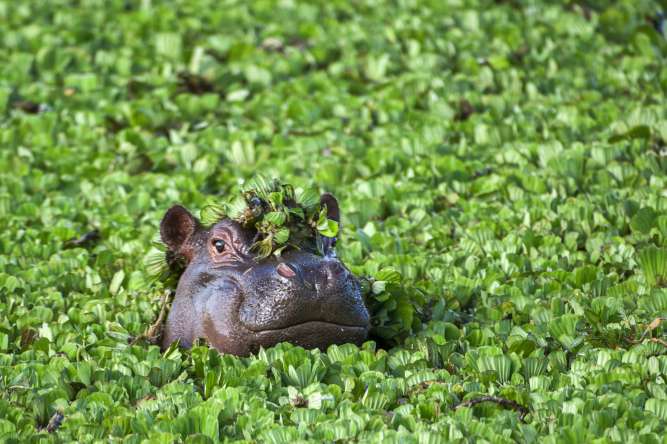
Let’s address the muddy riverbank elephant in the room: hippos are not part of the Big Five.
No matter how many tourists they intimidate, boats they glare at, or guides they keep awake at night, the hippopotamus was snubbed. And frankly, it’s time we talked about it.
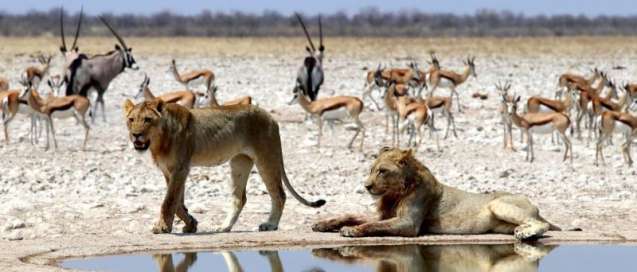
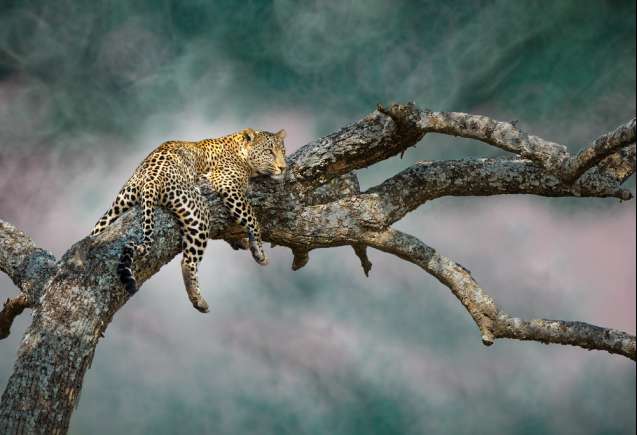
The Big Five — lion, leopard, elephant, buffalo, and rhino — were so-named by big-game hunters because they were the five most dangerous animals to hunt on foot. Hippos, meanwhile, were probably too busy capsizing boats and casually murdering crocodiles to attend the meeting.
So while hippos didn’t make the historical cut, they absolutely deserve honorary membership. Here’s why.
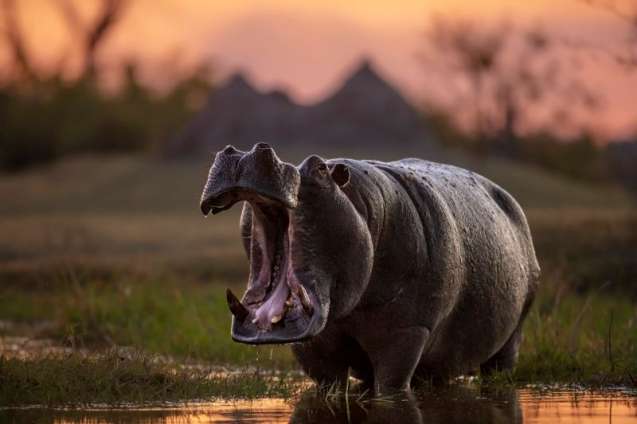
Hippos were excluded for one simple reason: the Big Five label is not about size or danger — it is about how difficult and dangerous an animal was to hunt on foot. Lion, leopard, elephant, buffalo and rhino earned their place because they were considered the most challenging and dangerous animals for hunters to track and shoot.
Hippos, by contrast, were usually found in predictable places such as rivers, lakes and waterholes, making them easier to locate. They were often shot from boats or at the water’s edge, which did not fit the colonial hunting idea of a “true” Big Five animal.
Ironically, this means one of Africa’s most dangerous animals to humans never made the list. Awkward.
| Animal | Part of the Big Five? | Danger to Humans |
|---|---|---|
| Hippo | No | Responsible for more human fatalities in Africa than any other large animal |
| Buffalo | Yes | Often considered the most dangerous Big Five animal |
| Lion | Yes | Dangerous, but usually less deadly than hippos |
| Leopard | Yes | Dangerous and unpredictable, especially on foot |
| Rhino | Yes | Dangerous when surprised or threatened |
And because hippos deserve a little more recognition, here are a few surprising facts about Africa’s most misunderstood heavyweight.
| Hippopotamus Amphibius Facts |
|---|
|
The name hippopotamus (hippo for short) comes from the Ancient Greek term for "river horse":
Of the two species in the family Hippopotamidae:
|
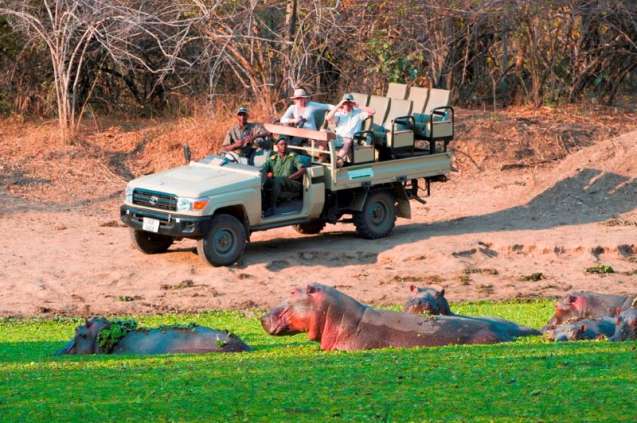
Despite their voluptuous 'Michelin Man' like appearance, hippos are considered one of Africa’s deadliest mammals, responsible for hundreds of human fatalities each year. Lions? Amateurs by comparison.
Cute: ❌
Deadly: ✅
On land, a hippo can reach speeds of up to 30 km/h (19 mph) — faster than the average human sprint. So no, “just run” is not a valid escape plan.
Pro tip: If a hippo is chasing you, you’ve already made several poor life choices.
Surprise! Hippos are too dense to swim. Instead, they walk or bounce along the riverbed, pushing off with their feet and holding their breath for up to five minutes.
Graceful? No, but in a way, yes!
Effective? Terrifyingly yes.
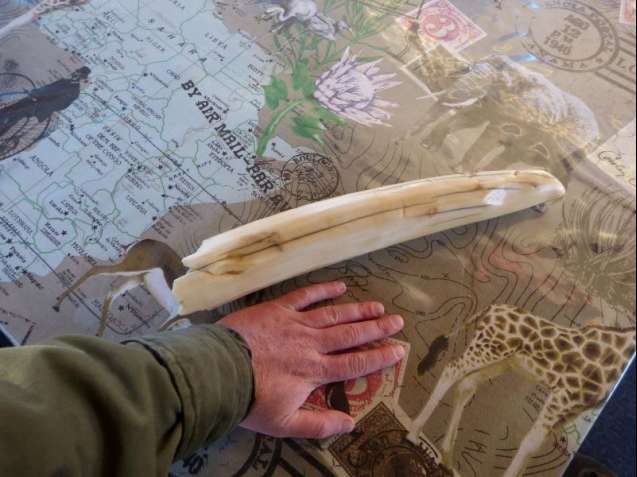
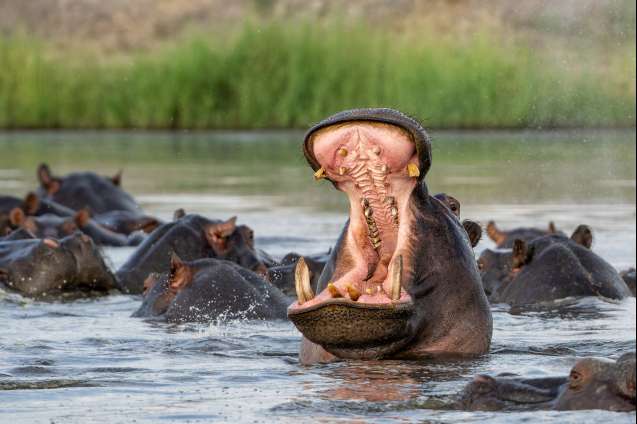
A hippo’s yawn is not cute — it’s a threat display. Their jaws open almost half a meter wide, armed with blunt, chunky tusks that can grow over 50 cm (20 inches).
That’s not a smile. That’s a warning.
Weighing up to 1,500 kg (3,300 lbs), hippos have incredibly thick skin — up to 6 cm in places. Bullets, teeth, and bad attitudes bounce right off (figuratively… mostly).
If tanks had personalities, they’d be hippos.
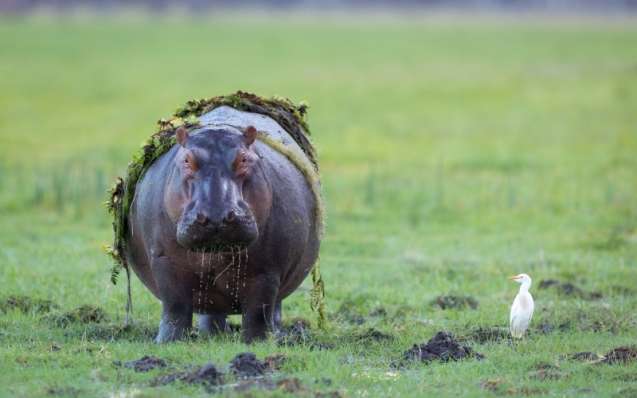
By day, hippos lounge in water, looking like floating boulders. By night, they emerge to graze, travelling up to 40 kilometres in search of grass.
Yes, this is what makes hippos my spirit animal – lounge around all day, eat all night!
Hippos sweat a reddish, oily substance often mistaken for blood. It’s actually a natural sunscreen and antibacterial lotion.
Imagine being so unbothered by life that your body invents skincare products for you.
Hippos may seem relaxed, but they are extremely aggressive, especially in water. Boats, canoes, and unsuspecting tourists are often treated as personal insults. Be sure to follow the instructions of your expert guide when you are around them.
Hippo logic: This river is mine. So is that boat. And possibly you.
Yes — crocodiles, those ancient killing machines, tend to give hippos a wide berth. Even apex predators know when not to start something.
Respect is earned. Fear is enforced.
If the Big Five were redefined today as the most dangerous animals to encounter on foot, hippos would storm the list and immediately demand top billing.
Lion? Predictable.
Buffalo? Grumpy.
Hippo? Unhinged.
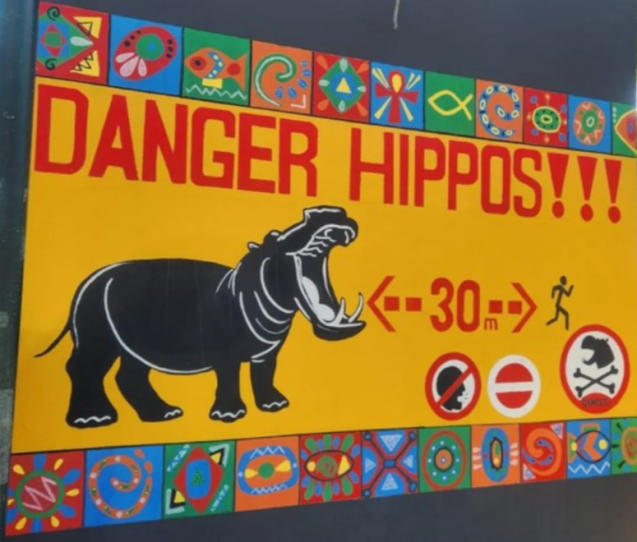
Hemmed in by an estuary to the west and the Indian Ocean to the east, the little town of St Lucia, South Africa, sits squarely in what locals proudly call Hippo Land. This is the UNESCO-listed iSimangaliso Wetland Park, home to over 800 hippos — one of the largest populations in the country.
But the hippos don’t just live in the estuary — they pop into town like oversized, bad-tempered lawn inspectors. By nightfall, it’s not unusual to find these chunky giants wandering residential streets, calmly grazing on manicured lawns while humans keep a very respectful distance. The hippos are strangely unfazed by cars, headlights, and the endless camera flashes from wide-eyed visitors.
Southern and East Africa offer some of the best hippo-viewing opportunities in the world, often with sightings that are as surprising as they are unforgettable. From bustling rivers to tranquil lakes, hippo sightings are almost guaranteed — just always best admired from a safe distance.
__medium.jpg)
Absolutely.
While they may not have fit the old colonial hunting criteria, hippos check every modern box:
Dangerous ✅
Massive ✅
Unpredictable ✅
Iconic African wildlife ✅
They may not be Big Five animals — but in the real world, hippos are Big Attitude, Big Teeth & Big Problems.
So, next time you’re on safari and spot a hippo yawning in the water, remember: you’re looking at one of Africa’s most misunderstood legends — excluded from the Big Five, but feared by everyone who knows better.
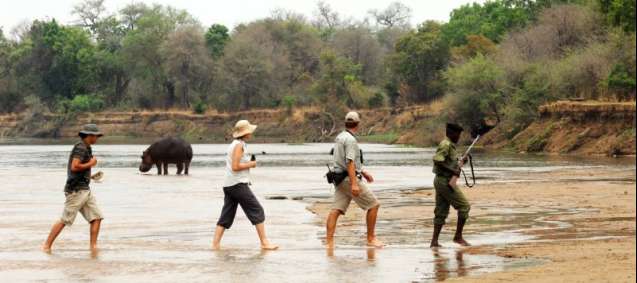
Few wildlife encounters are as memorable as watching hippos wallow, snort, and jostle in Africa’s rivers and lakes. Going in search of hippos on an African safari takes you to some of the wildest waterways in Southern and East Africa, where pods gather in their hundreds and daily life unfolds in a chorus of grunts and splashes.
Whether you spot them from a boat, a riverbank, or even near a safari town after dark, hippo sightings add a thrilling, unmistakably African dimension to any safari adventure. The possibilities are endless, and African Budget Safaris can help you select a safari destination that suits you.
African Budget Safaris is an independent and privately owned travel agency. Owner, Terence Murphy, started African Budget Safaris in 2006 with a mission to make it possible for those on a budget to enjoy the same epic wildlife experiences as those paying for high-end luxury safaris. With no allegiance to any specific tour operator or public entity, we are free to choose the best tours to match our clients with the perfect experience, one that reflects their dreams and turns them into a rich, real adventure.
With African Budget Safaris, you’re not just booking a tour — you’re being welcomed into a community of people who adore hippos and can’t wait to show you why.
Chat with one of our friendly travel experts to start exploring your safari options today.
Explore these destinations mentioned in this post.
Below you'll find further reading and articles related or similar to this post.




Call us toll free from US/Canada on 1-888-414-6513, or from the UK on 0-808-189-1052. All other countries can contact us on +27 21 791 0878.
© 2026 African Budget Safaris | Privacy | Terms | Cookie Policy | Consent Preferences


__thumb.jpg)



__medium.jpg)