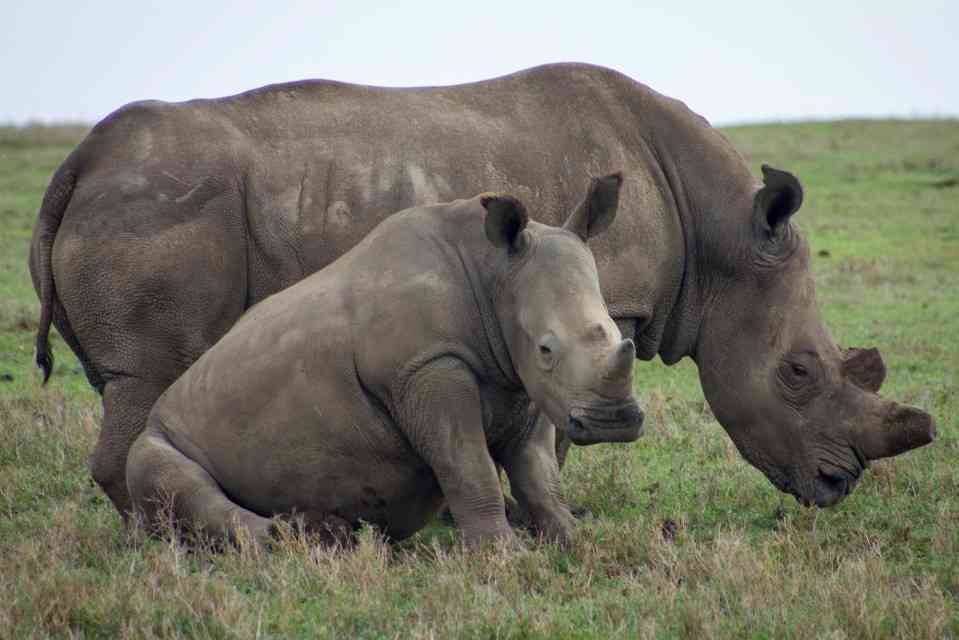
Few safari sightings are as memorable as encountering a rhinoceros in the wild. These prehistoric giants are part of Africa’s Big Five, and seeing one up close is often a highlight of any safari.
But travellers quickly notice something confusing: black rhinos and white rhinos are not actually black or white.
The difference between the two species lies in lip shape, feeding behaviour, body size, and habitat. Once you know what to look for, identifying them on safari becomes surprisingly easy.
This guide explains how to tell black vs white rhinos apart, where you are most likely to see them in Africa, and which safari destinations offer the best chance of seeing both species.
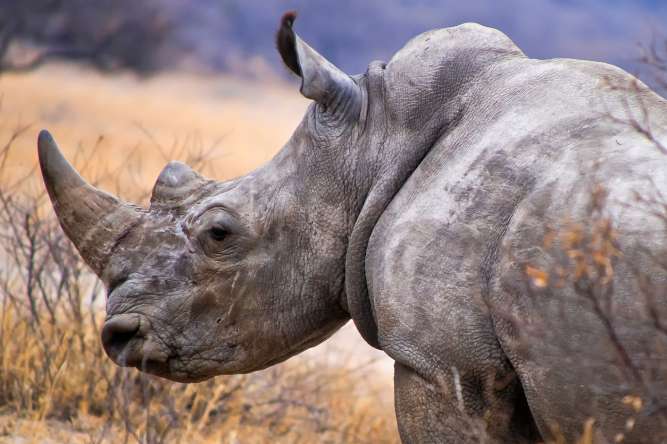
If you remember only one thing, remember the mouth.
| Distinguishing Feature | Black Rhino | White Rhino |
|---|---|---|
| Lip shape | Hooked, pointed lip | Wide, square lip |
| Diet | Browser (leaves, shrubs) | Grazer (grass) |
| Head posture | Head held high | Head held low |
| Body size | Smaller | Largest rhino species |
| Behaviour | Mostly solitary | Often seen in groups |
| Habitat | Bush, woodland, scrub | Open savanna and grassland |
In simple terms:
Their lips are perfectly adapted for these diets.
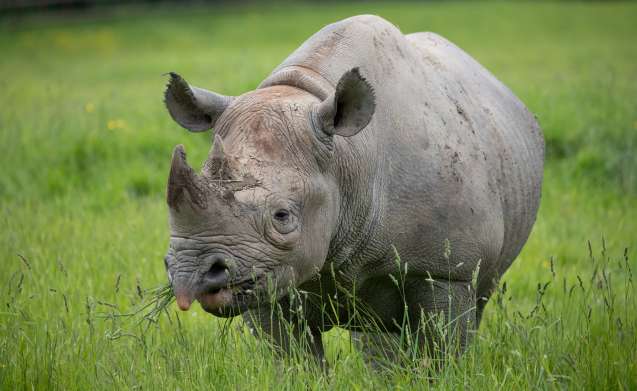
Black rhinos are browsers, feeding on leaves, branches, twigs, and shrubs.
Their most distinctive feature is the hooked upper lip, which works like a finger to grasp vegetation. This adaptation allows them to feed efficiently from bushes and small trees.
Because of this feeding behaviour, black rhinos usually live in dense bushveld, scrubland, and woodland habitats.
They are also more solitary and more defensive than white rhinos. While they have a reputation for being aggressive, most charges are simply defensive reactions when they feel threatened.
Black rhinos are rarer than white rhinos, making sightings particularly special on safari.
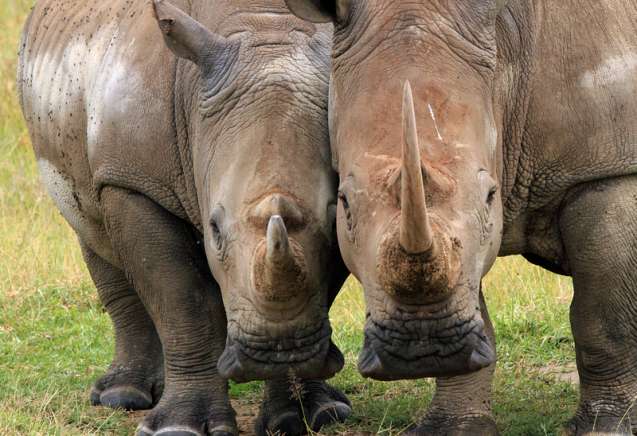
White rhinos are the largest rhino species in the world, with males weighing over 2,300 kg (5,000 lbs).
Their defining feature is the wide, square-shaped mouth, designed for grazing grass close to the ground.
White rhinos move slowly across open plains with their heads low, sweeping their broad lips through the grass like natural lawnmowers.
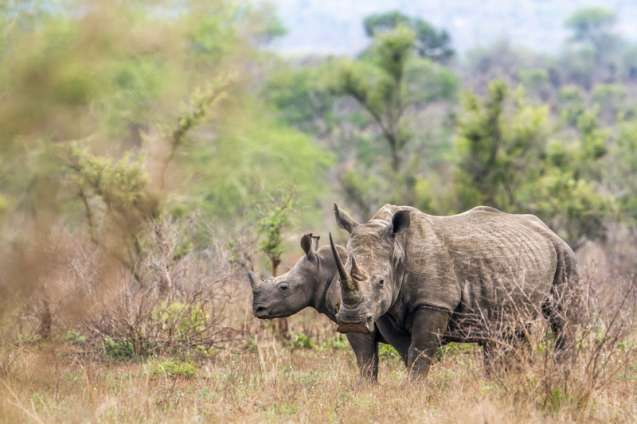
They are also more social than black rhinos, often seen in small groups of females and calves known as a crash of rhinos.
Because they live in open habitats, white rhinos are generally easier to spot on safari.
The name white rhino likely comes from a mistranslation.
Early Dutch settlers described the animal’s wide mouth using the Afrikaans word “wijd” (meaning wide). English speakers misheard this as “white,” and the name stuck.
So the name refers to the shape of the mouth, not the animal's colour.
| Feature | Black Rhino | White Rhino |
|---|---|---|
| Scientific name | Diceros bicornis | Ceratotherium simum |
| Weight | 800–1,400 kg | 1,800–2,300 kg |
| Feeding style | Browser | Grazer |
| Lip shape | Hooked | Square |
| Habitat | Bushveld, woodland | Grassland, savanna |
| Social behaviour | Mostly solitary | Small groups |
| Conservation status | Critically endangered | Near threatened |
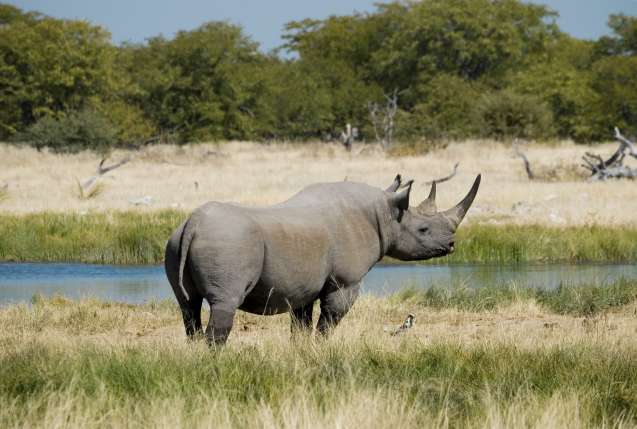
Black rhinos are far rarer and more elusive than white rhinos, but several parks across Africa offer excellent chances of sightings thanks to strong conservation programs.
| Destination | Country | Why It’s Good |
|---|---|---|
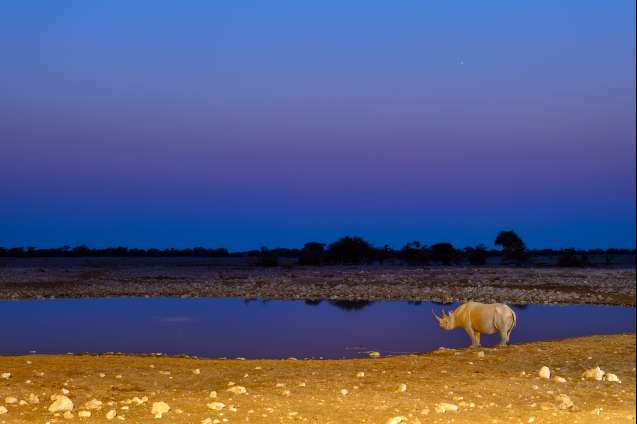
| Etosha National Park | Namibia | One of Africa’s best places to see black rhinos, especially at waterholes |
| Ngorongoro Crater | Tanzania | Tanzania’s most reliable black rhino sightings |
| Nairobi National Park | Kenya | High concentration of black rhinos near Kenya’s capital |
| Lewa Conservancy | Kenya | Major black rhino conservation success |
| Hluhluwe–iMfolozi | South Africa | Historic conservation stronghold |
Namibia, in particular, has become one of Africa’s most important refuges for black rhinos, including populations adapted to desert conditions in Damaraland and Kaokoland.
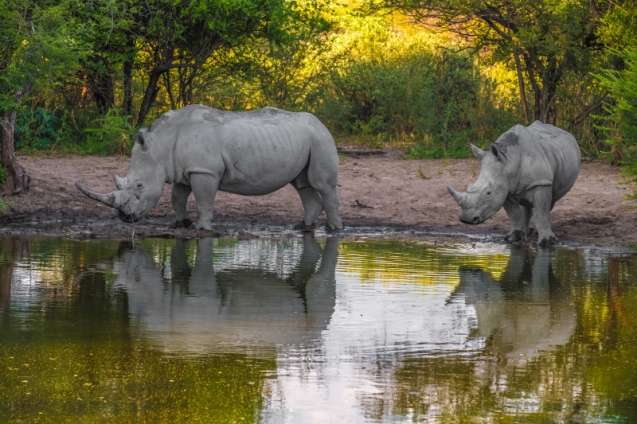
White rhinos are more numerous and easier to see than black rhinos. Most populations today are concentrated in southern Africa and well-protected East African sanctuaries.
| Destination | Country | Why it's Good |
|---|---|---|
| Kruger National Park | South Africa | Africa’s largest white rhino population |
| Hluhluwe–iMfolozi | South Africa | Where the species was saved from extinction |
| Lake Nakuru National Park | Kenya | Scenic sanctuary population |
| Ol Pejeta Conservancy | Kenya | Strong protection and excellent sightings |
| Ziwa Rhino Sanctuary | Uganda | Uganda’s only rhino population |
White rhinos are grazers and prefer open grassland habitats, which is why they are particularly common in South Africa’s savanna parks.
__medium.jpg)
Tracking rhinos on foot is one of the most exciting wildlife experiences on safari. Guided by expert trackers, visitors follow fresh tracks through the bush to safely approach these powerful animals while learning about the conservation efforts protecting them.
Near Victoria Falls, Matobo Hills offers renowned rhino tracking walks where visitors can approach both black and white rhinos on foot among dramatic granite landscapes.
Mkhaya is famous for intimate rhino encounters, allowing visitors to track both black and white rhinos on foot with experienced rangers.
Rhino tracking offers a rare, close-up encounter with one of Africa’s most endangered animals while directly supporting conservation efforts.
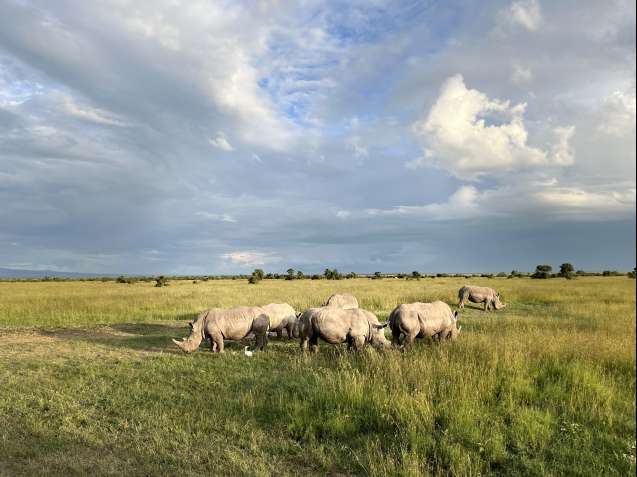
Some destinations focus almost entirely on rhino conservation and offer some of the most reliable sightings.
Ol Pejeta Conservancy on the Laikipia Plateau is one of Africa’s most important rhino conservation areas.
It protects:
Ol Pejeta combines excellent wildlife viewing with world-class conservation efforts.
Botswana’s Khama Rhino Sanctuary is a community-run conservation success story.
The sanctuary protects white rhinos, which have thrived here since their reintroduction. The compact reserve offers excellent viewing around the salt pans and is one of the best places in Botswana to reliably see rhinos.
Some animals from this sanctuary have even been reintroduced into Botswana’s northern parks, helping restore rhino populations across the country.
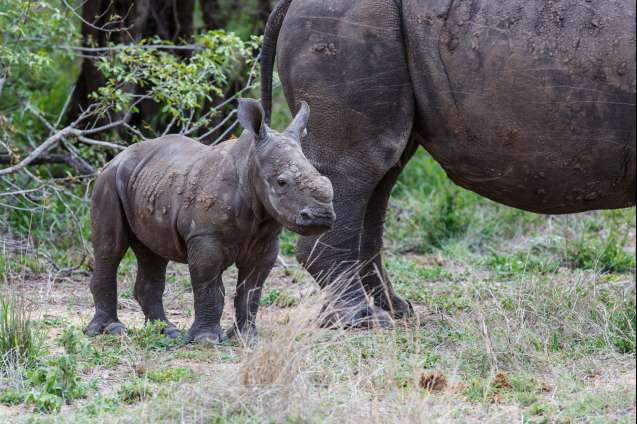
Travellers hoping to see rhinos should look for Big Five safaris or itineraries that visit rhino conservation areas.
Popular options include:
These destinations consistently offer some of Africa’s best rhino sightings.
__medium.jpg)
Rhinos are considered keystone species, meaning they play a crucial role in maintaining the health of their ecosystems. Through grazing and browsing, rhinos shape the landscape by controlling plant growth, reducing bush cover, and creating open areas that allow many other plants and animals to thrive. By protecting rhinos and the habitats they depend on, entire ecosystems are preserved, benefiting countless other species. Rhinos also support local economies through wildlife tourism, drawing visitors to national parks across Africa and helping fund conservation while creating jobs for surrounding communities. Beyond their ecological and economic value, rhinos hold deep cultural significance in many societies, symbolising strength, resilience, and the importance of protecting the natural world.
_(1)__medium.jpg)
Black rhinos are generally more defensive and solitary, which gives them a reputation for being aggressive. In reality, most charges occur because the animal feels threatened or surprised.
White rhinos are much larger. Adult males can weigh over 2,300 kg, making them the largest rhino species in the world.
Black rhinos are rarer and considered critically endangered, although conservation efforts have helped populations slowly recover.
Some of the most reliable rhino destinations include:
Yes. Some parks offer guided rhino tracking walks, including Matobo Hills in Zimbabwe, one of the best places in Africa for this experience.
__medium.jpg)
Seeing rhinos in the wild is one of the most powerful moments you can experience on safari, but choosing the right destination can make all the difference.
Whether you want to track rhinos on foot in Zimbabwe’s Matobo Hills, visit conservation strongholds like Ol Pejeta in Kenya, or explore the vast landscapes of Kruger and Etosha where both species still roam, our team can help you find the right safari for your budget and travel style.
Get in touch with African Budget Safaris to start planning a rhino-focused adventure that supports conservation while giving you the best chance of seeing these incredible animals in the wild.

Explore these destinations mentioned in this post.
Below you'll find further reading and articles related or similar to this post.




Call us toll free from US/Canada on 1-888-414-6513, or from the UK on 0-808-189-1052. All other countries can contact us on +27 21 791 0878.
© 2026 African Budget Safaris | Privacy | Terms | Cookie Policy | Consent Preferences