
Who are the Black Mambas of Greater Kruger National Park?
The black mamba is one of Africa’s deadliest and most feared snakes. By contrast, the Black Mambas is a female anti-poaching unit dedicated to conservation. It was founded by Transfrontier Africa NPC in 2013 to protect the Olifants West section of Balule Nature Reserve, which forms part of the Greater Kruger National Park. The unit soon proved effective and was asked to expand its realm to protect all the boundaries of Balule.
Comprising 32 women and two men from the area, the Black Mambas protect the rhinos on the ground. Due to their gender and their successes, they have become the darlings of the media; practically all the media houses have done stories on them. In 2022, a documentary by Lena Korbe was shot that portrays the strength of the women who comprise this unit.
The women are role models for the girls and women in their community and provide a voice for conservation and its benefits to counter the ‘false economy’ of poaching.
According to environmentalists at Greentumble, less than 27,000 rhinos are left in the wild, about half of which are in South Africa. The poaching crisis is driven mainly by the demand of Asian markets, where the horn is cherished for its (totally unproven) 'medicinal' value. A black rhino horn can sell for as much as $300,000 there, so the incentive to poach rhinos is very strong.
Increasing protection efforts seem to be paying off, at least in some areas. According to this 2023 Black Mambas story by Jamie Fullerton, rhino poaching has been almost eliminated in Olifants West. This was due to the Black Mambas and because the rhinos in the area had been dehorned – an effective deterrent for poachers. The unit has won several awards for its valour and achievements.

The Mambas undergo three months of training, including theory, rigorous fitness training, learning surveillance practices, and survival tactics – in case one is stranded in the bush – which prepare them for the job. They also learn how to hide from the dangerous animals and poachers in Balule (Greater Kruger National Park).
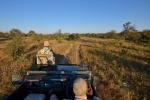
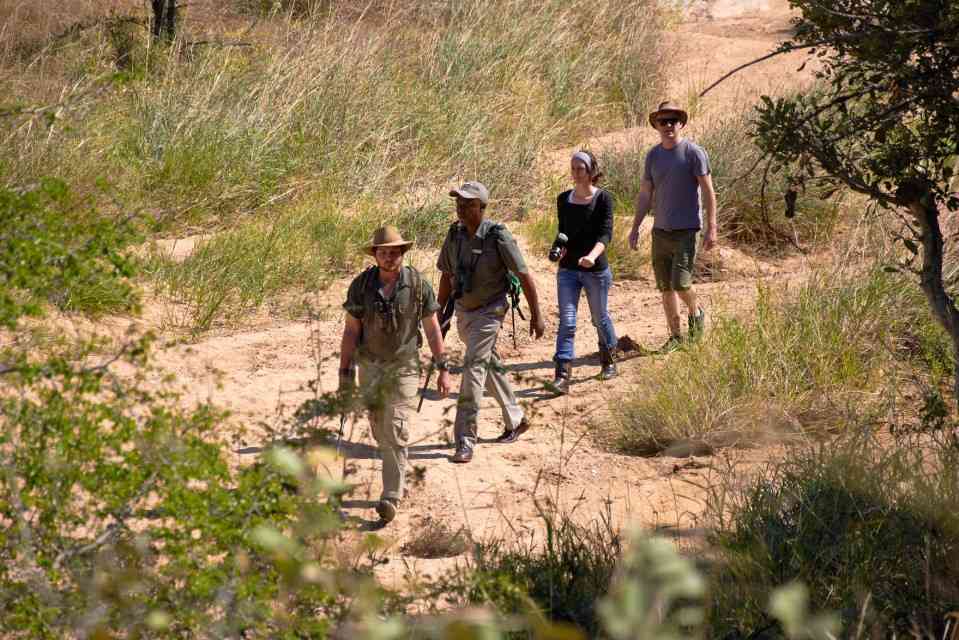
Each day begins with an army-style parade and issuing orders, and then the uniformed Mambas head off into the bush. Every member of the Black Mambas spends three weeks of each month patrolling through the Kruger, either on foot or by jeep. The concept behind it is that the poachers are deterred by being visible – and it’s working.


At first light, groups head out each morning to patrol the boundaries. At the last light, vehicle patrols are conducted. Known entry points and popular rhino waterholes are monitored, and signs of poisoning are looked out for. One of the main roles of the Mambas is to gather intelligence, which is shared with other rangers.

When snares are removed before animals get trapped, this not only saves the animals from being snared but also, in the long run, stops people from setting snares, as there is no longer any reward. However, unemployment is rife in the Limpopo population on the Kruger’s western boundary, which has led to a surge in the bushmeat trade and, in 2018, a tenfold increase in the amount of snares collected. According to a 2023 Mail & Guardian report, nearly half of the Kruger staff is corrupt, so poaching is becoming harder to contain.

The Mambas conduct roadblocks and routine searches of both visitors and workers in the area to weed out any illegal or suspect items. They work unarmed, deliberately (they do carry pepper spray) to help create a new conservation ethos that builds constructive relations between rangers and those who live near the Kruger. It’s a dangerous occupation – globally, nearly 500 rangers died on active duty in the last decade.
Creating strong bonds within the communities who live in and around Greater Kruger National Park and promoting a pro-environmental ethos with a focus on social upliftment helps to ensure ongoing conservation. Craig Spencer, founder and director of Transfrontier Africa, says those who live near conservation areas were mostly historically excluded from the benefits these areas generate and have not seen themselves as custodians of natural heritage. To redress this requires a multipronged approach.
The Mambas empathise with the unemployed in the communities they live near the Kruger. To help feed the hungry, they grow vegetables and package them into parcels, which they pass out to surrounding communities and sell to the lodges in the park.

One project is the Bush Babies program, run by the Black Mambas, which involves ten schools surrounding Greater Kruger National Park. During weekly visits to the schools, the children are taught the importance of conservation and protecting their environment for the long-term sustainability of the area.
The Black Mambas – many of them mothers themselves – teach the kids about poaching, its detrimental effects, and how they work to stop it. The top performing children are also taken on trips and Scout camps to the Kruger, which has an entrance fee beyond the reach of most locals.

Basic salaries are paid through the Extended Public Works Program, but all other costs, of which there are many, are absorbed by Transfrontier Africa. They rely heavily on funding and donations to cover these costs, which include training, uniforms, equipment, food, vehicles, fuel and the Bush Babies program. To help, get hold of them on one of their social media channels:
Find out more about the Black Mambas of Greater Kruger National Park on the Transfrontier Africa website, or to support them, go straight to their Donations Page.
It’s a cause well worth supporting to save these threatened African animals.

If you'd like to visit Balule Nature Reserve, view our budget-friendly Balule Safaris in South Africa.
Explore these destinations mentioned in this post.
Below you'll find further reading and articles related or similar to this post.




Call us toll free from US/Canada on 1-888-414-6513, or from the UK on 0-808-189-1052. All other countries can contact us on +27 21 791 0878.
© 2026 African Budget Safaris | Privacy | Terms | Cookie Policy | Consent Preferences