
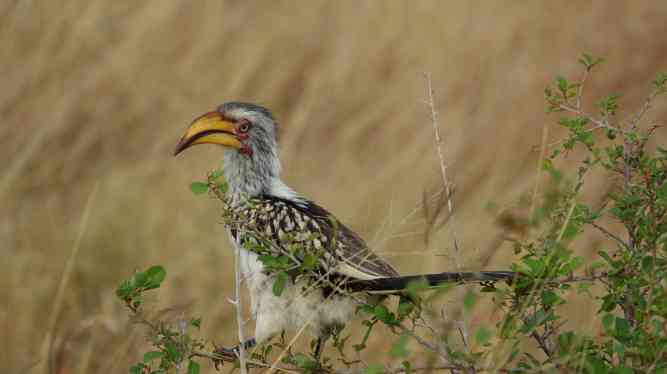
A final, bonus, trip report from Peter and Wendy's safari in Kruger National Park. This last Kruger safari report from the adventure-loving Belgian couple is for the twitchers and amateur birdwatchers.
Hello safari guests,
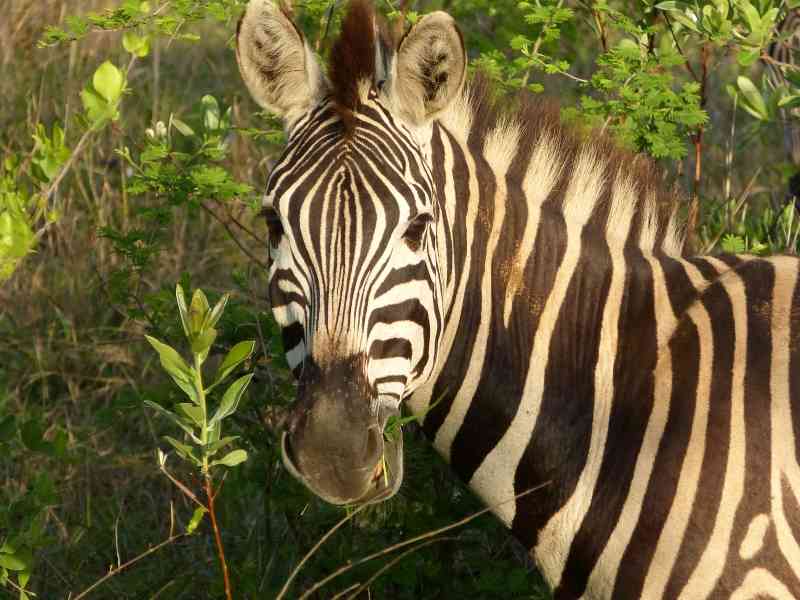
In addition to many mammals, Kruger National Park also has a lot to offer for people who are interested in birds. Real bird lovers should go in the hot and wet season (late November to March) because that is when the bird life is at its best. But even in May we saw many beautiful birds.
And not just in Kruger National Park. After we landed in Johannesburg at 1 p.m. we drove east in the direction of Kruger Park. We then spent 1 night in Schoemanskloof because we wanted to be off the road before dark (at 5:30 PM).
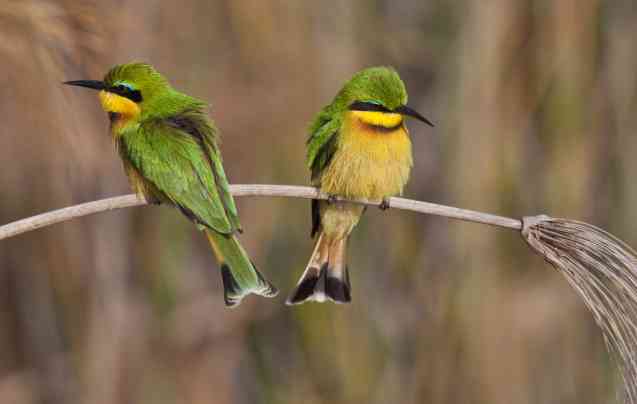
We got a beautiful room at a lodge with a view of the garden and when we woke up in the morning, the garden turned out to be full of colorful birds. We walked around there for an hour with our binoculars and cameras at the ready before we drove on to Kruger National Park.
In Kruger itself you also see many birds: water birds, birds of prey, scavengers, ....
Not far from Skukuza rest camp they have a beautiful bird hide where you can see at least a few water birds and an osprey, and usually some hippos and, if lucky, a few drinking or swimming elephants (but that was not the case this year).
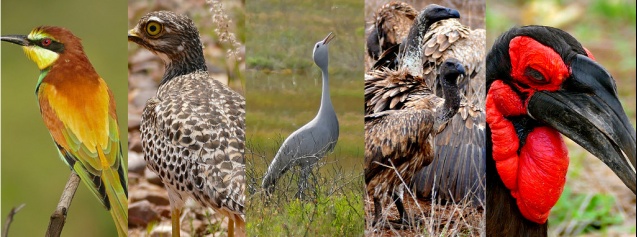
Peter uses the free app "Birds of Africa" to identify all the birds we see. A fun activity. I'm not going to list them all here, but I'll give you an idea through the photos.
Greetings
Wendy and Peter
We broke the birding list up broadly into 3 categories: Water birds, Raptors, and Kruger birding highlights.
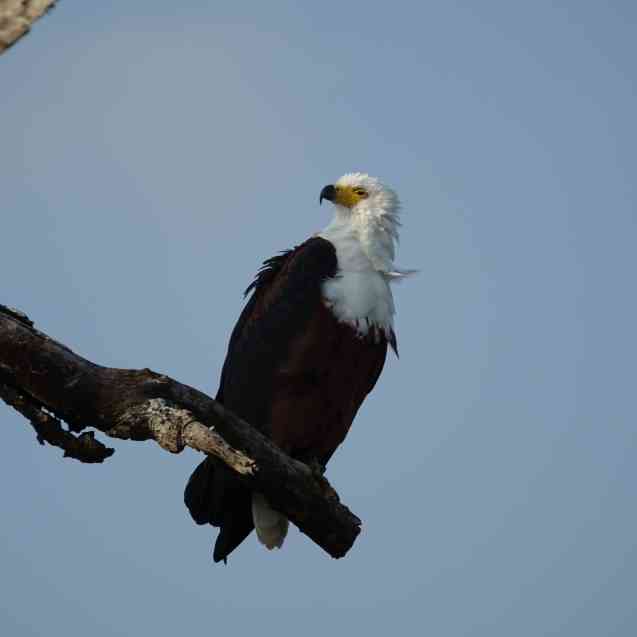
With so much water, streams, rivers, and watering holes, Kruger has some fantastic birding for waterbirds. We saw 3 different species in a very short space of time, as well as storks, herons, and the African lightning bird.
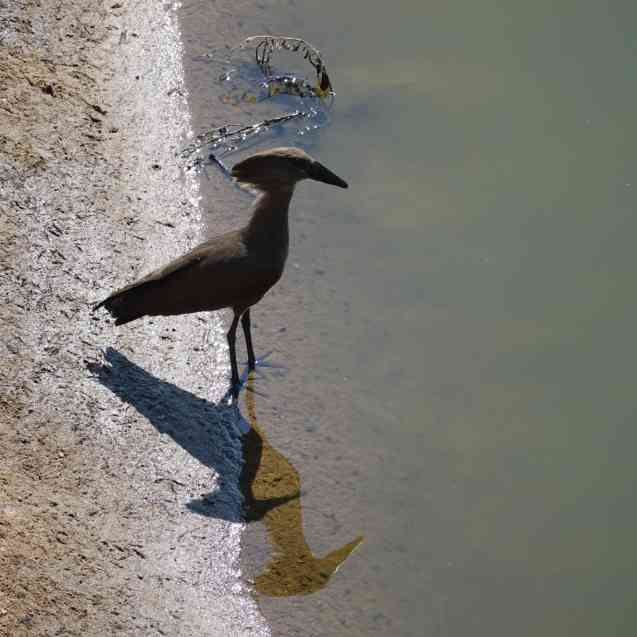
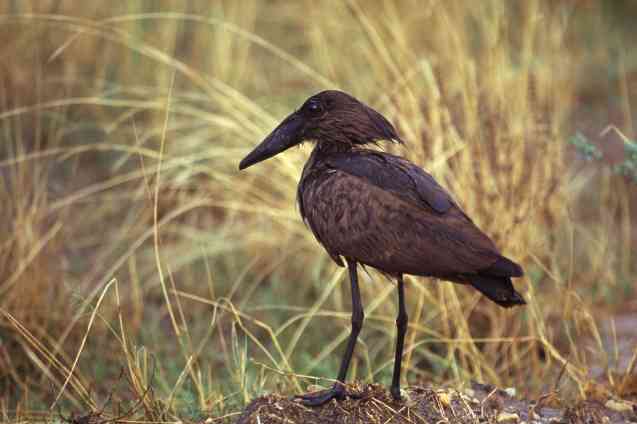
The lightning bird, also known as the hammerkop, is a graceful wader that feeds on frogs and insects. It features prominently in African folklore and is strongly associated with witchcraft, you can read more about the lightning bird here.
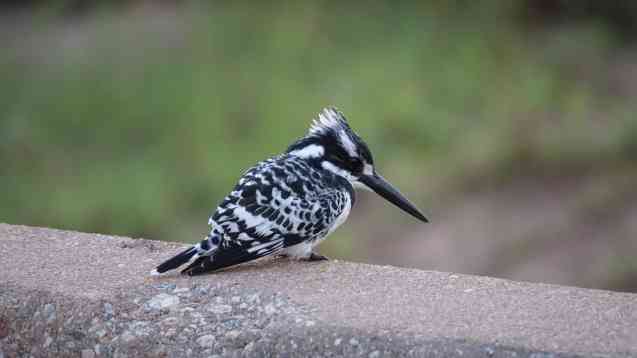
The pied kingfisher with its black spots on a white background is as distinctive as they come.
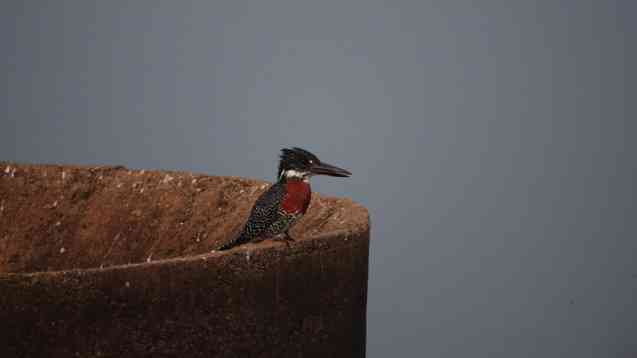
The giant kingfisher, though common is an impressive bird to encounter around waterways.
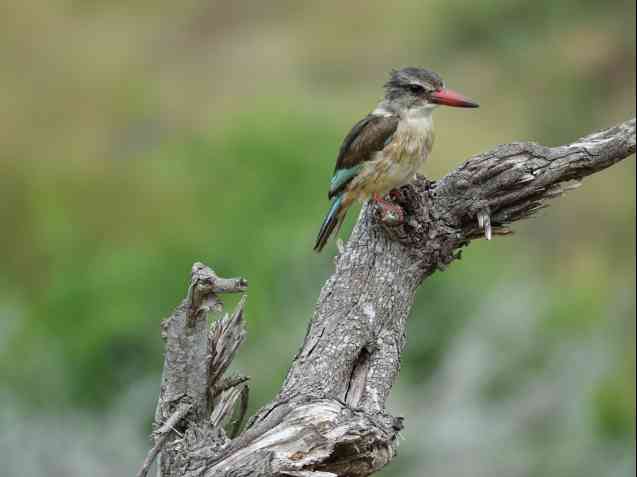
The brown-hooded kingfisher, similar to the migratory woodland kingfisher, is often tricky to spot in amongst the trees but this one posed beautifully on a dead branch for a photo.
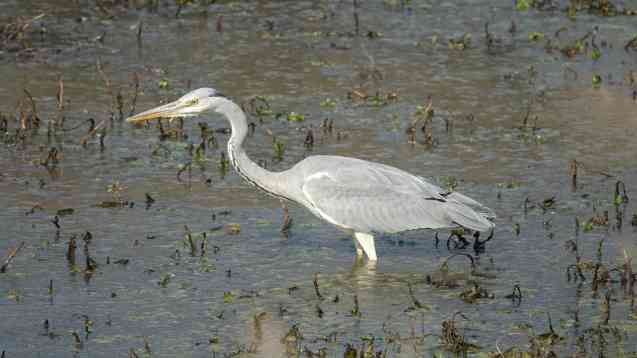
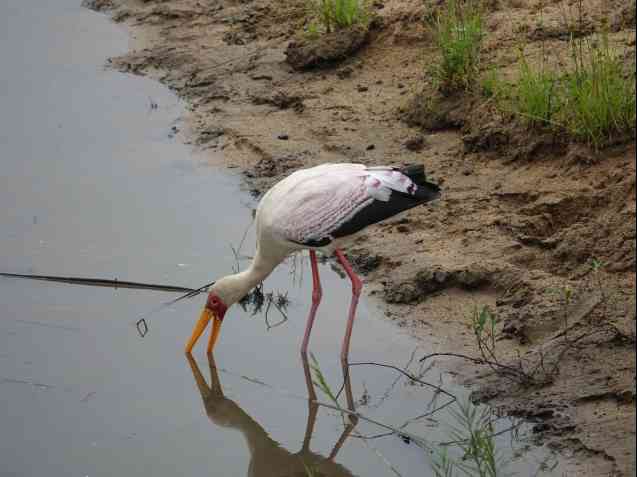
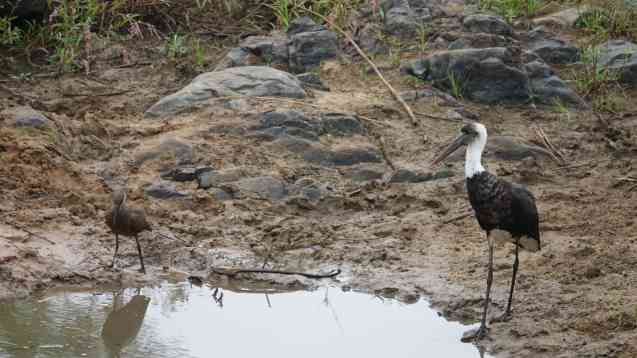
We saw a couple of herons and a stork too, the grey heron, woolley-necked heron, and the yellow-billed stork.
Kruger has an amazing variety of raptors. On this trip, we only had sightings of a few raptors, and want to go further north to see the Bateleur eagles.
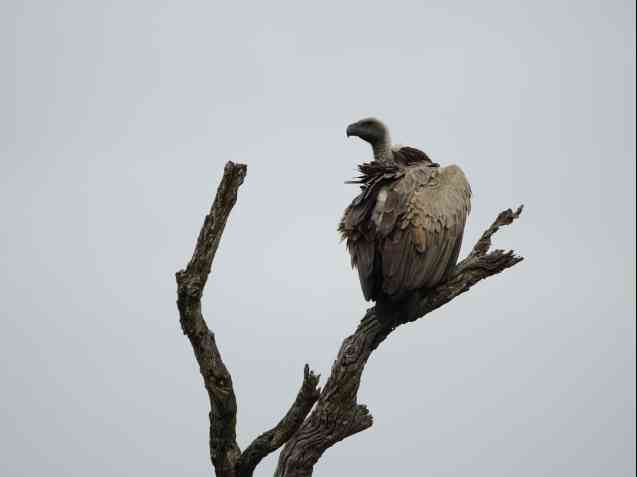
The white-backed vulture looks similar to the Cape vulture but, in the Kruger, the white-backed vulture is commonly sighted while the Cape vulture which nests in the Drakensberg Mountains is rare.
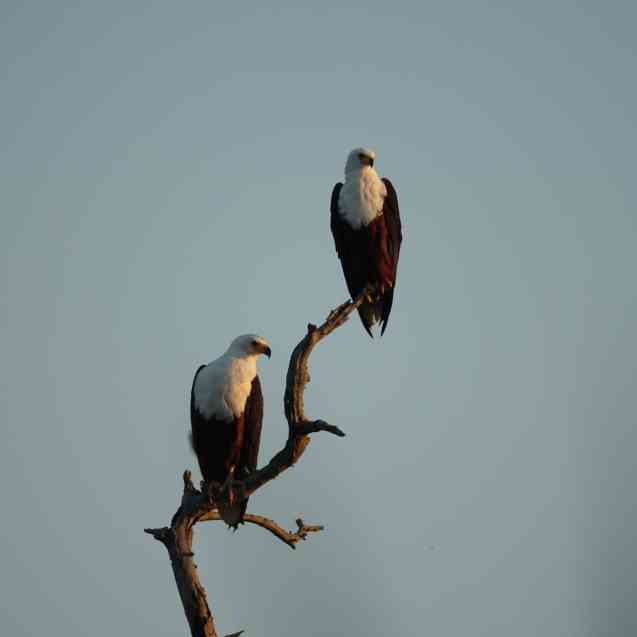
The call of the fish eagle is one of the most distinctive of the African bush, and their contrasting white heads and brown bodies make them easy to identify.
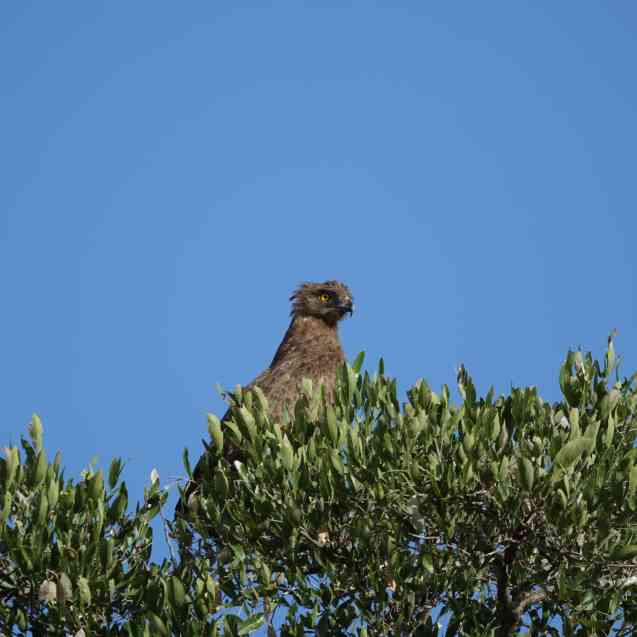
Snake eagles are named after their habit of eating snakes. The brown snake eagle is the largest and most powerful of these birds and has thick skin to protect them from the bites of venomous species.
These birds are common enough but always exciting to see in the Kruger.
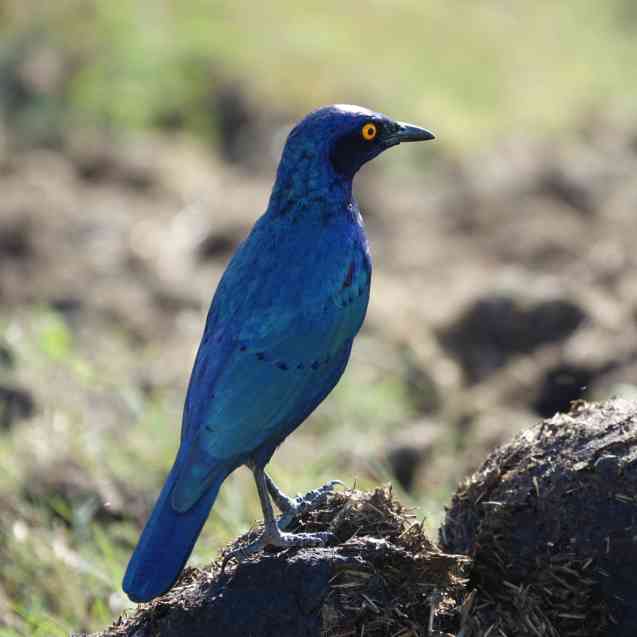
The glossy starling with its shimmering blue-green feathers and yellow eye is a striking bird that is a joy to see.
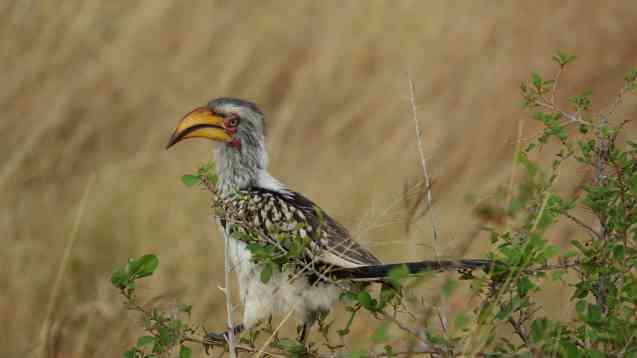
The southern yellow-billed hornbill is a curious bird and they are great fun to watch as they investigate everything.
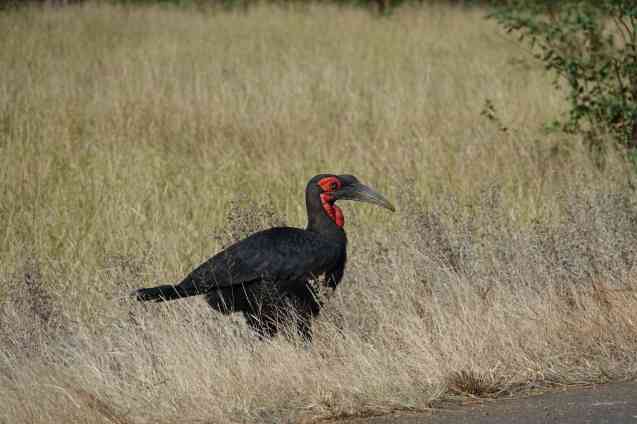
The ground hornbill is South Africa's largest hornbill and an endangered species. Any encounter with these terrestrial birds is special.
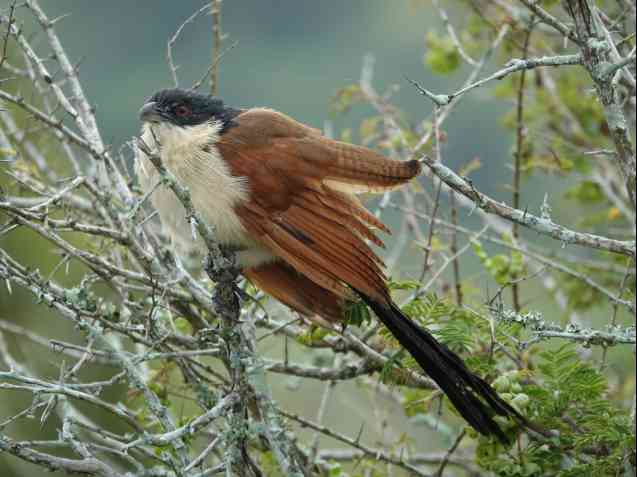
The Burchell's coucal is a handsome bird with a call that sounds like water pouring from a plastic bottle. It usually hops around in dense bush, but its striking colouration and red eye make it an impressive sighting.
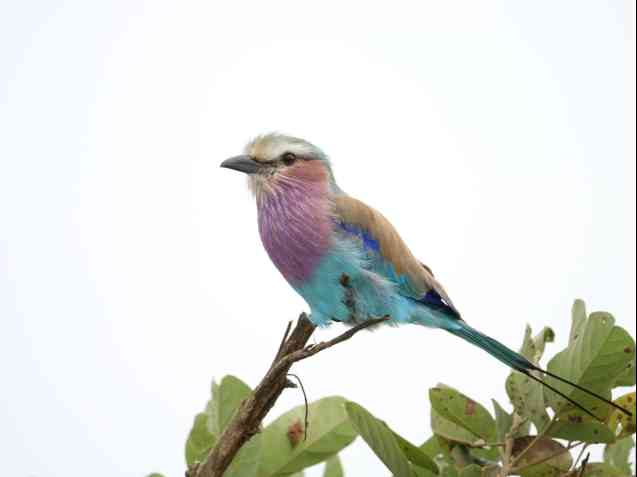
Finally, one of the most striking Kruger birds is the lilac-breasted roller. When you see these birds you know you have arrived in Kruger and they are always a joy to encounter.
Check out these blog posts about Kruger National Park safaris:
While the Big 5 are a big draw card of a Kruger National Park safari, there is so much smaller wildlife to see that every outing is exciting. But the birdlife in Kruger Park is unparalleled. Remember to pack a bird book or download an app, and binoculars for hours of entertainment throughout the park.
Talk to one of our experienced African travel consultants today to arrange a Kruger safari or enquire about a bespoke birding expedition.
Catch up on Wendy and Peter's Kruger safari reports:
Explore these destinations mentioned in this post.
Below you'll find further reading and articles related or similar to this post.




Call us toll free from US/Canada on 1-888-414-6513, or from the UK on 0-808-189-1052. All other countries can contact us on +27 21 791 0878.
© 2026 African Budget Safaris | Privacy | Terms | Cookie Policy | Consent Preferences








__large.jpg)