Kruger Safari Part 2: How Kruger was different this time by experienced Belgian travellers
Published on 22 July 2024, Last updated on 22 August 2024.
By Guest Blogger in Big 5 Safari.
In part 2 of our Kruger Safari series, we share the next trip report from Wendy and Peter. This is the trip report the Belgian couple emailed to friends and family after their recent Kruger safari in South Africa.
Kruger Safari Report 3: Kruger National Park - different than usual
This was Peter's 4th time in Kruger National Park and the 5th time for me. Several things were different to usual on this Kruger safari:
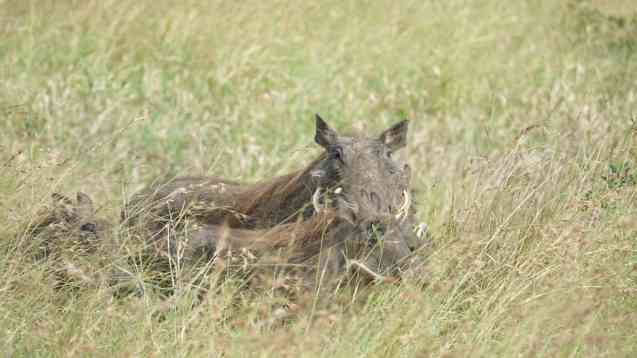
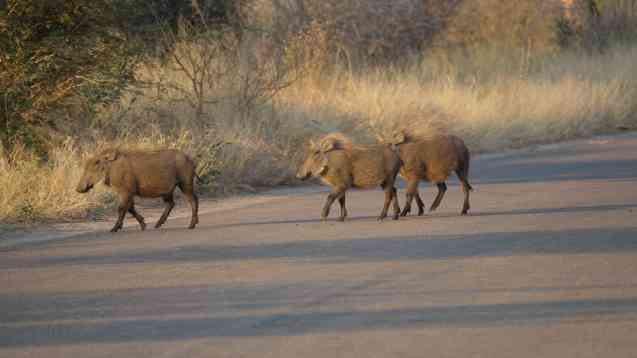
1) It rained more at the beginning of this year (2024) than in previous years when we were in Kruger National Park because everything was much greener. The bushes had many more leaves and the grass was taller than we have ever seen in May. That made spotting the animals more difficult than on previous Kruger safaris. Smaller animals, such as warthogs, were sometimes completely hidden in the grass. Only when they walked away did their upright tail reveal their presence. An elephant sometimes even disappeared behind a bush, strange but true.
Kruger Park safari warthogs
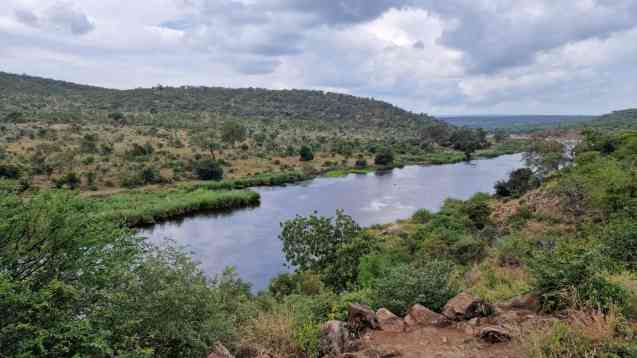
2) There was much more water in the rivers, so the animals did not necessarily have to come to the waterholes to drink. Because of the plentiful water available, the animals in Kruger all looked good. No emaciated animals dying of thirst - a sad sight we have once seen after a long drought.
Kruger National Park river
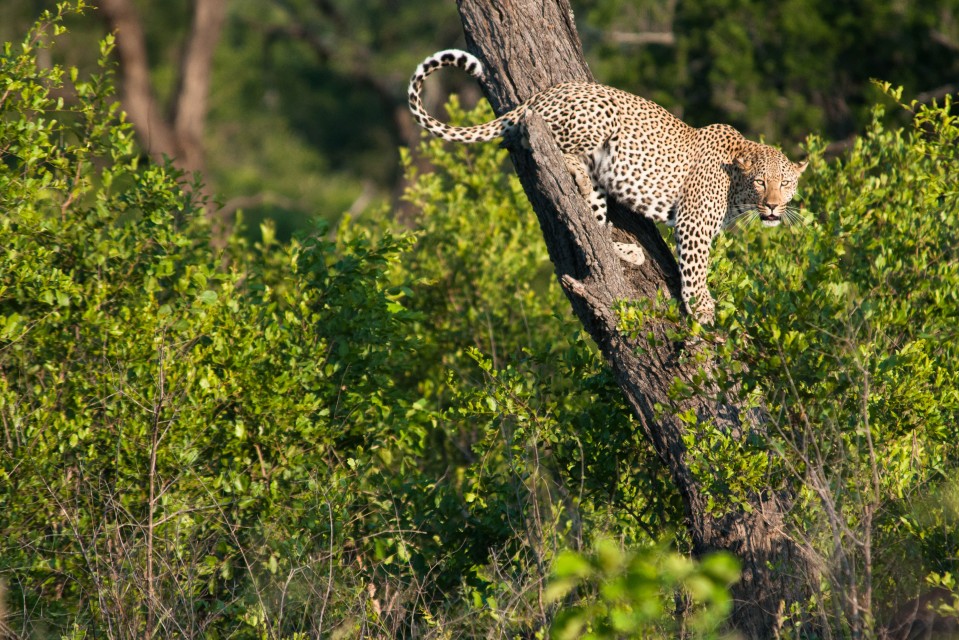
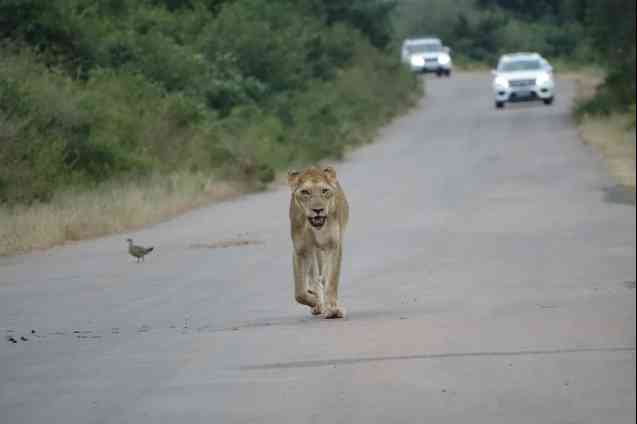
3) The theory says that you are most likely to see cats on the road early in the morning, at dawn between 6 am and 7 am. But on our Kruger safari we saw lions at 8 am and 4 pm so that theory is just a theory. ;O))
Kruger lion
4) The main roads in Kruger National Park are paved and wide, which makes safari driving very easy. But there are also many unpaved roads. On our previous Kruger safaris we were always able to brave it with a normal, low-clearance sedan car. This year we rented a car with a higher clearance (with more space between the ground and the road) and we were very happy with that because some unpaved roads were in poor condition: with deep holes or gullies where a normal car could no longer pass.
Kruger Park safari road and warthogs
5) Most safari goers take a break in the afternoon, to eat something and chill after the morning drive. Normally we do that too. But on this Kruger safari our morning drives were sometimes so uneventful (in terms of seeing animals) that we often kept driving around to find more animals. Moreover, due to the poor condition of the unpaved roads, we sometimes made such slow progress that we did not get back to our camp by noon. But don't worry: miraculously, we often saw more animals during the hot hours between 12 noon and 2 pm than during the cool morning hours.
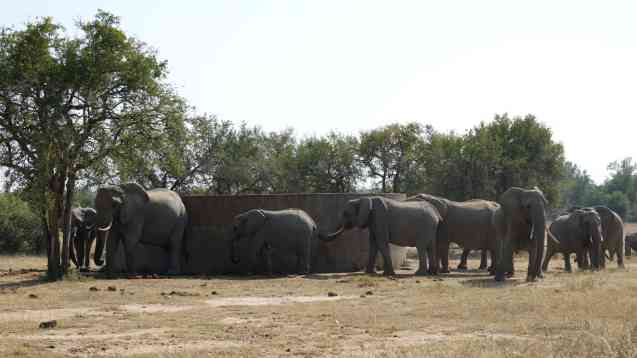
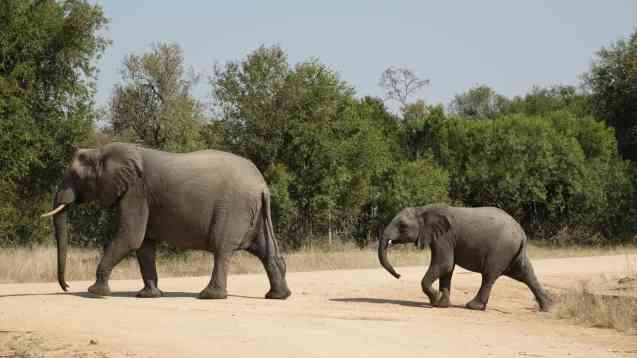
Kruger Park safari elephant herd
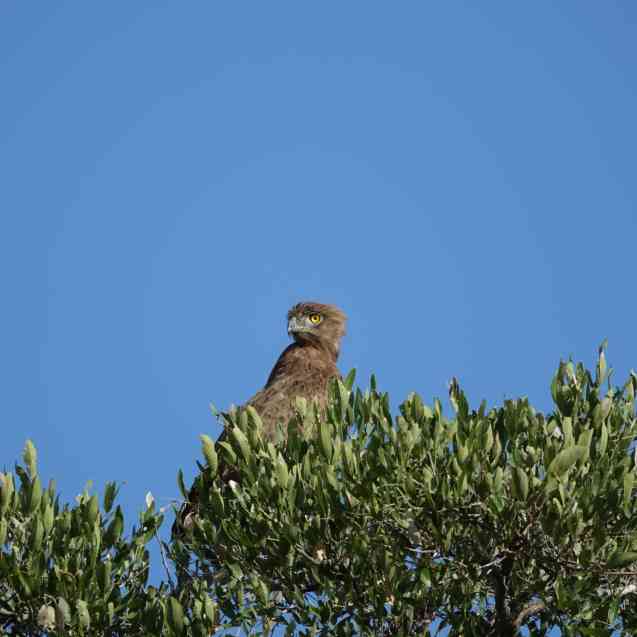
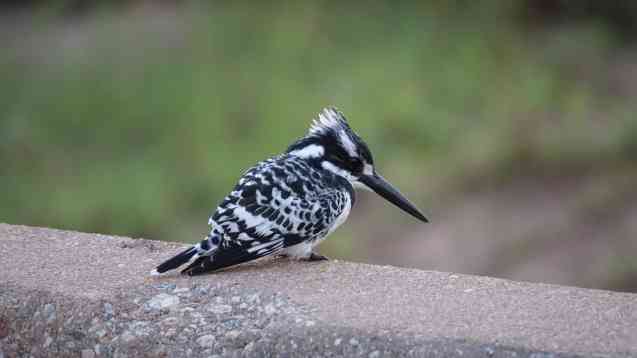
6) On routes where we saw many animals on previous Kruger safaris, we sometimes saw nothing for an hour this time. Fortunately, our interest in birds has increased enormously so we were happy to focus on that. We saw many colourful specimens and also many birds of prey and vultures (more in our Kruger birding report).
Kruger Park safari raptor
Kruger Park safari birdlife
7) The accommodation at some of the camps is old and in need of renovation. Apparently, they are working on that, but we still slept in old ones. The first rondavel (round house) we got clearly had a bat living in it because there were droppings on the beds and our towels, so we asked for another rondavel.
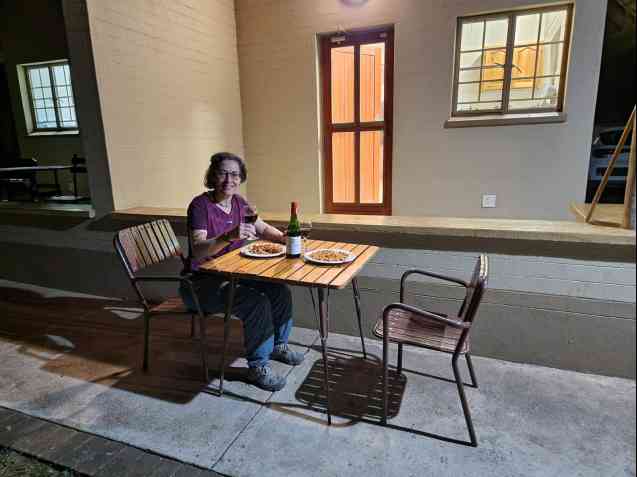
At the next Kruger safari camp, we could not eat under the thatched roof of our terrace because of the bats that dropped all kinds of things as they flew back and forth. We placed the table, chairs and our pasta in front of the terrace. In the house itself, there was a smell of bat droppings. But they had planned something for that: a spray can with strawberry scent helped us through the 2 nights, haha.
Kruger Park safari accommodation
8) The safari tent in the Punda Maria camp, which we were very enthusiastic about and which we remembered as a "luxury tent" 10 years ago; sorely needed replacing.
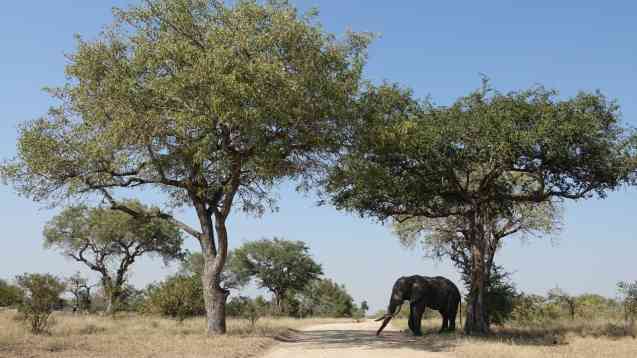
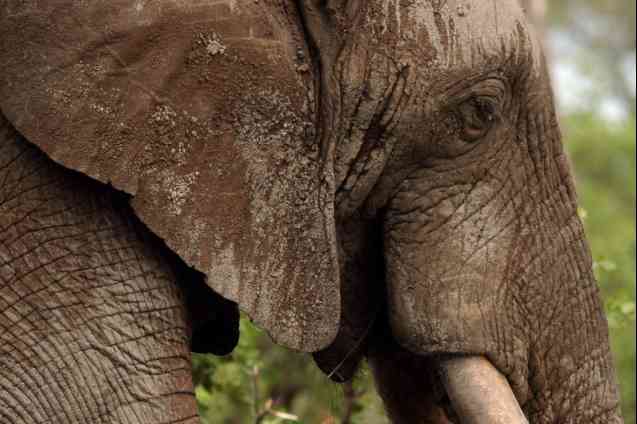
Kruger National Park safari elephant
But despite those things, we still think Kruger is a wonderful national park for safari drives because ultimately you don't go there for the accommodation, you go there to be close to wildlife for days, track animals and listen to the sounds of nature at night.
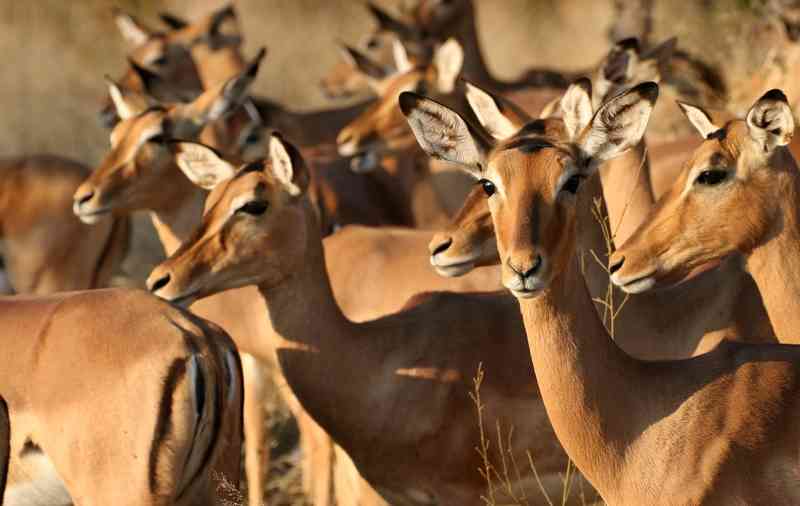
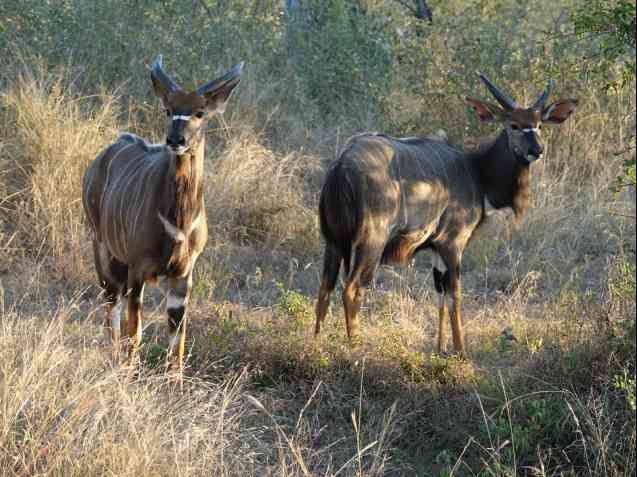
Kruger Park antelopes
Greetings
Wendy and Peter
Catch Peter and Wendy's other Kruger safari reports:
We love to feature guest bloggers with firsthand safari stories to share from their travels or experiences living in Africa. Some of our guest writers are travel bloggers, others safari Aficionados or wildlife experts - all share a love of Africa!
Related Destinations
Explore these destinations mentioned in this post.










__large.jpg)