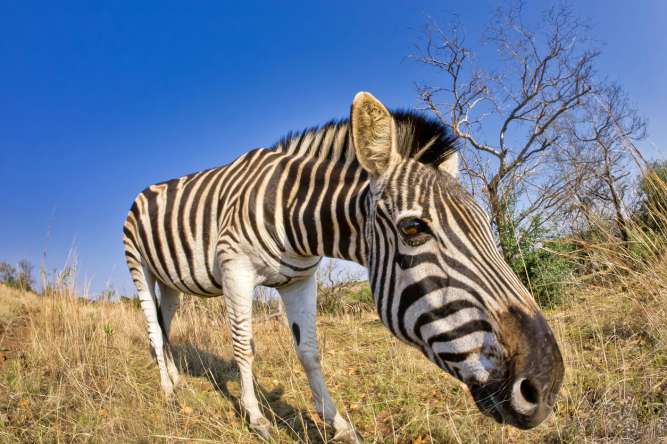
At first glance, a zebra is a zebra is a zebra. Black-and-white, striped, and usually standing somewhere photogenic against a dramatic African backdrop. But look a little closer on safari, and you’ll discover two very different characters roaming southern and eastern Africa: the plains zebra and the mountain zebra.
Knowing which is which adds a surprising amount of depth to your game drives. It sharpens your eye, gives guides something fun to quiz you on, and turns a common sighting into a proper safari moment.
Quick answer: Plains zebra are larger, have stripes across the belly and are common on safari. Mountain zebra are rarer, have narrower stripes, a white belly and a distinctive dewlap under the throat.
Plains zebra are among the easiest animals to see on safari in Tanzania, Kenya, Botswana and South Africa. Mountain zebra are much rarer and usually require a more specialist safari in South Africa or Namibia.
Explore Tanzania safari tours where zebra sightings are common
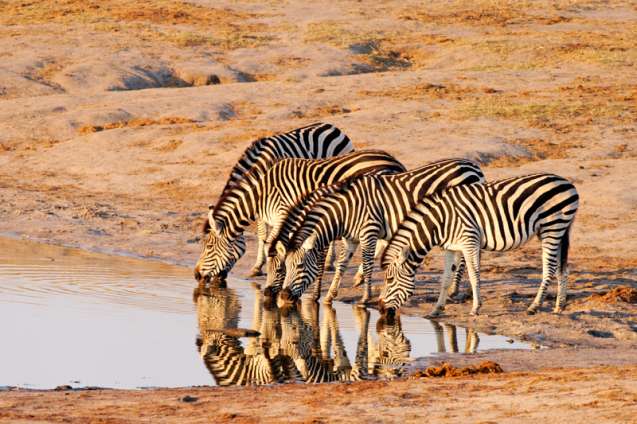
Most safari travellers will encounter plains zebra, but Africa actually has three zebra species, each adapted to a different environment.
The plains zebra, Equus quagga, is scientifically recognised as having six living subspecies, plus one that is recently extinct, the quagga, Equus quagga quagga, and is the most widespread of all the zebra species.
See this 3-Day Kruger National Park Lodge Safari to see the Plains zebra.
__medium.jpg)
The mountain zebra, Equus zebra, is Africa’s second zebra species and a specialist of dry, rocky, mountainous landscapes. It occurs in two subspecies, the Cape mountain zebra and Hartmann’s mountain zebra, both adapted to steep terrain and capable of living at elevations of over 900 metres (3,000 ft) above sea level.
See this 3-Day Cape Town Big 5 safari to see mountain zebras at Sanbona.
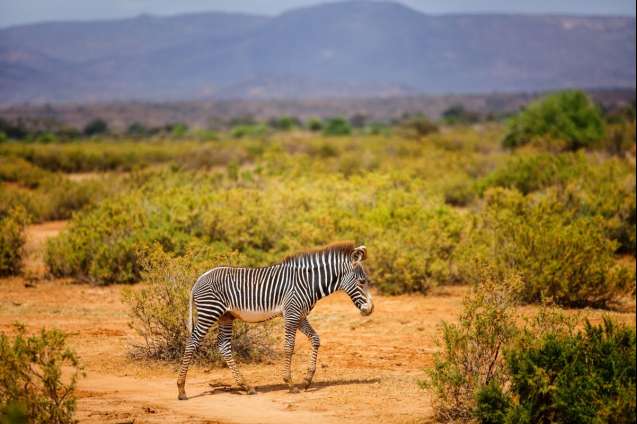
Grevy’s zebra Equus grevyi, is the largest and rarest of Africa’s zebras and is immediately recognisable by its narrow, closely spaced stripes, large, rounded ears, and white belly. Unlike plains and mountain zebras, Grevy’s zebra has no recognised subspecies and is considered monotypic. It is restricted to the arid and semi-arid landscapes of northern Kenya and small parts of Ethiopia, where it is specially adapted to dry conditions, sparse grazing, and long distances between water sources.
See this 7-Day Samburu & Masai Mara Kenya safari to see both Grevy's and Plains zebra.
This guide focuses on the two you’re most likely to compare on a southern or East African safari: Plains vs mountain zebra.
|
Info Box: Why Do Zebras Have Stripes? |
|---|
Zebra stripes have fascinated scientists for decades. The leading explanation today is insect deterrence.Stripes confuse biting flies like tsetse and horseflies, making it harder for them to land. This reduces disease transmission and irritation. Secondary benefits may include temperature regulation and social recognition, but fly defence is the strongest-supported theory. In short, stripes are survival gear, not fashion. |
__medium.jpg)
Once you know what to look for, the differences are obvious.
|
Info Box: What Colour Is a Zebra? |
|---|
|
A zebra is black with white stripes, not the other way around. This is confirmed by skin pigmentation. Under the fur, zebra skin is black, and the white stripes appear where pigment cells are suppressed during development. Foals are born with brown and cream stripes that darken with age. So yes, that pub argument has a correct answer. |
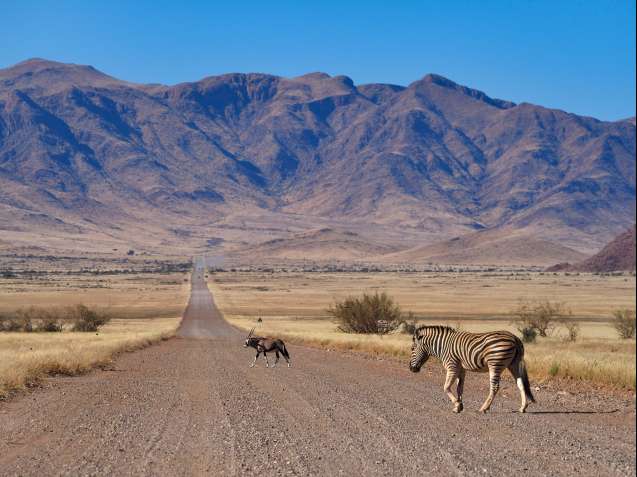
If you see a zebra confidently picking its way up a steep hillside, chances are you’re looking at a mountain zebra.
__medium.jpg)
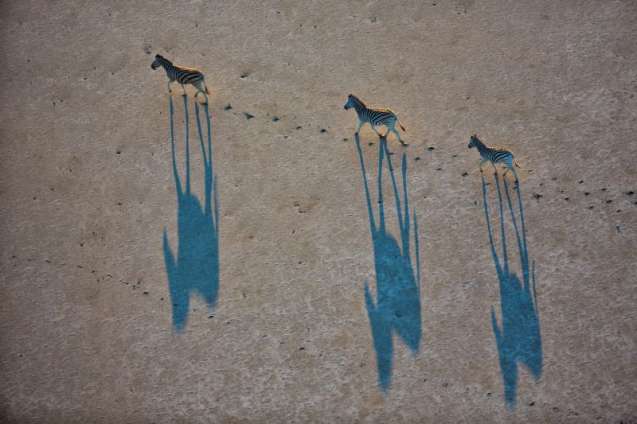
Plains zebra are Africa’s most widespread and adaptable zebra species, thriving in open grasslands, savannas, and lightly wooded plains where grazing is abundant. They occur across East and southern Africa, from Kenya and Tanzania through to Botswana, Zimbabwe, Namibia, and South Africa, and are a defining feature of classic safari landscapes. Because they are highly social and often found in large herds, plains zebra are among the easiest and most reliable wildlife sightings on safari, especially in well-known national parks and migration corridors.
If you’re travelling on a first-time safari, plains zebra sightings are almost guaranteed. These are some of the best first-time safari destinations in Africa.
|
Info Box: The Plains Zebra Migration in Botswana |
|---|
|
Botswana hosts Africa’s longest zebra migration, with tens of thousands of plains zebra moving up to 500 km between the Chobe River floodplains and Makgadikgadi Pans National Park. As the summer rains arrive in November and December, herds travel south towards the Makgadikgadi, where peak numbers gather between January and March for calving on the nutrient-rich grasslands. From April to May, the zebras gradually drift back north as surface water disappears. Unlike the Serengeti, this migration is driven by rainfall rather than river crossings and was only fully re-established in the early 2000s after veterinary fences were removed. Today, it stands as a quiet conservation success and one of southern Africa’s most underrated wildlife events, offering vast landscapes, fewer crowds, and excellent predator sightings during the calving season. |
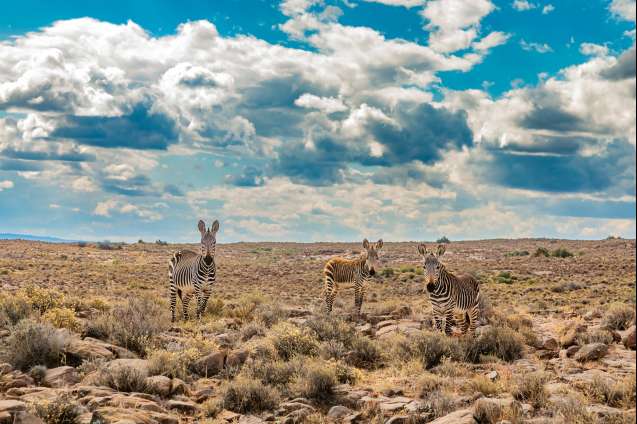
Mountain zebra require more intention and better timing, as they are specialists of dry, rugged, and mountainous landscapes rather than open savannas. They favour rocky slopes, escarpments, and semi-desert terrain where few other large grazers can survive, and are found only in southern Africa, particularly in parts of South Africa and Namibia. Safaris that include mountain zebra are typically slower-paced and more scenic, rewarding travellers who enjoy dramatic landscapes and off-the-beaten-track wildlife encounters.
For the best-value mountain zebra safari, South Africa is usually easier and more affordable than Namibia, especially on short trips from Cape Town or along the Garden Route.
Mountain zebra safaris are less about big herds and more about scenic, slow-burning wildlife encounters.
| Feature | Plains Zebra | Mountain Zebra |
|---|---|---|
| Build | Larger and heavier | Slightly smaller and more compact |
| Stripe Pattern | Broad stripes, often with faint shadow stripes | Narrow, sharply defined stripes |
| Belly | Striped | White and unstriped |
| Dewlap | No | Distinct flap of skin under the throat |
| Habitat | Grasslands and savannas | Mountainous, rocky terrain |
| Best Places to See | Serengeti, Masai Mara, Kruger, Etosha | Mountain Zebra NP, Karoo NP, Namib-Naukluft |
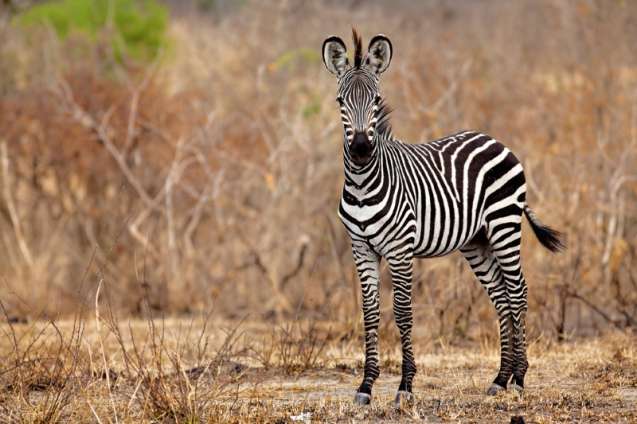
Plains zebra are the social, wide-ranging icons of the savanna. Mountain zebras are the tough, cliff-walking specialists of southern Africa’s rugged landscapes. Seeing both on safari adds texture to your wildlife experience and rewards travellers who look beyond the obvious.
If you want help planning a safari that includes classic plains game drives or a more off-the-beaten-track mountain zebra encounter, African Budget Safaris knows where to take you, when to go, and how to do it without blowing the budget.
Contact one of our experienced safari consultants and start planning your zebra safari today.

Explore these destinations mentioned in this post.
Below you'll find further reading and articles related or similar to this post.




Call us toll free from US/Canada on 1-888-414-6513, or from the UK on 0-808-189-1052. All other countries can contact us on +27 21 791 0878.
© 2026 African Budget Safaris | Privacy | Terms | Cookie Policy | Consent Preferences

tours_through_moremi_game_reserve__thumb.jpg)

__medium.jpg)