__banner.jpg)
Knowing what to photograph and when on safari helps you anticipate moments. By choosing the correct settings, composition, and textures, your images can feel intentional rather than accidental.
From iconic big cats to visually striking herd animals, here are the most photogenic African animals to look out for on safari!
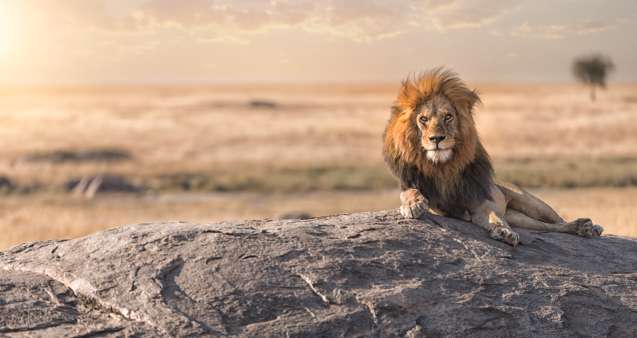
Lions are iconic safari animals, and the ultimate safari subject. Their size, beautiful manes, and sheer presence (plus our childhood obsession with The Lion King) give any composition drama and a magnetic aura.
Plus, lions are easy to photograph.
Famously lazy, you’ll often find a pride lying in the shade, or sometimes in the road instead of hiding away in dense cover.
This gives you plenty of time to refine and adjust settings to get the best shot.
The Serengeti National Park is one of the best safari destinations for photographing lions. For a wilder experience, head to Kafue in Zambia.
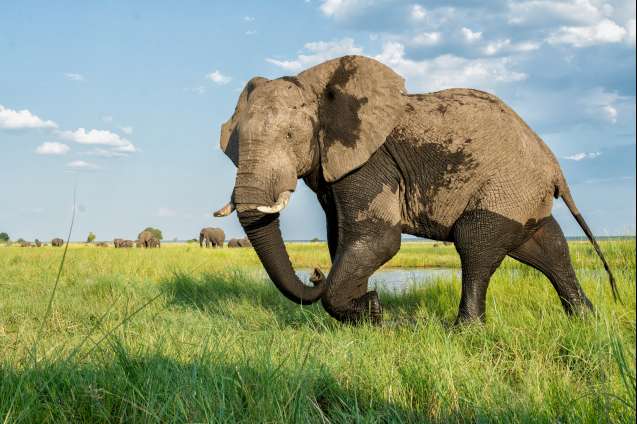
Did you know an adult elephant can weigh up to 6,000 kilograms!?
Their massive size adds beautiful scale to photographs and contrast in vast landscapes. Then, there are the close-up details.
Zoom in for detail shots of eyelashes, wrinkled skin, and expressive eyes to add texture and emotion to your Big 5 safari photos.
Top tip: Keep an eye out for dust baths, river crossings, and drinking scenes.
Few animals convey scale like an elephant. Wide shots show their dominance in vast landscapes, while close-ups reveal wrinkled skin, eyelashes, and expressive eyes.
Elephants also create dynamic moments, from dust baths to river crossings.
Photography tips:
Best destination to photograph elephants:
The best destination to photograph elephants is Chobe National Park in Botswana. Amboseli National Park in Kenya and Hwange National Park in Zimbabwe also offer fantastic elephant sightings and behaviour.
__medium.jpg)
Think you’re patient? A leopard will put you to the test.
Elusive and rare, every sighting feels earned, and capturing one on camera that isn’t a blurry mess or a speck in the distance is a win for any safari bucket list.
To get a single sharp leopard shot, you’ll want to focus more on clean backgrounds, a fast shutter speed, and a careful focus over dramatic action.
The best place to photograph leopards on safari is the Sabi Sands Game Reserve in the greater Kruger National Park. South Luangwa National Park in Zambia is also known for seeing leopards.
__medium.jpg)
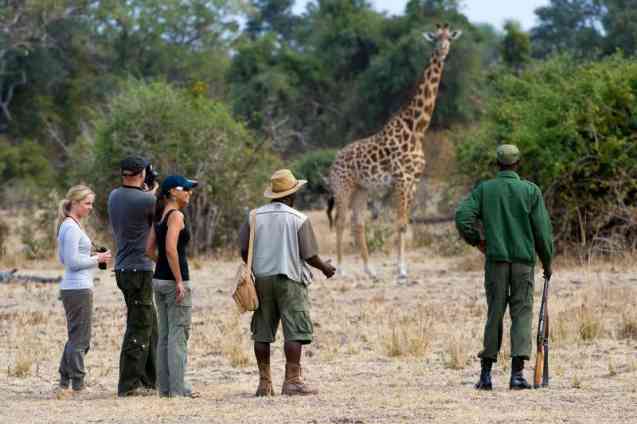
Giraffes are a safari photography staple for good reason.
These gorgeous creatures move slowly, giving you time to fine-tune your composition and create eye-catching safari images.
Look out for giraffes at sunrise or sunset for beautiful silhouettes and feeding or drinking scenes for tension and movement.
Etosha National Park is one of the best places to photograph giraffes in Africa. The pans and waterholes provide a dramatic backdrop that allows giraffes to take centre stage.
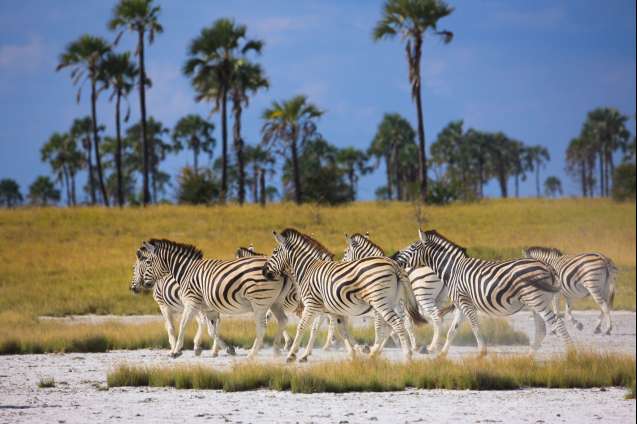
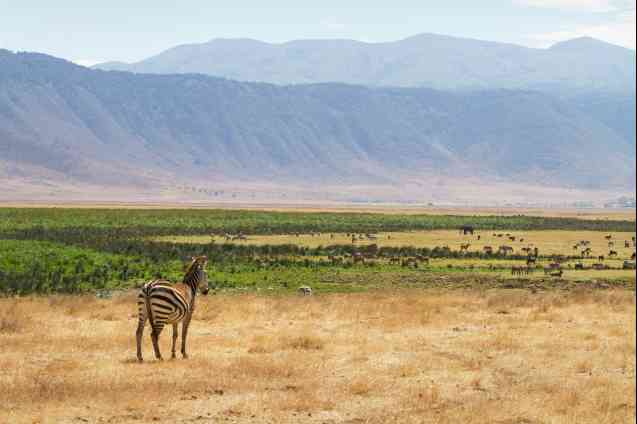
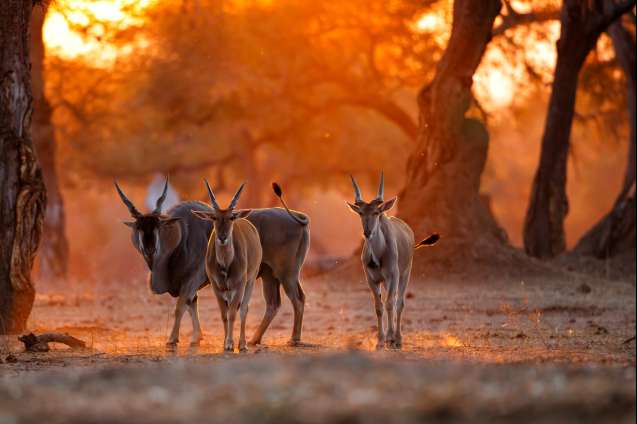
Zebras give photographers a palette of patterns and contrast.
Whether you’re capturing a herd up close or from afar, there’s so much detail and different compositions you can choose from to create an intriguing frame.
Overlapping bodies create natural repetition and rhythm, while dust, movement, and backlighting add depth and contrast. Harsh midday light can also work in your favour, sharpening stripes rather than washing them out.
The best place to photograph zebras is in Botswana, as zebra herds migrate from Botswana's Okavango Delta to the Makgadikgadi Pans.
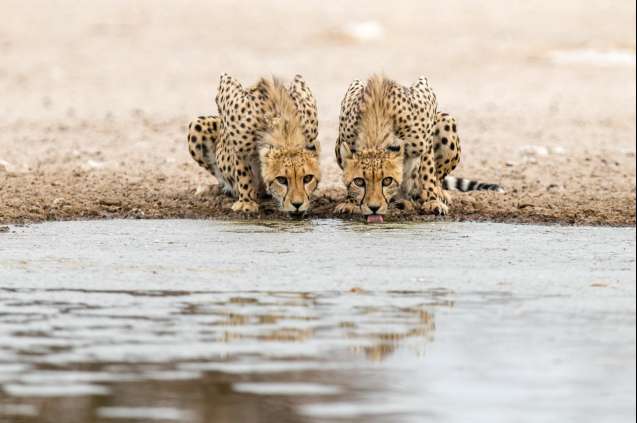
Reaching incredible speeds of 120 km/h, capturing a cheetah flooring it across the savanna is a bucket list item for many wildlife photographers.
But these high-speed hunts are rare to witness.
Usually, you’ll find cheetahs in intense moments of alert focus, scanning the plains for prey or walking with purpose. Because cheetahs rely on visibility rather than bush cover to stalk prey, it makes your job of setting up a powerful composition so much easier.
The best place to photograph cheetah on safari is in the Central Kalahari Game Reserve in Botswana. Another top location for cheetahs is the Serengeti National Park in Tanzania.
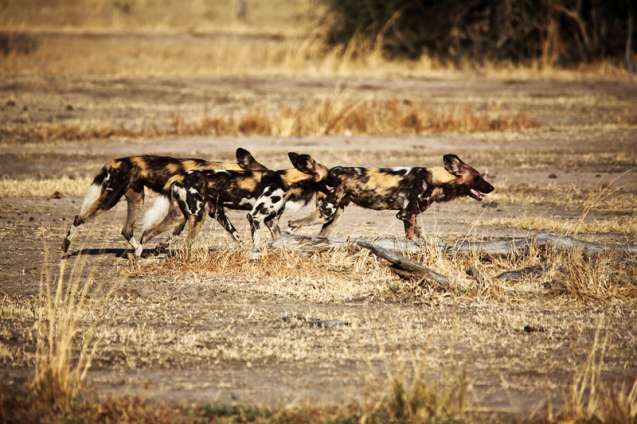
African wild dogs are rare to see on a safari, but if the odds are in your favour, you can expect chaos, colour, and emotion in every frame.
Their unique painted coats and group movement give you so much to work with, and it’s possible to spend hours at a single sighting clicking away.
To capture these rare creatures, you’ll want a fast shutter speed and wider compositions to capture pack behaviour.
If you’re lucky, you might even witness a hunt in action!
The best place to photograph African wild dogs on safari is in the South Luangwa National Park in Zambia. The Okavango Delta also offers excellent photography for wild dogs.
_(1)__medium.jpg)
Armoured skin. Heavy folds. Iconic horns.
All these traits create bold shapes in wildlife photography.
Aim for dusty environments to enhance a rhino’s texture and close-up shots to highlight the cracked skin and twitching ears.
The rarity of rhinos contributes to the drama as they represent one of Africa’s most powerful conservation narratives.
Etosha National Park's floodlit waterholes are the best place to photograph black rhino in Africa. Moody light and intimate encounters reward patient travellers.
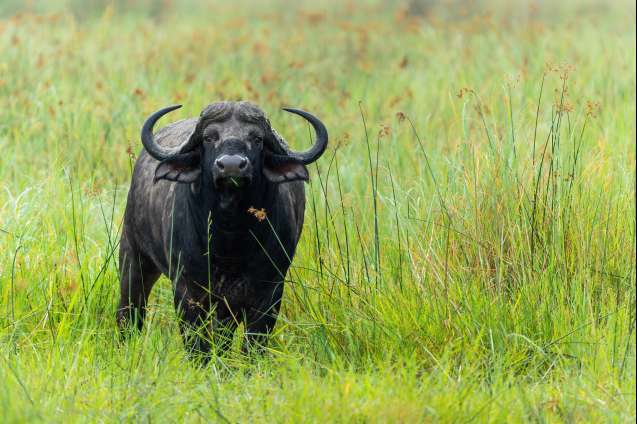
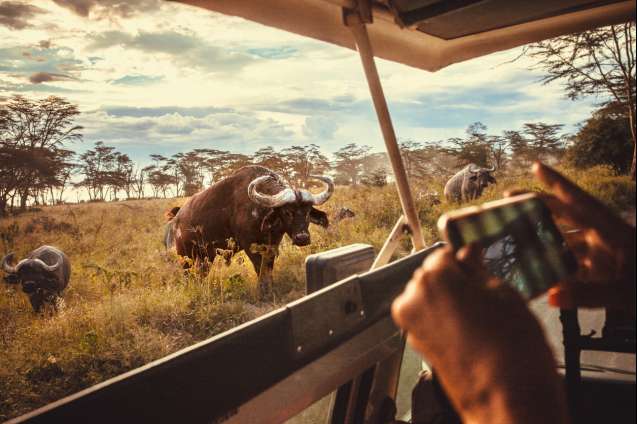
Rounding off your photographic Big 5 safari is the African buffalo.
These powerful animals bring mood and atmosphere to safari photos rather than movement.
Their dark coats, horns, and piercing stares create vibrant portraits that contrast against African landscapes.
The best place to photograph buffalo on safari is the Okavango Delta. The nature of the Delta leads to unusual photographic landscapes and angles that are found nowhere else in Africa. A strong second is the Kruger National Park in South Africa.
__medium.jpg)
Timing dramatically affects your photography results. While the dry season will offer easier-to-spot wildlife, the green season offers incredible light and lush vegetation.
Know more and plan better by reading our Green Season safari guide
If wildlife density is your priority, dry season is typically the strongest choice. If mood, colour, and dramatic skies matter more, the green season can be exceptional. Both offer incredible opportunities to capture Africa's unique safari wildlife.
Choosing the right destination increases your odds of strong sightings.
Each destination offers a different photographic style, from wide savannas, flood plains, and woodland, to dramatic desert pans.
Lions, elephants, giraffes, and zebras are typically easiest due to their size and visibility.
A 200–600mm telephoto lens covers most wildlife situations and gets you close while maintaining a safe distance.
July to October offers peak wildlife density in many regions. Green season months offer dramatic landscapes, incredible birdlife, and fewer crowds. Choosing the best month for your safari depends on what you are hoping to capture and the size of your budget.
Not necessarily, but a private vehicle gives more control over positioning, time at sightings, and access to a professional and knowledgeable guide.
__medium.jpg)
Wildlife photography success depends as much on location as it does on timing.
Choosing the right destination, season, and safari style increases your chances of capturing the animals you want to see.
Speak to one of our safari experts today and start planning a photography safari that matches your goals and your budget.
Explore these destinations mentioned in this post.
Below you'll find further reading and articles related or similar to this post.




Call us toll free from US/Canada on 1-888-414-6513, or from the UK on 0-808-189-1052. All other countries can contact us on +27 21 791 0878.
© 2026 African Budget Safaris | Privacy | Terms | Cookie Policy | Consent Preferences


tours_through_moremi_game_reserve__thumb.jpg)

__thumb.jpg)